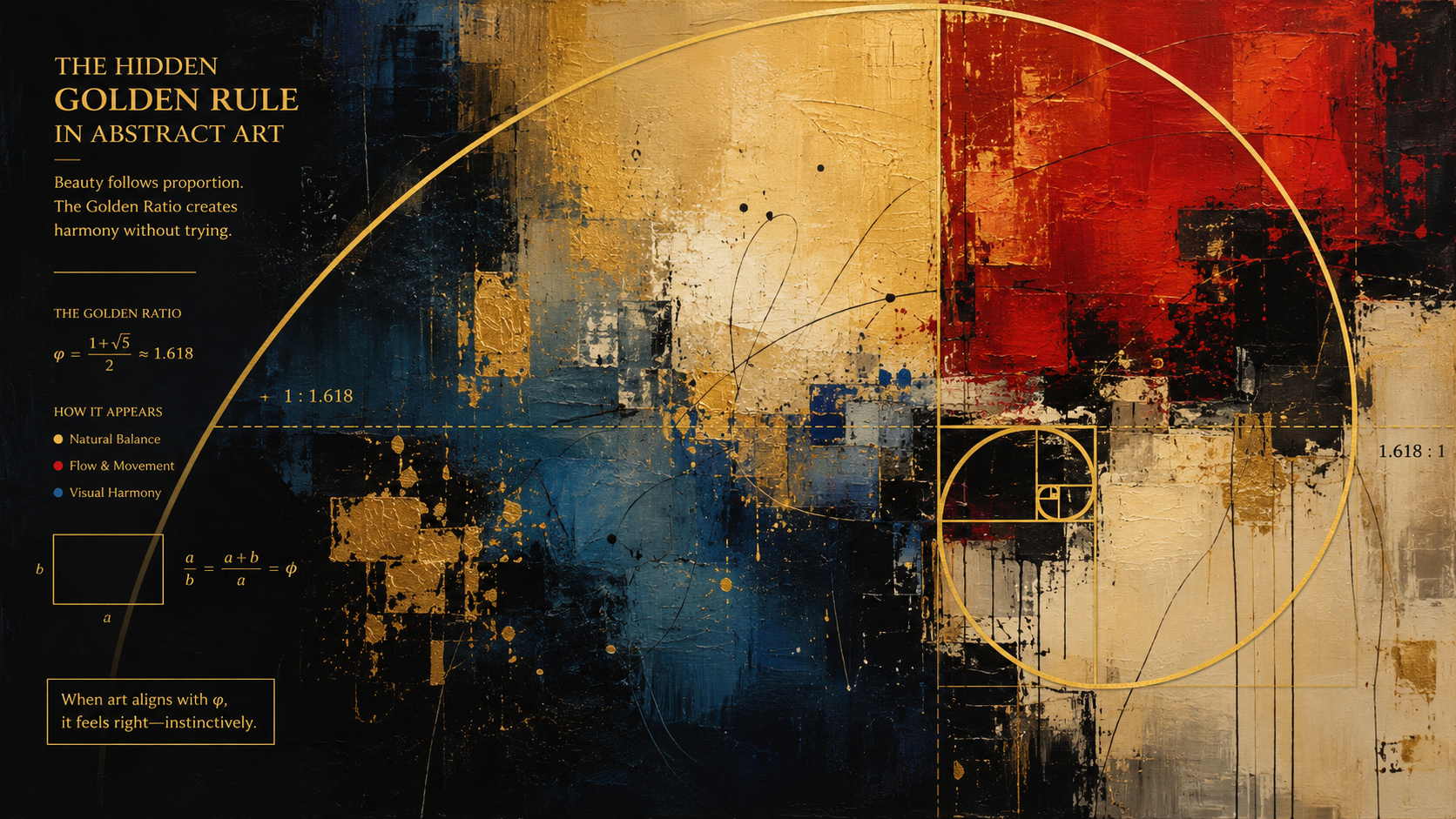
Recent Studies reveal that abstract art may be more structured than previously thought, with a hidden mathematical ‘golden rule’ potentially influencing composition and viewer perception. This doesn’t mean artists are consciously applying formulas, but rather that a natural sense of balance, proportion, and visual harmony may be at play, aligning with mathematical principles.
Keypoint Summary
- A new study suggests abstract art possesses a hidden mathematical structure related to the ‘golden rule’.
- This structure may influence how viewers perceive and react to abstract compositions.
- The ‘golden rule’ isn’t a strict formula, but rather a balance achieved through artistic intuition and practice.
- AI-generated art often lacks this structural element, differentiating it from human-created abstract art.
What’s the ‘Golden Rule’ and How Does It Relate to Art?
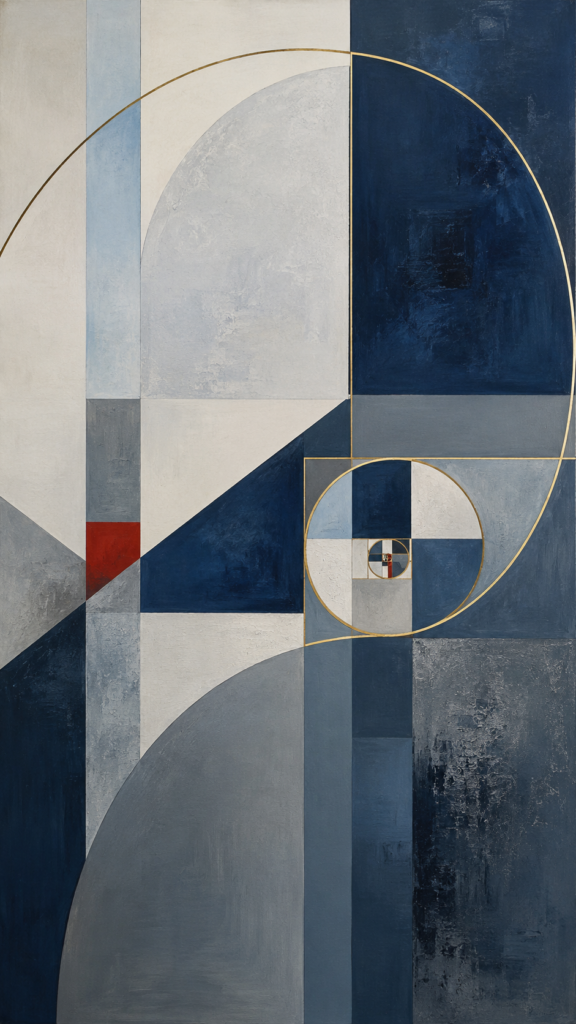
The ‘golden rule,’ often associated with the golden ratio (approximately 1.618), is a mathematical proportion found throughout nature and design, believed to create aesthetically pleasing compositions. In art, it can manifest in the arrangement of elements, the balance of positive and negative space, and the overall structure of a piece. While artists may not consciously calculate this ratio, their intuitive sense of composition can often align with it.
How Did Mathematicians Discover This ‘Rule’ in Abstract Art?
Researchers used a mathematical technique called persistent homology to analyze abstract paintings. This method examines the shapes, loops, and textures within an image, revealing underlying structural patterns. By comparing human-made abstract art with AI-generated images, they found that genuine artworks often exhibit a specific rate of “duality violation,” hinting at an intuitive understanding of this ‘golden rule’.
Does This Mean All Good Abstract Art Follows a Strict Formula?
No, definitely not. Art is subjective, emotional, and deeply personal. The study doesn’t suggest that every successful abstract piece adheres to a rigid mathematical equation. Instead, it proposes that skilled artists often achieve a compositional balance that aligns with these mathematical principles through training, practice, and intuition. It’s about a hidden structure, not a literal formula.
How Does This Discovery Affect How We Understand Abstract Art?
This research offers a new perspective on how we perceive and engage with abstract art. It suggests that our eyes are drawn to specific patterns and areas within a composition due to this underlying mathematical structure. Understanding this can deepen our appreciation for the artist’s choices and the subtle ways they guide our visual experience. To further understand artistic choices, explore understanding the meaning behind common art symbols.
What are Some Techniques for Achieving Balance in Abstract Art?
Achieving balance in abstract art involves several techniques. One is understanding and using contrast to create harmony. Another is rhythm, achieved through the repetition of elements like lines or colors. Considering the placement of focal points and using directional movement to guide the viewer’s eye are also key. As you experiment, consider exploring lets explore awesome art techniques together to broaden your artistic toolkit.
How Can Artists Use This Knowledge to Improve Their Work?
While you shouldn’t try to force a mathematical formula onto your art, being aware of these principles can inform your compositional choices. Experiment with different arrangements, paying attention to how the balance of elements affects the overall feel of the piece. Consider using collage to quickly test different placements, as suggested in creating strong compositions in abstract art. Remember, the goal is to enhance your intuition, not replace it.
What Role Does Color Play in Abstract Art and Achieving Balance?
Color is a crucial element in abstract art, influencing emotional responses and contributing to overall balance. Experimenting with unexpected color combinations can create visual tension and psychological complexity. Understanding color harmony and how different colors interact is essential for creating compelling abstract works. It is also important to consider the latest 2026 color trends for abstract artists.
What About the Use of Digital Tools in Abstract Art?
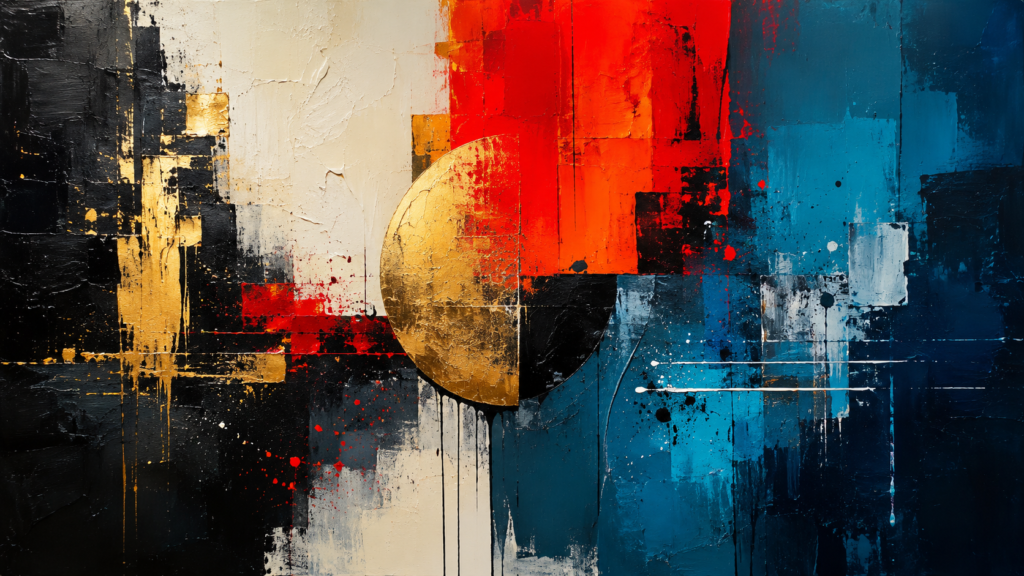
Digital tools are increasingly integrated into abstract art, allowing artists to experiment with AI-assisted design and generative algorithms. This hybrid approach democratizes art creation, enabling rapid iteration and exploration of countless variations. However, as the recent study suggests, it’s important to ensure that these digitally created works still possess the underlying structural integrity found in human-made art. For beginners, there are top 5 free digital art software options available.
Where Can I See Examples of Abstract Art That Exemplify These Principles?
Museums and galleries are great places to study abstract art. You can also find inspiration online by researching prominent abstract artists like Wassily Kandinsky, Mark Rothko, and Jackson Pollock, who were mentioned in the study. Additionally, exploring the works of contemporary abstract painters can provide insights into current trends and techniques. Consider looking at the Metropolitan Museum of Art paintings for some ideas.
How Does Texture Contribute to the ‘Golden Rule’ in Abstract Art?
Texture, like color and composition, plays a key role. The way “holes”, loops, and textures unfold across an image contributes to its hidden mathematical structure. Experiment with the impasto technique to add depth and visual interest.
FAQs
Q: Is the ‘golden rule’ a conscious decision by abstract artists?
A: Not necessarily. The study suggests it’s more of an intuitive balance achieved through training and practice, rather than a deliberate calculation.
Q: Does this mean AI can’t create good abstract art?
A: AI can generate visually appealing images, but the study found that AI-generated art often lacks the structural complexity and engagement of human-made art.
Q: Should I try to apply the golden ratio directly to my paintings?
A: It’s more beneficial to focus on developing your sense of balance and composition. Understanding the principles can inform your choices, but don’t force it.
Q: Where can I learn more about abstract art techniques?
A: ProminentPainting.com offers various tutorials and guides on abstract art techniques, including color theory, composition, and texture.