Summary: Making your first art sale is thrilling, but the logistics of payments and shipping can feel overwhelming. This guide breaks down exactly how to secure payment without losing money to hidden fees. You will also learn the “Safety Sandwich” packing method to ensure your painting arrives perfectly intact. Follow these steps to handle your first transaction like a seasoned professional.
That little notification changes everything. Someone just messaged you wanting to buy your painting. The excitement hits you first. Then the panic sets in. You realize you have no idea how to actually charge them, pack the canvas, or ship it across the country.
Most artists stall here. They worry about looking amateurish. We want to bypass that anxiety completely so you can focus on the milestone. Selling art for the first time requires a few unglamorous but essential systems. You need a reliable way to collect the money. You need cardboard and bubble wrap. You also need a solid script to close the deal without feeling pushy.
Once you nail these basics, every future sale becomes a breeze. Before we dive into the logistics, take a moment to celebrate. When you ship that piece off, come share your “First Sale Story” in our Community Gallery. We love celebrating those tangible wins together. Let’s get your painting ready for its new home.
How Do You Choose the Best Payment Method for Art Sales?
The best payment method for beginners is a standard business account with PayPal or Square. These platforms offer buyer protection and generate professional invoices for a standard fee of around 2.9% plus 30 cents per transaction. You simply factor this small fee into your final asking price.
You want to make handing over money as frictionless as possible. When a buyer is ready to pay, asking them to download a new app kills the momentum. Stick to the platforms everyone already uses. Venmo is great for local sales among friends. However, for a true professional transaction, an emailed invoice through a major processor builds immediate trust. A recent breakdown of merchant transaction fees shows that standardizing your payments protects both you and the buyer.
Always calculate your costs before quoting a final number. You can use our art price calculator to figure out your baseline. Then simply add a 3% buffer to cover those processing fees. This ensures you never lose money on the final transaction.
| Payment Method | Best For | Typical Fees | Professional Feel |
| PayPal Business | Online sales, international buyers | ~2.9% + $0.30 | High |
| Square | In-person sales, email invoicing | ~2.9% + $0.30 | High |
| Venmo | Local sales, friends and family | 0% (personal) to 1.9% | Low |
The “Safety Sandwich” Packaging Method
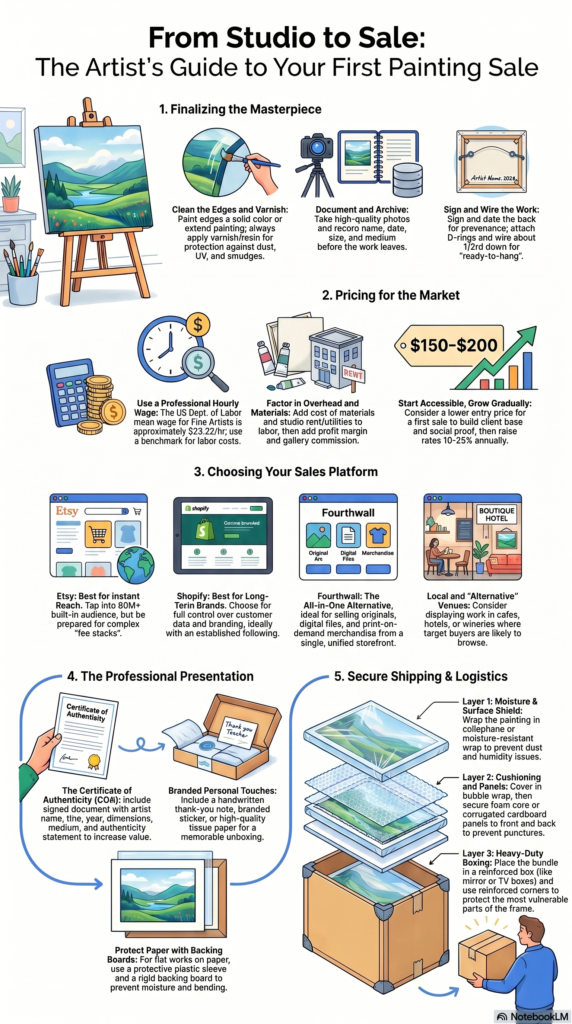
Shipping art for beginners usually involves a lot of unnecessary stress. A beautiful painting can easily be ruined by a careless delivery driver. You must protect the surface and the corners at all costs. The “Safety Sandwich” method is foolproof.
First, wrap the entire painting in acid-free glassine paper. This prevents anything from sticking to the surface of your artwork. Next, wrap the piece in two layers of large-bubble wrap. Tape it securely. Finally, sandwich the wrapped painting between two pieces of double-corrugated cardboard.
Cut the cardboard so it extends about two inches past the edges of the painting on all sides. Tape the edges of the cardboard tightly together. This creates a rigid shell that absorbs impacts and protects the delicate corners of the canvas. If you want to dive deeper into long-term care, check out our complete guide to art preservation.
How Do You Respond to an “Is This Still Available?” DM?
Respond promptly and confirm availability, then immediately offer a clear path to purchase. Say: “Yes, it is! The piece is $150 plus $20 for shipping. If you would like to claim it, just send me your email address and I will shoot over an invoice.”
This script works because it removes all the guesswork. It is polite and direct. It also prevents the endless back-and-forth messaging that often leads to ghosting. Data shows that prompt and clear communication drastically increases social media conversion rates.
If the buyer hesitates, do not panic. Give them a day to respond. If they go quiet, you can follow up once. A simple message saying you have other interest but wanted to give them first priority is entirely appropriate.
The Professional Touch for Your First Customer
People who buy original artwork online are not just buying an object. They are buying a piece of your creative journey. You want their unboxing experience to feel special.
You do not need expensive custom packaging to achieve this. A simple, hand-written thank you note goes a very long way. Tell them what the piece means to you. Include a basic Certificate of Authenticity.
You can print this certificate at home on nice paper. Include the title, the medium, the dimensions, and your signature. These tiny details cost almost nothing but elevate you from a hobbyist to a professional in the eyes of your collector.
What Are the Best Shipping Carriers for Original Art?
For beginners shipping standard-sized paintings domestically, the national postal service is usually the most cost-effective choice. For oversized works or high-value pieces requiring signature confirmation, private carriers like FedEx and UPS offer better tracking reliability and specialized art handling services.
Always purchase insurance for the full retail value of the painting. Never skip this step. If a package goes missing, you want to be fully compensated. You can review official shipping insurance guidelines to understand exactly what is covered.
You can learn more about managing these logistical systems in our guide on how to start an art business. Getting familiar with your local post office now will save you countless headaches as your sales volume grows.
Conclusion
Your first sale is a massive validation of your hard work. By setting up a simple invoicing system and mastering the “Safety Sandwich” packing method, you take the friction out of the process. You are completely capable of handling this. Package that painting with pride, send it out into the world, and then get back to the easel. We cannot wait to see your “First Sale Story” in the Community Gallery.
Frequently Asked Questions
1. How much should I charge for shipping my first painting?
Always calculate shipping before you list the artwork. Box the painting, weigh it, and use an online calculator from your chosen carrier to find the exact rate. You can either charge the buyer this exact amount or add it to the base price to offer “free shipping.”
2. Do I need a special business license to sell one painting?
No, you do not need a business license for your very first casual sale. However, as you begin selling regularly, you will need to register as a sole proprietor or LLC depending on your local laws. Check your local government website for specific tax reporting thresholds.
3. What if the painting gets damaged in transit?
If you purchased shipping insurance, you can file a claim with the carrier to recover the cost. You should then offer the buyer a full refund or a replacement piece. Always document your packing process with photos to prove the item was secured properly before shipping.
4. Should I frame a canvas before selling it?
Framing is entirely optional and depends on your specific aesthetic. Unframed canvases are perfectly acceptable and much cheaper to ship. If you sell it unframed, make sure to wire the back so the collector can hang it immediately upon arrival.
5. Is it safe to accept checks for artwork?
Accepting personal checks from strangers is highly risky due to the potential for bounced payments or fraud. Stick to secure digital payment processors that offer seller protection. Only accept checks from close friends or long-term clients you trust completely.