The global art market is expanding and becoming remarkably accessible. Digital platforms and younger collectors are entirely reshaping how creative work is bought and sold. Despite this technological shift, the true value of painting remains deeply rooted in human connection. This guide breaks down current industry growth and explains why your unique, handmade perspective is more critical than ever.
People buy art because it makes them feel something. You can track auction records, analyze global sales data, and study the rise of digital platforms to try and map the industry. But at the end of the day, a painting sells because an artist transferred a piece of their humanity onto a canvas, and a collector recognized it.
We are watching a massive structural shift in who buys art and where they discover new talent. It is no longer an exclusive club reserved for billionaires sitting in velvet chairs holding auction paddles. Today, the art economy is global, highly digital, and remarkably accessible to beginners.
If you are just starting out and trying to understand where you fit into this massive industry, the numbers might feel intimidating. They do not have to be. Understanding the landscape is simply the first step to finding your own audience and recognizing your worth.
What Is Driving the Growth of the Art Market?
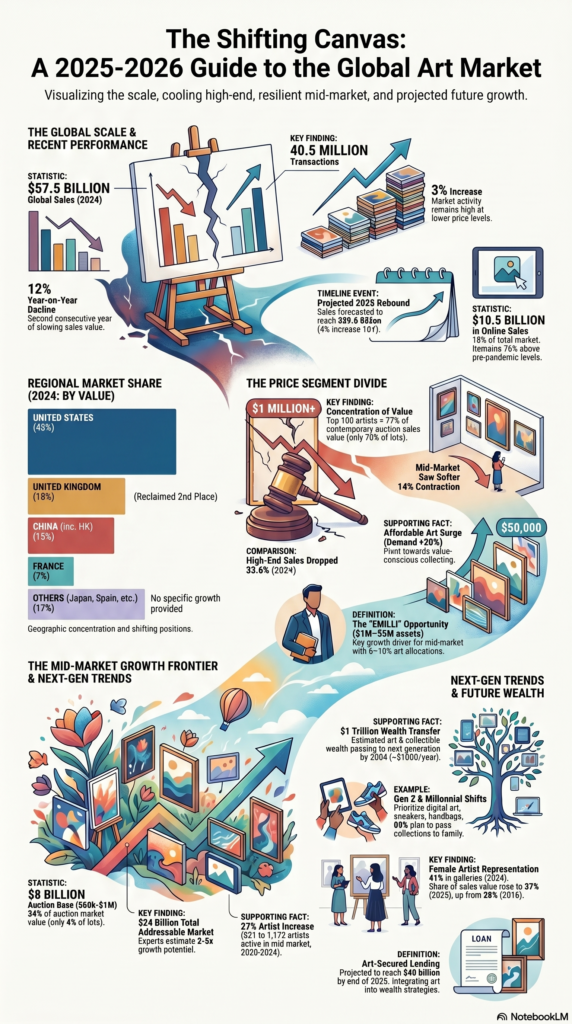
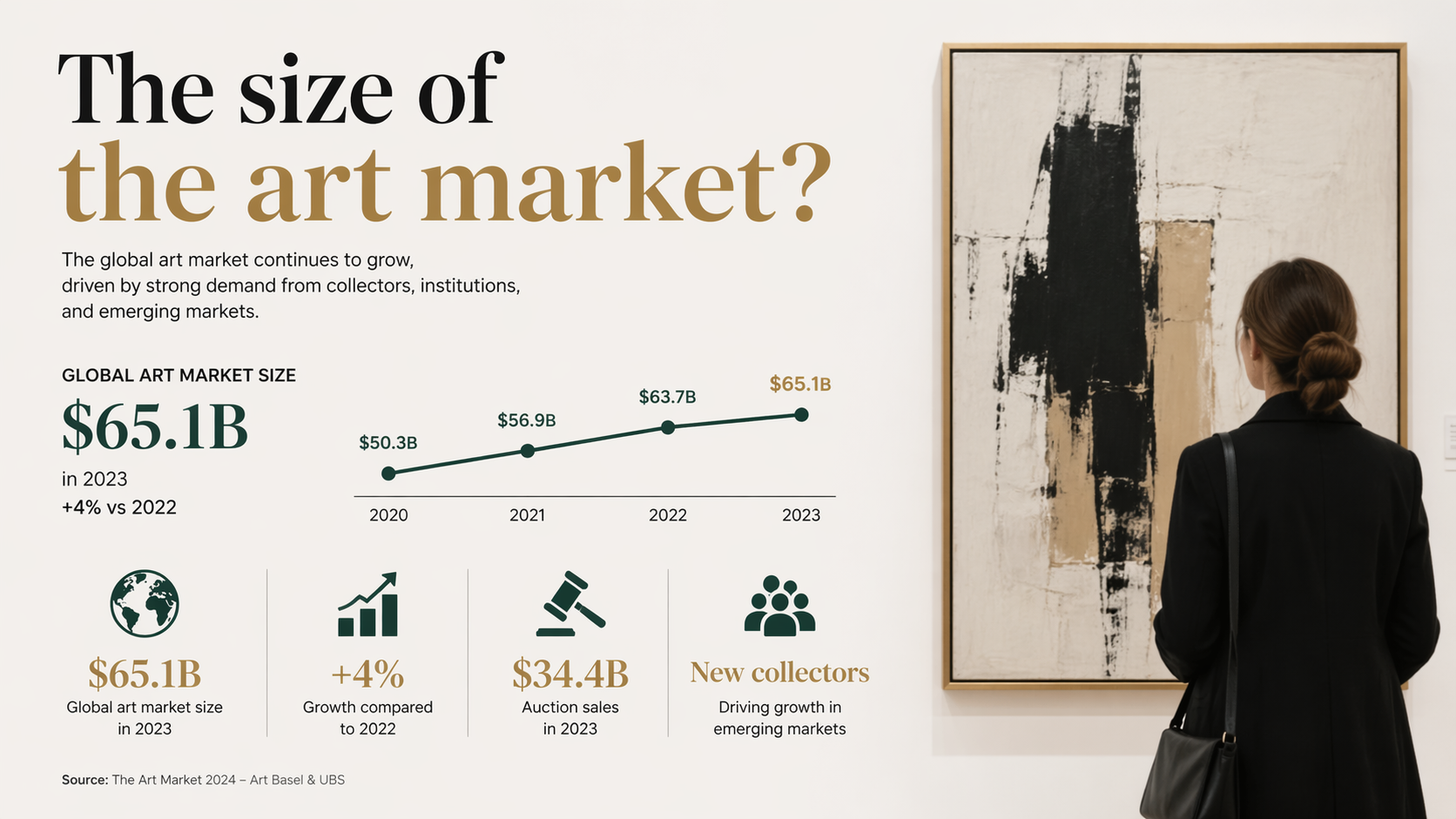
The global art market’s recent growth to $59.6 billion is driven by strong auction recoveries, expanded digital access, and a rapidly broadening base of entry-level buyers. More people than ever are discovering and purchasing physical artwork through new online channels instead of relying entirely on traditional gatekeepers.
We are seeing a fundamental shift in how creative work is consumed. Geographical barriers are rapidly dissolving. An artist painting in a small studio in Eastbourne can instantly connect with a collector in Tokyo. Wealth generation in new regions has also created a fresh class of buyers looking to diversify their portfolios and fill their homes with meaningful objects. Interestingly, smaller dealers with a turnover under $500,000 are recording some of the strongest growth in the industry right now.
The Shift Toward Digital Galleries
The traditional gallery model still holds immense power within the art ecosystem. However, it is no longer the only viable path to success for a working painter. Online marketplaces and social platforms now function as massive, unfiltered exhibition spaces.
Recent data shows that 59% of collectors purchased art online. This digital shift forced even the most influential art galleries to adapt their strategies and prioritize digital viewing rooms. Buyers now expect high-resolution virtual viewings, transparent pricing, and instant communication. For emerging artists, this significantly levels the playing field. You do not need a gatekeeper to validate your work if you are willing to share your journey directly with the public. In fact, more than 40% of first-time online art buyers discovered art directly through social media platforms.
How Do New Collectors Change the Market?
Younger buyers are shifting the market focus away from traditional exclusivity and toward community, identity, and direct engagement with creators. They increasingly value authentic connections, transparency in pricing, and the social values reflected in the physical pieces they choose to acquire.
This younger generation of buyers does not want to be lectured about what is good. They trust their own taste and want to participate in the culture. Gen Z collectors, for example, allocate a massive 26% of their wealth to their collections. Looking at current market trends for 2025, these collectors frequently look for artists who offer a transparent look into their creative process. They are seeking intimacy in their acquisitions. They want to know the people and the stories behind the works they buy.
Valuing the Human Touch in a Digital Age
As the market scales and technology advances, the physical act of applying paint to canvas actually becomes a premium commodity. We are flooded with mass-produced images and artificial content on a daily basis. This relentless digital saturation makes genuine, handmade artwork stand out completely.
Despite the rise of digital mediums, physical paintings remain the most purchased medium globally by value. Understanding what makes paintings valuable often comes down to the tangible evidence of the artist’s hand. Brushstrokes, texture, and even slight imperfections tell a story of human effort. Technology can easily replicate an image, but it absolutely cannot replicate the emotional weight of an artist’s deliberate physical choices.
Why Does Art Remain a Valuable Asset?
Art retains its value because it provides a tangible, emotional connection while also functioning as a highly resilient financial investment. The entry-level and middle markets are currently seeing stronger growth than high-end trophy lots, making collecting more accessible and stable for new buyers.
Even during periods of economic uncertainty, the broader art market tends to remain stable. The sub-$10 million segment of the market actually saw a 17% rise in sales recently, even as ultra-expensive pieces declined. The auction trends shaping 2025 consistently show strong demand for physical, culturally significant pieces at accessible price points. For everyday buyers, the investment is primarily emotional. They are investing in the joy the piece brings to their home.
Your perspective matters immensely. The market is huge, but it runs entirely on individual human connections. Pick up a brush today, mix your colors, and start putting your human touch onto a canvas.
Frequently Asked Questions
Is the global art market continuing to grow? Yes, the global art market continues to expand. The market recently rebounded to $59.6 billion, fueled by a surge in digital sales and an influx of new collectors entering the space globally.
Do I need a physical gallery to sell my art today? No, you do not need traditional gallery representation to sell your work. Many successful artists build their own collector base through social media, where a significant portion of first-time buyers discover new art.
What makes a physical painting valuable? A painting’s value stems from its authenticity, the artist’s unique perspective, and the physical evidence of human effort. Texture, brushwork, and the emotional resonance of the piece all contribute heavily to its worth.
Are young people actually buying art right now? Yes, millennial and Gen Z collectors represent a rapidly growing and highly active segment of the art market. Gen Z collectors are currently allocating roughly 26% of their wealth directly into their collections.
How does technology affect traditional painters? Technology provides traditional painters with unprecedented global reach. While digital tools evolve, the demand for authentic, handmade, and tactile art remains incredibly strong, with paintings remaining the most purchased medium.
Updated: April 2026