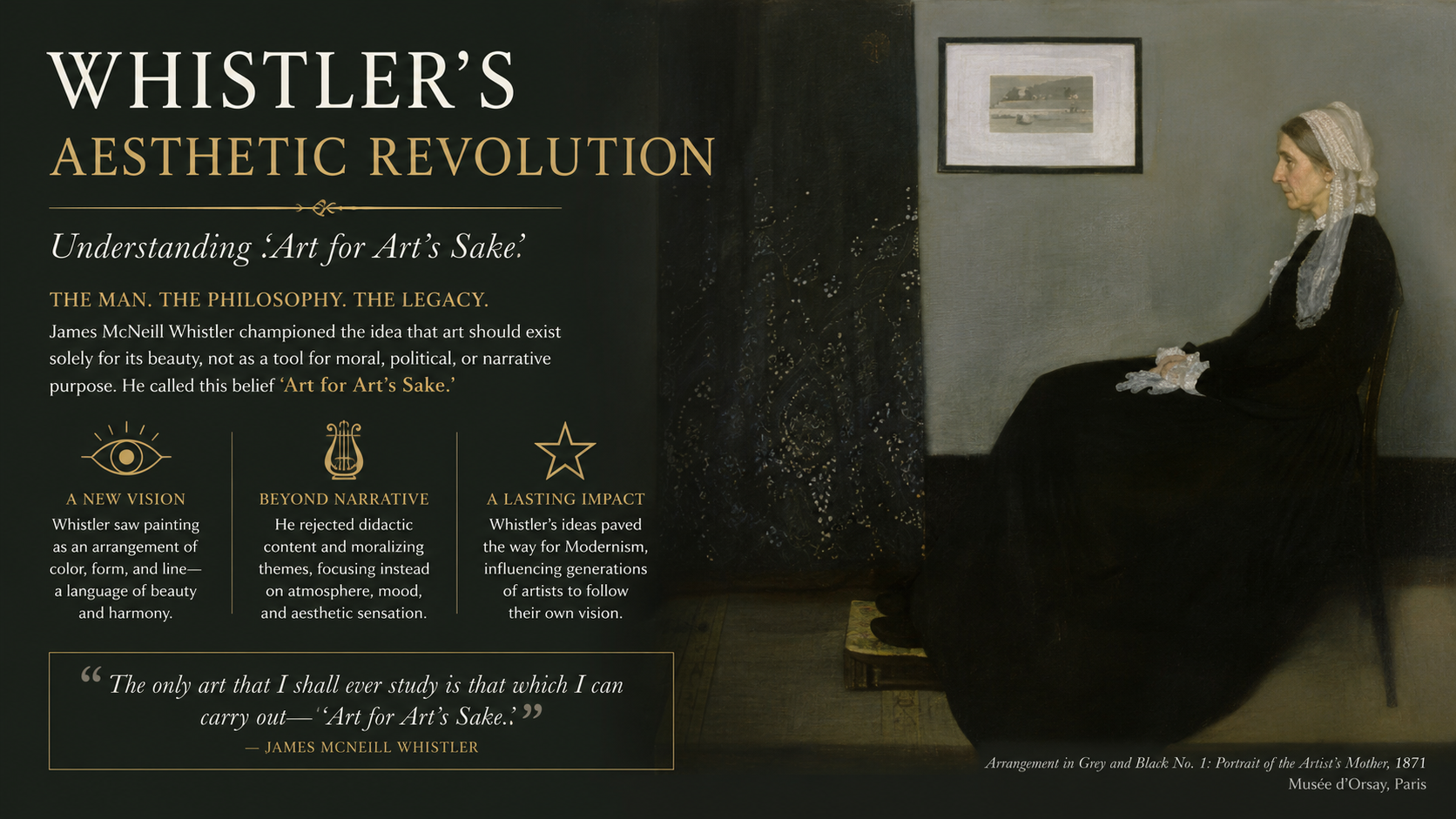
James McNeill Whistler, a pivotal figure in the 19th-century Aesthetic Movement, championed the philosophy of “Art for Art’s Sake,” asserting that art’s primary purpose is to exist for its own beauty and formal qualities, rather than serving moral, narrative, or didactic functions. This radical idea profoundly shifted artistic focus from storytelling and societal messages to the intrinsic visual and sensual experience of a work.
Keypoint Summary
- Autonomy of Art: “Art for Art’s Sake” (or “l’art pour l’art”) posits that art’s value is inherent, independent of external purposes like morality, politics, or utility.
- Emphasis on Form: Whistler and the Aesthetic Movement prioritized elements such as color, line, composition, and tonal harmony, believing these formal qualities were the true essence of art.
- Influence of Music: Whistler often titled his paintings with musical terms like “nocturnes,” “harmonies,” and “arrangements” to emphasize their abstract, evocative nature, akin to pure music.
- Rebellion Against Tradition: This philosophy was a direct challenge to the strict academic conventions and Victorian moralism that dominated art at the time, advocating for artistic freedom and self-expression.
What is the Core Idea Behind “Art for Art’s Sake”?

The core idea behind “Art for Art’s Sake” is that art should be judged and appreciated solely on its aesthetic merits, independent of any external message, moral lesson, or practical function. This concept, popularized by Whistler, emphasizes that a painting, sculpture, or musical piece finds its complete justification within its own formal qualities, such as its beauty, composition, and the emotions it evokes through pure visual or auditory means.
Whistler articulated this perspective famously, stating, “Art should be independent of all clap-trap, should stand alone, and appeal to the artistic sense of eye or ear, without confounding this with emotions entirely foreign to it, as devotion, pity, love, patriotism and the like.” This declaration was a clear break from the prevailing academic and public expectations of art in the 19th century, which often demanded art to convey historical narratives, religious themes, or moral virtues.
How Did Whistler’s Techniques Reflect His Philosophy?
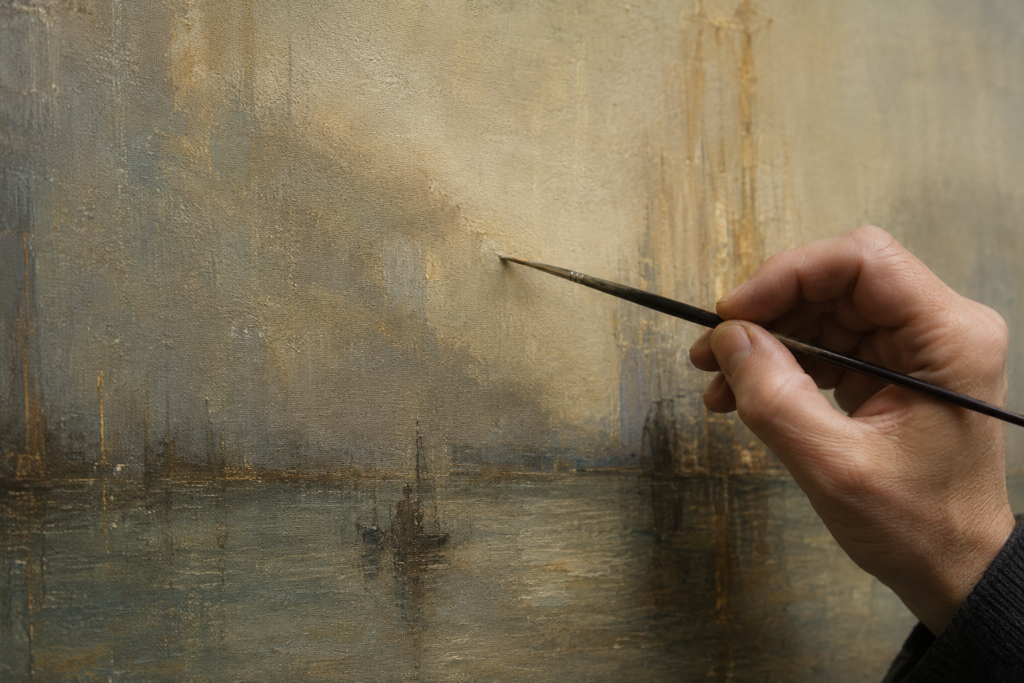
Whistler’s painting techniques were meticulously crafted to embody his “Art for Art’s Sake” philosophy, focusing on subtle tonal harmonies and evocative atmospheres rather than detailed realism. He often employed thin layers of paint, diluted with turpentine, building up colors gradually to achieve a nuanced depth and intensity. His process involved working with great rapidity yet also spending long hours, often scraping down canvases to rework passages until the desired effect of a “one-skin paint surface” was achieved. This dedication to the surface and the overall “arrangement” of color and line allowed him to create works that were less about depicting a subject literally and more about evoking a feeling or mood, much like music.
For artists looking to explore similar ethereal qualities in their work, understanding how to build depth with glazes and thin washes can be transformative. You can read about oil painting for beginners here to begin your journey into layered techniques.
The Aesthetic Movement and its Broader Impact
The Aesthetic Movement, with Whistler as a central figure, flourished in Britain during the 1870s and 1880s, advocating for “pure beauty” across fine and applied arts. This movement was deeply influenced by Japanese art and culture, particularly on artists like Whistler, and extended beyond painting to interior design, furniture, literature, and fashion. Aestheticism challenged the notion that art was confined to traditional canvases and sculptures, arguing for the potential of art in everyday life and domestic spaces. This emphasis on integrating art into daily existence resonates with contemporary discussions about the role of art in public spaces and its accessibility to a broader audience.
For those fascinated by how art interacts with its environment, exploring how different movements have shaped our visual world can be incredibly enlightening. Discover more about the evolution of art movements from Renaissance to Postmodernism.
Whistler’s Controversies and Legacy
Whistler’s staunch advocacy for “Art for Art’s Sake” often led to public controversy, most notably his libel suit against art critic John Ruskin in 1878. Ruskin had accused Whistler of “flinging a pot of paint in the public’s face” regarding his painting Nocturne in Black and Gold: The Falling Rocket. Though Whistler won the case, he was awarded a symbolic one farthing in damages, and the legal costs led to his bankruptcy. This trial, however, served as a platform for Whistler to expound his aesthetic philosophy, marking a significant moment in the shift towards modern art.
His influence extended to later movements, laying foundational groundwork for abstraction and inspiring artists to prioritize the subjective, visual experience. Whistler’s focus on formal qualities, color, and composition paved the way for artists to experiment with non-representational forms of expression.
How Does Whistler’s Philosophy Resonate in Modern Art?
Whistler’s philosophy of “Art for Art’s Sake” continues to resonate strongly in modern and contemporary art, particularly in movements that prioritize abstract expression, formalism, and the subjective experience of the viewer. The idea that art’s value lies in its intrinsic aesthetic qualities, rather than its narrative or moral content, directly influenced the rise of abstract painting in the early 20th century. Contemporary artists often explore color, line, shape, and texture to create works that appeal directly to the eye and evoke feeling, pushing boundaries similar to how Whistler challenged his contemporaries. Recent scholarly work, such as the “Palaces of Art: Whistler and the Art Worlds of Aestheticism” symposium, continues to explore his complex cultural contexts and enduring aesthetic vision, highlighting his ongoing relevance in art discourse.
Understanding the subjective nature of art and how different artists perceive and interpret reality is crucial for any aspiring painter. Explore the unique vision of another master by reading the world through Edgar Degas’ eyes.
Can We Apply Whistler’s Principles to Our Own Artistic Practice?
Absolutely. Whistler’s principles offer valuable guidance for contemporary artists. By focusing on the intrinsic beauty of your chosen medium and the harmonious arrangement of elements, you can elevate your art beyond mere representation. Consider experimenting with limited color palettes to achieve subtle tonal variations, much like Whistler’s “arrangements” and “nocturnes.” His dedication to the craft, often repainting sections until perfection, underscores the importance of patience and persistence in developing your unique artistic voice. Whether you’re working with oils, watercolors, or even digital mediums, striving for visual and sensual appeal as the primary goal can lead to deeply satisfying and impactful creations.
If you’re looking to refine your approach to color and composition, consider delving into specific techniques. For example, learning how to paint trees in watercolor can help you focus on form and atmosphere, applying a Whistlerian sensibility to your landscapes.
FAQs
What does “Art for Art’s Sake” truly mean?
“Art for Art’s Sake” means that art’s ultimate value and purpose are found within itself, in its aesthetic qualities and the experience it provides, rather than in serving any external moral, political, or utilitarian agenda.
How did James Whistler contribute to the Aesthetic Movement?
James Whistler was a leading proponent and central figure of the Aesthetic Movement, promoting its philosophy through his paintings, writings, and public lectures, emphasizing artistic principles, elevated taste, and pure beauty over narrative content.
What was the significance of Whistler naming his paintings after musical terms?
Whistler named his paintings with musical terms like “nocturnes” and “harmonies” to highlight their abstract, evocative nature, suggesting that, like music, his art appealed directly to the senses and emotions through formal qualities rather than literal representation.
Did “Art for Art’s Sake” influence modern art?
Yes, “Art for Art’s Sake” had a profound influence on modern art, laying the groundwork for abstraction and formalism by emphasizing the autonomy of art and the importance of its formal elements, paving the way for movements that explored non-representational expression.