There is a certain mystique surrounding oil painting. Walk into any major art museum, and you are immediately greeted by the rich, luminous colors and masterful blends that only oils can achieve. It’s easy to feel intimidated, but here is the truth: oil painting is actually incredibly forgiving. Because the paint dries slowly, you have plenty of time to move colors around, correct mistakes, and find your footing.
This guide will walk you through everything you need to start your journey into oil painting, without the overwhelm.
1. The “Absolute Essentials” Supply List
Walk down any art store aisle, and it is easy to get lost in the endless tubes of paint and mediums. You do not need all of them. Starting with a limited palette teaches you how to mix colors effectively and keeps your initial costs down.
Here is your beginner-friendly shopping list:
- The Colors (A Split-Primary Palette): Titanium White, Cadmium Yellow Light, Alizarin Crimson, Cadmium Red Light, Ultramarine Blue, and Burnt Umber.
- The Brushes: Two hog bristle brushes (one medium filbert, one medium flat) and one softer synthetic brush for blending.
- The Mediums: Odorless Mineral Spirits (OMS) for thinning paint and cleaning, and Refined Linseed Oil for thinning paint while adding gloss and slowing drying time.
- The Surface: A canvas pad, a canvas board, or a stretched canvas (make sure it is primed for oils or acrylics).
- The Palette: A disposable paper palette pad or a sheet of glass.
SHOP here for all Basic Art Materials
Pro Tip: Keep a secondary “nice-to-have” list for the future. As you grow, you can slowly add palette knives, a mahl stick, and specialized colors like sap green or dioxazine purple.
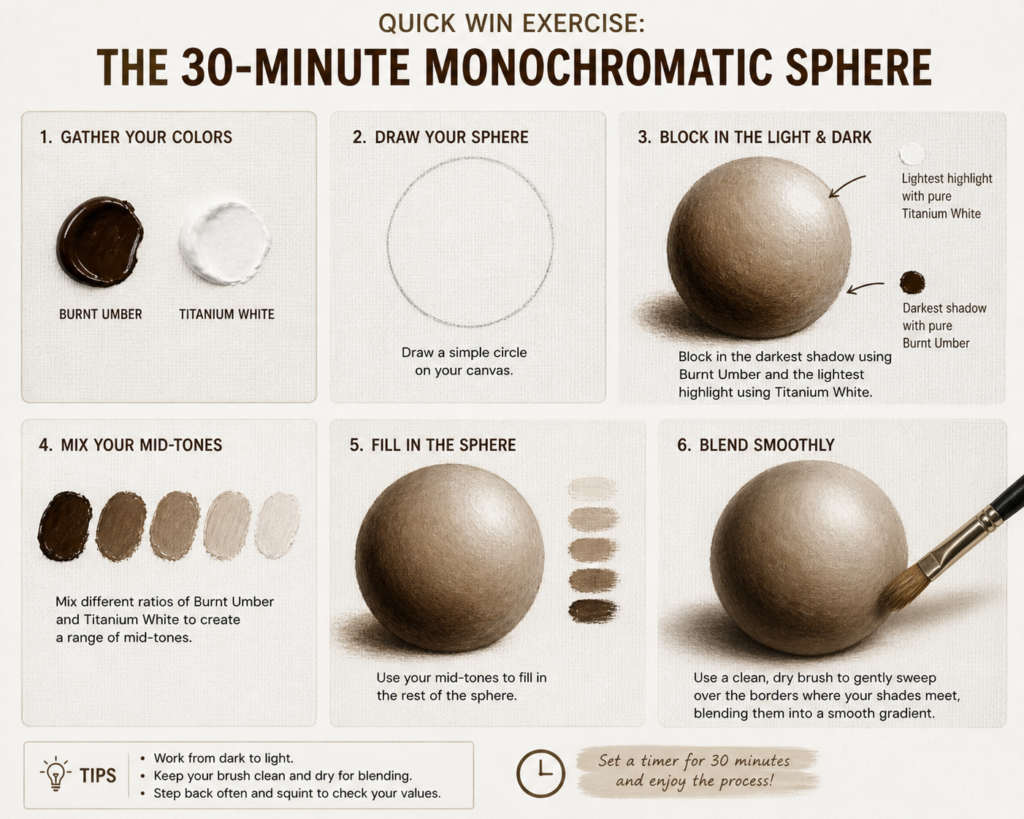
2. Your “Quick Win”: The 30-Minute Monochromatic Sphere
Before committing to a complex, full-color landscape or portrait, let’s build your confidence with a quick, single-color exercise. This teaches you how oil paint feels on the canvas and how to create the illusion of 3D form.
The Exercise:
- Squeeze out a dab of Burnt Umber and a dab of Titanium White.
- Draw a simple circle on your canvas.
- Paint the darkest shadow of the sphere using pure Burnt Umber.
- Paint the lightest highlight using pure Titanium White.
- Mix different ratios of the two colors to create mid-tones, filling in the rest of the sphere.
- Use a clean, dry brush to gently sweep over the borders where your shades meet, blending them into a smooth gradient.
3. Step-by-Step: Your First Full Painting
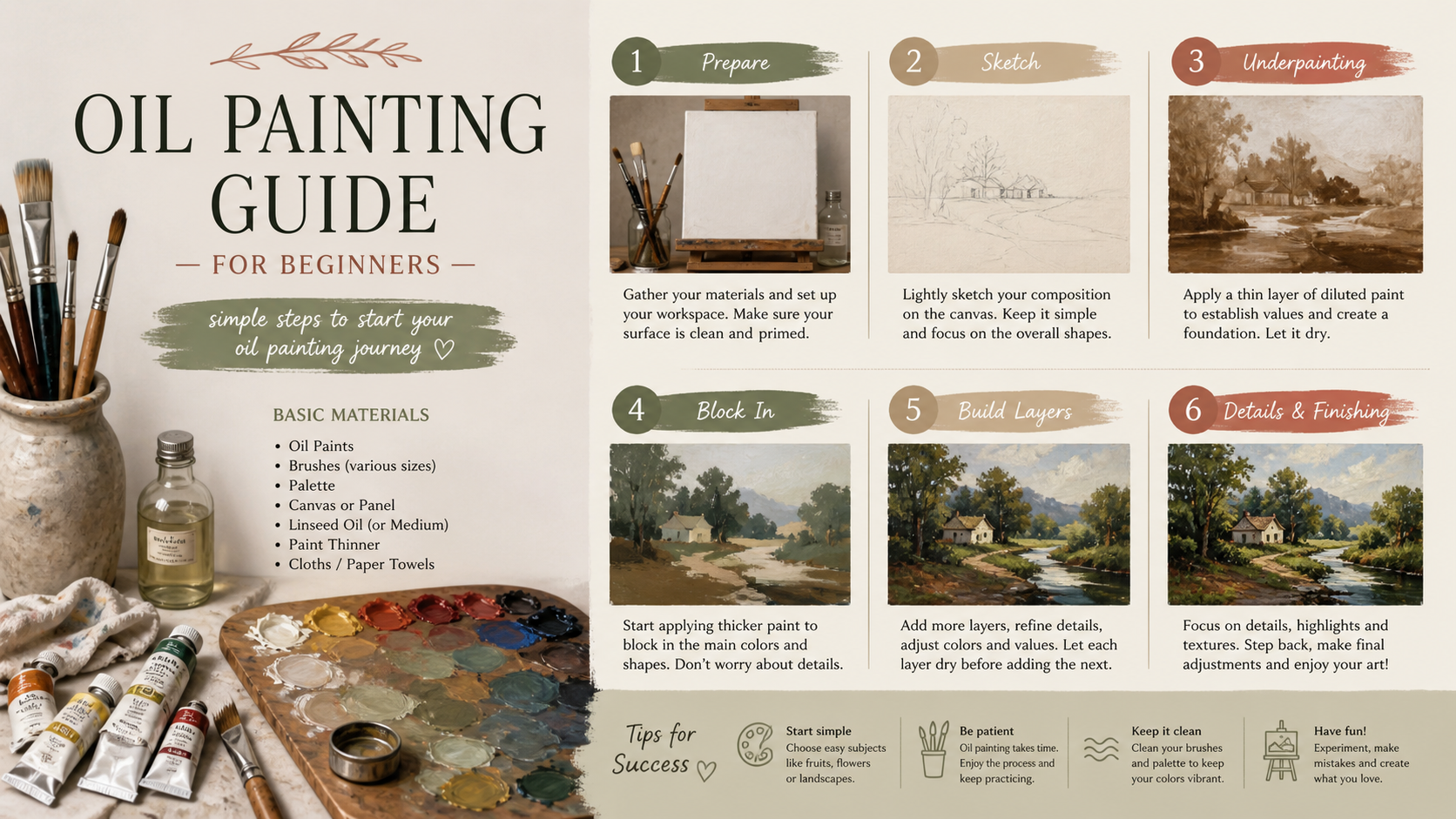
Ready for a full composition? Follow these sequential steps for a structured, stress-free process.
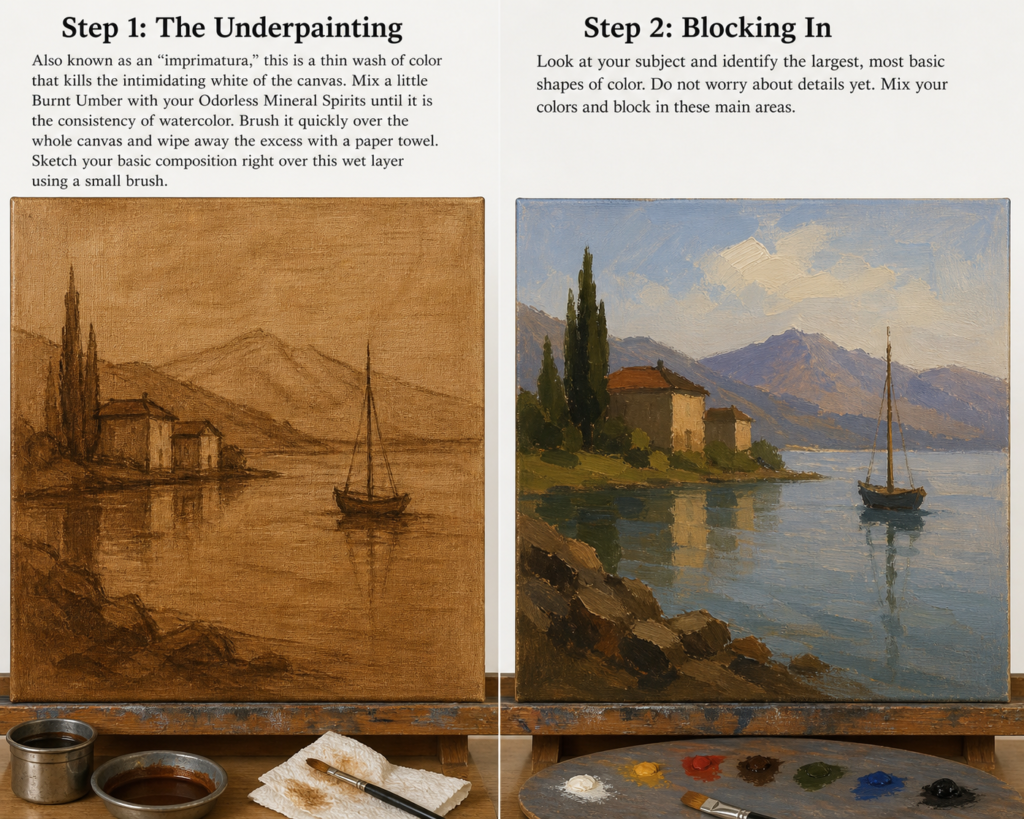
Step 1: The Underpainting
Also known as an “imprimatura,” this is a thin wash of color that kills the intimidating white of the canvas. Mix a little Burnt Umber with your Odorless Mineral Spirits until it is the consistency of watercolor. Brush it quickly over the whole canvas and wipe away the excess with a paper towel. Sketch your basic composition right over this wet layer using a small brush.
Step 2: Blocking In
Look at your subject and identify the largest, most basic shapes of color. Do not worry about details yet. Mix your colors and block in these main areas.
Step 3: Understanding “Fat Over Lean”
As you add more layers, you must follow the golden rule of oil painting: Fat Over Lean.
- Lean: Paint mixed with solvent (thinner, dries faster).
- Fat: Paint straight from the tube or mixed with oil (thicker, dries slower).
Your bottom layers should always be leaner than your top layers. If you paint a fast-drying “lean” layer over a slow-drying “fat” layer, the top layer will crack as the bottom layer shifts underneath it.
Step 4: Refining and Details
Once your block-in is complete and you have established your fat-over-lean rhythm, begin refining. Use your softer brushes to smooth out harsh transitions. Add your sharpest details and brightest highlights last, using thicker paint.
4. Essential Cleanup and Safety
Oil painting involves materials that require respect. Proper cleanup keeps your studio safe and your brushes in perfect condition.
- Ventilation: Always paint in a room with good airflow, especially when using solvents.
- Cleaning Brushes: Wipe excess paint off your brush with a paper towel. Swish the brush in your OMS jar to remove the remaining pigment. Finally, wash the bristles in the sink using warm water and a brush soap (or standard dish soap) until the suds are completely white.
- Disposing of Rags: Rags or paper towels soaked in oil and solvent can spontaneously combust as they oxidize. Never throw them directly into a standard trash can. Store used rags in a sealed, water-filled metal container, or lay them flat outside to dry completely before throwing them away.
Next Steps on Your Artistic Journey
Completing your first painting is a massive milestone. Allow it to dry in a safe, dust-free area (which can take anywhere from a few days to a few weeks, depending on how thick the paint is).
Once you are comfortable with these basics, it is time to start exploring specific techniques. Check out our dedicated tutorials on color theory mixing and mastering brushwork to continue building your skills!
If you’ve always admired the rich colors and textures of oil painting for beginners, it’s time to dive into this rewarding artistic medium. Oil paints offer incredible versatility, a forgiving nature, and the ability to create stunning works of art. Don’t worry if you think it’s too expensive or difficult – this guide will give you the essential knowledge and steps to get started and embark on your oil painting journey.
FAQs: Oil Painting for Beginners
How long does an oil painting take to dry? Unlike acrylics or watercolors, oil paint does not dry by evaporation; it cures through a chemical reaction called oxidation. Depending on how thick the paint was applied, the climate of your room, and the specific pigments used (some earth tones dry much faster than others), a painting can be dry to the touch in anywhere from a few days to two weeks. It can take up to six months to a year for a piece to cure entirely before it is safe to varnish.
Do I absolutely have to use strong-smelling solvents? No! While Odorless Mineral Spirits (OMS) are standard, many artists paint entirely solvent-free to protect their indoor air quality. You can use alternatives like walnut oil or safflower oil to clean your brushes and thin your paints. Just remember that avoiding solvents means your initial layers will take slightly longer to dry.
Can I use oil paint over an old acrylic painting? Yes, but you can never do the reverse. You can safely paint oils on top of a fully dried acrylic base (in fact, many artists use acrylics for their initial underpainting because it dries in minutes). However, because oil is flexible and acrylic is essentially plastic, painting acrylic over oil will result in the paint flaking and peeling off the canvas.
How do I fix a mistake if I used the wrong color? This is the beauty of oil painting! Because it stays wet for so long, you have a few options. You can simply wipe the mistake right off the canvas using a rag or paper towel. Alternatively, you can use a clean brush to gently scrape the paint away, or simply wait a few days for the layer to dry and paint directly over it with an opaque color.
What is the best surface for a complete beginner? Canvas pads or canvas panels (boards) are highly recommended for beginners. They are inexpensive, take up very little storage space, and are perfect for practice exercises. Once you feel comfortable with your brushwork and color mixing, you can graduate to traditional stretched canvases. Just ensure whatever surface you buy says it is pre-primed for oil paints.
Why are my colors turning muddy when I mix them? Muddy colors usually happen for two reasons: mixing too many different pigments together at once, or over-blending directly on the canvas. Try to stick to mixing just two or three colors to reach your desired shade, and clean your brush thoroughly between strokes when transitioning from dark shadow areas to bright highlights.