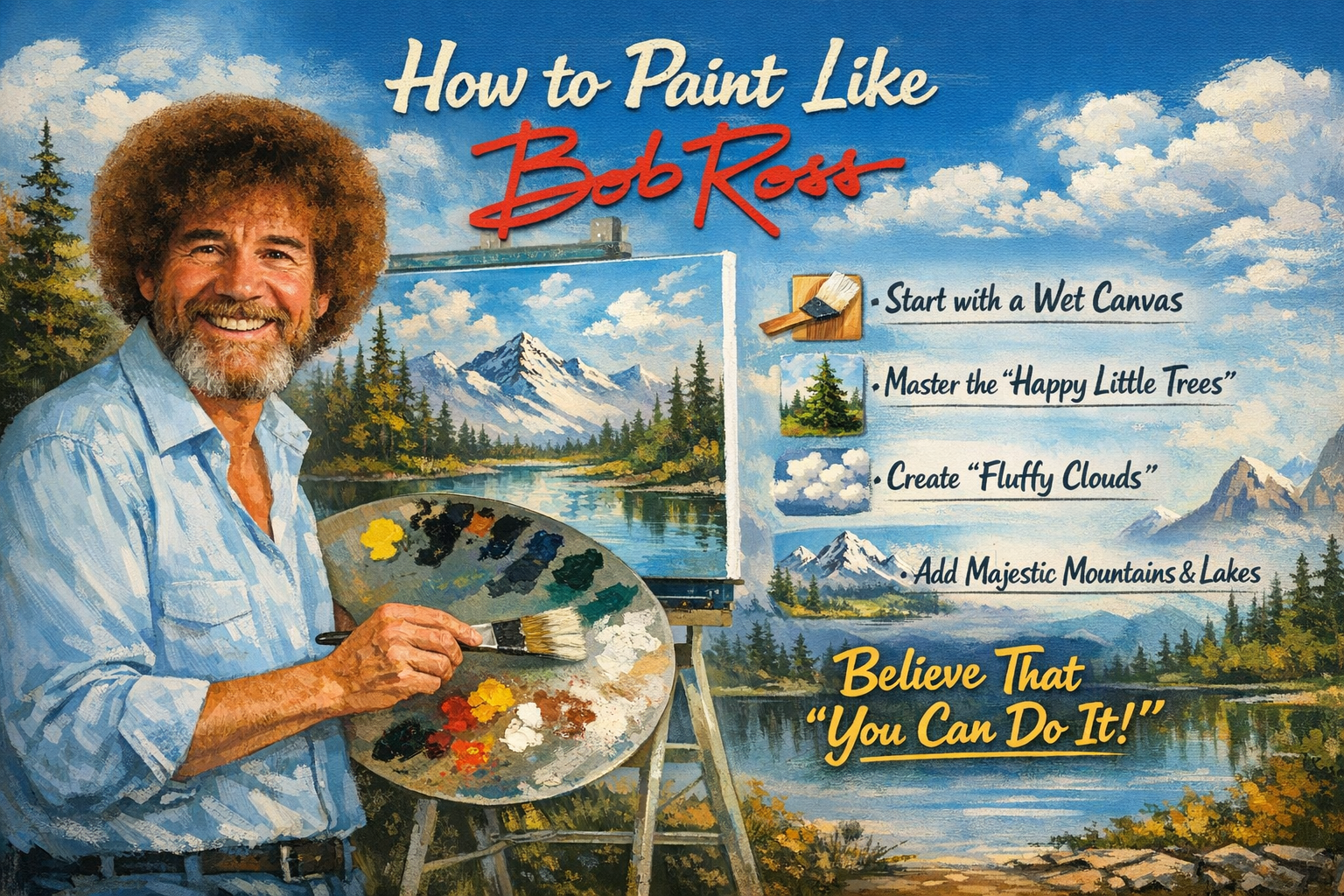
Bob Ross made art feel easy for everyone. By using the wet-on-wet method, you can finish a painting in one sitting. This guide breaks down the tools you need and the steps to start creating your own landscapes without any stress. You just need a few specific brushes and the right mindset to get started.
Most people think oil painting takes weeks to dry. Bob Ross proved you can do it in thirty minutes. He used a fast style that lets you blend colors right on the canvas. If you want to paint like Bob Ross, you have to stop worrying about mistakes. He called them happy accidents for a reason.
When I was teaching art, I often saw students get stuck on tiny details. They would spend hours on one leaf. I always pointed them back to the Ross method to help them loosen up and enjoy the process. It’s about freedom, not perfection.
What Is the Bob Ross Wet-on-Wet Technique?
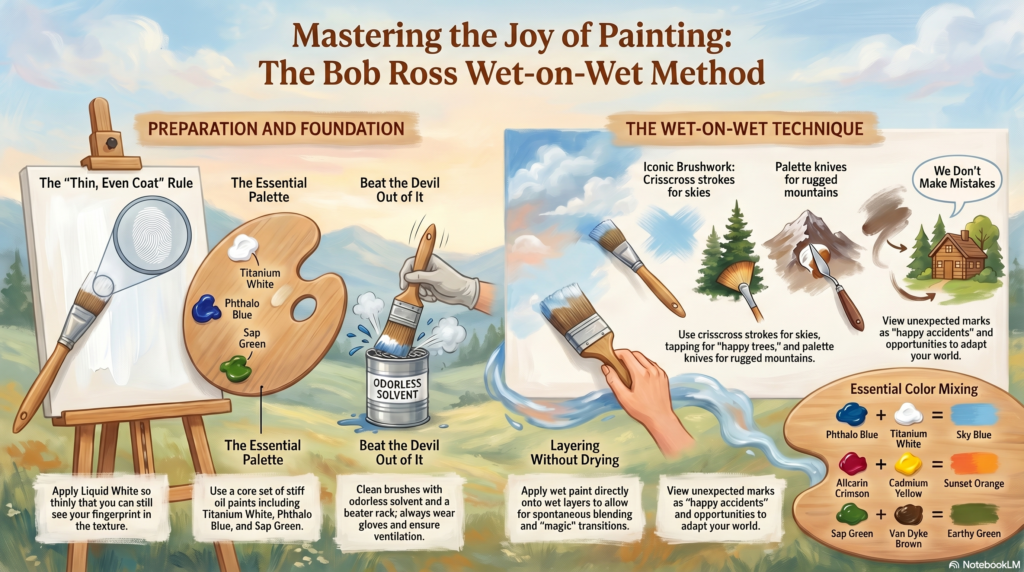
Wet-on-wet is an oil painting method where you apply wet paint on top of a wet base layer. It skips the traditional rule of waiting for layers to dry. This lets you blend skies and mountains instantly, making it the fastest way for beginners to finish a landscape.
This technique is also known as “alla prima”. Instead of painting on a dry white canvas, you start with a thin layer of specialized liquid medium. This base keeps the canvas “open” so you can move colors around easily. It is why Bob could create those soft, misty backgrounds in seconds.
What Supplies Do You Need to Paint Like Bob Ross?
You need firm oil paints, a 2-inch background brush, a fan brush, and a palette knife. You also need a base layer called “Liquid White”. These large brushes are meant to cover the canvas quickly, while the firm paint stays put without running into other colors.
Standard oil painting for beginners often involves small, soft brushes. For this method, you need the opposite. The brushes are big and stiff. They act more like tools for construction than delicate pens. You can see a full list of these essential painting supplies to understand how they work together.
| Tool | Purpose | Key Feature |
| 2-Inch Brush | Skies and water | Large and flat |
| Fan Brush | Trees and highlights | Shaped like a fan |
| Palette Knife | Mountains and rocks | Firm and angled |
| Liquid White | Base layer | Slick and wet |
Preparing Your Canvas With Liquid White
You cannot skip the base layer. If you try to paint on a dry canvas, the paint will pull and scratch. Apply a very thin, even coat of Liquid White over the entire surface. You should still be able to see the texture of the canvas through it.
A good test is to touch the canvas with your finger. You should see your fingerprint in the white paint, but your finger shouldn’t be dripping. This slick surface is what allows for brush stroke painting that looks smooth and effortless.
How Do You Paint Happy Little Trees and Clouds?
To paint trees and clouds, use a “tapping” or “scrubbing” motion with a dry brush. By loading the brush with thick paint and lightly touching the wet canvas, the background colors pull the paint off your brush to create natural, leafy textures.
Clouds are just “circles” made with a 2-inch brush. You use the corner of the brush and dance across the sky. For trees, use the fan brush and tap downwards. The paint is so thick that it stands up on the canvas, giving your work a 3D look. If the paint isn’t sticking, add a tiny drop of oil to thin it out. Thin paint sticks to thick paint.
🎨 Bob Ross Technique Studio
Practice Bob Ross painting techniques with happy little trees, fluffy clouds, and textured fan brush effects.
☁️ Cloud Technique
Use circular scrubbing motions with the corner of the 2-inch brush. Soft tapping creates natural fluffy cloud edges.
🌲 Tree Technique
Tap downward using the fan brush to create layered evergreen branches with realistic depth.
🖌️ Paint Rule
Thin paint sticks to thick paint. Add a tiny bit of oil thinner when the brush begins dragging.
The Joy of Painting Is About Mindset
Bob Ross believed that anyone could be an artist. His show was not just about art; it was about mental health and relaxation. He wanted people to feel like they were in control of their own little world.
If you make a "mistake," turn it into a bird or a bush. This low-pressure approach is perfect for realistic scenery painting because nature is not perfect. Trees are crooked. Clouds are messy. Embrace the chaos and just keep moving your brush.
Final Thoughts
Painting like Bob Ross is about more than just owning a fan brush. It is about giving yourself permission to create something today without worrying about how it looks tomorrow. Grab a canvas and some liquid white. Put on an old episode and follow along. You might find that the "joy of painting" is exactly what your week has been missing. Now, go out there and make some happy little clouds.
Frequently Asked Questions: How to Paint like Bob Ross
Do I need expensive oil paints to start? No, but you do need "firm" oil paints. Cheap, runny paints will mix together into a gray mess on the wet canvas. Look for student-grade paints that are advertised as having a heavy body.
Can I use acrylics instead of oils? You can use acrylics, but they dry too fast for the wet-on-wet method. You would need a "retarder" medium to keep the paint wet long enough to blend. It is much easier to learn with oils first.
How long does a wet-on-wet oil painting take to dry? Because the paint is applied thickly, it can take 7 to 14 days to be dry to the touch. It may take up to six months before it is ready for a final varnish.
What exactly is Liquid White made of? It is a very fluid mixture of Titanium White pigment and linseed oil. It has the consistency of heavy cream. You can buy it pre-made or mix your own by thinning white oil paint with oil.
How do I clean my brushes without toxic chemicals? Bob Ross used odorless mineral spirits, but you can use soap and warm water. For a natural choice, use safflower oil to rinse the pigment out of the bristles before washing with dish soap.