Pinterest is filled with stunning abstract art that looks expensive but is incredibly easy to make. You don’t need a fine arts degree to create something beautiful for your walls. This guide covers the most popular abstract techniques trending right now. Grab some paint, pick a limited color palette, and start moving color around the canvas.
Pinterest is a goldmine for painting inspiration. You scroll through your feed and see a massive textured canvas that looks like it belongs in a high-end gallery. Then you realize someone made it in their garage with a piece of cardboard and leftover house paint. That’s the magic of abstract art. It doesn’t require a fine arts degree or perfect hand-eye coordination. It just requires you to start moving paint around.
Many beginners feel intimidated by realistic portraits or strict perspective rules. Abstract painting removes those barriers completely. You dictate the rules. If you want to use a kitchen sponge instead of a brush, you can. If you want to stick to just three colors, go for it. We’ll look at some of the most popular abstract techniques dominating Pinterest right now and how you can try them at home.
What Makes Abstract Art Popular on Pinterest?
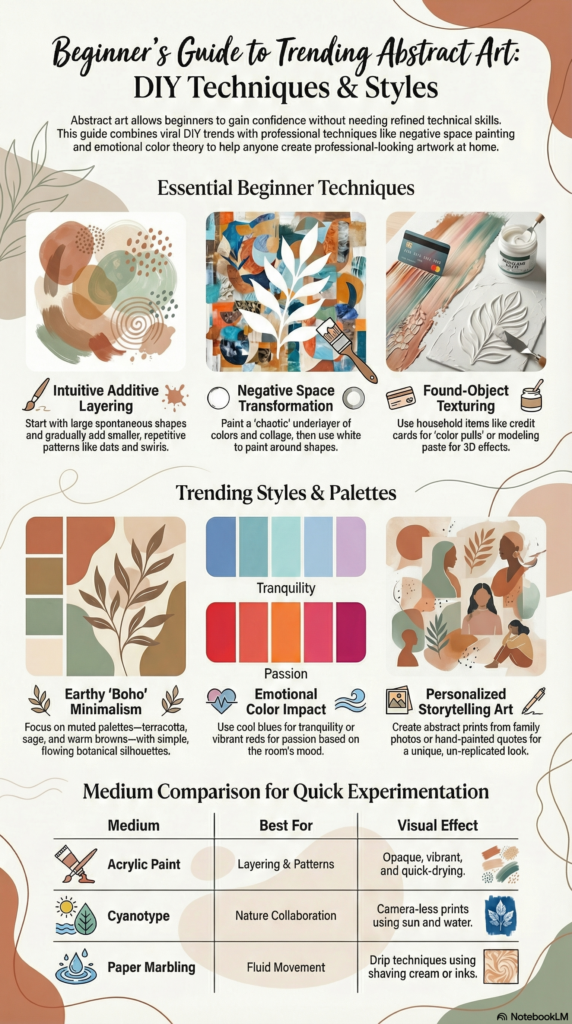
Abstract art dominates Pinterest because it focuses on accessible aesthetics rather than strict technical skills. Beginners can recreate striking visuals using household tools like credit cards or sponges. The platform rewards highly visual processes that look impressive but are incredibly forgiving to learn.
Trends on this platform have incredible staying power. Data shows that Pinterest trends last nearly twice as long as trends on other platforms. People want art that matches their living room without stressing over exact shapes. You can focus entirely on the physical act of painting. It’s about creating a mood rather than an exact replica of reality.
Scraping and Spreading Color
One of the easiest ways to start is by ditching the paintbrush entirely. Grab an old gift card or a plastic scraper. Apply dots of acrylic paint directly onto the canvas. Drag the scraper across the surface to blend the colors in a single motion.
This technique creates a sleek modern look instantly. It also prevents you from overworking the paint. When you use a brush, the temptation is to keep blending until the colors turn muddy. A scraper forces you to be decisive. Make a mark and leave it alone. Check out these abstract painting ideas for more ways to manipulate paint.
How Do You Mix the Right Colors for Abstract Art?
Mixing the right colors requires limiting your palette before you start. Pick two dominant colors and one accent color. Add white to create lighter values and black or brown for contrast. This prevents muddy colors and ensures visual harmony across your entire canvas.
Color choice dictates the mood of the piece. Warm tones create energy. Cool tones like deep blues and greens feel calming. Try using leftover house paint samples for a cohesive look. You don’t need expensive artist paints to get a solid result.
Textured Minimalism
Another massive trend involves mixing modeling paste with paint. You apply this thick mixture with a palette knife or a spoon. The result is a piece of art that looks sculptural. The shadows change depending on the lighting in the room.
This approach is highly forgiving. If you make a mistake, you just scrape it off or let it dry and paint over it. The focus is entirely on the physical act of creating. Abstract painting techniques often highlight texture because it adds instant sophistication to a simple composition.
Why Is Abstract Painting Good for Your Brain?
Abstract painting provides a safe and non-verbal outlet for processing emotions. The physical act of moving paint across a canvas lowers stress and encourages mindfulness. It allows you to express feelings you might not have the words to describe without the pressure of perfection.
Clinical studies back this up. Researchers found that just 45 minutes of making art significantly lowers cortisol levels in healthy adults. You don’t even have to be good at it to get the benefits. Furthermore, engagement with aesthetic experiences activates the brain’s default mode network and has been shown to reduce symptoms of depression and anxiety. It forces you to exist in the present moment. You stop worrying about drawing a perfect circle and focus entirely on how the paint feels. It’s one of the most accessible expressive art techniques you can practice daily. Creating art for relaxation builds mental resilience over time.
10 Abstract Ideas for Pinterest
| Abstract Art Idea | What It Is | Why It Is Perfect for Beginners |
| Hair Dryer Fluid Acrylics | Moving fluid acrylics across a canvas using the airflow from a hairdryer. | You do not need brush skills. The air does the heavy lifting to create the shapes. |
| Glue Gun Textures | Drawing lines or shapes with a hot glue gun, letting it dry, and painting over it. | It creates an instant raised surface. You just apply a simple wash of color over the top. |
| Catalyst Wedge Scraping | Dragging thick acrylic paint across a surface using a silicone catalyst wedge. | It stops you from overworking the paint. You create dynamic works without a brush. |
| Layered Torn Paper | Tearing strips of painted watercolor paper and stacking them to suggest landscapes. | The rough torn edges naturally mimic things like waves or light hitting a horizon. You get depth without drawing. |
| Sponge Gradients | Dabbing paint onto the surface with a sponge to build color transitions. | It makes blending incredibly forgiving. You can hide uneven strokes easily. |
| Stencil Layering | Adding structured patterns using stencils. | It adds instant contrast. The rigid shapes make chaotic backgrounds look completely intentional. |
| Potato Stamping | Carving simple shapes into a potato and stamping them. | It is a cheap way to create whimsical patterns. You can build interesting designs quickly. |
| Peel-and-Stick Collage | Mixing painted elements with cutouts from peel-and-stick wallpaper. | You get interesting patterns immediately. There is no need to paint intricate details by hand. |
| Minimalist Line Art | Painting flat color blocks and drawing continuous abstract lines over them. | It relies entirely on basic color blocking. The focus stays on the natural movement of your hand. |
| Abstract Textured Portraits | Using face stencils and filling the space with thick texture. | It gives you a recognizable anchor. You can completely loosen up on the abstract sections. |
Grab a canvas and a few tubes of paint. Pick a color palette that makes you happy. Try dragging the paint with a piece of cardboard or building up a thick texture. You might hate your first attempt. That’s perfectly fine. Paint over it tomorrow. The goal is to get comfortable making marks and trusting your own taste. Your walls need art. You are fully capable of making it yourself.
Frequently Asked Questions
What kind of paint is best for beginners trying abstract art? Acrylic paint is the best choice for beginners. It dries quickly and cleans up easily with water. It’s also cheap enough that you won’t worry about wasting it while you experiment.
Do I need expensive brushes for abstract painting? No. Many popular abstract techniques don’t use brushes at all. You can use old credit cards, kitchen sponges, palette knives, or even your fingers to move the paint.
How do I know when an abstract painting is finished? An abstract painting is finished when you feel satisfied looking at it. Step back and leave the room for an hour. If you come back and nothing bothers your eye, it’s done.
Can I use regular house paint on a canvas? Yes. Interior latex house paint works perfectly fine for abstract art. It’s a great way to use up sample pots and ensure the artwork matches your room perfectly.
How do I fix a mistake in an abstract painting? Let the paint dry completely. Once it’s dry, you can paint right over the section you don’t like. The layers underneath will just add interesting texture to the final piece.