
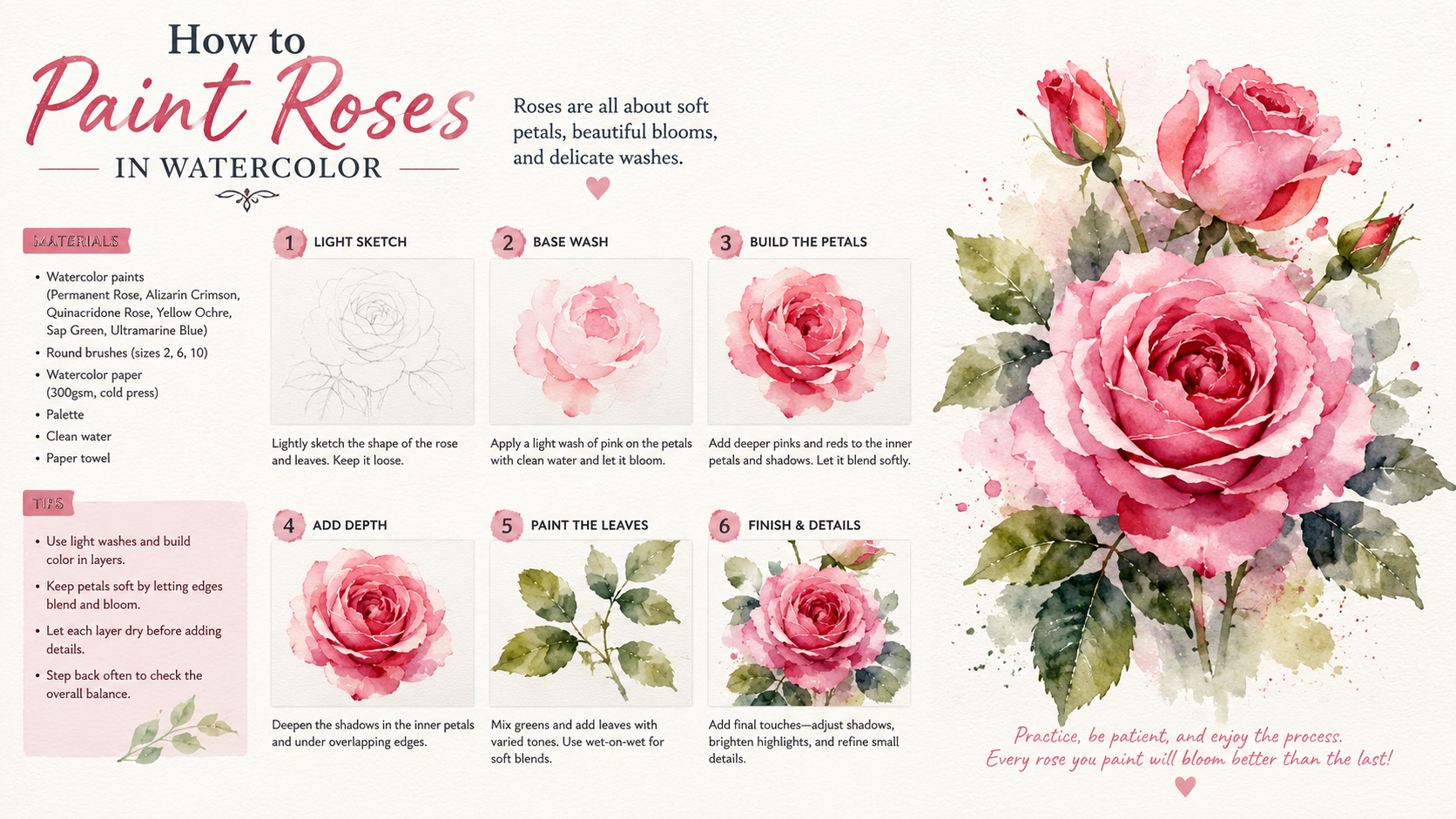
Summary: This step-by-step guide teaches you exactly How to Paint Roses in Watercolor without feeling overwhelmed. You will learn everything from selecting the right brushes to mastering the tricky wet-on-wet technique. Forget about achieving absolute perfection. This is about finding joy in the process and letting the water do the heavy lifting for you. Grab your brushes and start creating today.
You stare at the blank paper and your mind suddenly goes completely blank. It happens to everyone. You want to learn How to Paint Roses in Watercolor, but the petals look impossibly complicated. All those overlapping folds can paralyze a beginner.
It does not have to be that way. I know the feeling well. The trick is to simplify. You do not need to paint every single petal perfectly. You just need to suggest the shape and let the viewer’s eye do the rest.
Watercolors are having a massive moment right now. In 2025 alone, “paint with me” videos hit over 100 million views on YouTube as people searched for relaxing hobbies. The world is recognizing the mental health benefits of creativity. In fact, the global art therapy service market reached $3.8 billion in 2025.
My goal here at ProminentPainting.com is simple. I want to make art education accessible for everyone, not complicated or stuffy. You can absolutely do this. Let us break down the process step by step.
What Supplies Do You Need to Paint Watercolor Roses?
To paint watercolor roses, you need cold-pressed watercolor paper, a medium round brush, clean water, paper towels, and high-quality paints. A basic palette of cadmium red, sap green, and a touch of ivory black is perfect for beginners creating muted, harmonious floral compositions.
Having the right gear makes a huge difference. If you are totally new to this medium, you might want to read a quick overview on what is watercolor painting first. Good paper is absolutely non-negotiable. It stops your colors from turning into a muddy puddle.
You also need a brush that holds a good amount of water but comes to a fine point. A size 8 round brush is my personal favorite. If you are building your kit from scratch, check out my guide on finding the best paint brushes for beginners.
How Do You Paint a Loose Watercolor Rose?
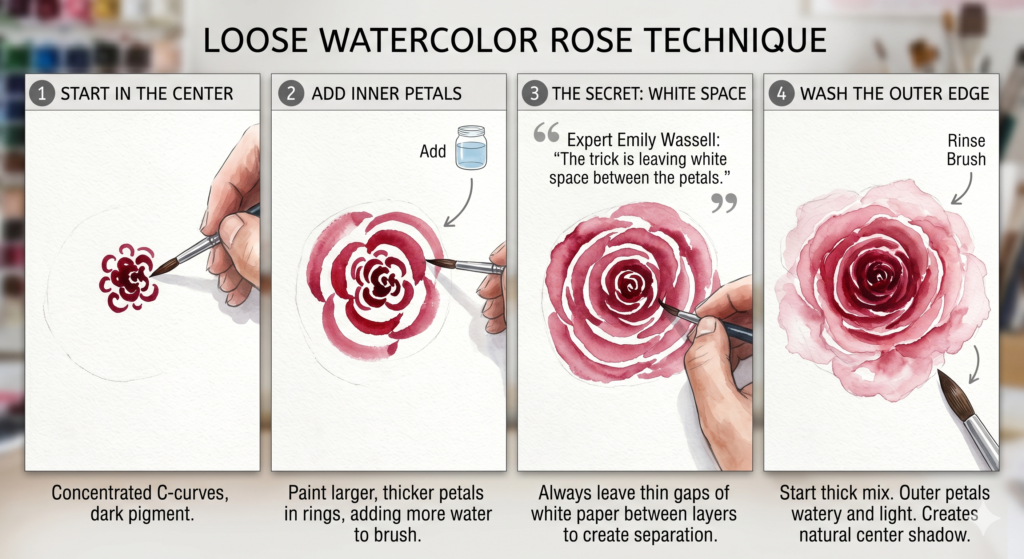
You paint a loose watercolor rose by starting in the center with small, concentrated C-curves using dark pigment. Gradually paint larger, thicker petals in concentric rings while adding more water to your brush. Always leave thin gaps of white paper between the layers.
That white space is the real secret. It creates separation and stops your rose from looking like a flat red blob. As expert artist Emily Wassell notes, the trick is leaving white space between the petals.
Start with a thick mix of paint. Then rinse your brush slightly for the next layer. By the time you reach the outer petals, your paint should be very watery and light. This creates a natural shadow in the center.
The Magic of Wet-on-Wet Petals
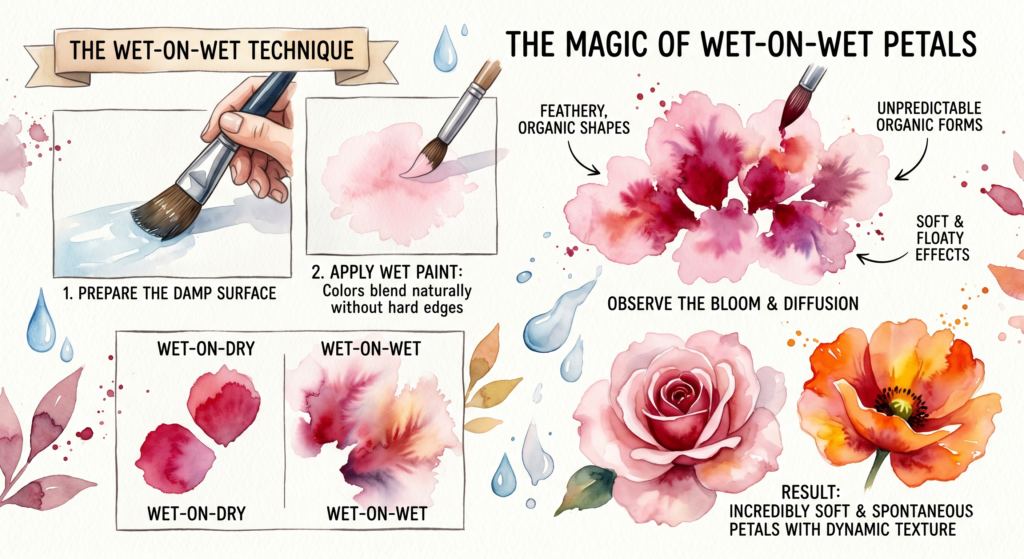
This is where the medium truly shines. The wet-on-wet technique involves applying wet paint onto a damp surface. It creates incredibly soft and floaty effects. A recent guide explains that this method allows colors to blend naturally without hard edges.
You can drop a darker red into the base of a wet petal and watch it bloom. The unpredictable nature of the water creates organic shapes that look exactly like real flower petals. According to Jackson’s Art Blog, painting wet-on-wet produces feathery, spontaneous results that add dynamic texture.
It takes practice to control the water. Do not get discouraged if your first attempt runs everywhere. You can learn more about managing these effects in my guide on watercolor blending techniques.
Why Is Leaving White Space So Important?
Leaving white space is essential because transparent watercolors lack opaque white paint to create highlights. The unpainted paper serves as your brightest highlight, providing contrast and form. Without these bright gaps, your flower will lack depth and look entirely flat.
When I paint here in my Eastbourne studio, I always remind myself to leave breathing room. The white space defines the edge of each petal. It tells the viewer exactly where the light is hitting the flower.
If you accidentally cover all your white space, do not panic. It is a very common issue. You can discover ways to fix watercolor mistakes without ruining your entire piece.
The Mental Benefits of Painting Florals
Painting is not just about the final product. It is deeply therapeutic. More people are turning to visual arts to manage stress and anxiety. A 2026 report projects that the global visual arts therapy market will reach $5.68 billion by 2033.
Focusing on the flow of water and pigment keeps you grounded in the present moment. The British Association of Art Therapists even reported a 5% growth in their membership recently, highlighting a growing professional field.
Letting go of perfection is the best thing you can do for your art. Enjoy the way the colors mingle on the page.
Where Can You Learn More About Painting Watercolor Roses?
You can learn more by attending local workshops, joining online communities, or exploring dedicated art festivals. Practicing regularly and observing other artists will rapidly improve your skills and help you discover your own unique painting style.
Events are springing up everywhere to celebrate this medium. For example, the massive Fabriano in Acquarello 2026 event in Italy will gather around 3,000 watercolor artists from all over the world.
If traveling to Italy is not in the cards right now, just keep practicing at home. For more inspiration, check out my tutorial on creating easy watercolor flowers to expand your garden.
Conclusion You now have the core recipe for painting beautiful watercolor roses. Start with small dark curves in the center and work your way outwards with lighter washes. Embrace the unpredictable bleeds and blooms that make this medium so special.
Do not worry about painting a masterpiece on your first try. Every single artist makes mistakes and paints a few muddy blobs along the way. Grab your paints, fill a jar of water, and put your brush to paper right now.
FAQs: How to Paint Roses in Watercolor
- What is the best brush for painting watercolor roses? A medium round brush is generally the best choice for beginners. It holds plenty of water for large washes but still comes to a fine point for delicate center details. Size 8 or 10 works perfectly for most floral pieces.
- Can I fix a watercolor rose if the colors bleed too much? Yes, you can lift excess paint while it is still wet. Simply clean your brush, dry it on a paper towel, and gently dab the wet area to soak up the pigment. Once dry, you cannot easily remove the stain.
- Why do my watercolor roses look flat? Your roses likely look flat because you are not leaving enough white space or varying your paint values. The center should be dark and concentrated, while the outer petals should be light and watery.
- Do I need to sketch the rose before painting? You do not need to sketch the rose beforehand. In fact, skipping the pencil sketch often leads to a looser, more organic painting. Just focus on making curved brush strokes around a central point.
- What colors make the most realistic roses? A mix of cadmium red with a tiny touch of sap green or black creates a lovely, muted tone. This prevents the rose from