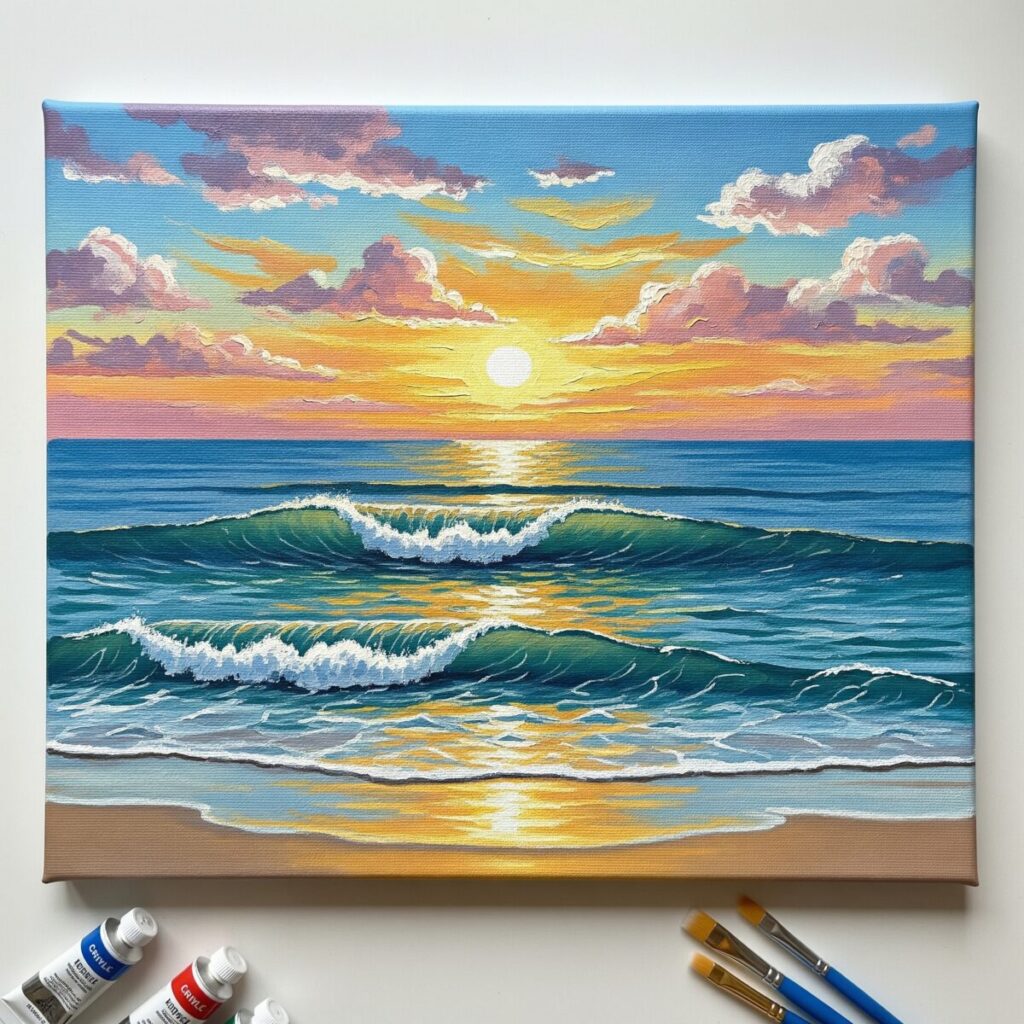
This guide shows you exactly how to paint an ocean scene in 15 minutes. You will learn basic acrylic techniques, simple color mixing, and canvas preparation. Grab your brush, follow these straightforward steps, and create a beautiful seascape today without the stress.
The ocean intimidates new artists. The water constantly moves, the colors shift by the second, and getting the light right feels impossible. You don’t need to capture all of that at once. You just need a few basic acrylic colors and 15 minutes. We are going to strip away the complicated techniques and focus on layering simple shapes. Acrylic paint dries quickly, making it the perfect medium to build a seascape without overthinking your next move. Recent market data shows professional use of acrylic paints has grown by 41% over the past decade because of this versatility. In fact, painting accounts for 45% of all acrylic medium use globally. Understanding the basics of acrylic painting for beginners makes this entire process feel manageable.
How Do You Prepare a Canvas for Acrylic Ocean Painting?
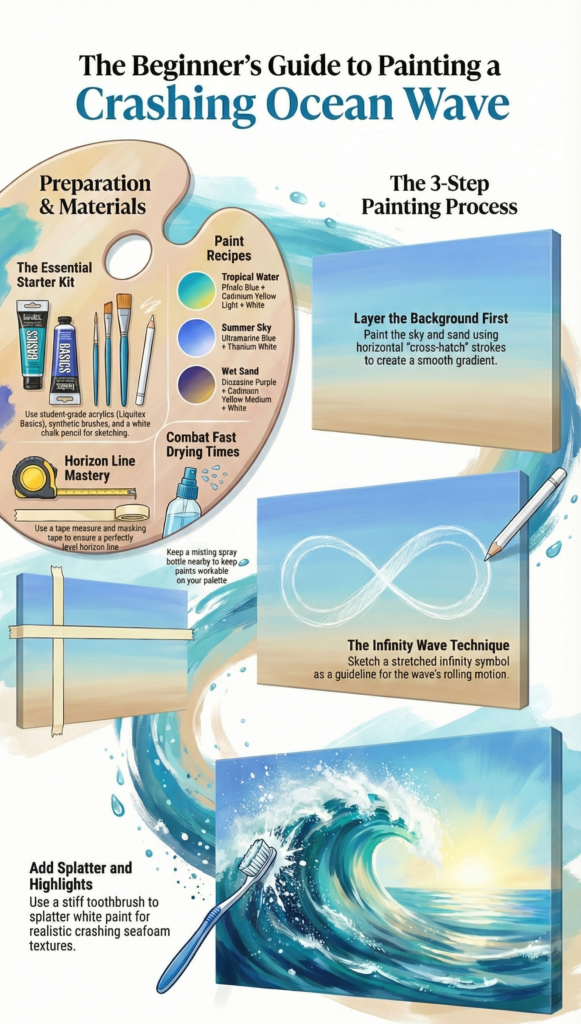
You prepare a canvas by applying a single layer of colored ground, like yellow ochre or light blue. Mixing a thin layer of acrylic paint with water and brushing it over the white canvas removes the intimidating blank space and creates a unified undertone.
Blank white canvas plays optical tricks on your eyes. A light grey mark on a bright white background looks black until you add context. Toning your canvas gives you a solid foundation so your colors look accurate from the start. Professional instructors recommend mixing your ground color to the consistency of milk or single cream before applying it. Make sure you pick the right canvas for your art so the surface can handle the moisture. You should ideally use a standard 9×12 inch canvas, which dominates 45% of the market because it offers enough space without overwhelming a beginner.
The Best Colors for a Simple Seascape
You don’t need a massive palette to paint the sea. Phthalo blue, titanium white, and yellow ochre are all you need for a stunning ocean. Phthalo blue provides that deep, rich ocean tone. Adding titanium white creates your lighter water sections and crashing foam. Yellow ochre warms up the sand and shallow water areas.
| Paint Color | Purpose in Ocean Scene | Mixing Ratio Tip |
| Phthalo Blue | Deep ocean water and sky gradient | Use sparingly; highly pigmented |
| Titanium White | Sea foam, highlights, light sky | Mix 50/50 with blue for sky |
| Yellow Ochre | Warm sand and shallow water | Thin with water for undertones |
Understanding color theory basics helps you mix the exact shades you want. Stick to these three tubes so you avoid mixing muddy greens. You can feel safe using them at home. The EPA reports that 68% of professional-grade paint manufacturers use low-toxicity, water-based formulas for a safer studio environment.
What Brush Techniques Create Realistic Waves?
You create realistic waves by using a flat brush with horizontal, overlapping strokes. Keep your brush mostly dry when adding white paint for the sea foam. This dry brushing technique naturally mimics the broken texture of crashing waves on the canvas.
Hold your brush loosely near the back of the handle. Tight grips lead to stiff, unnatural lines. The ocean is fluid and your brushstrokes should match that energy. Use a medium flat brush like a 19mm flat edge for the best results on a small canvas. Some instructors even recommend applying acrylic ground with a silicone catalyst wedge to ensure an absolutely smooth painting surface, but a flat brush works fine for beginners. If you make a mistake with a wave, let it dry. You can easily fix overworked paintings by painting over the dry acrylic layer.
Building the Horizon Line and Sky
Your painting needs a straight horizon line to anchor the scene. Place it about one-third of the way down from the top of your canvas. A horizon line perfectly in the middle feels static and unnatural. Paint your sky first, blending light blue at the horizon up to a deeper blue at the top.
This gradient creates instant depth. Once the sky dries, lay down a sharp, horizontal stroke of dark blue for the ocean meeting the sky. If you want softer edges, lightly mist the canvas with water to make blending smoother before adding your next layer.
Why Is Painting the Ocean Good for Stress Relief?
Painting the ocean reduces stress by engaging your brain in focused, creative work that lowers cortisol levels. Making art for just 45 minutes significantly decreases physical stress markers, while the rhythmic motion of painting waves promotes a calming, meditative state.
Art therapy is not just an abstract idea. Clinical trials confirm that brief visual art-making sessions lower cortisol levels in healthy adults. Another study found that 1 hour of art making helped reduce feelings of sluggishness and improved concentration. You don’t need formal training to get these benefits. The physical act of pushing paint across a surface forces you to stay in the present moment. You stop worrying about your inbox and focus entirely on the next brushstroke.
Conclusion
You have the tools and the colors. Stop staring at the blank canvas and put down that first layer of blue. Your first ocean painting might not hang in a gallery, but it will be yours. If you want more inspiration for your next session, check out these easy canvas art ideas. Keep painting, stay loose, and trust the process.
Frequently Asked Questions
What kind of paint is best for beginners painting the ocean?
Acrylic paint is the best choice for beginners. It dries quickly, cleans up with just water, and allows you to easily paint over mistakes. Oil paint takes days to dry and requires harsh solvents, whereas modern acrylics often use renewable resin bases.
Do I need an expensive brush to paint waves?
No, you don’t need expensive brushes. A basic, stiff flat brush from a craft store works perfectly for creating the sharp edges of waves and dry-brushing sea foam. Save your money for good quality paint.
How do I stop my acrylic paints from drying out on the palette?
Lightly mist your palette with water from a spray bottle every few minutes. You can also use a “stay-wet” palette, which uses a damp sponge under parchment paper. This prevents the paint from drying out on the palette, a common issue that affects 28% of acrylic users.
Why does my ocean painting look flat?
Flat paintings usually lack contrast. Make sure your deep water is dark enough and your sea foam highlights are bright white. Adding darker shadows directly under the crashing waves instantly creates the illusion of volume.
Can I paint over my canvas if I ruin the painting?
Yes. Acrylic paint is opaque once dry. If you hate your painting, let it dry completely, paint a solid layer of white gesso over it, and start again. You never ruin a canvas permanently with acrylics.