
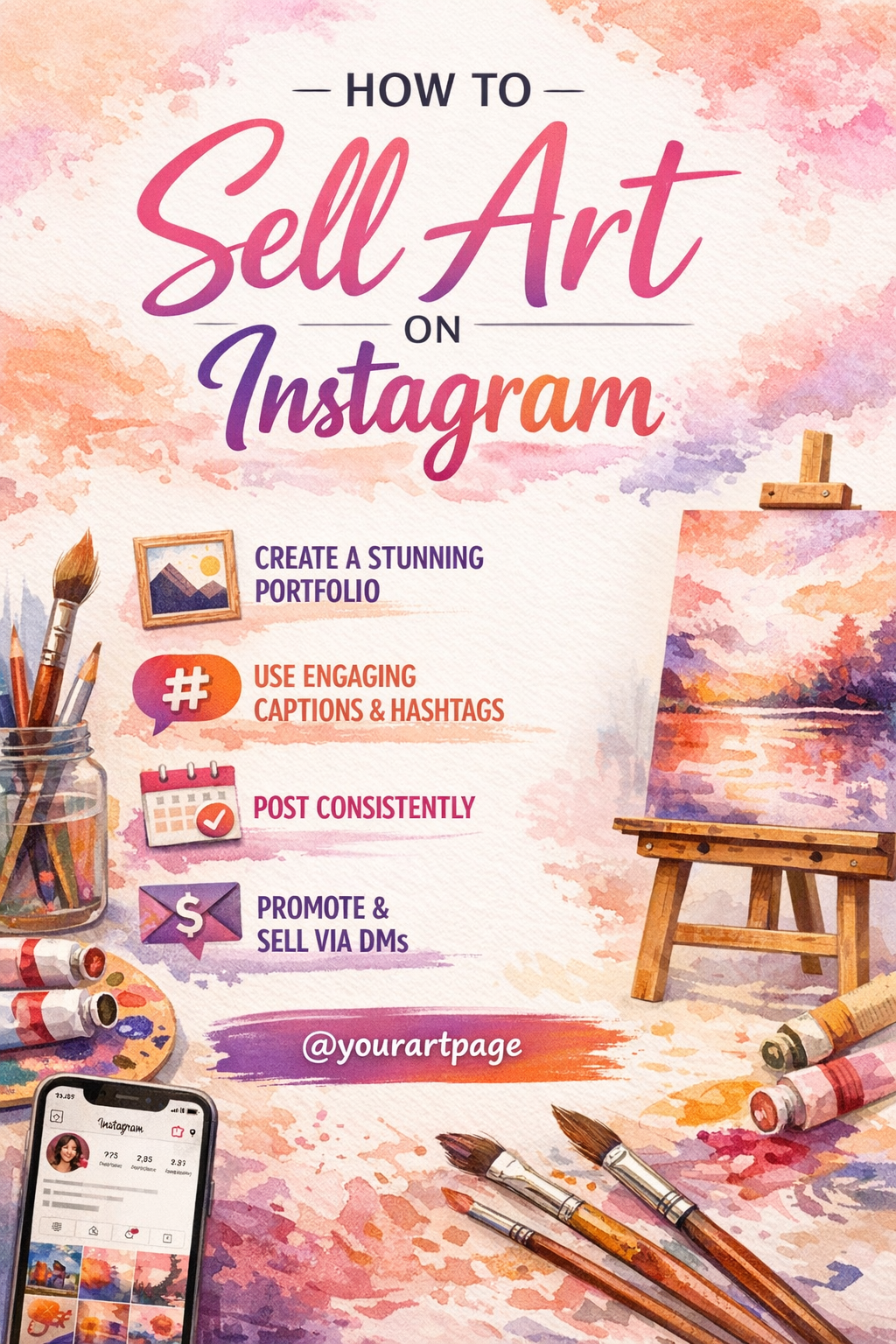

Selling art on Instagram isn’t about chasing millions of likes. It’s about connecting with the right people through authentic storytelling. This guide reveals how beginners can leverage visual content to build a loyal collector base from scratch. You’ll learn how to optimize your profile, engage meaningfully with your niche, and turn followers into supporters. Start sharing your creative journey today and transform your passion into a thriving art business.
Key Takeaways
- Engagement Rate Trumps Follower Count: A highly engaged micro-audience of 500 loyal followers will yield more art sales than 50,000 passive scrollers.
- Process Over Perfection: Collectors connect with the story and the technique behind the work. Showing your methods builds critical trust.
- Frictionless Purchasing: If a buyer has to click more than twice or DM you for a price, you will lose the sale. Your bio link must lead directly to a checkout page.
- Authentic Community Building: Commenting thoughtfully on peers’ and local galleries’ posts triggers reciprocal engagement, boosting your algorithmic visibility.
Breaking the “Viral” Myth
For emerging artists, Instagram can feel like an insurmountable mountain. There is a pervasive myth that you need tens of thousands of followers to make a sustainable income. However, high-volume accounts often suffer from terrible conversion rates. Selling art is an intimate transaction; it requires establishing a genuine connection, not just capturing a fleeting three-second view.
By shifting your strategy from “chasing virality” to cultivating a highly targeted community, you can turn a modest follower count into a dedicated collector base.
Expert Insight: The Conversion Funnel for Artists

In digital marketing, we analyze the conversion funnel—the journey a user takes from first discovering you to finally making a purchase. For artists, the top of the funnel is visibility (Reels, hashtags). The middle is engagement (Likes, comments, Saves). The bottom is the sale.
Many artists fail because they only focus on the top of the funnel. To succeed with a small audience, you must optimize for Social Proof and Micro-conversions. A micro-conversion is a small step of commitment, such as a user saving your post, replying to a Story poll, or clicking the link in your bio. According to data published by Sprout Social on Instagram engagement, micro-influencers (accounts with under 15,000 followers) consistently boast the highest engagement rates on the platform because their interactions feel personal rather than broadcasted.
The Interdisciplinary Connection: Art Marketing and Behavioral Psychology
Why do people buy original art? It rarely has to do with needing decoration; it is deeply rooted in Behavioral Psychology. The concept of the Endowment Effect suggests that people assign more value to things merely because they feel a sense of ownership or connection to them.
When you share your struggles with mastering watercolor water control or detail the days spent building up thick oil impasto layers, you invite the viewer into the creation process. They begin to feel a psychological investment in the piece before the varnish is even dry. When the painting finally goes up for sale, they aren’t buying a commodity; they are acquiring the climax of a story they have been following.
The 5-Step Guide to Monetizing a Small Audience
Follow this sequential process to turn your existing Instagram profile into a lean, effective sales channel.
1. Optimize Your Bio for Intent
Your bio is your digital storefront. It should instantly communicate who you are, what you make, and where to buy it. Remove vague quotes and replace them with a clear value proposition.
- Example: “Contemporary Landscape Painter | Exploring light and shadow | Available works 👇”
- Ensure your link-in-bio leads directly to your shop or building an art portfolio page, not just a generic homepage.
2. Document Your Specific Techniques

Don’t just post finished pieces. Share the granular details of your craft. Whether you are demonstrating the exact mixing ratios for oil painting techniques or showing a time-lapse of intricate pointillism, educational and process-oriented content establishes your authority and keeps viewers watching longer.
3. Implement Strategic Engagement
The algorithm rewards accounts that behave like genuine community members. Spend 15 minutes before and after you post leaving meaningful, multi-sentence comments on accounts within your specific art niche. Avoid spammy emojis; offer genuine critiques or praise regarding their use of composition or understanding color value.
4. Master the “Soft Ask”
Constantly shouting “Buy my art!” leads to unfollows. Instead, use the “Soft Ask” in your captions. Tell the story of the painting, describe the emotional state you were in while creating it, and end with a gentle call-to-action (CTA) such as, “This piece, along with two others from the coastal series, was just added to my shop via the link in my bio.”
5. Leverage Stories for Urgency
Instagram Stories are the best place to close sales. Because Stories disappear in 24 hours, they naturally create a sense of urgency. Use features like the countdown sticker for upcoming collection drops, or post a quick video of you packaging an order. Seeing that others are buying your work provides immense social proof to hesitant buyers.
Challenge Project: The 7-Day Studio Story Sprint
To immediately implement these concepts, commit to posting one Instagram Story every day for the next week, following this exact sequence:

- Day 1: A clean workspace shot. Text: “Starting a new piece today.”
- Day 2: A short video mixing your primary palette. Ask a poll question: “Warm tones or cool tones?”
- Day 3: A close-up macro photo of the brushwork/texture.
- Day 4: Face-to-camera video discussing a challenge you hit with the piece.
- Day 5: A time-lapse of the final details being added.
- Day 6: A photograph of the piece drying, styled nicely in good lighting. Text: “Varnishing tomorrow. Dropping in the shop at 5 PM.”
- Day 7: The final reveal with a direct link sticker to the product checkout page.
FAQs
Should I include the prices of my art directly in my Instagram captions? Yes. Forcing potential buyers to DM you for prices creates unnecessary friction and can be intimidating for new collectors. Transparent pricing builds trust and filters out users who do not have the budget, saving you time.
How often do I need to post to keep the algorithm happy? Consistency is more important than frequency. Posting high-quality, engaging content three times a week is far better than posting mediocre content every single day. Focus heavily on Stories daily, while reserving the main feed for your best work and polished Reels.
What if I post a piece for sale and it gets zero interest? Do not delete the post! A lack of immediate sales does not mean the art is bad; it usually means it hasn’t reached the right eyes yet. Leave the post up as a portfolio piece. You can re-market the same artwork a month later with a different angle, perhaps focusing on a detail shot or a different aspect of its creation story. (PU)

Olly
Olly Farmer M.Sc, B.Sc, PGCE 25 years experience of Watercolor Painting and AI Art; teacher for 13 years; Creator of Art Tools; Art Gallery Contributor of Art Articles to Medium.com, LinkedIn and Facebook
Continue exploring
PROMINENT PAINTING
Keep your creative momentum
Get new painting guides, practical techniques and artist stories delivered without the noise.
Occasional emails. Unsubscribe whenever you like.