
Starting a daily art habit can feel overwhelming when you stare at a blank page. This guide provides 30 easy art prompts for beginners to spark your imagination and build creative confidence. You’ll learn how daily sketching reduces stress, improves focus, and beats creative block. Grab your favorite tools, pick a prompt, and start your creative journey today.
Staring at a blank canvas can feel like a heavy weight. You want to paint or draw, but the ideas just won’t come. This is a common pain point for new artists. The good news is that using art prompts for beginners can completely change your routine.
When you use a prompt, you remove the stress of deciding what to make. You can skip the blank page anxiety and get straight to creating. I know this from personal experience. As an arts educator with over a decade of teaching experience, I’ve seen students freeze up. When we implemented simple daily prompts in class, we saw immediate changes in student confidence.
This post will give you 30 fresh ideas to jumpstart your daily practice. We’ll also look at the real science behind creativity. Research shows that making art is incredibly good for your brain. It lowers stress and boosts your mood. Whether you want to try getting started with watercolors or prefer pencil sketching, these prompts will help you grow.
What Are the Benefits of Daily Art Prompts for Beginners?
Art prompts for beginners provide clear direction and remove the pressure of having to invent original ideas every single day. They help you build a consistent creative habit, reduce daily stress, and improve your technical skills through regular, focused practice.
When you use prompts, you train your brain to act rather than overthink. A recent study highlights how art-making significantly reduces the stress hormone cortisol. It gives your nervous system a chance to slow down.
You don’t need to be a master to see these benefits. Simple, repetitive drawing can calm your mind. Working on fun art challenges keeps your practice light and enjoyable. The goal is to show up and make marks on the page.
How Do You Overcome Creative Block?
You overcome creative block by lowering your expectations, changing your art medium, and using structured prompts to force action. Taking small steps, like simply mixing colors or drawing basic shapes, shifts your brain out of perfectionism and back into a state of play.
Creative block happens when we try too hard to be perfect. The brain actually forms ideas better when we are relaxed. Science shows that lower mental effort often leads to spontaneous creative breakthroughs.
If you feel stuck, it helps to read how to overcome creative blocks for painters. Changing your scenery is another great trick. Try taking your sketchbook outside. A fresh environment can reset your mind.

30 Easy Art Prompts for Beginners
Having a list of ideas ready is the secret to a daily habit. You don’t need complex concepts. In fact, the simplest ideas often yield the best results.
Here are 30 prompts to keep you busy for an entire month:
- Draw the coffee mug you used this morning.
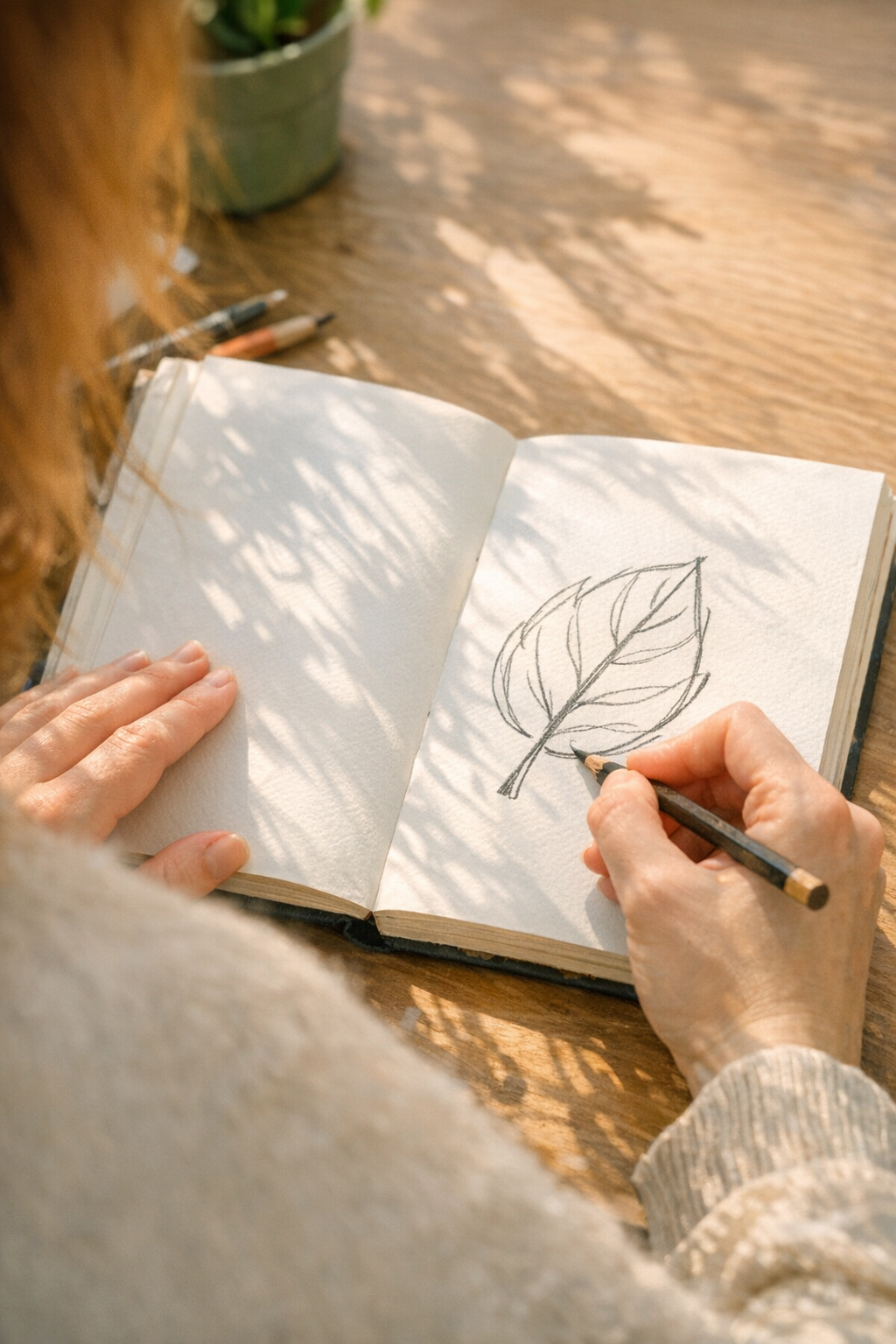
- Paint a single leaf you found outside.
- Sketch a pair of old shoes.
- Draw your non-dominant hand.
- Paint a sunset using only three colors.
- Sketch a piece of fruit cut in half.
- Illustrate your favorite quote.
- Draw a houseplant from a low angle.
- Paint a memory from your childhood.
- Sketch the view out your bedroom window.
- Draw a stack of your favorite books.
- Paint a rainy city street.
- Sketch a close-up of an insect.
- Draw a piece of crumpled paper.
- Paint a bird in flight.
- Sketch your keys on a table.
- Draw a pattern using only circles.
- Paint the sky at exactly 5:00 PM.
- Sketch a bicycle leaning against a wall.
- Draw a spoon reflecting light.
- Paint a simple boat on water.
- Sketch a messy unmade bed.
- Draw a tree without any leaves.
- Paint a slice of cake or pie.
- Sketch a bottle of perfume or cologne.
- Draw a wrapped gift.
- Paint an abstract emotion (like joy or anger).
- Sketch a chair in an empty room.
- Draw your art supplies.
- Paint a self-portrait using bold colors.
These tasks are designed to be quick. Grab your essential painting supplies and spend just 15 minutes a day. Over time, you’ll notice a huge improvement.
Why Is Drawing Good for Your Brain?
Drawing is good for your brain because it promotes neuroplasticity, improves memory retention, and enhances problem-solving skills. Engaging in visual arts activates both the left and right hemispheres of the brain, leading to better coordination and a stronger, healthier mind.
Studies show that drawing helps build new neural pathways. It also releases dopamine, which acts as a natural mood enhancer. One study found that drawing improves memory more than writing.
This is why art is often used in therapy. The non-verbal process allows people to process emotions safely. Even doodling during a meeting can help you stay focused.
How to Build a Consistent Daily Art Practice
Building a habit takes time and patience. Set up a dedicated workspace where your supplies are always ready. If you have to unpack your paints every time, you’ll probably skip it.
Choose a specific time of day for your art. Many people like the quiet of the morning. Others use it to wind down before bed. Finding a routine helps you find your painting style naturally over time.
Don’t worry about making masterpieces. Give yourself permission to make bad art. The act of creating is far more important than the final product. Just enjoy the process and watch your skills grow.
Conclusion
Starting a daily art practice is a wonderful gift to yourself. By using these art prompts for beginners, you skip the anxiety of the blank page. You also get to enjoy the mental health benefits of regular creativity.
Remember to keep your supplies handy and your expectations low. The goal is to enjoy the journey. Pick one prompt from the list right now and give it a try. What will you create today? Let me know in the comments below. Alternatively, buy original artwork online.
Frequently Asked Questions
1. What should a beginner draw every day? A beginner should draw simple, everyday objects. Things like coffee mugs, fruit, or keys are perfect. These objects help you practice observation without feeling overwhelmed.
2. How long should daily art practice be? You only need 10 to 15 minutes a day to see progress. Short sessions prevent burnout and keep the habit manageable. Consistency matters more than the length of time.
3. Are art prompts useful for learning? Yes, art prompts are incredibly useful. They remove decision fatigue so you can focus entirely on technique. They also force you to draw things you might normally avoid.
4. Can daily drawing improve mental health? Absolutely. Drawing has been shown to reduce cortisol levels and anxiety. It promotes mindfulness by keeping you grounded in the present moment.
5. Do I need expensive supplies to start? No, you do not need expensive supplies. A basic pencil and sketchbook are more than enough. You can upgrade your tools later as your skills improve.

Olly
Olly Farmer M.Sc, B.Sc, PGCE 25 years experience of Watercolor Painting and AI Art; teacher for 13 years; Creator of Art Tools; Art Gallery Contributor of Art Articles to Medium.com, LinkedIn and Facebook
Continue exploring
PROMINENT PAINTING
Keep your creative momentum
Get new painting guides, practical techniques and artist stories delivered without the noise.
Occasional emails. Unsubscribe whenever you like.