
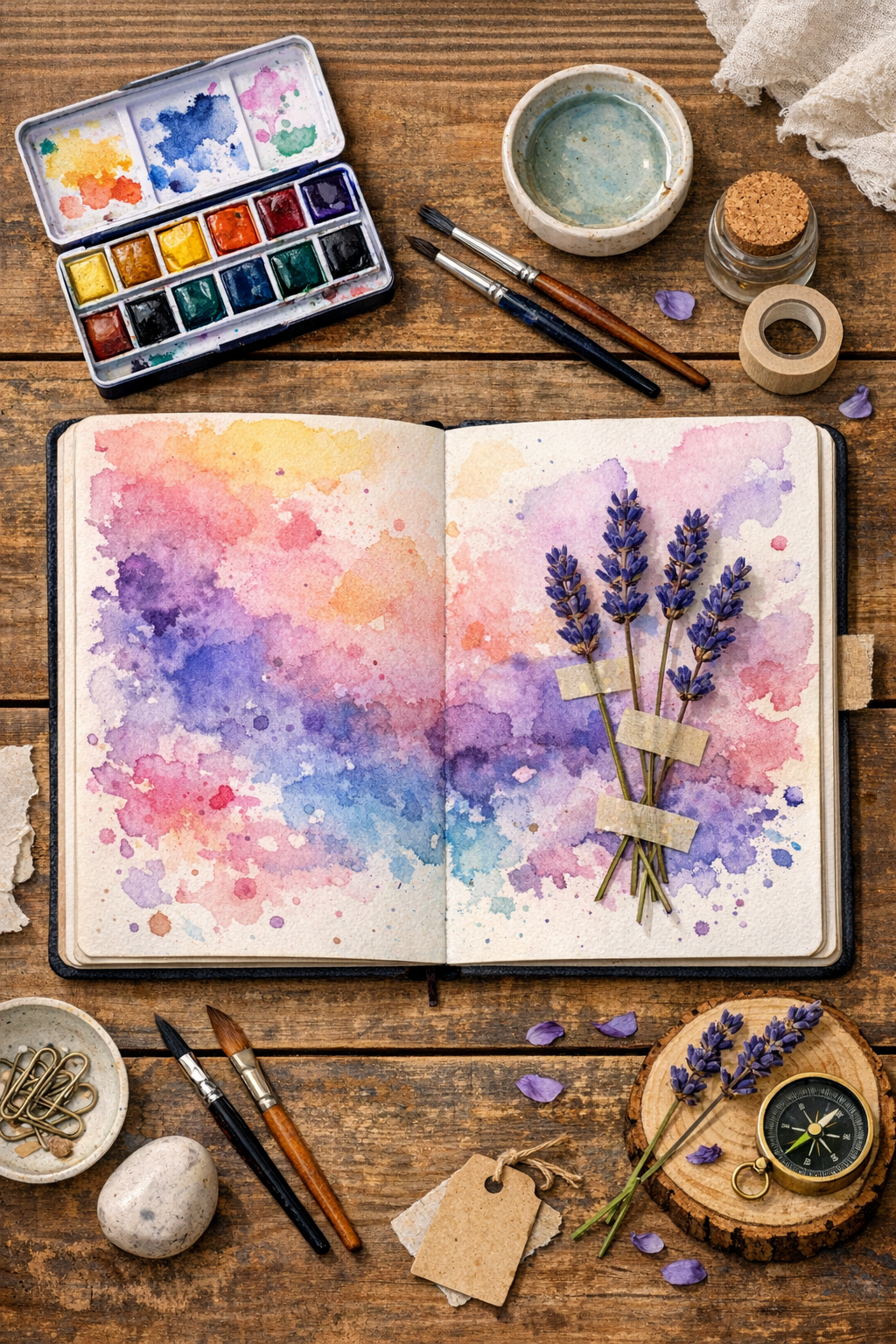
Does a blank white page ever make you feel more anxious than inspired? You aren’t alone. Many people want to start a creative hobby but feel paralyzed by the pressure to create a masterpiece. Watercolor journal ideas offer the perfect solution by shifting the focus from the final result to the calming process of painting itself.
In our fast-paced digital world, finding a “flow state” is more important than ever. Recent studies show that just 45 minutes of creative activity can significantly lower cortisol levels, which is the body’s primary stress hormone. Whether you are a total novice or a seasoned artist looking for a fresh perspective, watercolor journaling is a portable, accessible way to decompress. This guide will walk you through easy prompts, essential 2026 trends, and the therapeutic benefits of a daily art habit. Let’s demystify the medium and turn that intimidating sketchbook into your favorite place to play.
What is Watercolor Journaling and Why Start Now?
Watercolor journaling is the practice of using watercolor paints to document thoughts, emotions, and daily observations in a dedicated sketchbook. Unlike formal painting, it prioritizes personal expression and the therapeutic “flow state” over technical perfection, making it an ideal habit for stress relief and creative growth.
Art journaling serves as a “safe space” where you can experiment without judgment. You don’t need a massive studio to begin; a simple A5 journal and a small travel palette are all it takes to build a portable creative sanctuary. In 2026, the “handpainted experience” has become a major trend as people seek ways to counter digital fatigue and reconnect with tactile materials.
When I lead workshops, I often see students “freeze” at the sight of a fresh page. I always tell them that a journal isn’t for the world—it’s for you. It’s a place to be messy, to try new paint brushes for beginners, and to simply getting started with watercolors at your own pace.
How Can Watercolor Journaling Improve Your Mental Health?
Research indicates that creative acts like watercolor journaling release dopamine and reduce “rumination,” which is the repetitive loop of negative thoughts. By focusing on the movement of water and pigment, you activate brain areas responsible for concentration and emotional regulation. This leads to an improved mood and significantly reduced anxiety.
Art therapists often point to “emotional catharsis” as a key benefit of this practice. When you combine expressive writing with soft washes of color, you help your brain process feelings that might be hard to put into words. This visual form of “gratitude journaling” helps you notice the small, beautiful details in your life that you might otherwise miss. It’s a powerful way to ensure your creativity can improve your life every single day.
Trending 2026 Watercolor Journal Ideas for Beginners

If you are stuck for inspiration, try these popular 2026 themes that balance modern style with simple techniques:
- Electric Pastels & Earthy Tones: Mix grounded ochres with a “pop” of neon aqua or acid green to reflect current color theory basics.
- Mood Mandalas: Use circular patterns to represent your daily emotions through different colors.
- Urban Sketching Lite: Take five minutes to paint a quick vignette of an item in your home, like a coffee mug or a houseplant, to build muscle memory.
- Digital Hybrid Planning: Use AI-assisted sketches to map out your layout before you ever touch your brush to the paper.
| Journal Idea | Benefit | Time Required |
| Swatch Charts | Tests new colors | 5-10 Minutes |
| Layering Shapes | Builds patience | 15 Minutes |
| Nature Journaling | Connects to outdoors | 20 Minutes |
| Abstract Blooms | Stress release | 10 Minutes |
Essential Techniques for a Stress-Free Page
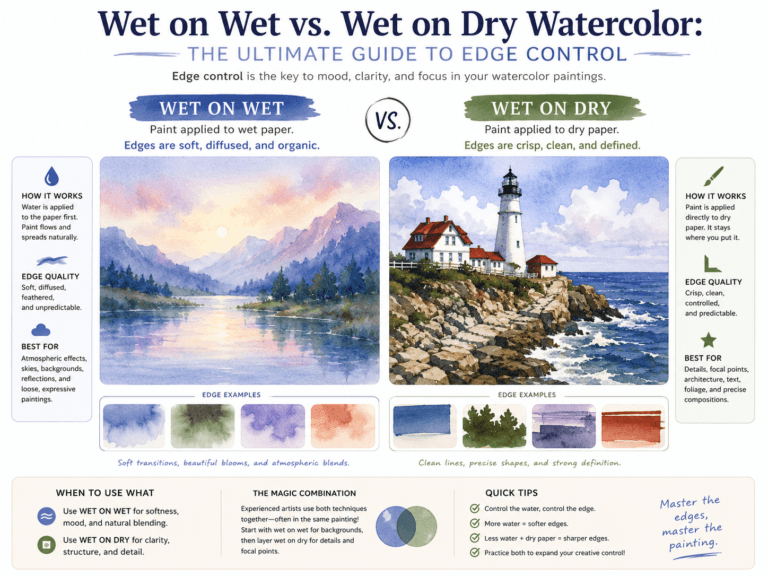
For a stress-free experience, try the “wet-on-wet” technique by dampening the paper with clear water before adding pigment. This allows colors to bleed naturally, creating soft, unpredictable “blooms” that encourage you to embrace “happy accidents” rather than seeking rigid control.
Many artists prefer the “paint first, write later” method. By painting background shapes or washes first, you remove the fear of making the “first mark” on a white page. Once the paint is dry, you can add notes, dates, or quotes on top of the color.
To add 2026’s most-wanted “tactile” depth, try using household items to create texture. You can sprinkle salt on wet paint for a crystallized look or use a sponge to mimic the leaves of a tree. If things don’t go as planned, don’t panic; there is always a way of fixing painting mistakes without starting over.
Overcoming the “Fear of the Blank Page”
The best way to start is with a “warm-up” ritual. Make your first page a simple grid of color swatches. This helps you understand how your paints behave and “seasons” the journal so it feels less precious.
Another low-pressure approach is using linework with “spot color”. Use a permanent fine-point pen to draw a quick sketch, then add a single wash of one color. This keeps things simple and prevents you from overworking the page. Remember that consistency beats intensity. A small, 10-minute daily habit is much more beneficial for your skills and your mental health than one long session every few weeks.
14-Day “Permission to Play” Starter List
Your First Week: Mindful Watercolor Prompts
- Day 1: The Swatch Grid – Create a simple grid of 6–9 squares. Fill each with a different color from your palette to “season” the paper and see how the pigments behave.
- Day 2: Abstract Blooms – Use the “wet-on-wet” technique to drop three different colors onto a damp page. Watch them bleed together naturally to create soft, unpredictable shapes.
- Day 3: The “Spot Color” Coffee – Use a permanent pen to sketch your morning drink, then add just one “pop” of color to the mug or the liquid.
- Day 4: Texture Hunt – Paint three large circles. While they are still wet, sprinkle salt on one, press a crumpled tissue on the second, and leave the third alone to see the difference in 2026’s trending “tactile” depth.
- Day 5: Mood Mandalas – Draw a simple circle and divide it into sections. Use colors that represent how you feel today (e.g., calm blues or energetic oranges) to fill the spaces.
- Day 6: Negative Space Leaves – Paint the shape around a leaf rather than the leaf itself. This is a great exercise for color theory basics and learning to see “shapes” rather than “things”.
- Day 7: The Gratitude Wash – Lay down a light, watery wash of your favorite color across the whole page. Once dry, write three things you were grateful for this week directly over the paint.
Week 2: Expanding Your Creative Toolkit
- Day 8: The “Glazing” Layer Challenge – Paint three simple overlapping circles in light, transparent colors. Let them dry completely, then paint a second layer over the intersections to see how new colors are created through transparency.
- Day 9: Textural Landscapes – Paint a simple horizon line using a “granulating” blue for the sky. While the ground area is wet, use a dry brush to “scumble” or drag thicker paint across the surface to mimic the 2026 trend of “tactile” earthiness.
- Day 10: Found-Object Stamping – Find a household item with texture, like a bottle cap or a piece of bubble wrap. Dip it into your watercolor and “stamp” patterns into your journal to create a unique abstract background.
- Day 11: Complimentary Pop – Choose two “opposite” colors from your color theory basics (like blue and orange). Paint a page of small triangles, alternating the colors to see how they make each other “vibrate” on the page.
- Day 12: Negative Painting Flowers – Instead of painting a petal, paint the dark space between the petals. This helps you master watercolor light and shadows by defining forms through their surroundings.
- Day 13: The “Limited Palette” Portrait – Attempt a very simple face or “tronie” using only three colors. This forces you to focus on values (lightness and darkness) rather than getting distracted by too many color choices.
- Day 14: Seasonal Reflection – Look out your window and paint the “feeling” of the current season using only three colors. If it’s raining, use cool greys and bleeds; if it’s sunny, use warm, “electric” yellows.
Conclusion
Watercolor journaling is more than just a hobby; it is a gateway to a more mindful and resilient life. By letting go of the need for “perfect” art, you open a door to genuine self-discovery and stress relief. Your journal is a private sanctuary where “mistakes” are just opportunities for new textures.
Start small tonight by painting a single wash of your favorite color. Whether you choose to track your moods or sketch your morning coffee, the goal is to simply keep your hands moving and your mind present. You’ve got the tools and the inspiration—now it’s time to make your mark.
Frequently Asked Questions
What kind of paper is best for a watercolor journal? You should look for “cold-pressed” paper that is at least 300gsm (140lb). This thickness prevents the paper from buckling or “warping” when you apply heavy washes of water.
Do I need expensive professional paints to start? No, a basic “student-grade” set is perfect for journaling. These paints are affordable and offer great color clarity for practicing basic techniques and daily prompts.
How long should a daily journaling session last? Even 10 to 15 minutes can provide significant mental health benefits. The goal is to build a consistent habit rather than spending hours on a single page.
Can I write over watercolor paint once it’s dry? Yes, once the paint is completely dry, you can use waterproof fine-liners or gel pens to add text. This is a great way to combine art with traditional journaling.
How do I fix a page I really don’t like? You can “lift” dry paint with a damp brush, cover the area with a thicker paint like gouache, or simply turn the page. In a journal, every “failed” page is just a lesson for the next one.

Olly
Olly Farmer M.Sc, B.Sc, PGCE 25 years experience of Watercolor Painting and AI Art; teacher for 13 years; Creator of Art Tools; Art Gallery Contributor of Art Articles to Medium.com, LinkedIn and Facebook
Continue exploring
PROMINENT PAINTING
Keep your creative momentum
Get new painting guides, practical techniques and artist stories delivered without the noise.
Occasional emails. Unsubscribe whenever you like.