
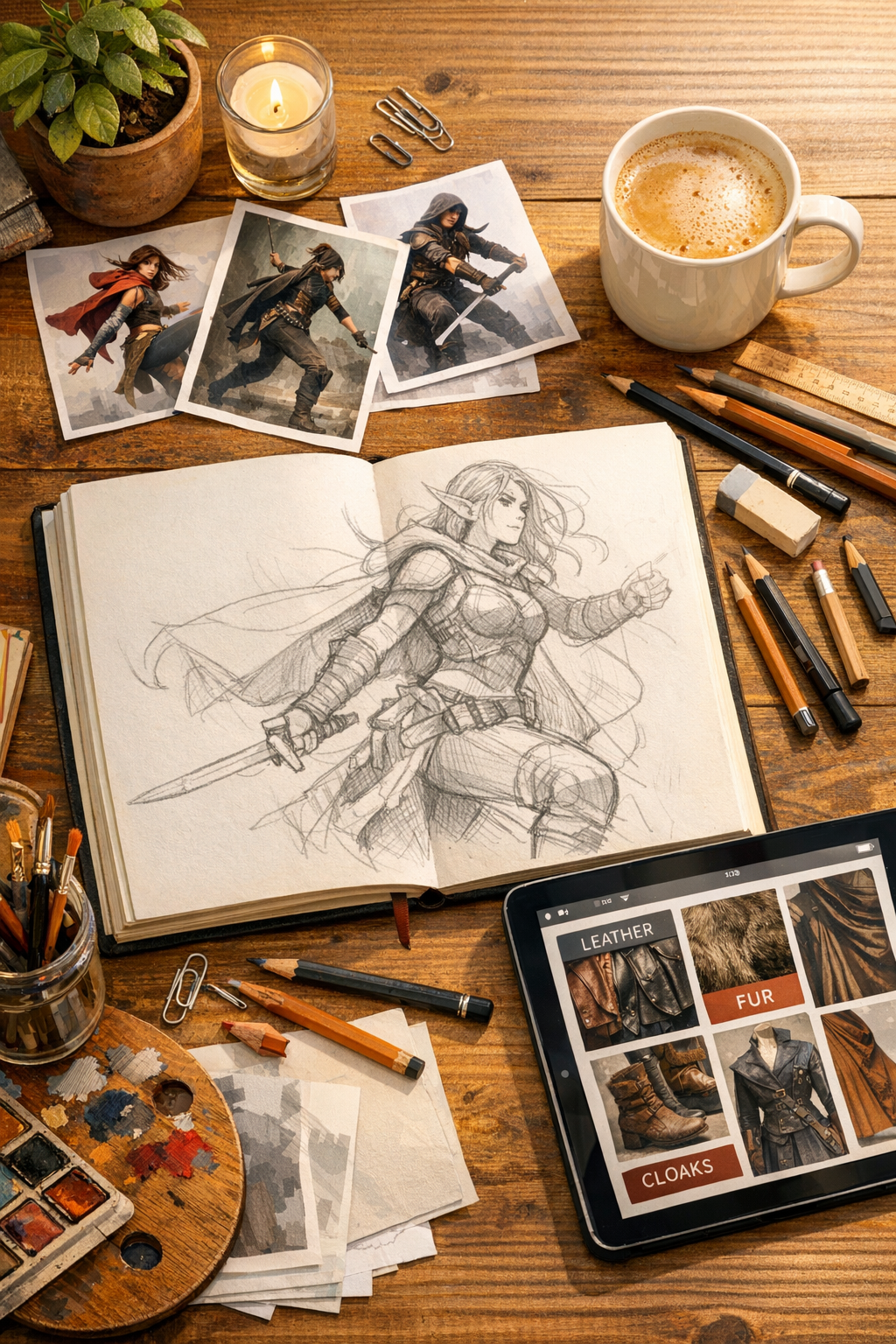
Do you ever stare at a blank page and feel completely stuck? You want to draw a hero, but you just cannot picture them in your head. Finding the best character design references is the fastest way to overcome this block.
Over my ten years of teaching, I have seen so many students freeze up. They think using photos is cheating. It is not! As an arts educator and watercolorist, I am here to tell you that every professional artist uses reference images. It is how you learn.
When you collect images, you are building what artists call a visual library. This is simply a mental and digital filing cabinet of shapes, lighting, and poses. It is a core part of drawing for beginners. In this post, we will explore how to build yours without feeling intimidated.

How Do You Build a Visual Library?
A visual library is a collection of images, memories, and observations that artists use for inspiration. You build it by actively gathering reference photos, studying how things look in real life, and saving these details to draw from later.
This library lives both in your mind and in folders on your computer. It is the crucial first step in any character design workflow. When you see a cool jacket or a unique facial expression, you save it.
Over time, your brain absorbs these details. You will start to remember how a sleeve folds or how light hits a nose. This makes drawing from imagination much easier later on.
Where Are the Best Places to Find Character Design References?
The best places to find character design references include Pinterest, dedicated art websites, and your own camera roll. You can also use stock photo sites, movie stills, and everyday observations to gather unique poses, outfits, and facial expressions.
Pinterest is fantastic for creating mood boards. You can easily save hundreds of pins in one place. However, dedicated online libraries offer curated galleries of poses and costumes specifically for animators and illustrators.
Do not forget about animals! Using photos of both humans and animals provides a great starting point for unique character anatomy. You can mix a human pose with animal traits for fantasy designs.
Finding references with diverse angles is also key. This helps you draw characters accurately from different visual perspectives. If you struggle with specific details, checking a guide on drawing facial proportions alongside your photos works wonders.
Top 5 Resources for Character Design References
| Resource | Description | Best For |
| A massive visual discovery engine where users collect, organize, and share images. | Creating dedicated mood boards, discovering diverse art styles, and finding everyday outfit inspiration. | |
| Character Design References | An independent, curated online art gallery and educational library. | Finding high-quality, professional character model sheets, turnarounds, and anatomy references. |
| Stock Photo Websites | Expansive databases of professional, high-resolution photography. | Sourcing clear, specific anatomical poses, diverse body types, and dynamic action shots. |
| Film & Movie Stills | High-quality captured frames from live-action films and animations. | Studying dramatic lighting, scene composition, and authentic, emotive facial expressions. |
| Your Camera Roll | Photos you take of yourself, friends, or everyday environments. | Studying real-world clothing folds, natural sunlight, and capturing completely customized poses. |
Why Is Observing Real Life Important for Character Art?
Observing real life is important because it teaches you how light, fabric, and anatomy behave naturally. Photos can be flat or edited, but watching real people helps you understand genuine expressions, weight distribution, and how characters move in 3D space.
Real-world observation passively builds your mental visual library. Next time you are at a cafe, take a moment to people-watch. Notice how someone slouches or how their coat wrinkles when they sit.
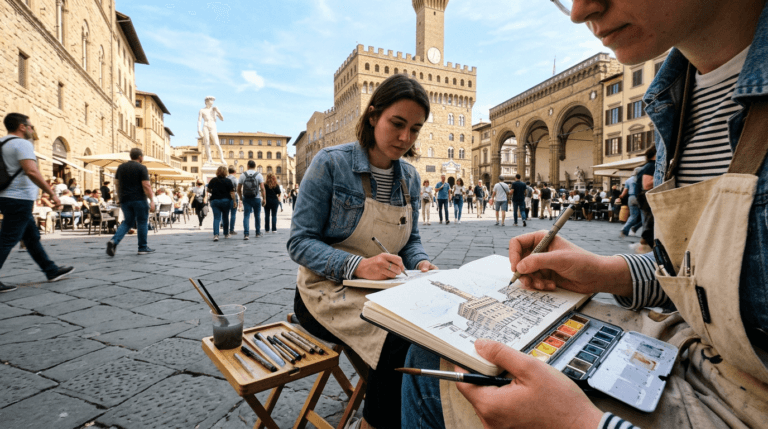
These small, authentic details bring your art to life. When I sit outside with my sketchbook, I often just quickly capture the gesture of a person walking. It is a mindful and therapeutic way to study human nature.
Organizing Your Reference Sheets for Success
Once you have hundreds of photos, you need a system. Creating specific reference sheets keeps your ideas focused and accessible during a drawing project. You do not want to scroll through your phone for 20 minutes looking for one specific boot.
I recommend grouping your images by category. Create one folder for poses, one for outfits, and one for faces. This makes your workflow smooth and stress-free.
| Category | What to Include | Purpose |
| Poses | Action shots, resting stances, unique angles | Helps establish the character’s attitude and weight. |
| Outfits | Fabrics, armor, shoes, accessories | Provides details for clothing folds and textures. |
| Faces | Expressions, lighting on skin, hairstyles | Guides the emotional tone and facial structure. |
Using model sheets also helps maintain consistency in proportions and details across different drawings. A tidy workspace (even a digital one) leads to a clear, creative mind.
Using References Without Just Copying
A common fear among beginners is that using photos means you are just copying. The trick is to break down your reference into basic shapes. Look for the simple circles, squares, and triangles that make up the figure.
Analyzing shapes and clothing textures helps ground a character realistically in their environment. Instead of tracing, use the photo to understand how a joint bends. For example, if you are studying and drawing hands accurately, look at the photo to see where the knuckles align, not just the outline.
Synthesizing different references is how you start developing your unique art style. Take the pose from one photo, the jacket from another, and the hairstyle from a third. This makes the final design entirely your own.
Conclusion
Building a visual library is one of the most rewarding steps in your art journey. By actively seeking out character design references, organizing them well, and observing the real world, you set yourself up for success. Remember that references are tools to help you learn, not crutches to lean on forever.
Do not let a blank page intimidate you. Your next great character is just a few good reference photos away. I challenge you to grab your sketchbook, head to a local park or cafe, and spend just 15 minutes observing the people around you. Start building your visual library today!
Frequently Asked Questions
What is a visual library in art?
A visual library is your mental and digital collection of images, shapes, and observations. Artists use this stored knowledge to draw confidently from imagination. It grows every time you study a reference photo or observe real life.
Are character design references cheating?
Not at all. Every professional artist uses references to understand anatomy, lighting, and fabric. They are essential learning tools that help you build accurate and believable characters.
How many references should I use for one character?
It is best to use a mix of 3 to 5 images for a single character design. You might use one for the pose, another for the facial expression, and a few for clothing details. This prevents you from just copying a single image.
Can I use Pinterest for art references?
Yes, Pinterest is a fantastic tool for finding and organizing art inspiration. You can create specific boards for different character traits, moods, or outfits. Just remember to use the images to study shapes rather than tracing them directly.
How do I practice using my visual library?
The best way to practice is by doing quick gesture sketches from your saved photos. Try to capture the essence of the pose in under two minutes. Over time, these shapes will stick in your memory.

Olly
Olly Farmer M.Sc, B.Sc, PGCE 25 years experience of Watercolor Painting and AI Art; teacher for 13 years; Creator of Art Tools; Art Gallery Contributor of Art Articles to Medium.com, LinkedIn and Facebook
Continue exploring
PROMINENT PAINTING
Keep your creative momentum
Get new painting guides, practical techniques and artist stories delivered without the noise.
Occasional emails. Unsubscribe whenever you like.