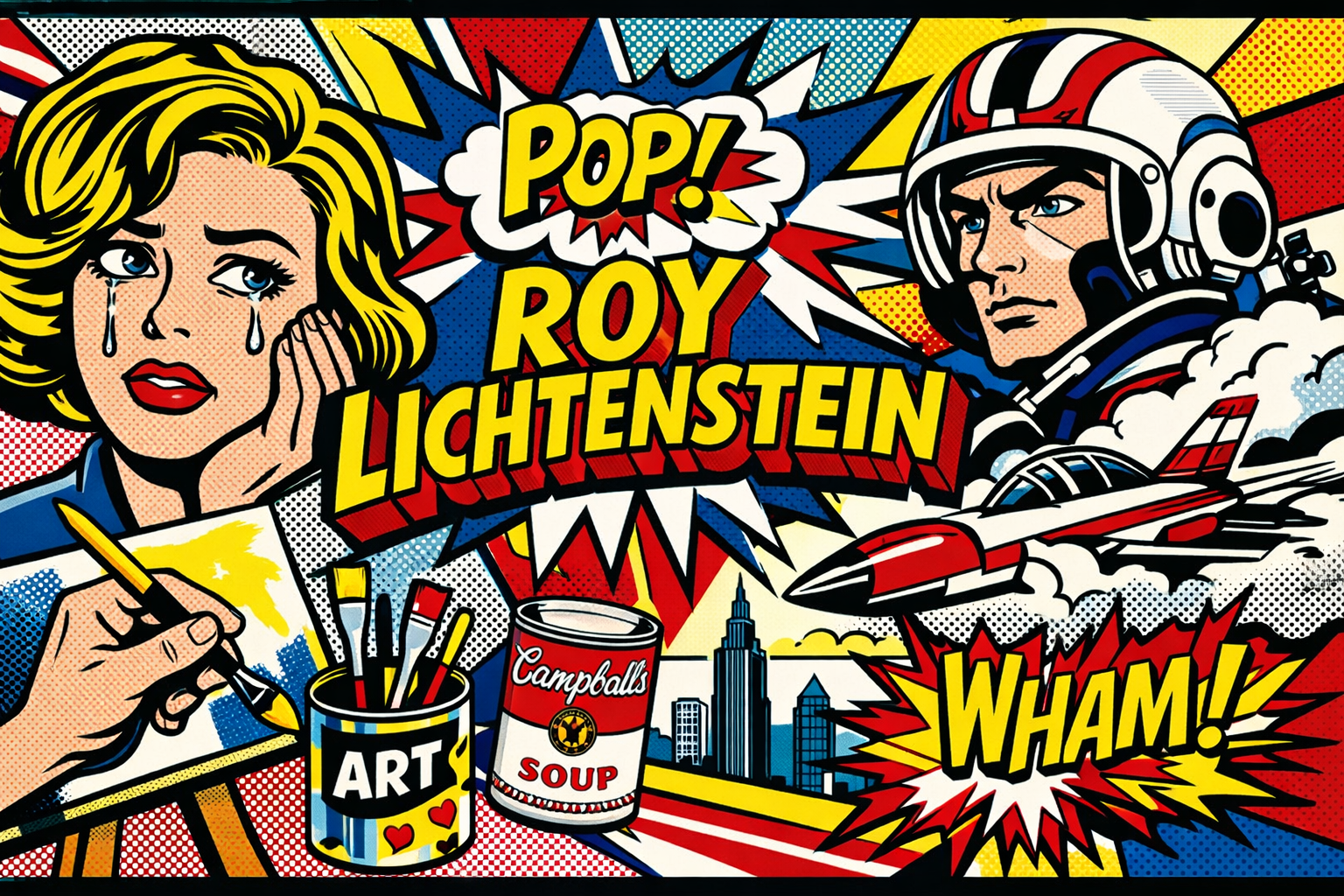
Roy Lichtenstein profoundly shaped the Pop Art movement by elevating commercial art forms, particularly comic strips and advertisements, into high art, challenging traditional notions of artistic originality and subject matter. Through his distinctive use of Ben-Day dots, bold outlines, and primary colors, Lichtenstein transformed mundane popular culture imagery into iconic, large-scale paintings, creating a visual language that became synonymous with Pop Art and left an indelible mark on modern art.
Keypoint Summary
- Elevated Commercial Art: Lichtenstein brought comic book panels and advertisements into the realm of fine art, blurring the lines between high and low culture.
- Iconic Style: His signature use of Ben-Day dots, thick outlines, and a limited palette became instantly recognizable and defined the Pop Art aesthetic.
- Challenged Originality: By appropriating existing imagery, Lichtenstein questioned traditional concepts of artistic creation and authorship.
- Lasting Influence: His work continues to inspire artists and designers, demonstrating the power of mass media imagery in contemporary art.
What was Roy Lichtenstein’s signature artistic style?
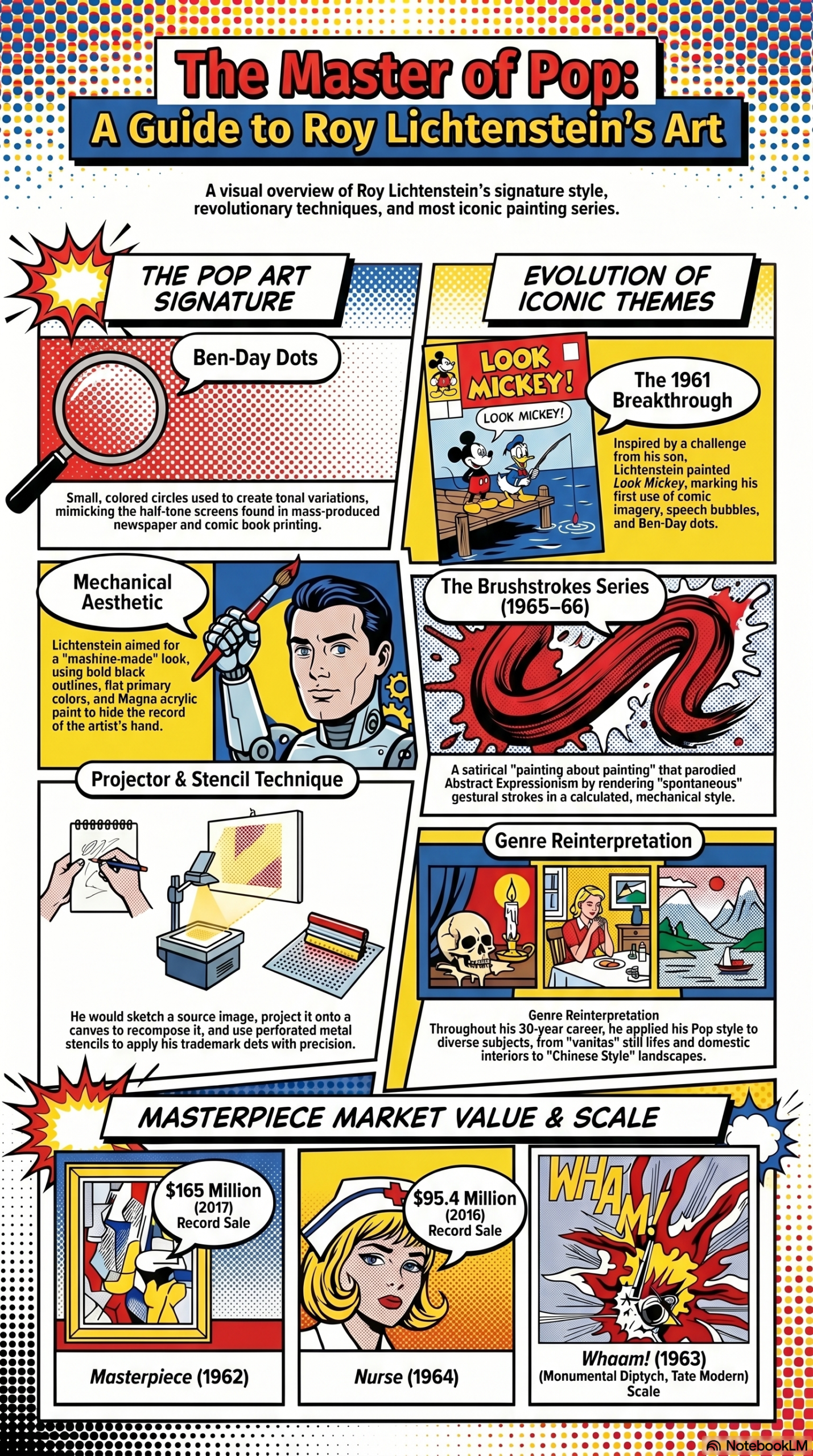
Roy Lichtenstein’s signature artistic style is characterized by its direct appropriation of comic strip panels and commercial advertisements, rendered with a meticulous, almost mechanical precision. He famously employed Ben-Day dots, a printing technique used in mass media, to simulate the mechanical reproduction process, alongside thick black outlines and a restricted palette of primary colors, creating a bold, graphic aesthetic that mimicked commercial printing Tate.org.uk. This distinctive approach made his work instantly recognizable and a cornerstone of the Pop Art movement.
How did Lichtenstein utilize Ben-Day dots in his paintings?
Lichtenstein utilized Ben-Day dots as a fundamental element of his painting technique to mimic the appearance of commercial printing processes, specifically those found in comic books and newspapers. These dots, which are small, colored dots arranged in patterns to create different tones and colors, were originally invented in 1879 by Benjamin Henry Day Jr. for printing Wikipedia.org. By meticulously hand-painting these dots on a large scale, Lichtenstein deliberately highlighted the artificiality and mechanical nature of mass-produced images, transforming a humble printing technique into a sophisticated artistic statement. This technique also allowed him to explore how light and shadow are depicted in a stylized, graphic manner, a concept artists often grapple with, as explored in The Complete Guide to Light and Shadow: Master Visual Depth in Your Art.
What themes did Roy Lichtenstein explore in his art?
Roy Lichtenstein primarily explored themes of consumerism, popular culture, and the representation of women in media, often with a subtle irony and critique. His works frequently depicted dramatic scenes from romance and war comics, domestic objects, and advertisements, stripping them of their original context to highlight their inherent clichés and societal implications MoMA.org. Through this appropriation, he commented on the pervasive influence of mass media and commercial imagery on everyday life, prompting viewers to reconsider the artistic merit and cultural significance of what was traditionally considered “lowbrow” art. Understanding the meaning behind common art symbols and types of art can provide further insight into how artists like Lichtenstein convey complex ideas, a topic explored in Understanding the Meaning Behind Common Art Symbols.
How did Lichtenstein’s work influence subsequent generations of artists?
Lichtenstein’s work profoundly influenced subsequent generations of artists by legitimizing the use of popular culture as a valid source of artistic subject matter and by demonstrating the power of appropriation. His bold, graphic style and innovative use of commercial printing techniques paved the way for artists to explore new mediums and challenge traditional artistic boundaries, impacting movements like Conceptual Art and Postmodernism. He showed that art could be both intellectually stimulating and widely accessible, inspiring artists to engage directly with contemporary society and its visual language. This shift in perspective helped broaden the definition of Art Types and Styles: Artist Classifications and opened doors for diverse artistic expressions.
Emulating Lichtenstein: Techniques for Your Own Pop Art
If you’re inspired by Lichtenstein’s iconic style, you can incorporate some of his techniques into your own artwork. Start by selecting a simple, bold image, perhaps from a comic book or an advertisement. Focus on strong outlines, much like those you might practice with Simple Sketching Prompts.
- Bold Outlines: Use thick, black lines to define shapes and figures. You can achieve this with acrylics, oil paint, or even markers.
- Ben-Day Dots: Recreate the dot pattern. You can use stencils, the eraser end of a pencil, or even a specialized dotting tool. Experiment with dot size and spacing to create different tonal values, similar to how Georges Seurat mastered his dot technique, as discussed in Georges Seurat: Pointillism Master.
- Limited Color Palette: Stick to primary colors, black, and white. Lichtenstein often used red, yellow, and blue, along with black for outlines and white for highlights.
- Flat Areas of Color: Fill in large areas with unmodulated, flat color to enhance the graphic, commercial print feel. This contrasts with the subtle blending often seen in Oil Painting for Beginners.
- Speech Bubbles and Onomatopoeia: Incorporate text elements like speech bubbles or sound effects (e.g., “WHAAM!”, “BLAM!”) to further capture the comic book aesthetic.
By focusing on these elements, you can create pieces that pay homage to Lichtenstein’s enduring legacy and explore the vibrant world of Pop Art.
FAQs
What is Roy Lichtenstein best known for?
Roy Lichtenstein is best known for his iconic Pop Art paintings that appropriated imagery from comic books and advertisements, characterized by his use of Ben-Day dots, bold outlines, and primary colors. His works like Whaam! and Drowning Girl are among his most famous.
What are Ben-Day dots in art?
Ben-Day dots are a printing technique, named after Benjamin Henry Day Jr., involving small, colored dots arranged in patterns to create optical illusions of color and shading. Lichtenstein famously incorporated these dots into his large-scale paintings to mimic the look of mass-produced comic book imagery.
How did Lichtenstein influence the Pop Art movement?
Lichtenstein was a pivotal figure in the Pop Art movement, influencing it by elevating commercial art forms to fine art status. He challenged traditional artistic conventions, introduced new techniques like the large-scale application of Ben-Day dots, and broadened the scope of acceptable artistic subject matter.
Where can I see Roy Lichtenstein’s art?
Roy Lichtenstein’s art is featured in major museums and galleries worldwide, including the Museum of Modern Art (MoMA) in New York, the Tate Modern in London, the Art Institute of Chicago, and the National Gallery of Art in Washington, D.C.