Summary Blank canvases can feel terrifying to beginners. This guide reframes painting as a stress-free zone using simple wet-on-wet watercolor exercises for mindfulness. You will learn to let go of perfectionism and embrace the relaxing flow of water and pigment. Grab your brushes. It is time to breathe deep, watch colors blend, and discover how painting for stress relief can completely transform your daily routine.
You stare at the pristine white paper and freeze. The pressure to create a masterpiece instantly kills the joy of painting. I see this happen to my students every single day. We forget that art does not have to be perfect to be meaningful. Sometimes the most beautiful thing you can create is a moment of calm in a chaotic world.
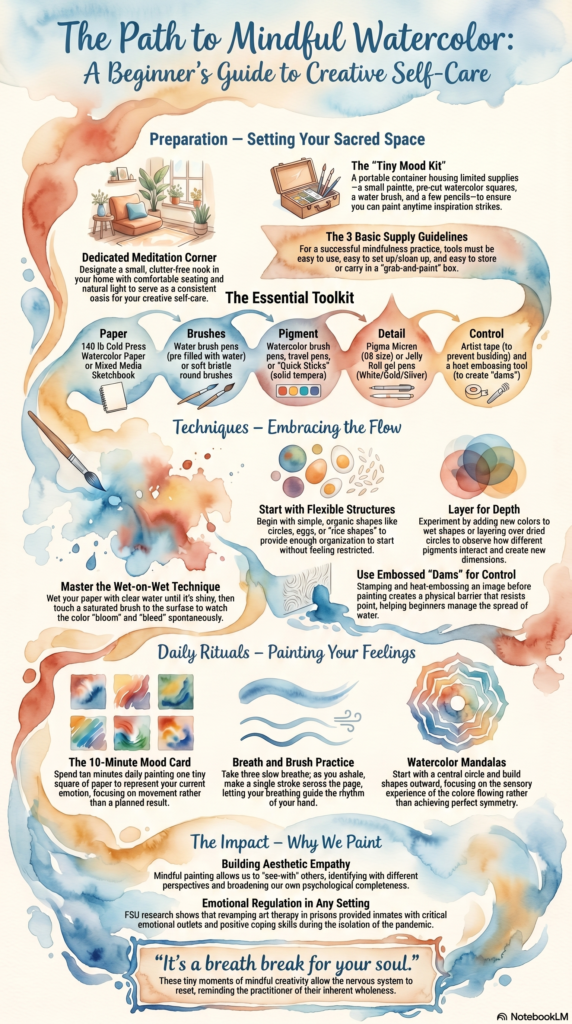
Watercolor exercises for mindfulness offer a completely different approach. We are stripping away the expectations. We are throwing out the rulebook. Instead of worrying about realism, we focus entirely on the physical sensation of a wet brush gliding across damp paper. This is your stress-free zone. When you approach painting for stress relief, the blank canvas transforms from a terrifying test into a welcoming sanctuary. Let the water do the heavy lifting while you just sit back and watch.
How Does Art Reduce Anxiety and Stress?
How does art reduce anxiety and stress? Artistic practice reduces anxiety by lowering cortisol levels and engaging the brain’s reward center. When you focus on repetitive, creative tasks like painting, you enter a meditative state called “flow” that naturally calms your nervous system.
The psychological benefits of artistic practice are profound. Research shows that just forty-five minutes of creative activity significantly reduces stress hormones in the body. You do not need to be a professional artist to feel these benefits. The act of making decisions about color and watching pigments bleed together anchors your mind in the present moment. If you want to dive deeper into this science, check out our guide on how creativity can improve your life.
Essential Materials for Mindful Painting
You do not need a massive studio or expensive equipment to start. In fact, keeping your supplies minimal actually reduces decision fatigue and helps you relax faster. Grab a basic set of watercolors, a round brush, and some thick watercolor paper. You will also need two jars of water: one for rinsing dirty brushes and one for picking up clean water. If you feel overwhelmed by the options at the art store, read our comprehensive guide on getting started with watercolors to find the perfect beginner tools.
What Is the Wet-on-Wet Color Bleed Exercise?
What is the wet-on-wet color bleed exercise? The wet-on-wet color bleed is an exercise where you brush clean water onto your paper and drop in wet paint. The colors spread and mix naturally without your intervention, teaching you to surrender control and appreciate unpredictable results.
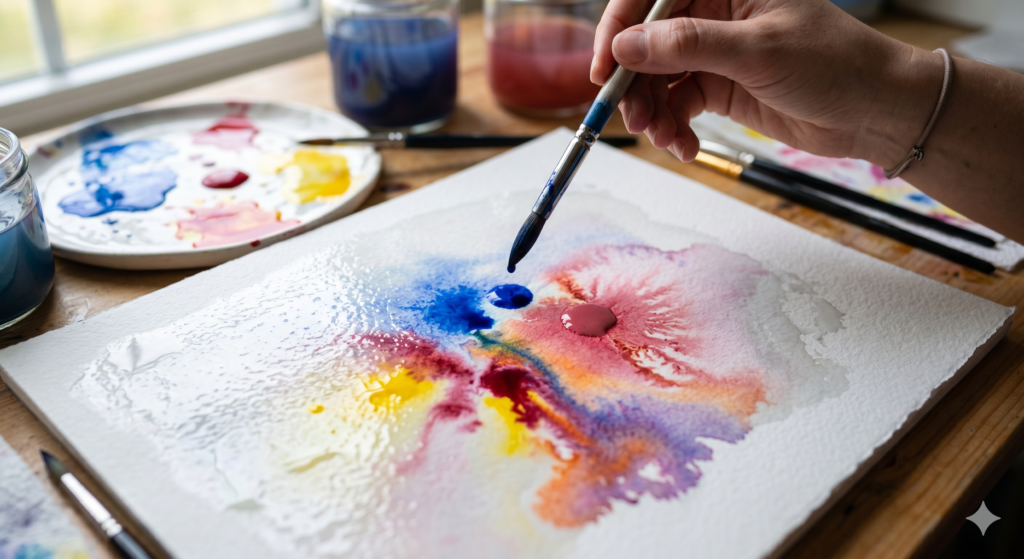
This is the foundation of mindful watercolor painting. Load your brush with a vibrant color and gently tap it into a puddle of clean water on your paper. Watch how the pigment blooms like a cloud. Add a second color right next to it. Let them merge on their own terms. Do not try to fix or guide the paint. Just observe the chemical reaction happening right in front of your eyes. For more tips on this foundation, review these simple wet-on-wet watercolor techniques.
Rhythmic Glazing
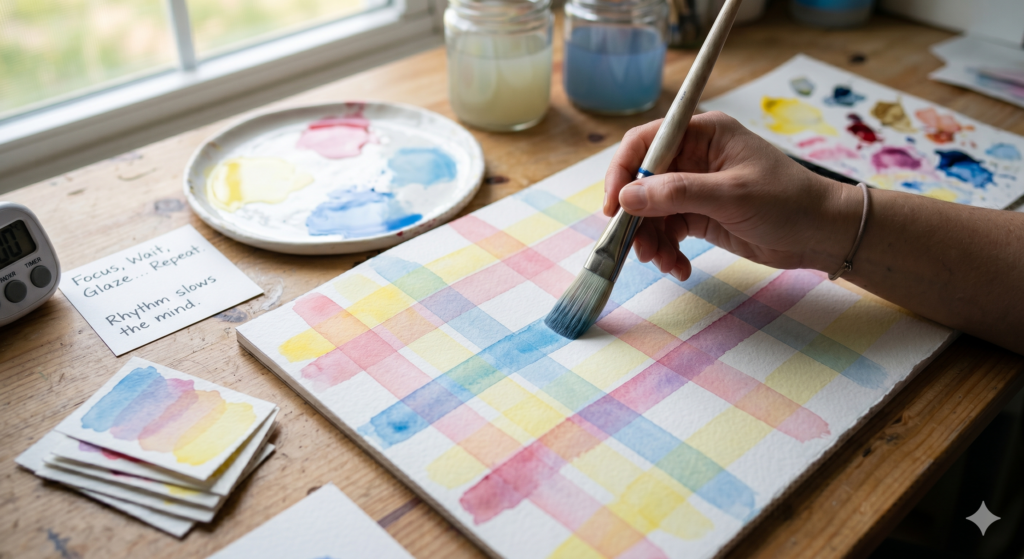
This exercise builds focus through repetition. Paint a single, broad stroke of a very light, watery color. Let it dry completely. Once it is dry to the touch, paint another stroke partially overlapping the first one. The sheer, transparent nature of watercolor allows the bottom layer to shine through the top layer. Repeat this process methodically. The physical rhythm of painting a stroke and waiting for it to dry naturally slows down a racing mind. It is a fantastic 10-minute daily practice to quiet your thoughts.
How Do You Paint an Abstract River Flow?
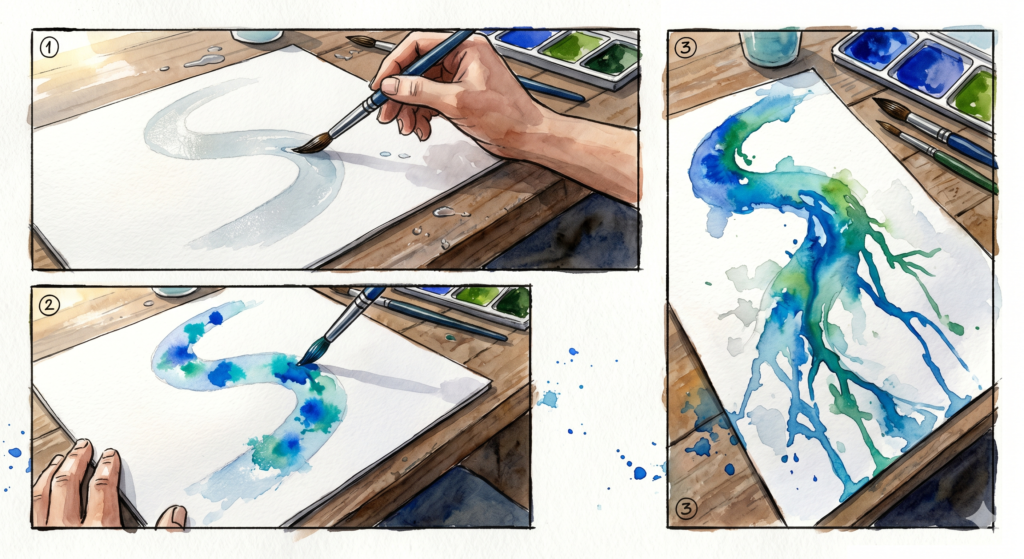
How do you paint an abstract river flow? You paint an abstract river flow by wetting a curved path on your paper and dropping blue or green pigments into the damp area. You then tilt the paper to let gravity pull the water naturally downward.
We spend a lot of time on this blog discussing how to render realistic water scenes. This exercise strips all of that pressure away. You are not trying to paint a specific river you saw on holiday. You are simply playing with the physics of water and gravity. Tilt your paper back and forth. Watch the paint gather and flow in tiny streams across the page. It is mesmerizing and entirely unpredictable. If you decide you want to add realistic details later, you can always explore techniques for watercolor reflections.
The Breath-Synced Brushstroke
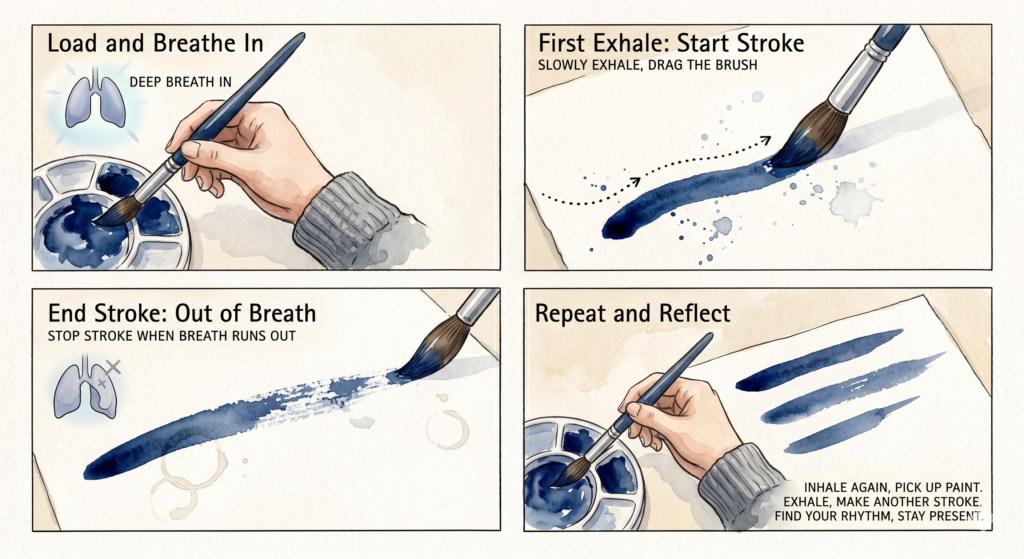
Connect your physical body to your creative output. Load your brush with a highly concentrated color. Take a deep breath in. As you slowly exhale, drag the brush across the paper. Stop the stroke the moment you run out of breath. Inhale again while picking up new paint. Exhale and make another stroke. By linking your lung capacity to the length of your brushstrokes, you force yourself to slow down and stay entirely present.
What Is a Quiet Triumph Gallery?
What is a quiet triumph gallery? A quiet triumph gallery is a personal collection of artwork where success is measured by how calm you felt while painting, rather than the visual perfection of the final piece.
When you finish these watercolor exercises for mindfulness, do not judge the results by traditional art standards. Create a special folder or a physical box for these pieces. The goal is to celebrate the process. Every piece of paper in that gallery represents a moment where you chose peace over panic. I encourage you to share your quiet triumphs in our community forum or simply keep them as a personal reminder of your creative growth.
| Exercise | Name | Core Technique & Focus |
|---|---|---|
| 1 | The Wet-on-Wet Color Bleed | Brush clean water onto the paper, drop in wet paint, and observe the natural blooming and mixing without trying to control the outcome. |
| 2 | Rhythmic Glazing | Paint a transparent stroke, let it dry completely, and paint another overlapping stroke to build focus through methodical repetition. |
| 3 | Abstract River Flow | Wet a curved path on the paper, drop in pigment, and gently tilt the page to let gravity pull the water and paint naturally. |
| 4 | The Breath-Synced Brushstroke | Inhale while loading the brush, then drag the brush across the paper while exhaling. Stop the stroke exactly when you run out of breath. |
| 5 | Quiet Triumph Gallery | Save your completed exercises in a dedicated space to celebrate the calming process rather than judging the visual perfection of the result. |
Conclusion
Painting for stress relief is not about creating museum-quality artwork. It is about giving your brain a much-needed break from the constant noise of daily life. These wet-on-wet exercises teach us to let go of rigid control and find beauty in the unexpected blooms of color. Remember to keep your materials simple, breathe deeply, and allow the water to do the work. If you are ready to expand your mindful practice, head over to the mARTket to browse the Art of the Affordable section. You can find inspiring, calming pieces from fellow artists or grab a beginner watercolor supply kit to keep your creative momentum going. Pick up your brush today.
Frequently Asked Questions
1. Do I need expensive watercolors for mindful painting? You do not need professional-grade paints to enjoy these exercises. Student-grade watercolors are perfectly fine for practicing mindfulness and stress relief. The focus is on the process of painting rather than the archival quality of the finished piece.
2. How much water should I use for wet-on-wet techniques? Your paper should be damp and shiny but not completely flooded with standing puddles. If water is pooling heavily on the surface, gently absorb the excess with a clean paper towel. Finding the right moisture balance takes a little practice.
3. What if my colors mix together and look muddy? Muddy colors happen when you mix too many complementary colors or overwork wet paint. In mindful painting, try to accept whatever colors appear on the page without frustration. If you want brighter results next time, limit your palette to just two analogous colors.
4. Can I use regular paper instead of watercolor paper? Regular printer paper will warp, buckle, and tear when saturated with water. You must use dedicated watercolor paper designed to handle heavy moisture. Cold-pressed watercolor paper is the best choice for beginners because it has a slight texture that helps control the paint.
5. How long should a mindful painting session last? A mindful painting session can be as short as five minutes or last for several hours. The length does not matter as long as you feel present and relaxed. Stop painting the moment it starts feeling like a chore instead of a break.