
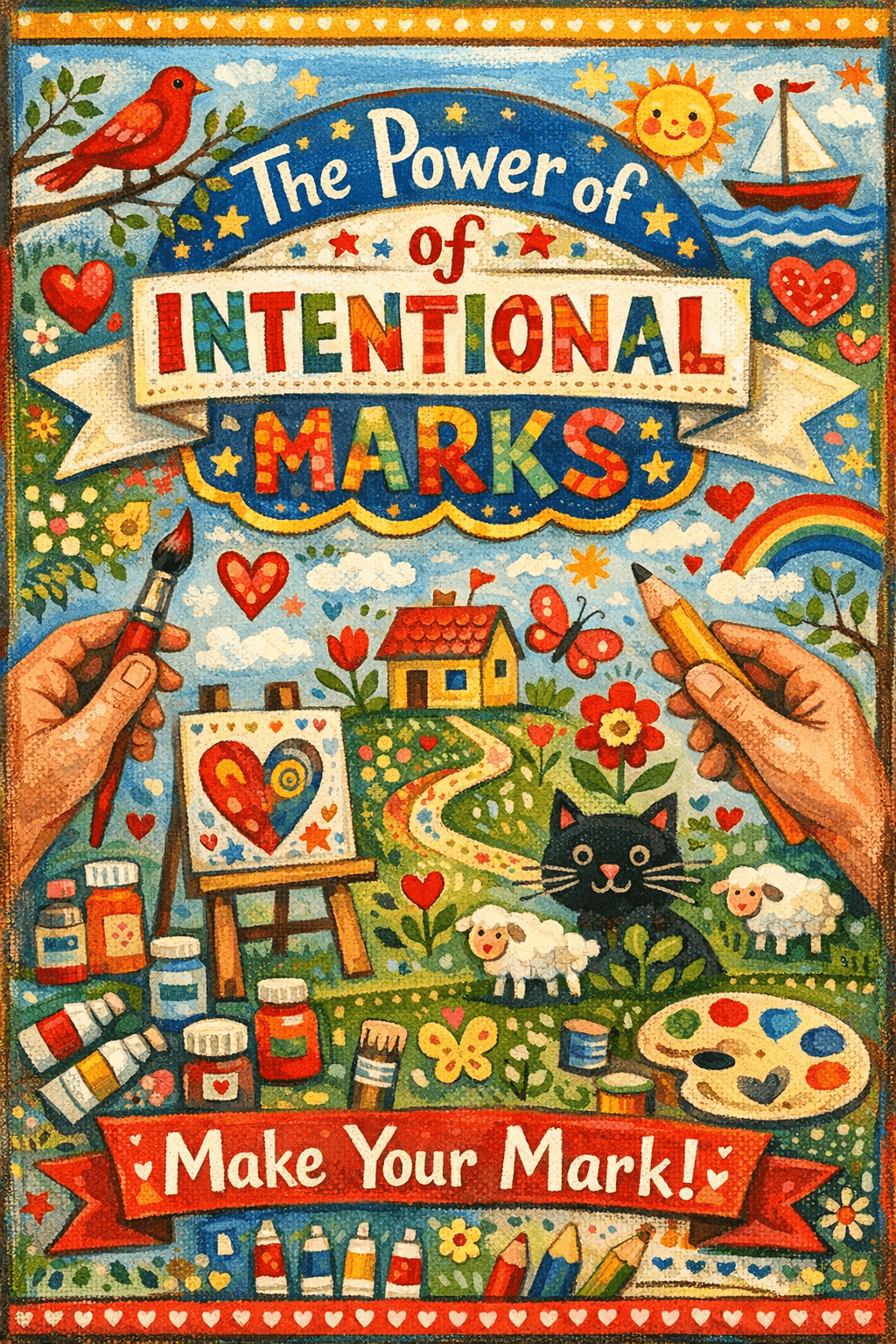
The naïve art painting style is making a massive comeback as artists reject flawless, artificial perfection in favor of the human touch. This post explores why intentional marks, flat shapes, and bold colors are trending right now. You’ll learn how to embrace these imperfect techniques to create more honest and emotionally resonant art. Grab your brushes, let go of the rigid rules, and discover your true creative voice.
Have you ever stared at a blank canvas and felt completely paralyzed by the pressure to make it look perfect? You’re definitely not alone in feeling that way. For years, the art world told us that good painting required strict rules. We thought we needed flawless blending and perfect perspective.
But the creative landscape is shifting massively in 2026. As artificial intelligence floods our screens with hyper-realistic images, people are craving something authentic. We want to see the human hand at work.
This is where the naïve art painting style steps into the spotlight. It’s no longer just a niche category for self-taught artists from the past. Today, painters of all levels are intentionally choosing to leave their pencil marks visible, flatten their shapes, and use colors that feel right rather than look accurate.
As an arts educator, I’ve watched my students transform when they stop trying to paint like a photograph. Embracing intentional imperfection makes painting incredibly freeing. Let’s dive into why these simple, honest marks are taking over the modern art scene and how you can bring this refreshing style into your own creative practice.
What Is the Naïve Art Painting Style?
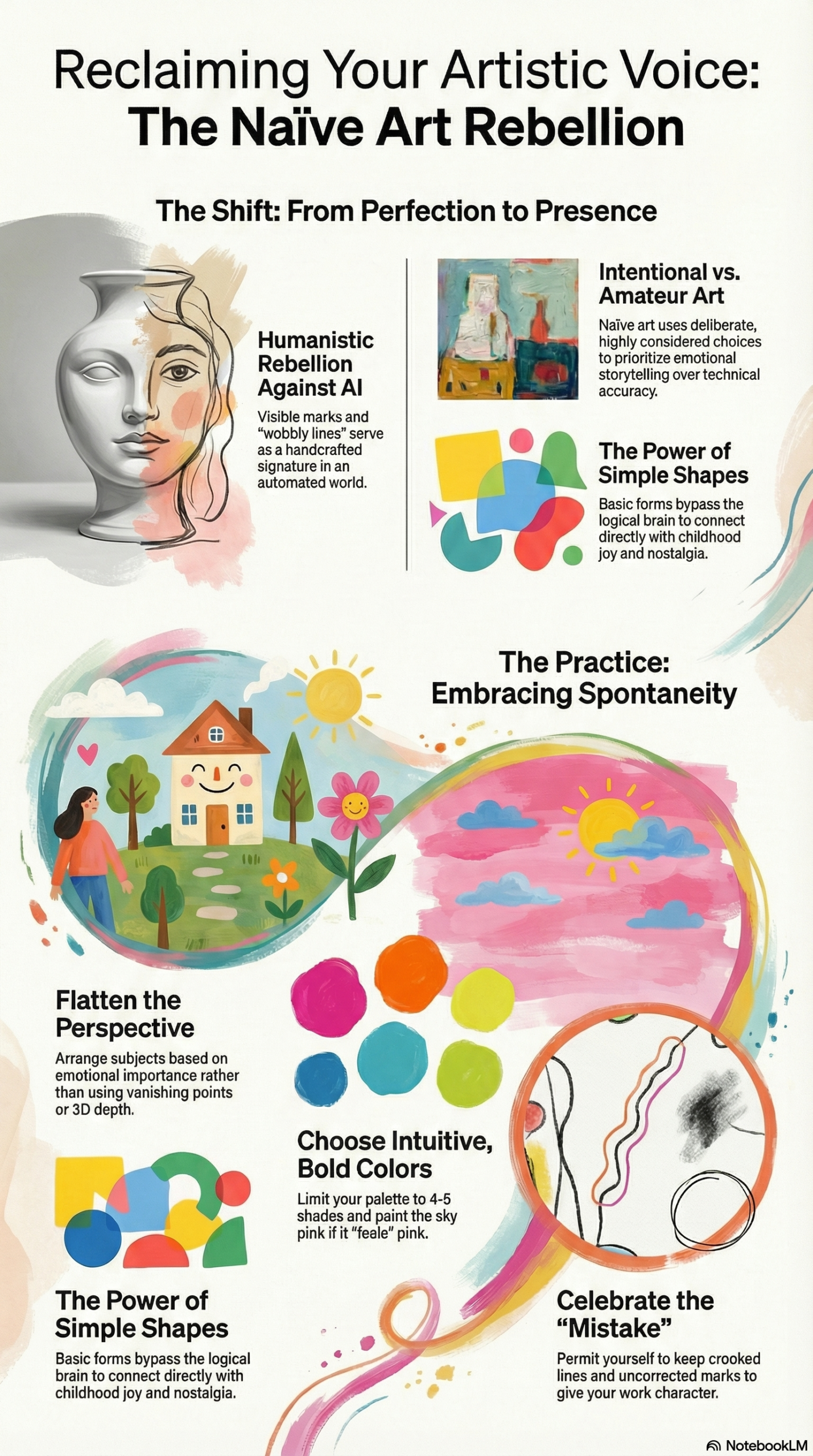
The naïve art painting style is a visual approach that prioritizes emotional honesty over technical perfection. It features flattened perspectives, bold colors, and simplified shapes. This style embraces intentional imperfections, showing clear evidence of the artist’s hand through visible brushstrokes and uncorrected marks.
Historically, art critics used this term to describe work by artists who had no formal training. Today, the narrative has changed. Experts define the movement as a form of intentional innocence where the focus is on what is felt rather than just what is seen. Many formally trained artists are now deliberately adopting these techniques, choosing to keep their creative revisions and “mistakes” proudly visible on the canvas.
You’ll often see wobbly lines or spaces that don’t make logical sense. This isn’t an error; it’s a bold and liberating choice. By ignoring the rigid rules of academic art, you can tap into a deeply authentic way of storytelling. Think about the famous works of Henri Rousseau. He never took formal classes, yet his jungle scenes are legendary because he painted with intense, unfiltered focus.
Why Are Intentional Marks Trending Right Now?
Intentional marks are trending because people are tired of overly polished, artificial visuals. In 2026, the naïve art painting style serves as a humanistic rebellion against AI-generated perfection and sterile minimalism. It offers viewers a genuine, handcrafted connection that feels completely authentic.
We live in an increasingly digital and automated world. Because software can generate flawless images in seconds, visual perfection has lost its magic. In 2026, naïve design has become a massive trend specifically as a reaction against the coldness of AI and extreme minimalism.
When you leave a sketchy pencil line under your paint, you’re leaving a human signature. When you let a brushstroke remain slightly uneven, you prove a person made it. Viewers are naturally drawn to this warmth. They want to connect with the artist behind the canvas. This cultural shift proves that expressing feelings through art is far more valuable than showing off technical skills.
The Difference Between Naïve and Amateur Art
It’s easy to look at a simplified painting and think it lacks skill. However, there’s a huge difference between painting naively and painting as an amateur. The secret ingredient is pure intention.
In naïve art, choices are highly considered even when the execution looks loose or “messy”. You simplify a shape on purpose to draw the viewer’s eye exactly where you want it. You choose a wildly bright color to evoke a specific memory.
Amateur art often feels accidental, as if the artist is fighting the paint. Naïve art feels confident in its restraint. Consider a painting of a kitchen table. An amateur might struggle to make the legs look even. A naïve artist paints the table tilted forward on purpose so you can see all the delicious food resting on top. Intentionality turns a perceived lack of polish into a celebrated style.
What Is the Psychological Power of Simple Shapes?
Simple shapes hold psychological power because they bypass our logical brains and connect directly with our emotions. They remind us of childhood innocence and joyful simplicity. This approach lowers our visual defenses, making the artwork feel approachable, nostalgic, and safe to the viewer.
Think about the last time you saw a child’s drawing. You didn’t critique the shading. You simply felt the joy radiating from the page. Naïve art taps into that same psychological openness. It creates an immediate, warm bridge between the artist and the viewer.
This is incredibly therapeutic for the artist, too. When you explore mindful painting techniques, you focus on the physical act of moving the paint. You stop worrying about creating a masterpiece. The simple shapes give you permission to just breathe, relax, and play with your materials.
How Can You Incorporate Flat Shapes and Bold Colors?
To incorporate flat shapes and bold colors into your work, stop trying to create three-dimensional depth. Paint objects as solid blocks of vibrant color chosen for their emotional impact. Use strong, graphic outlines to define forms clearly and playfully without worrying about realism.
Ditching traditional perspective is one of the most liberating things you can do. Instead of worrying about vanishing points, try arranging your subjects based on what feels important. Make the flowers huge if they are the focus, even if they’re technically in the background.
Choose your palette based on color theory basics, but apply the paint intuitively. If the sky feels pink to you today, paint it pink. This playful approach works beautifully with almost any medium. Try limiting your palette to just four or five colors. When you don’t have every shade available, you’re forced to make bold, decisive choices that give your work a unique personality.
Overcoming the Fear of Mistakes
For beginners, the hardest part of the naïve art painting style is silencing your inner critic. We’re conditioned to erase stray lines and blend harsh edges. But in this style, those “mistakes” are the actual art.
When we implemented this approach in our workshops, we saw students finally relax. They stopped apologizing for wobbly lines. If your hand shakes while painting a vase, let the vase be crooked. That crookedness gives the painting character. To truly find your painting style, you have to permit yourself to paint exactly as you are.
I’ve taught hundreds of students who were terrified of the blank page. I always tell them to trust their natural marks. The magic happens when you stop fighting your instincts and start celebrating them.
Finding Freedom in Your Daily Practice
Consistency is the secret to getting comfortable with this loose style. You don’t need to spend hours at an easel. Just spend ten minutes sketching or laying down some joyful color.
Start a sketchbook dedicated purely to messy experimentation. Use this private space to test out weird color combinations and unrefined shapes. Draw objects from memory instead of looking at a photo. Your memory will naturally simplify the shapes, giving you that beautiful naïve quality automatically.
Remember, the goal isn’t to create a perfect replica of the world. The goal is to create a sincere reflection of your inner life. Over time, you’ll develop a visual vocabulary that is entirely your own, completely free from the restrictive rules of the past.
Conclusion
The resurgence of the naïve art painting style is a reminder that art doesn’t have to be perfect to be powerful. By embracing intentional marks and bold colors, we reclaim the joy of creating. It is a wonderful rebellion against the sterile and the artificial.
Your unique, wobbly lines are exactly what the world needs to see right now. They prove that a real human made the work with heart. If you’ve been feeling stuck or intimidated by rules, I challenge you to grab a brush and just let go. Focus on the feeling, not the finish. Are you ready to dive deeper into the history of this movement? Check out our guide on what naïve art is to continue your journey.
Frequently Asked Questions
1. What defines the naïve art painting style? It is defined by a childlike simplicity, flattened perspective, and bold colors. It ignores traditional academic rules to focus on emotional storytelling.
2. Is naïve art the same as amateur art? No. Naïve art relies on deliberate, intentional choices, whereas amateur art often lacks control and structure.
3. Can formally trained artists create naïve art? Yes. Many trained professionals deliberately adopt this style to inject authenticity and raw emotion into their work.
4. Why is the naïve style becoming popular again? It is a reaction to the flawless, hyper-realistic images made by AI. People crave visuals that feel handcrafted and human.
5. How do I start painting in a naïve style? Let go of realistic proportions. Paint solid, flat shapes and allow your natural, uncorrected brushstrokes to remain visible on the canvas.

Olly
Olly Farmer M.Sc, B.Sc, PGCE 25 years experience of Watercolor Painting and AI Art; teacher for 13 years; Creator of Art Tools; Art Gallery Contributor of Art Articles to Medium.com, LinkedIn and Facebook
Continue exploring
PROMINENT PAINTING
Keep your creative momentum
Get new painting guides, practical techniques and artist stories delivered without the noise.
Occasional emails. Unsubscribe whenever you like.