
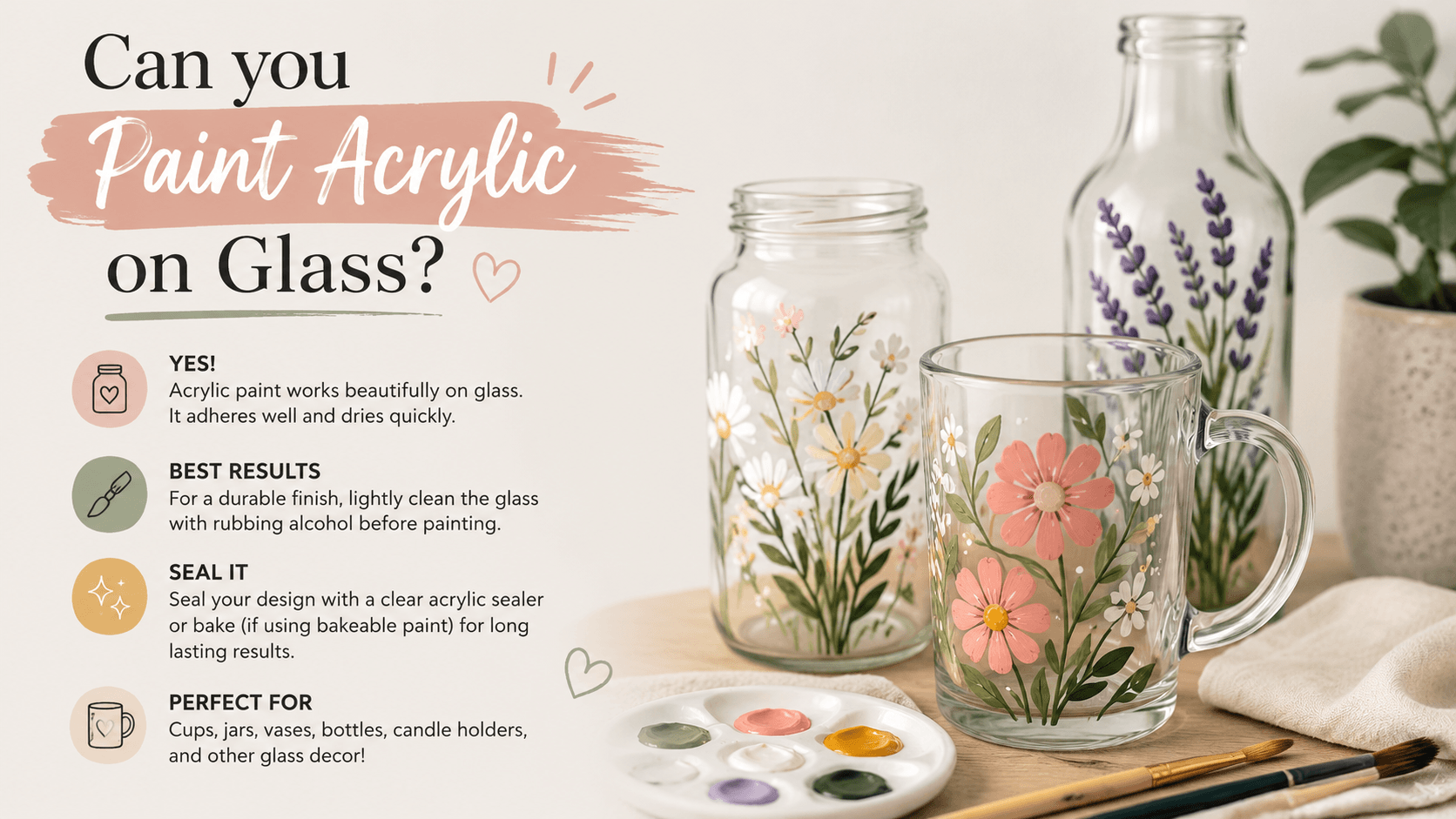
Summary: Yes, you can use acrylic paint on glass. The secret lies in proper surface preparation and sealing. By cleaning the glass thoroughly, choosing enamel-based acrylics, and curing the finished piece, you can create durable art. Grab your brushes. Prep your surface. Start painting.
You stare at an empty wine glass or a plain mason jar. You want to add some color. You look at your stash of craft paints and wonder if they will actually stick.
Glass is notoriously slick. It lacks the texture of a traditional canvas or wood panel. Because of this, many beginners assume acrylics will just slide right off. That is a myth. You can absolutely paint on glass. It just requires a slightly different approach to your usual painting routine.
The main challenge is getting the paint to grip a non-porous material. If you slap regular acrylic onto an unwashed jar, it will likely peel off the next day. We want your art to last. We want it to handle a gentle wash. By tweaking your materials and learning a few sealing tricks, you can master painting surfaces beyond the canvas. Let’s break down the exact steps to make your paint stick permanently.
Can You Use Acrylic Paint on Glass?
Yes, you can use acrylic paint on glass. You simply need to prep the smooth surface properly and seal the finished piece. With the right technique and materials, your design will adhere beautifully and last for years.
Standard acrylic paint is water-based. It loves porous surfaces that absorb moisture. Glass does not absorb anything. If you use a regular craft paint without any preparation, the paint forms a plastic-like film on top of the glass. The slightest bump will scratch it off.
You overcome this by creating a surface the paint can grab onto. Mastering acrylic painting on non-traditional items is all about the chemistry of adhesion. You need the right paint type and a solid foundation.
What Type of Acrylic Paint Is Best for Glass?
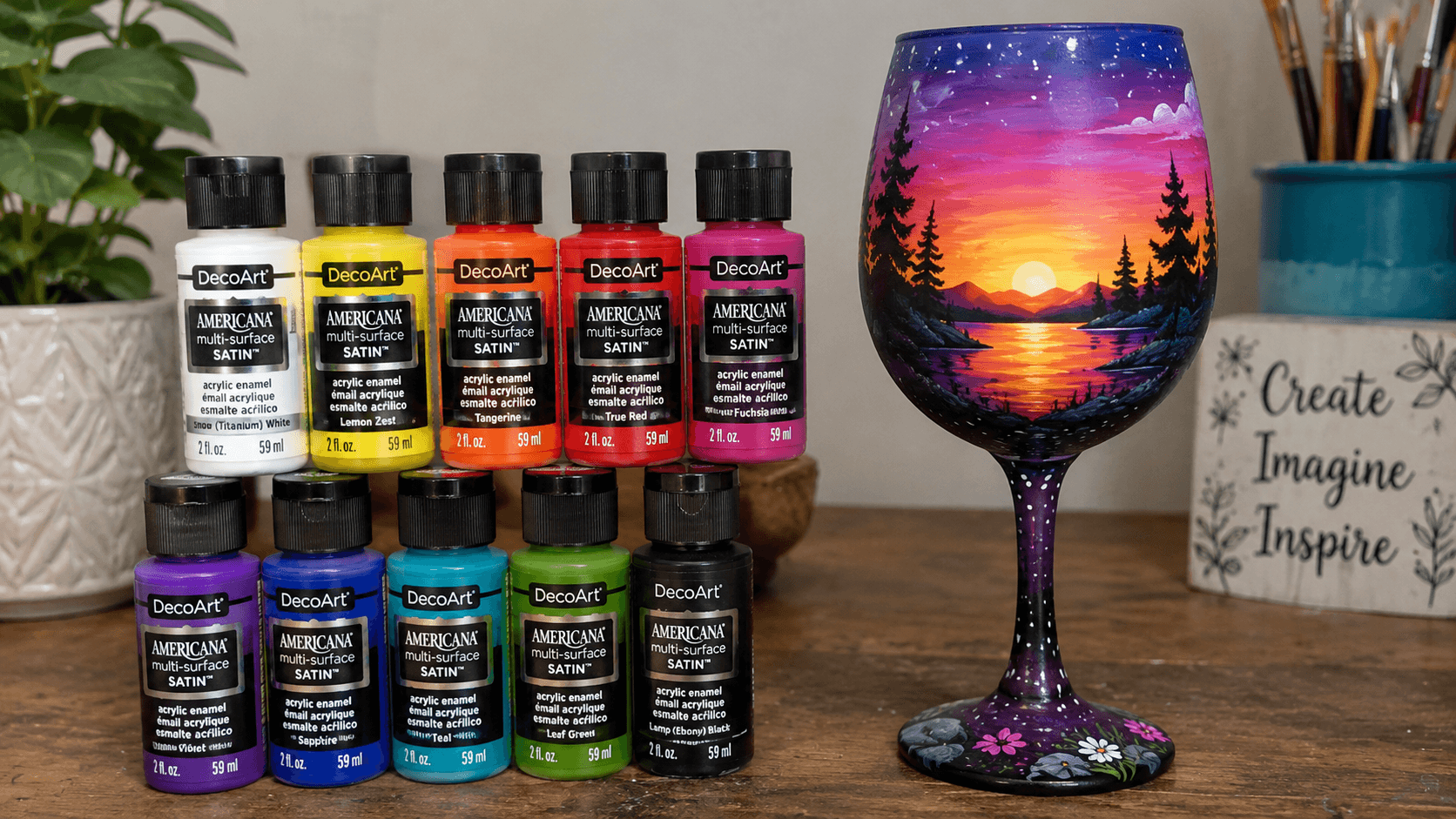
Enamel-based acrylic paints are the best choice for glass. They are specifically formulated to bond to smooth, non-porous surfaces. This makes them highly durable, glossy, and resistant to scratching compared to standard craft acrylics.
When you shop for painting supplies, look for labels that explicitly say “enamel” or “for glass and ceramics.” These specialized paints bond tightly to the surface and hold up well to sunlight.
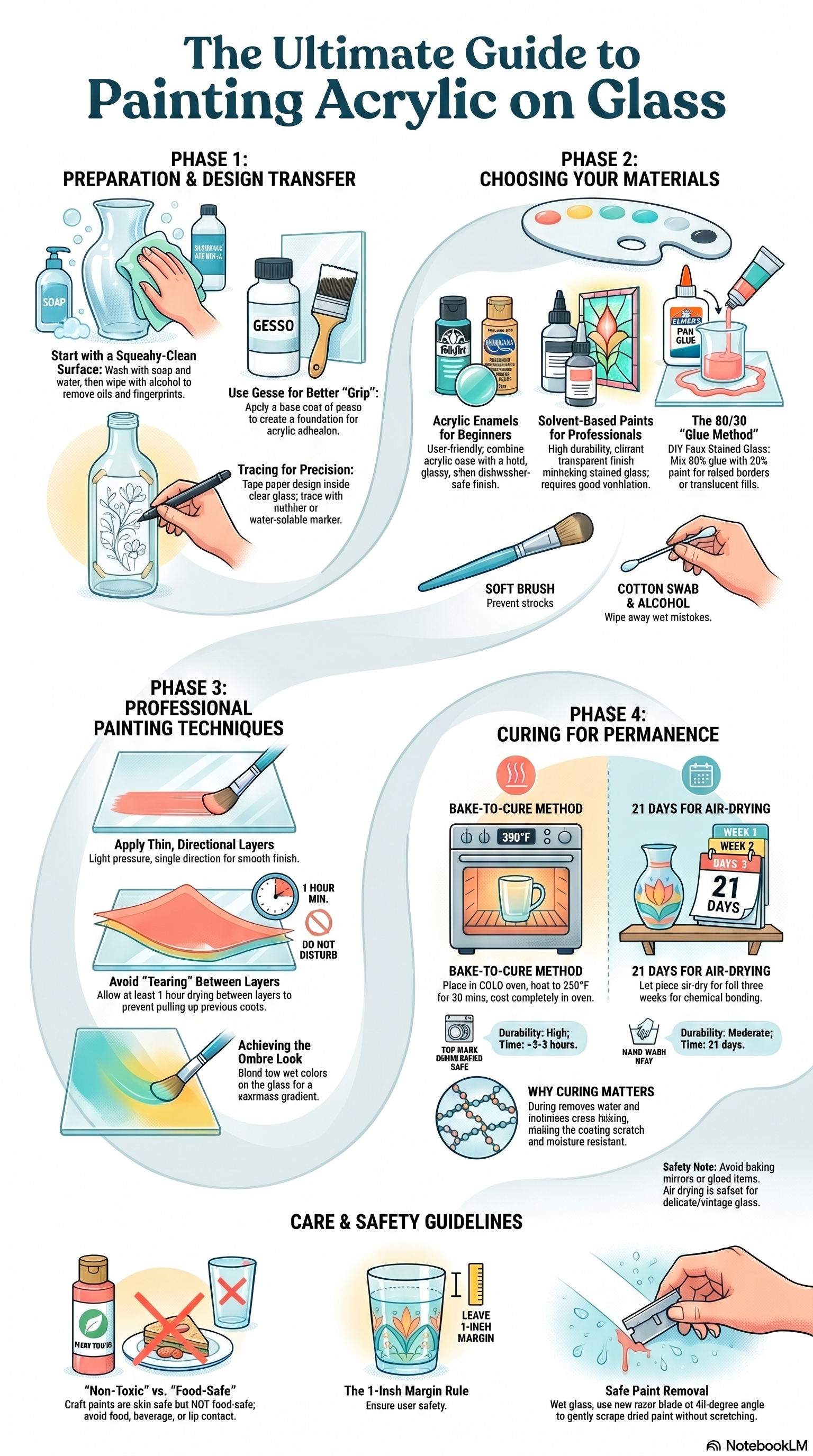
Keep one very important rule in mind. Most acrylic enamels are not food safe. If you are painting a wine glass or a tumbler, leave a thick unpainted rim at the top. You never want your mouth or food to come into direct contact with the painted areas.
How to Prepare Glass for Painting
Preparation dictates your success. Even a brand-new glass out of the box is covered in invisible dust and oils. Your hands naturally transfer oils to the glass when you hold it. Paint will refuse to stick to grease.
Start by washing your glassware in warm, soapy water. Rinse it thoroughly and let it dry. Next, take a cotton ball soaked in rubbing alcohol and wipe down the entire surface you plan to paint. This removes all residual oils and hard water marks.
Once cleaned, try not to touch the painting area with your bare hands. Wear latex gloves if you need to hold the glass firmly. Tape off any sections you want to keep clean. Now you are ready for your acrylic painting tools.
Do You Need to Prime Glass Before Painting?
Yes, priming glass is highly recommended. Because glass is incredibly smooth, standard acrylic paint has nothing to grip. An enamel-based primer gives the paint a textured surface to hold onto and prevents future peeling.
You can apply primer with a brush or a spray can. Sprays tend to give you a much smoother, even coat. You must let the primer dry completely before applying your colors. Depending on the brand and your local humidity, this can take anywhere from 24 to 72 hours. Do not rush this step.
How to Seal Acrylic Paint on Glass
You can seal acrylic paint on glass using a spray-on or brush-on varnish. A glossy acrylic polymer varnish works best. Applying two to three thin coats protects your artwork from moisture, fading, and accidental chipping.
Sealing is your final line of defense. Without a sealer, everyday handling will eventually wear the paint down. A glossy varnish enhances the vibrant colors and matches the natural sheen of the glass.
Work in a well-ventilated area if you choose a spray sealant. Apply a light, even coat and let it dry for about 15 minutes before adding the next one. Three thin coats will always look better than one heavy, dripping coat.
Baking Your Painted Glass for Durability
Some acrylic glass paints require baking to fully cure. This hardens the paint permanently. Check your paint bottle instructions first. If the paint is oven-safe, you can dramatically increase its durability.
The process requires patience. Place your painted piece into a completely cold oven. Turn the heat to the temperature specified on your paint bottle (usually around 300 to 350 degrees Fahrenheit). The glass must heat up gradually. If you put cold glass into a hot oven, it will shatter.
Bake it for the recommended time. Turn the oven off and leave the glass inside. Let the glass cool down completely as the oven cools.
Conclusion
Painting on glass opens up a whole new world of creative projects. You are no longer restricted to flat canvases or heavy wood blocks. You can customize vases, upgrade old jars, and create stunning personalized gifts.
Remember the core steps. Clean the glass until it squeaks. Use enamel paints. Seal your work with a high-quality varnish or an oven cure. Do not let the smooth surface intimidate you. Pick up a cheap glass from the thrift store today and start practicing. Your next great piece of art is waiting for a pop of color.
FAQs: Can You Use Acrylic Paint on Glass?
- Is acrylic paint on glass waterproof? Standard acrylic paint is water-resistant when dry but not entirely waterproof on glass. Prolonged soaking will cause the paint to lift and peel off. You must cure the paint in an oven or use a dedicated waterproof sealant to protect it from moisture.
- Can I wash glasses painted with acrylics? Yes, but you should only hand wash them gently. Even fully cured and sealed acrylic paint can chip inside the harsh environment of a dishwasher. Use warm water, mild soap, and a soft sponge to keep your art intact.
- Is acrylic paint food safe? No, most acrylic paints and sealants are not food safe. You should never apply paint to the inside of a bowl or the rim of a drinking glass. Always leave a clear, unpainted margin where your mouth or food will make contact.
- How do I fix a mistake while painting on glass? Fixing painting mistakes on glass is easy when the paint is still wet. Simply dip a cotton swab in rubbing alcohol and wipe the error away. If the paint has already dried, you can carefully scrape it off with a craft knife or razor blade.
- Why is my acrylic paint peeling off my glass? Peeling usually happens because the glass was not cleaned properly before painting. Invisible oils from your fingers prevent the paint from bonding to the surface. It can also peel if you skipped the priming step or failed to seal the final dried piece.

Olly
Olly Farmer M.Sc, B.Sc, PGCE 25 years experience of Watercolor Painting and AI Art; teacher for 13 years; Creator of Art Tools; Art Gallery Contributor of Art Articles to Medium.com, LinkedIn and Facebook
Continue exploring

PROMINENT PAINTING
Keep your creative momentum
Get new painting guides, practical techniques and artist stories delivered without the noise.
Occasional emails. Unsubscribe whenever you like.