
Pentimenti are the visible ghosts of previous decisions showing through a painting’s surface. This post explains how these hidden layers emerge over time and what they teach us about art history. You will learn to spot these alterations and realize that even the masters changed their minds mid-painting. Look closely at your favorite works and start finding the hidden revisions beneath the paint.
The masters messed up. They painted over arms. They shifted eyes. They hid entire figures under thick layers of oil paint. Centuries later, the oil becomes transparent. Those hidden mistakes reappear. We call them a pentimento.
This is a normal part of the working process. Beginners assume the greats painted perfectly on the first try. That is completely false.
We will look at exactly why this chemical process happens. We will examine famous examples. You will see how curators use these hidden layers to spot fakes. If you understand famous painting mistakes, you stop fearing your own canvas. You can just paint over your errors. We can observe the science behind the disappearing layers and the ghosts they leave behind.
What Is a Pentimento (plural Pentimenti) in Art?

A pentimento is an alteration in a painting where traces of previous work show through the current surface. The word comes from the Italian term for repentance. It proves the artist changed their mind and painted over their original idea.
Those hidden layers do not always stay hidden. You can sometimes see them with the naked eye. Other times, experts need infrared cameras to find them. They reveal the true history of how a painting was built.
Why Do Hidden Paint Layers Become Visible?
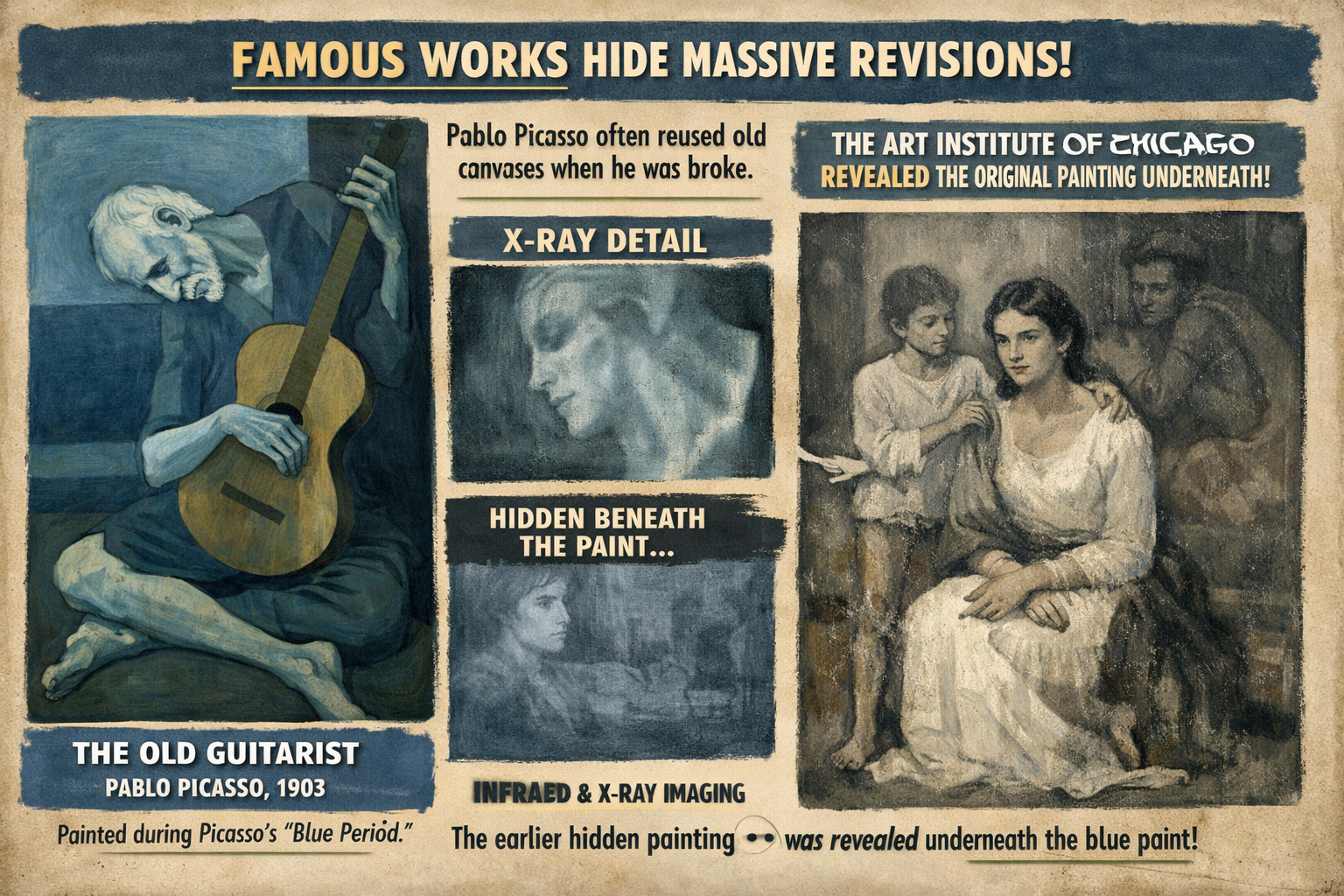
Hidden paint layers become visible because oil paint grows increasingly transparent as it ages. The chemical structure of the linseed oil changes over centuries. Light penetrates deeper into the older layers and reflects off the original sketches or discarded figures hidden underneath.
This process takes hundreds of years. The refraction index of the oil shifts slowly. According to the Tate conservation department, the oil medium eventually matches the refractive index of certain pigments like lead white. The top layer effectively turns into a window. You get to see exactly what the artist was trying to hide.
Famous Pentimenti in Masterpieces
Some of the most famous works in the world hide massive revisions. Pablo Picasso famously reused canvases when he was broke. You can see a woman’s face ghosting through the neck of his subject in The Old Guitarist. The Art Institute of Chicago used X-ray and infrared imaging to reveal an entire earlier composition hidden underneath the blue paint.
John Singer Sargent had to make a rapid change to Portrait of Madame X. He originally painted her dress strap slipping off her shoulder. The Paris Salon crowds were scandalized. Sargent repainted the strap firmly on her shoulder to save his reputation. The Metropolitan Museum of Art confirms you can still see the faint outline of the original strap.
Rembrandt constantly reworked his compositions. In The Night Watch, he shifted the positions of spears and altered the legs of the main figures. These changes prove he was actively solving visual problems on the canvas. If you know the secret language of art, these shifts tell a story of struggle and refinement.
How Curators Use Pentimenti to Spot Forgeries
Curators use pentimenti to authenticate paintings because forgers rarely make structural changes mid-painting. A forger copies the final image directly. The presence of hidden, reworked layers strongly suggests the painting is an original piece created by an artist actively figuring out the composition.
This is a core concept in art conservation. When experts analyze a disputed work, they immediately take it to the X-ray lab. They look for the struggle. Authentic art has a messy history underneath the varnish. If an X-ray shows perfectly laid paint with zero hesitations, the experts get suspicious. It is one of the most reliable scientific methods to detect forgery in the art world.
What Master Mistakes Teach Beginner Artists
Beginners put too much pressure on the first brushstroke. You think it has to be perfect. When I teach my watercolor classes, I watch students abandon a piece because they put a shadow in the wrong spot.
The masters just wiped it away or painted over it. They treated the canvas as a draft. They adjusted the proportions. They moved entire limbs. You can always fix overworked paintings by making an active change. Stop trying to execute a flawless plan. Start reacting to what is actually on your canvas and adjust as you go.
Conclusion
Changes are a necessary part of the painting process. The blank canvas is not a test you have to pass on the first try. It is a workspace. Every great painting is just a series of corrected mistakes. The oil paint might betray those mistakes a few centuries later. That just makes the art more interesting.
Stop worrying about ruining the canvas. Put the paint down. If you hate it, scrape it off or wait for it to dry and cover it up. Your favorite painters did the exact same thing. Grab your brushes and go start your next piece right now.
Frequently Asked Questions
- What causes a pentimento to appear? A pentimento appears when the top layers of oil paint become transparent over time. The chemical structure of the oil ages and allows light to pass through to the hidden layers beneath.
- Can you see pentimenti without an X-ray? Yes. Many pentimenti are visible to the naked eye under normal lighting conditions. You can often spot faint lines or strange ghostly shapes pushing through the surface of older paintings.
- Did Leonardo da Vinci have pentimenti in his work? Yes, Leonardo da Vinci frequently altered his compositions. The National Gallery found extensive underdrawings and changes in The Virgin of the Rocks using infrared reflectography to show how he completely repositioned the figures before finishing the piece.
- How does a pentimento prove a painting is real? A forger usually copies a finished painting perfectly without making mistakes. An original artist changes their mind and leaves hidden layers of abandoned ideas behind. Finding those hidden layers proves the artist was actively creating the composition.
- Can acrylic paint create a pentimento? Acrylic paint does not age and become transparent the way oil paint does. You can paint over mistakes in acrylic, but those hidden layers will likely stay hidden forever.

Olly
Olly Farmer M.Sc, B.Sc, PGCE 25 years experience of Watercolor Painting and AI Art; teacher for 13 years; Creator of Art Tools; Art Gallery Contributor of Art Articles to Medium.com, LinkedIn and Facebook
Continue exploring

PROMINENT PAINTING
Keep your creative momentum
Get new painting guides, practical techniques and artist stories delivered without the noise.
Occasional emails. Unsubscribe whenever you like.