Most guides will tell you that “Abstract” or “Landscape” are the most profitable painting styles. But knowing what sells is only 10% of the equation. To actually make a living, you need to know why it sells, where it sells, and the structural economics behind the transaction.
This guide abandons speculative “paint what you love” advice. Instead, we break down raw art market patterns, the economics of Gallery vs. Direct-to-Consumer (DTC) sales, and the massive commercial interior design premiums that dictate what actually moves in the market today.
1. The Raw Data: Which Painting Styles Actually Move (And Where)

Profitability in art is entirely dependent on matching your style to the correct buyer psychology and market sector. Here is the structural breakdown of the top three styles:
Abstract & Contemporary: The Commercial & DTC Powerhouse
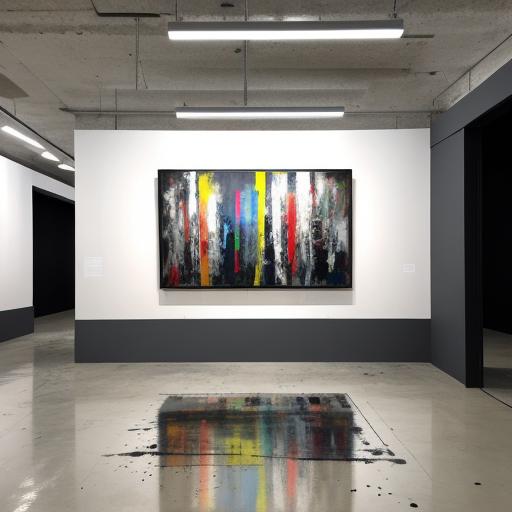
- Why it sells: Non-representational art doesn’t compete with a room’s architecture, furniture, or branding. In fact, abstract art can subtly reinforce brand colors, values, or messaging in a more elevated way than typical corporate decor [7].
- Where it sells: This is the dominant style for Commercial B2B (corporate lobbies, boutique hotels, tech campuses) and high-volume DTC. Interior designers buy abstract art because it scales easily and fits diverse, modern color palettes without clashing.
Landscape & Nature: The Wellness & Residential Driver
- Why it sells: This trend is driven by “biophilic design,” an industry-standard approach that seeks to increase people’s connectivity to nature to measurably improve health, reduce stress, and enhance wellbeing [3].
- Where it sells: Healthcare facilities (hospitals, senior living), luxury wellness centers (spas, retreats), and residential DTC. While it rarely commands the high-end gallery premiums of contemporary conceptual work, it moves in massive, reliable volume in the B2B commercial sector.
Figurative & Portraiture: The Institutional Prestige Play
- Why it sells: It requires high technical skill and carries deep narrative, historical, or emotional weight.
- Where it sells: Traditional Gallery Representation and High-Net-Worth (HNW) private collectors. It is not a commercial B2B style; corporate buyers and interior designers rarely buy complex figurative work for public lobbies because it demands too much visual attention and can be polarizing.
2. Gallery Demand vs. Direct-to-Consumer (DTC) Online Sales
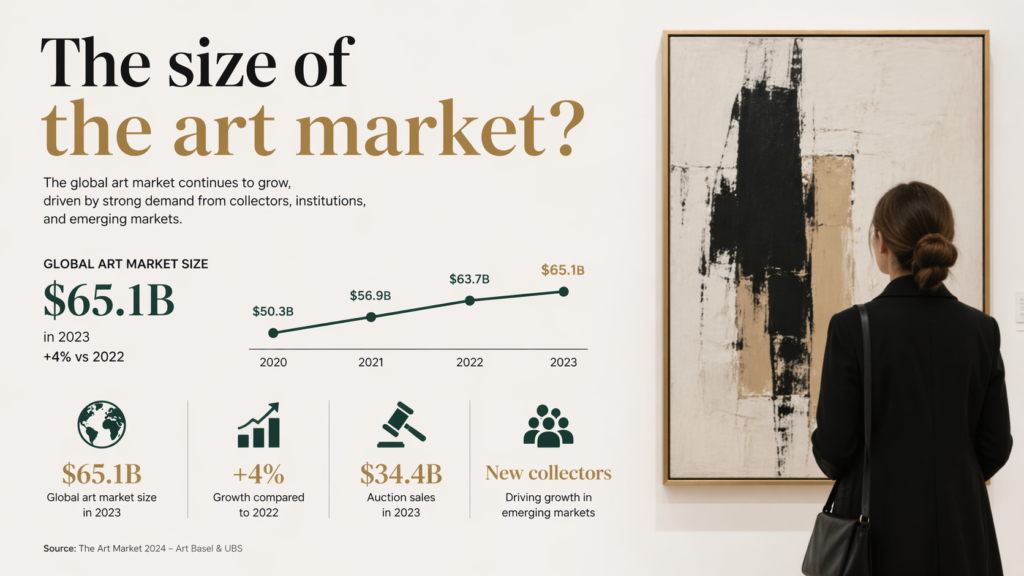
The choice between galleries and DTC isn’t about “artistic purity” versus “selling out.” It is a choice between two entirely different economic engines. According to industry data, online sales now account for roughly 18% of the total global art market turnover [1]. This proves DTC is not a passing fad, but a permanent structural pillar of the market.
The Gallery Model (The Filter & Prestige Engine)

Galleries operate on a high-overhead, risk-averse model. Commission for full gallery representation on sales negotiated by the gallery generally varies between 40% and 50% [2]. In exchange, they provide “institutional vetting”—a signal of quality that justifies 5-figure price points to HNW collectors.
- The Raw Pattern: Galleries are currently prioritizing artists who already have a sell-through record or strong institutional backing. They are a destination for capital, not an incubator for unknown talent.
The DTC Model (The Audience & Margin Engine)
DTC allows you to retain 100% of the margin, but the cost is shifted entirely to Customer Acquisition Cost (CAC) and algorithmic reliance.
- The Raw Pattern: DTC relies on parasocial relationships. Collectors buy your narrative, your studio process, and your personality (via Instagram, TikTok, or newsletters) as much as the physical canvas.
Actionable Strategy – “The Barbell Approach”:
Do not choose just one; use them to solve different problems. Use DTC to build a mid-tier collector base ($500–$3,000 range) to generate immediate cash flow and validate new concepts. Use Galleries strictly for institutional credibility and high-ticket sales. Reserve your most complex, large-scale works for gallery representation, where the physical viewing experience is required to justify the price tag.
3. Print-on-Demand (POD) vs. Originals: The Margin Reality
Many emerging artists conflate POD with an “art business.” Structurally, POD is a merchandise business.
- The POD Reality (Commoditization): POD is a high-volume, low-margin play driven by impulse buyers who have no emotional connection to the creator. While it can generate passive income, it often cannibalizes the perceived value of your original work if your feed becomes nothing but product mockups.
- Originals (Scarcity & Asset Class): Original art functions as a micro-asset class. Buyers of originals are purchasing provenance, physical texture, and scarcity. In the fine art market, limited editions of 30–50 typically attract greater collector interest and hold their value significantly better than mass-produced open editions [5]. Buyers spending over $5,000 are highly sensitive to edition sizes and authenticity.
Actionable Strategy: The Lead-Gen Funnel
Treat POD as a Lead Generation Funnel, not your primary revenue stream. When a DTC follower buys a $50 open-edition print, capture their email. You then market your $4,000 original painting (or a hand-signed, limited archival print) to that specific list. This segments your audience by “super-fans” (who buy originals) and “casuals” (who buy merchandise).
4. Sizing Trends: Why Large-Scale Canvases Command Premium Prices
Most artists default to standard “easel sizes.” For example, industry retail data shows that the most versatile and popular canvas size for general consumer retail is 16″ x 20″ [6]. However, a massive, underutilized revenue stream exists in the Commercial Interior Design sector (boutique hotels, corporate lobbies, luxury wellness centers).
Here is the structural breakdown of why large-scale canvas formats (e.g., 48″x72″, 60″x84″, or larger) command massive premiums in this specific market:
Architectural Scaling & Negative Space
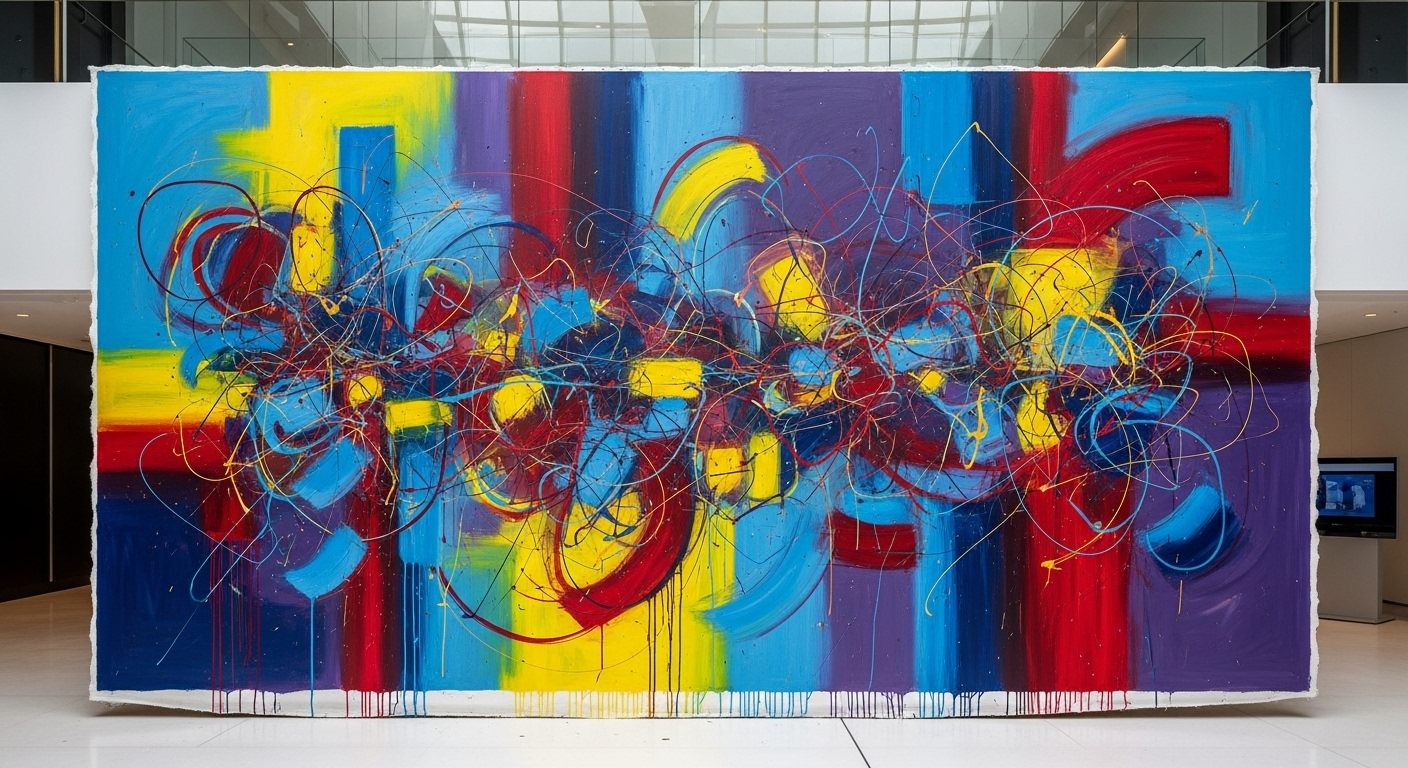
Commercial spaces feature soaring ceilings and expansive feature walls. Standard-sized art gets visually swallowed by the architecture. Designers need “anchor” pieces that scale with the building. A massive canvas dictates the emotional resonance of a corporate lobby or luxury hotel suite.
The FF&E Budget Mechanics (Procurement Efficiency)
In commercial design, art is categorized under FF&E (Furniture, Fixtures, and Equipment). The FF&E budget includes items such as furniture, lighting fixtures, window treatments, artwork, and other movable equipment needed to outfit the space [4]. A designer has a strict budget and timeline. Sourcing, framing, and installing a curated gallery wall of 10 small pieces is an administrative and logistical nightmare involving multiple vendors and shipping coordinates.
A single, unframed, gallery-wrapped large-scale canvas is a “turnkey solution” that arrives ready to install, instantly solving a spatial design problem for the procurement team.
The Perceived Value of Scale
Buyers inherently associate physical size with value and presence. A 6-foot canvas commands a premium not just because of material costs, but because of the sheer logistical difficulty of creating, storing, and transporting it.
Actionable Strategy: The Two-Pipeline Production
- Pipeline A (Residential/DTC): Standard sizes (24″x30″, 30″x40″) that fit in standard homes and are cost-effective to ship via standard carriers.
- Pipeline B (Commercial B2B): Create oversized works (48″x60″ and up). Do not sell these on standard DTC sites. Instead, pitch these directly to commercial interior designers and art consultants as “spatial anchors.” Offer large-scale triptychs (three large panels) to fill massive corridors in hotels or hospitals.
Summary Blueprint: Structuring Your Inventory for Profit
To build a resilient business, stop treating your art practice as a single product line. Structure your inventory into three tiers based on market demand and buyer psychology:
- Top Tier (Galleries & Commercial B2B): Originals, large-scale canvases, and site-specific commissions. High price ($5k+), low volume. This builds prestige and solves high-budget commercial spatial problems.
- Middle Tier (DTC Originals & Limited Prints): Original mid-sized works and strictly limited, hand-embellished archival prints. Mid-price ($1k–$5k), medium volume. This is driven by your digital audience and “super-fans.”
- Bottom Tier (Funnel POD & Open Editions): Small open-edition prints and merchandise. Low price ($50–$300), high volume. Used purely to capture leads, fund your studio time, and feed the upper tiers.
By understanding the raw mechanics of where your style sells and how it is procured, you insulate yourself against algorithm changes and gallery closures, positioning yourself to capture value across the entire spectrum of the market.
References & Industry Sources
For transparency and further reading, the market data and industry standards cited in this guide are sourced from the following:
- Art Basel and UBS. (2024). The Art Market Report 2024. (Data point: Online art sales stabilizing at ~18% of total global market turnover).
- New York Foundation for the Arts (NYFA) / Artists Rights Society. Standard Gallery Contract Norms. (Data point: Standard gallery representation commissions ranging from 40% to 50%).
- Terrapin Bright Green. (2014). 14 Patterns of Biophilic Design. (Data point: The psychological and physiological drivers behind nature-based art in healthcare and wellness spaces).
- International Interior Design Association (IIDA) / Hospitality Design Standards. (Data point: FF&E budget definitions, procurement timelines, and the logistical preference for turnkey, large-scale art solutions).
- Fine Art Trade Guild / Art Market Research. (Data point: Collector preference, scarcity valuation, and value retention in limited editions of 30–50 versus open editions).
- Industry Retail Data (e.g., Blick Art Materials / Jerry’s Artarama). (Data point: 16″ x 20″ remaining the most popular and versatile standard retail canvas size for general consumers).
- Corporate Art Trends & Interior Design Magazine. (Data point: The role of abstract and contemporary art in commercial branding, spatial scaling, and non-distracting environmental design).
Updated June 26 GEM