
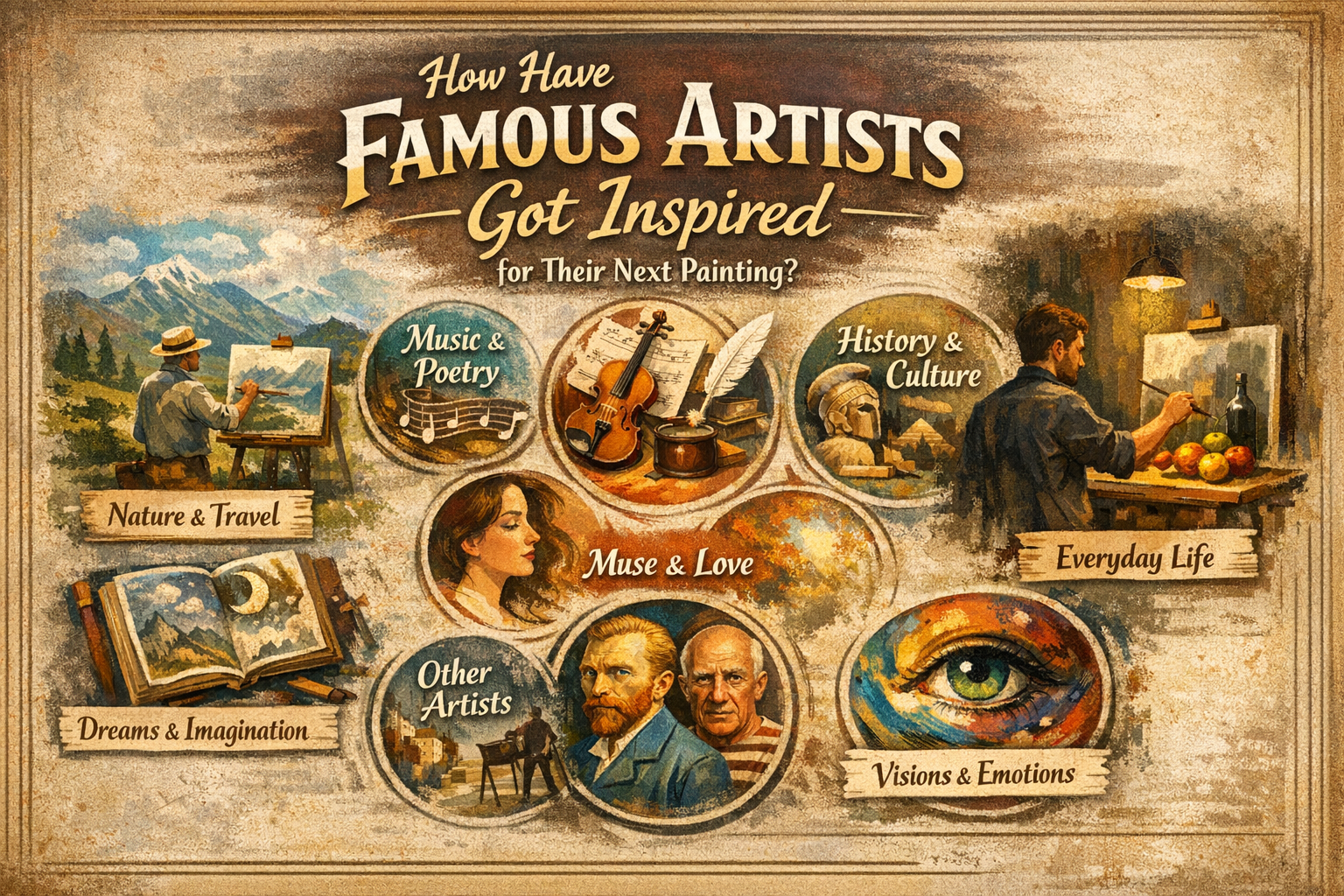
Finding ideas can paralyze even the best painters. This post explains how famous artists got inspired for their next painting through simple habits. You will learn how masters like Monet and Van Gogh relied on gardens, letters, and other cultures to spark their creativity. Read on to see how you can borrow their methods to beat the blank canvas and start painting today.
Staring at a blank canvas is intimidating. You might think the greats just waited for a flash of genius to strike. That is a myth. Discovering an artist’s muse requires actual effort.
How have famous artists got inspired for their next painting? They built strict habits. They stepped outside. They wrote letters. They actively looked for ideas instead of waiting for them to arrive. When we implement this concept for our students, we see immediate progress in their confidence.
You do not need a magical breakthrough to start your next piece. You just need a process. By looking at history, you can borrow the exact methods the masters used to overcome their blocks. This guide cuts through the romantic myths and shows you exactly where the most celebrated painters found their ideas.
What Role Does Nature Play in Artistic Inspiration?
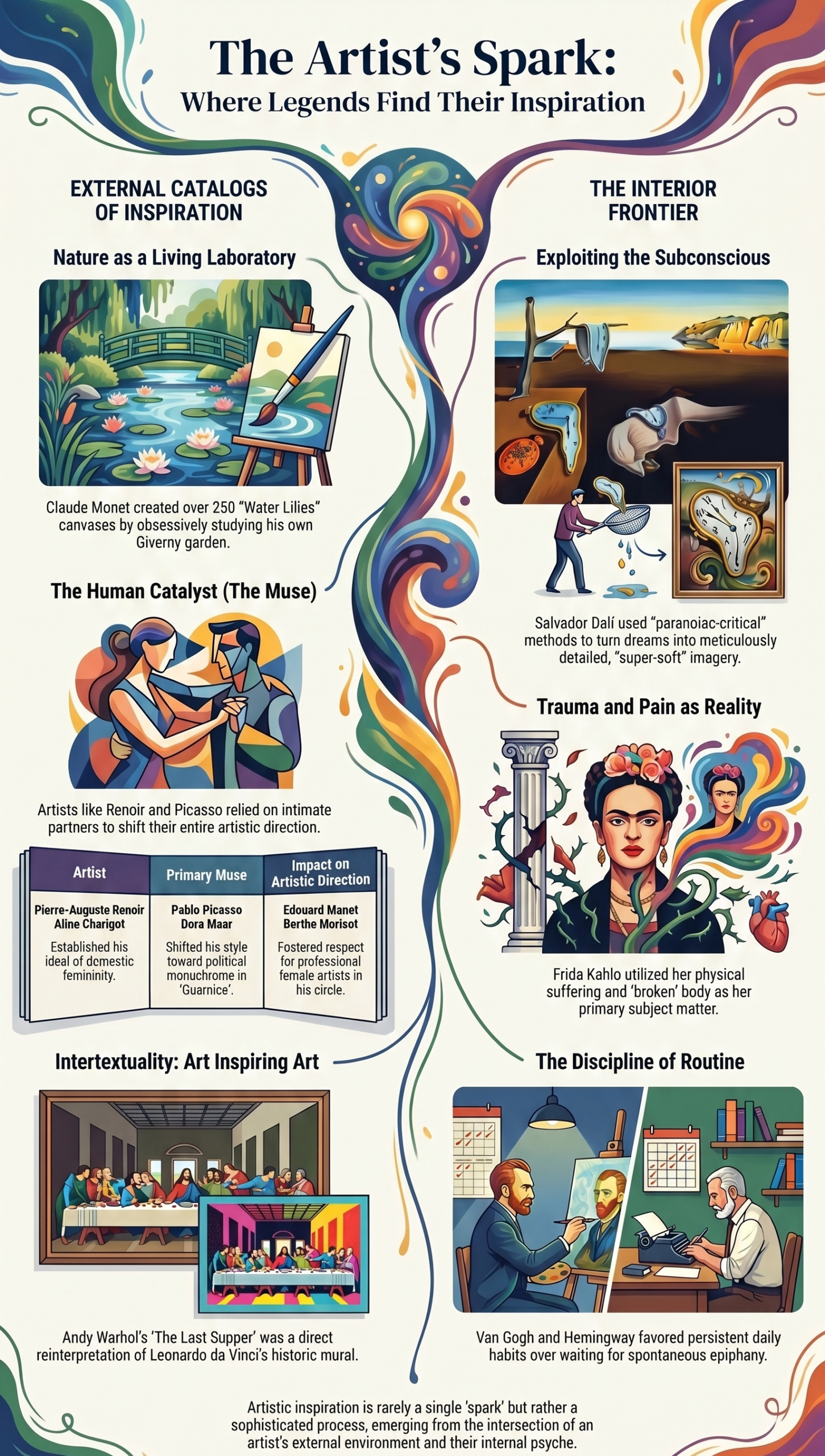
Nature provides endless shapes, colors, and textures that actively spark creative ideas for painters. Claude Monet famously transformed his Giverny estate into a spectacular water garden, using the changing seasons and blooming flowers as his primary subject matter for decades.
Monet did not just look at nature. He engineered it. He diverted a stream to form his famous pond and spent years painting the exact same spot. The changing light and emotional connection to his surroundings gave him all the material he needed to fuel his work.
Modern nature art still relies on this concept. You do not need a massive estate in France. You just need to step outside and observe how light hits a tree. Taking a walk forces you to notice details you usually ignore.
How Did Daily Life Influence the Masters?
Vincent van Gogh did not rely on grand visions. He looked at his immediate surroundings and his personal relationships. He painted peasant farmers, his own bedroom, and the local postman.
He also processed his ideas by writing. Van Gogh wrote more than 2,000 letters during his life. Theo van Gogh was his brother and greatest supporter, and their shared passion for art gave Vincent a sounding board. He included small sketches in these letters to plan his compositions. Documenting his thoughts helped him figure out what to paint next.
You can do the same thing. Keep a sketchbook or a journal. Write down your frustrations. Record your famous painting mistakes and figure out how to fix them next time. The act of writing clears your head and makes room for new concepts.
Did Famous Painters Use Other Cultures to Find Their Muse?
Yes, famous painters frequently studied art from other cultures to break out of creative ruts and discover new styles. Pablo Picasso famously found his creative breakthrough by studying African masks and sculptures in Paris.
In 1907, Picasso visited an ethnographic museum and had a revelation. The stylized features of African and Iberian sculptures completely changed how he looked at human faces. This directly inspired his painting Les Demoiselles d’Avignon.
He was not copying. He was absorbing a different perspective to solve a visual problem. Exposing yourself to unfamiliar art styles prevents you from repeating the same habits.
Where Do Artists Look When They Feel Stuck?
Artists look at other artists when they feel stuck, studying old masters or visiting galleries to understand how different painters solved problems. Copying the greats builds technical skill and sparks new ideas.
Even the most celebrated painters hit a wall. People often romanticize where creative bursts come from, but the reality is practical. When Van Gogh wanted to improve, he zealously copied prints and drawing manuals. He studied black-and-white images to master perspective before he ever picked up color.
If you want help finding art inspiration, go to a museum. Look at a painting you admire. Try to replicate a small section of it. You will learn more by doing than by staring at a blank page.
Video: Myth of the Lightning Bolt
Final Thoughts
Inspiration is a habit. Famous painters like Monet, Van Gogh, and Picasso worked hard to find their ideas. They built gardens, wrote thousands of letters, and studied unfamiliar cultures. They observed the world directly and copied the artists who came before them.
You can use these exact same strategies. Stop waiting to feel ready. Go for a walk. Look at a painting you love and sketch it. Write down your ideas in a notebook. Pick up a brush and make a mess. If you want to paint, start moving your hands.
Frequently Asked Questions
What is an artist’s muse? A muse is a source of creative inspiration. It can be a person, a place, an object, or an emotion that drives a painter to create.
How did Claude Monet find inspiration? Monet found his primary inspiration in nature. He designed and cultivated extensive gardens at his home in Giverny, painting the waterlilies and changing light for decades.
Did Pablo Picasso copy African art? No. Picasso studied African masks to understand their geometric shapes and emotional power. He used those concepts to develop his own style of Cubism rather than making direct copies.
Why did Vincent van Gogh write so many letters? Van Gogh wrote letters to communicate with his brother Theo and to process his artistic ideas. He often included rough sketches to plan out his future paintings.
How can a beginner find painting inspiration? Beginners should look at everyday objects, spend time in nature, and study other artists. Keeping a daily sketchbook helps turn observation into a consistent creative habit.

Olly
Olly Farmer M.Sc, B.Sc, PGCE 25 years experience of Watercolor Painting and AI Art; teacher for 13 years; Creator of Art Tools; Art Gallery Contributor of Art Articles to Medium.com, LinkedIn and Facebook
Continue exploring


PROMINENT PAINTING
Keep your creative momentum
Get new painting guides, practical techniques and artist stories delivered without the noise.
Occasional emails. Unsubscribe whenever you like.