
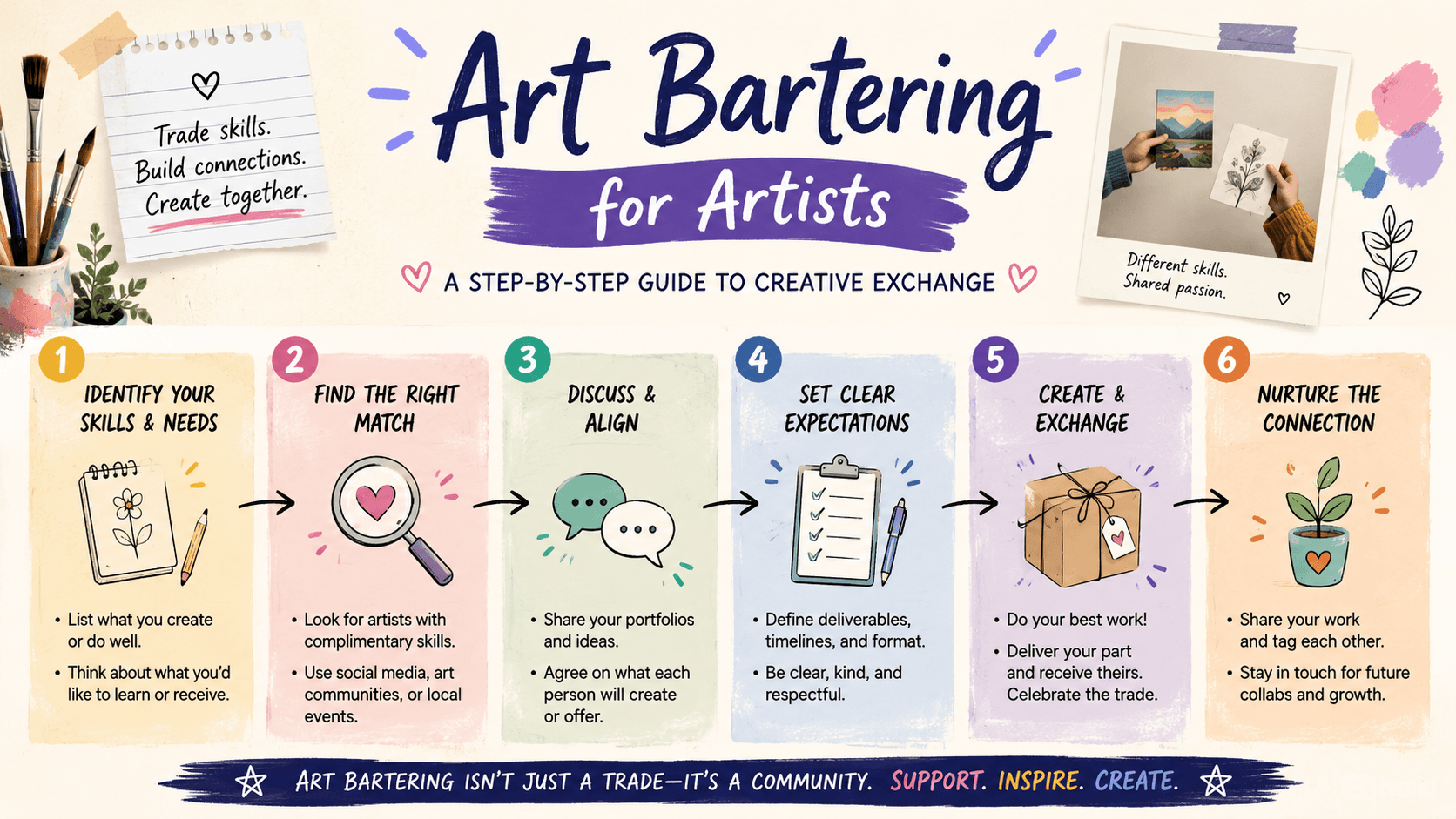
Artists can successfully start viral art bartering by strategically identifying their artistic value, seeking out complementary services or goods, clearly defining the terms of exchange, and leveraging social media to showcase successful trades. This process not only provides access to needed resources without monetary cost but also expands an artist’s network and visibility, fostering a vibrant community of creative collaboration.
Keypoint Summary
- Define Your Value: Clearly assess the monetary and artistic worth of your work before proposing a trade.
- Identify Needs & Partners: Determine what services or goods you require and research artists or businesses offering them.
- Formalize the Agreement: Create a written agreement outlining deliverables, timelines, and usage rights to prevent misunderstandings.
- Promote Your Trades: Share your successful barters on social media to inspire others and attract new exchange opportunities.
What is Art Bartering and Why Should Artists Consider It?

Art bartering is the exchange of artwork or artistic services for other goods, services, or even other artworks, without the use of money. Artists should consider it because it offers a powerful way to acquire necessary resources, gain exposure, and build professional relationships when cash flow is limited, fostering a collaborative economy.
Historically, bartering was the primary method of commerce before the widespread adoption of currency, and it continues to be a viable economic practice today, particularly within creative communities source: Wikipedia on Barter. For artists, it’s an opportunity to bypass traditional market constraints and engage directly with their community.
How Do You Find Potential Bartering Partners?
Finding potential bartering partners involves active networking, online research, and clear communication of your bartering intentions. Start by considering what services or goods you need, then look for individuals or businesses in your local community or online art platforms who might benefit from your artistic talents.
Platforms like Instagram, dedicated art forums, and local artist collectives are excellent starting points. You might seek a web designer for your art portfolio website, a photographer for professional shots of your work, or even another artist for a collaborative exchange.
Setting the Value of Your Artwork for Barter
Accurately valuing your artwork for a barter exchange is crucial for a fair trade. Consider factors such as the materials used, the time invested, your experience level, your current market prices, and comparable sales in the art market.
While a direct monetary equivalent might not always be the goal, having a clear understanding of your artwork’s market value ensures you receive a fair exchange. Researching current art market trends for 2026 can provide valuable insights into pricing. You might also consider the perceived value to the recipient, especially if it’s a unique commission or a piece that aligns perfectly with their brand.
Crafting a Clear Bartering Agreement
A clear, written bartering agreement is essential to protect both parties and prevent misunderstandings. This document should detail what each party will provide, the quality and scope of the deliverables, timelines for completion, and any intellectual property or usage rights.
For instance, if you’re trading a custom oil painting for marketing services, specify the size and subject of the painting, the number of revisions, and the exact marketing deliverables like social media posts or ad campaigns. This formalization ensures transparency and professionalism, much like any commercial contract.

Promoting Your Art Barter to Go Viral
To make your art bartering efforts go “viral,” actively document and share your successful exchanges across social media and your professional network. Showcase both your artwork and the service or product you received, tagging your bartering partner and using relevant hashtags.
Highlight the story behind the exchange, the mutual benefits, and the unique collaboration. This not only celebrates the partnership but also inspires others to consider bartering, expanding the reach of your art and the concept of creative exchange. Consider creating short videos or blog posts detailing the process, similar to how artists share their watercolor journey video tutorials.
Leveraging TikTok for Viral Bartering “Chains”
TikTok has transformed bartering from a simple transaction into a highly bingeable genre of entertainment. The platform’s algorithm thrives on human connection, dopamine-inducing transformations, and narrative arcs. Artists can capture this audience by turning a single trade into a multi-part storytelling series.
To successfully spark a viral TikTok barter campaign, consider the following content strategies:
- The “Trading Up” Narrative: Frame your barter as a quest. Emulate viral trends like trading a single sticker and seeing how many consecutive barters it takes to land something massive (like a studio lease or a billboard space). Audiences will hit “Follow” just to see how far the chain goes.
- The Asmr and Process Hook: TikTok viewers are deeply captivated by the physical creation of art. Use crisp audio of paint mixing, canvas stretching, or clay throwing, overlaid with text-to-speech explaining the unusual trade you just accepted (e.g., “Trading an 8-foot mural for a year of free dental care”).
- The Unboxing and Reveal: The climax of your video should always be the emotional payoff. Film the raw, authentic reaction of the person receiving your art, or your own reaction to unboxing the service or product they traded you.
By tagging your trading partners and using high-traffic hashtags like #ArtBarter, #TradeUp, and #CreativeEconomy, you invite your audience to pitch their own goods and services in the comment section—turning a single video into an infinite pipeline of future business.
What Are the Benefits of Art Bartering for Emerging Artists?
Art bartering offers emerging artists significant benefits, including access to services they might not otherwise afford, increased exposure to new audiences, and the opportunity to build a diverse professional network. It allows artists to gain valuable experience and resources without upfront financial investment.
This method can be particularly beneficial for artists developing their unique style, as it encourages creative problem-solving and collaboration. It’s a practical way to acquire professional services, from website development to photography, that are crucial for career growth, much like understanding the essential elements of composition is crucial for artistic development.
Tips for a Successful Art Barter Exchange
- Be Specific: Clearly define your needs and what you are offering. Vague proposals lead to confusion.
- Communicate Openly: Maintain regular communication throughout the exchange process.
- Quality Matters: Ensure the quality of your artwork or service meets professional standards. Your reputation depends on it.
- Respect Timelines: Adhere to agreed-upon deadlines.
- Get it in Writing: Always have a written agreement, even for informal trades.
- Follow Up: After the exchange, follow up to ensure satisfaction and maintain the relationship.
Many artists, throughout history, have engaged in forms of patronage and exchange that resemble bartering, often trading their works for lodging, food, or materials. For example, artists in the Renaissance often worked under commissions that involved complex exchanges of goods and services source: The Met Museum on Patronage. Modern artists can draw inspiration from these historical models to foster their own sustainable practices. Even contemporary art institutions like the Tate Modern often acquire works through various means, including gifts and exchanges, highlighting the diverse ways art enters collections.
FAQs
Is art bartering legal?
Yes, art bartering is perfectly legal. It’s a form of non-monetary exchange. However, it’s important to note that the fair market value of the goods or services exchanged may be considered taxable income by tax authorities in some regions, so consulting with a tax professional is advisable.
How do I ensure fair value in a barter?
To ensure fair value, both parties should independently research the market value of what they are offering and what they are receiving. Transparency, open discussion, and a written agreement detailing the agreed-upon values are key to a mutually beneficial exchange.
What if the other party doesn’t deliver?
A written agreement is crucial here. It should outline consequences for non-delivery or unsatisfactory work, such as renegotiation, partial delivery, or termination of the agreement. Clear communication and regular check-ins can also help prevent such issues.
Can I barter digital art?
Absolutely! Digital art, including illustrations, graphic design, AI art generation, or even NFTs, can be bartered just like physical artworks. The agreement should clearly define file formats, usage rights, and delivery methods.

Olly
Olly Farmer M.Sc, B.Sc, PGCE 25 years experience of Watercolor Painting and AI Art; teacher for 13 years; Creator of Art Tools; Art Gallery Contributor of Art Articles to Medium.com, LinkedIn and Facebook
Continue exploring
PROMINENT PAINTING
Keep your creative momentum
Get new painting guides, practical techniques and artist stories delivered without the noise.
Occasional emails. Unsubscribe whenever you like.