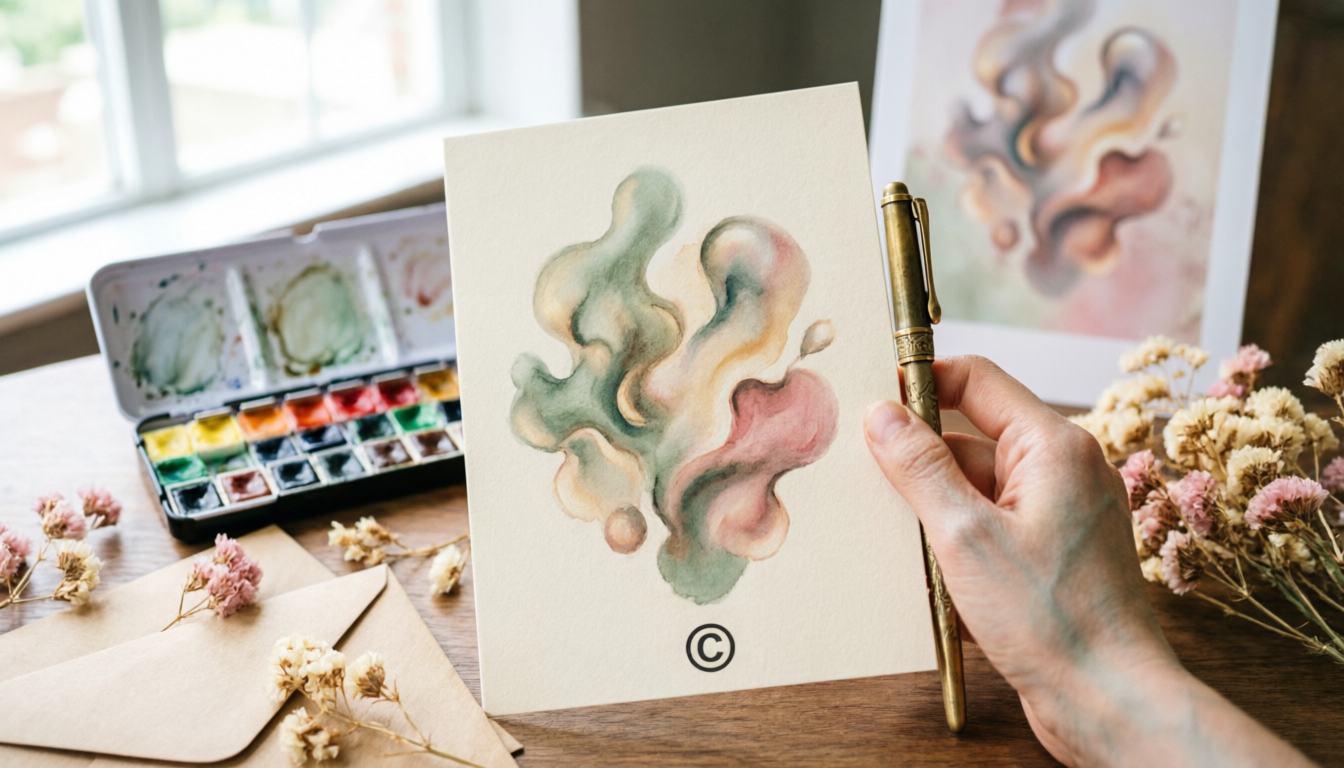
Imagine walking into a store, picking up a stunning birthday card, and flipping it over to see your name on the back. That isn’t just vanity — it is smart business.
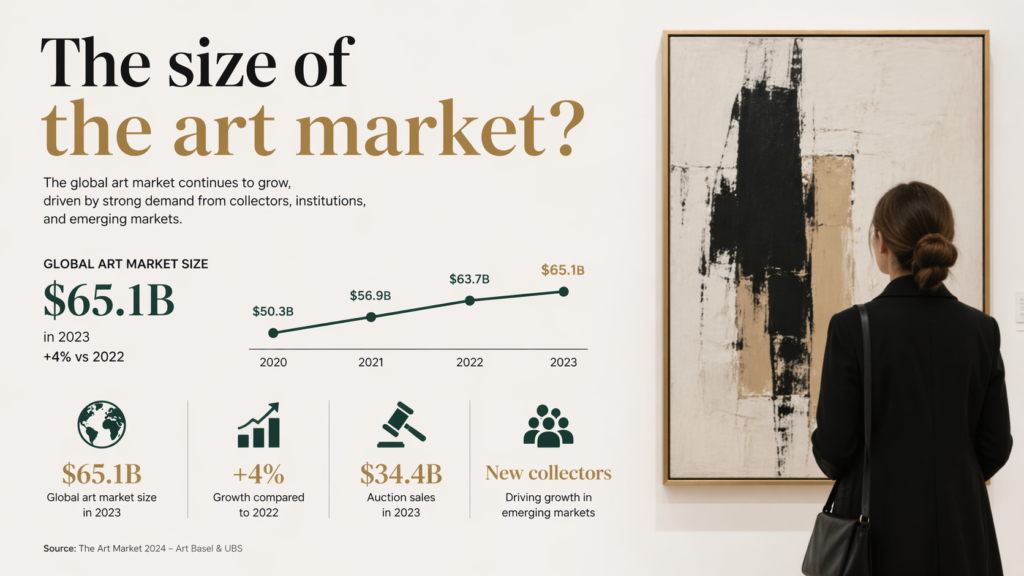
The global greeting card market surpassed $19.8 billion in 2025 and continues its steady climb. Despite the all-digital promises of previous decades, humans still crave physical connection — and that appetite is accelerating, not fading. Licensing is your gateway to grabbing a reliable slice of that pie.
If you are an artist wondering how to license art for greeting cards, stop guessing. This guide is fully updated for the 2026 market landscape, covering everything from negotiating royalty checks to mastering the technical file requirements that publishers demand.
2026 Summary
- Market Value: Stable and growing, with projected annual growth of 2.1% through 2034, driven by premiumisation and eco-conscious buying.
- Earnings Potential: Royalties average 3%–10%, with flat fees ranging from $150–$900.
- Critical Tech: Mastery of CMYK colour modes, bleed margins, and high-resolution file prep is non-negotiable.
- Top Trends: Hyper-personalised Print-on-Demand (POD), AI-assisted design workflows, and genuinely sustainable materials dominate buyer conversations.
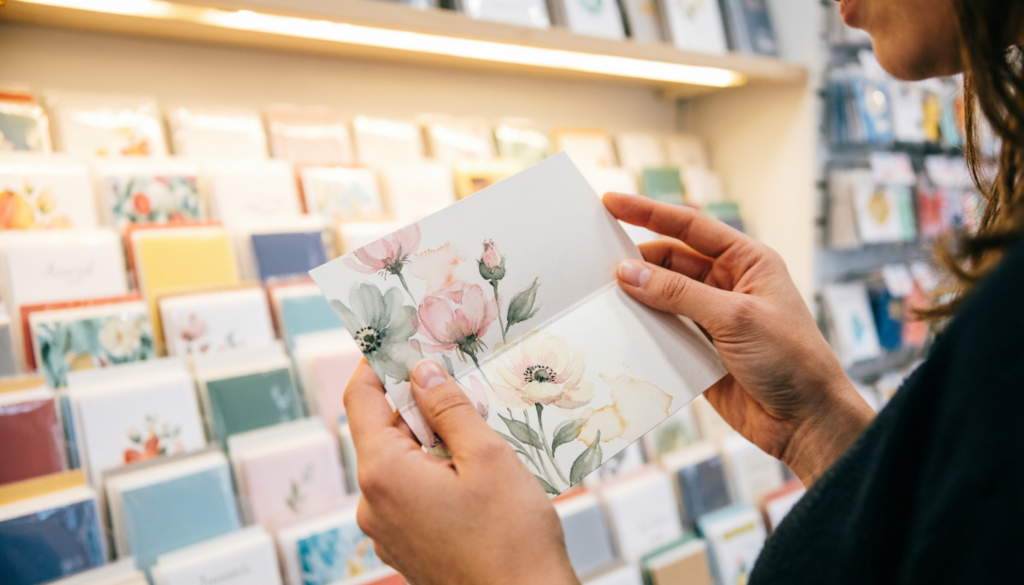
Introduction: Why Greeting Cards Are a High-Volume Opportunity
Many artists trap themselves in the cycle of selling one original painting at a time. While entirely valid, that strategy requires constantly hunting for new buyers. Licensing is fundamentally different — it is the business of renting your art. You create a design once, and a licensee pays you repeatedly to place it on thousands of products.
North America commands over 42% of the global greeting card market. The appetite for fresh, distinctive designs is enormous. Whether you paint luminous watercolours or build cutting-edge digital compositions, there is a profitable niche waiting for you — and licensing is one of the most powerful forms of passive income available to artists today.
The State of the Industry in 2026
The industry isn’t dying — it’s evolving faster than ever. While traditional holiday cards remain strong anchors, “everyday” cards (thinking-of-you, encouragement, pet sympathy, mental health support) are exploding in popularity and command premium shelf space.
Crucially, over 70% of consumers now expect some level of personalisation in the cards they buy. This has supercharged the rise of Print-on-Demand (POD) platforms, where artists upload designs for customers to customise online before printing. If you’re ready to learn exactly how POD works and how to set it up, it remains the lowest-barrier entry point into the licensing world in 2026.
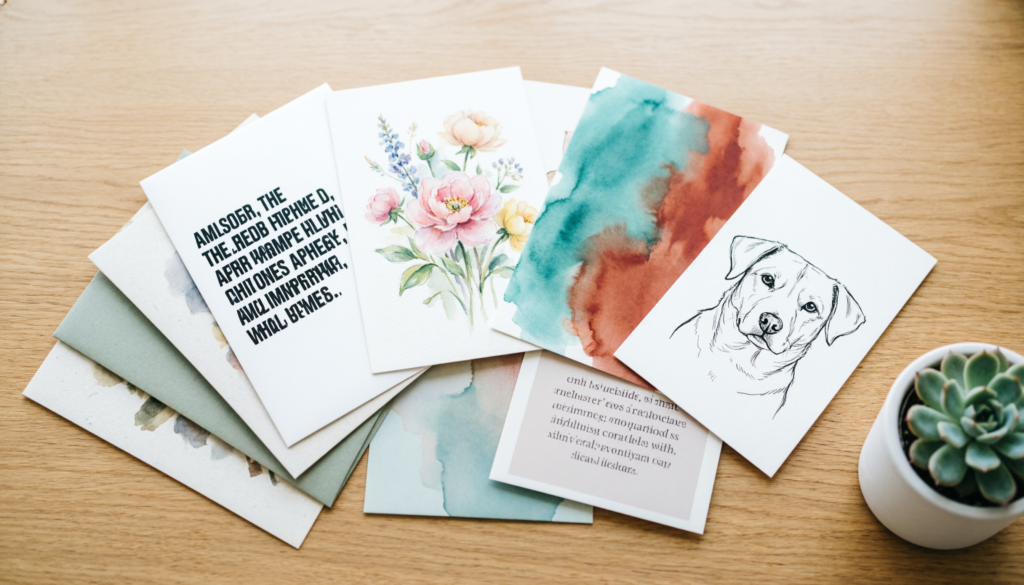
The AI question: AI-assisted design is now embedded in major publishers’ workflows, but it has not replaced authentic artistic voices — it has raised the bar. Publishers are actively seeking artists with a distinctive, human aesthetic that AI tools cannot replicate. Your originality is your competitive advantage.
Licensing vs. Selling Outright (Buyouts)
Before talking numbers, you must understand these two business models completely:
Licensing (The “Rent” Model): You retain the copyright. The company pays a royalty (a percentage of net sales) or a flat fee to use the image for a defined period. Critically, you can often license that same image to a mug manufacturer, a notebook company, or a fabric brand at the same time — without any conflict.
Selling Outright (The “Buyout” Model): You transfer the copyright entirely. The company owns the image forever. You cannot use it again for anything. This commands a higher upfront payment, but you forfeit all long-term passive revenue and creative control.
For most independent artists, licensing is the superior model. Think carefully before accepting a buyout on any image you believe has strong repeat commercial potential. If you want a broader view of how selling art in all its forms is evolving, our complete guide to selling art online in 2026 is essential reading.
Understanding the Financials: What Should You Charge?
Money conversations can feel awkward, but in the art licensing business, ignorance is genuinely expensive. You need to identify a fair deal the moment a term sheet lands in your inbox.

Before pitching any company, get your baseline numbers locked in using our art price calculator guide.
Current Royalty Rate Standards (3% to 10%)
Royalties are passive income cheques tied directly to sales volume.
- Mass Market (Target, Walmart, supermarket chains): Expect lower rates (3%–5%) but extraordinary volume. Selling 100,000 cards at a 4% royalty generates significant recurring income.
- Specialty / Boutique Retail: Expect higher rates (6%–10%) with lower but more consistent volume.
Flat Fee Industry Benchmarks ($150–$900)
Some companies prefer to pay once for a set licence period (typically 2–3 years).
- Standard single-card licence: $300–$550
- Complex or highly detailed illustration: $650–$900
- Full copyright buyout: Should start at $1,200+ — do not undervalue your intellectual property.
Advances Against Royalties
An advance is an upfront payment that is essentially a loan against future earnings. You won’t see a further royalty cheque until accumulated sales exceed that advance amount.
2026 trend: Advances from boutique brands have largely disappeared. However, digital royalty tracking has become far more transparent and frequent — many platforms now report monthly rather than quarterly, which is a real improvement for artists managing cash flow.
2026 Greeting Card Income Reference Table
2026 Greeting Card Income Reference
| Income Type | Mass Market (Hallmark / AG) | Boutique / Niche Brand |
|---|---|---|
| Royalty Rate | 3% – 6% | 7% – 10% |
| Flat Fee Licence | $350 – $650 | $150 – $450 |
| Full Buyout | $1,200 – $2,800 | $600 – $1,400 |
| Advance | $200 – $500 | $0 – $200 |
* Rates reflect 2026 industry benchmarks. Actual fees vary by artwork complexity, territory, exclusivity, and publisher size.
Preparing Your Portfolio for Commercial Success
Publishers don’t simply want “good art” — they want proven shelf appeal. Your portfolio must demonstrate that your work belongs on a retail display today, not in five years.
Identifying Your Voice and Niche
The temptation to paint everything for everyone will drain you and confuse buyers. Pick a lane and own it completely. The strongest-selling categories in 2026 are:
- Humour: Consistently the top-selling category year after year.
- Floral / Botanical: The perennial staple for weddings, birthdays, and sympathy.
- Mental Health & Empathy: The fastest-growing “everyday” card category.
- Religious / Spiritual: A massive, dedicated, and consistently underserved market.
- Modern / Abstract: Strong demand from Millennial and Gen Z buyers seeking art-forward designs.
Not sure which direction suits your natural style? Our guide to finding your painting style will help you identify your authentic visual voice.
The Art of the Mockup
Art directors at publishers are overwhelmed with submissions. Do the creative visualisation work for them before they have to imagine it.
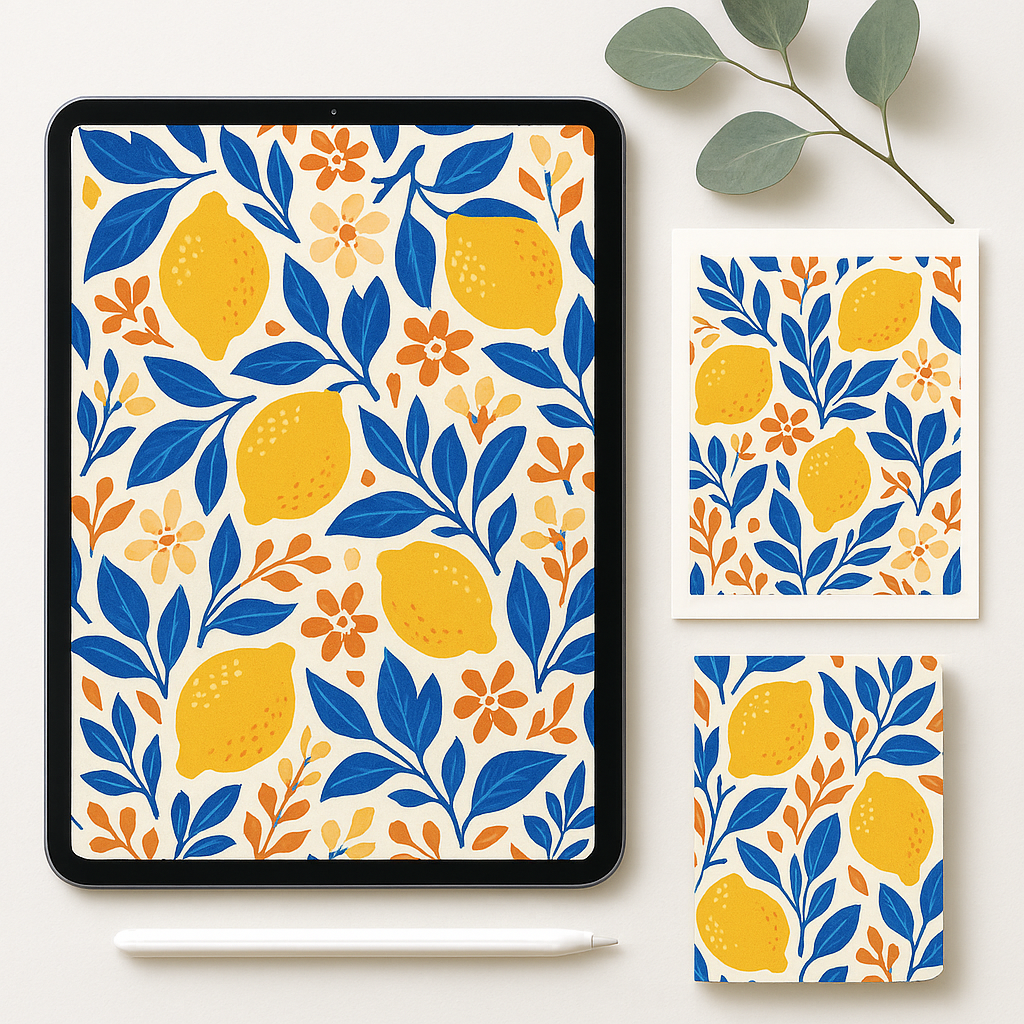
- Mock it up: Place your art inside a professional digital card template.
- Add context: Include sample typography like “Happy Birthday” or “Thinking of You” — layout text is part of the product.
- Show the fold: Demonstrate that you understand how an image wraps and breathes across a folded card format.
Essential Technical Specifications
Incorrect file setup is consistently cited as the primary reason solid artwork gets rejected outright. Get these right before you submit anything:
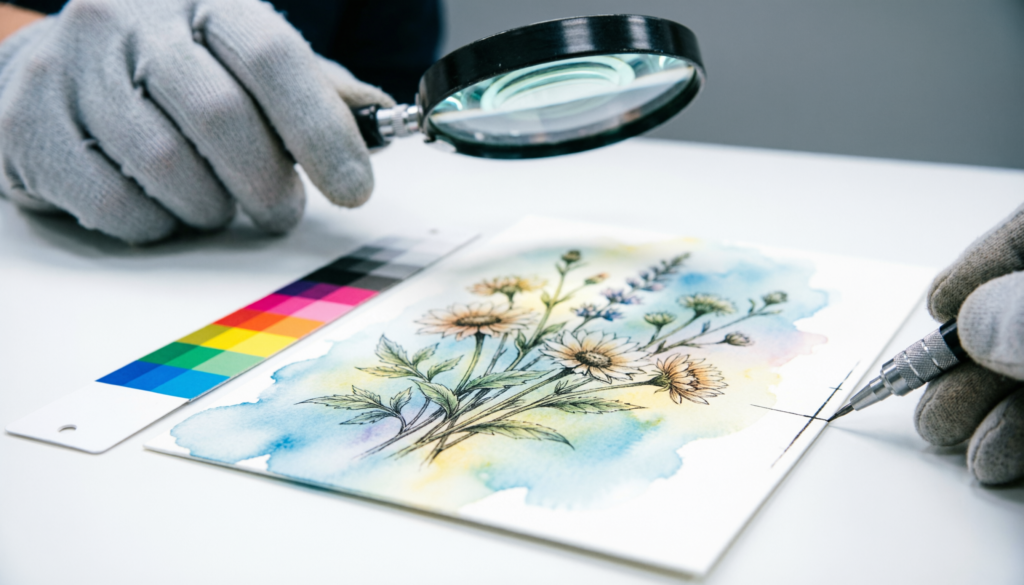
DPI (Dots Per Inch): Web images are typically 72 DPI. Print requires a minimum of 300 DPI. If you are scanning watercolour originals, scan at 600 DPI to preserve fine texture and detail. Our guide to digitising traditional paintings walks through the full process.
Colour Mode — CMYK is Non-Negotiable: Screens display colour using RGB (Red, Green, Blue). Commercial printing uses CMYK (Cyan, Magenta, Yellow, Black). If you design in RGB and don’t convert, your vibrant greens will print as muddy brown-greens and your rich pinks may go flat. Always convert to CMYK and proof your colour. Understanding why this matters at a technical level ties directly into mastering colour theory for artists.
Bleed Margin: You must include an additional 1/8 inch (3mm) of artwork beyond the intended card edge on all sides. This “bleed” ensures no white borders appear if the cutting blade drifts fractionally during production.
Vector vs. Raster:
- Raster files (Photoshop, JPEG, TIFF): Pixel-based. Cannot scale up without quality loss. Acceptable for most greeting card submissions if supplied at correct DPI.
- Vector files (Illustrator, SVG): Mathematically defined. Infinitely scalable at zero quality loss. Required by many surface design clients and increasingly requested by card publishers for logo elements and typography.
For a complete walkthrough of setting up professional digital art files from scratch, see our step-by-step guide to creating your first digital artwork.
Turning Traditional Paintings into Licensable Digital Files
If you work in watercolour, gouache, oil, or pastel, your originals can absolutely be licensed — but they need to be professionally digitised first. A phone photo will not cut it. Scan at 600 DPI on a quality flatbed scanner, or commission a professional art photographer for large-format pieces.
Gouache, in particular, has had a huge resurgence in the greeting card and stationery world — the opaque, velvety quality of the medium photographs beautifully and reproduces exceptionally well in print. If you haven’t explored it yet, our guide to gouache painting techniques is a great starting point.
Finding the Right Partners: Where to Submit Your Art
You have the portfolio. Now you need the right partner.
Major Publishers
These companies offer massive distribution but are difficult to break into as an independent artist.
- Hallmark Cards: Predominantly uses in-house creative teams.
- American Greetings: Relies heavily on “Work for Hire” contracts — read carefully before signing.
- Papyrus: The best mass-market target for high-end, embellished, and luxury-format designs.
Boutique and Eco-Friendly Brands (Your Sweet Spot)
This is where independent artists win in 2026. Boutique brands actively seek fresh outside voices, move faster, and often offer more artist-friendly terms.
- Rifle Paper Co.: Predominantly an in-house studio, but they set the dominant aesthetic standard for the illustrated stationery world. Study their work to understand market taste.
- Minted: Runs open design challenges. If the community votes your work up, it gets sold globally. An exceptional entry point for newer artists.
- Blue Mountain Arts: The leading publisher for poetry-led, sentimental cards — a distinct category with a loyal audience.
- Recycled Paper Greetings: Actively seeks humour and distinctive artistic voices from outside contributors.
- Eco-friendly independents: Sustainability is no longer a niche — it is a mainstream purchasing driver. Brands built around recycled materials, soy inks, and carbon-neutral production are multiplying rapidly. If this aligns with your values as an artist, it should be a priority segment. Read our guide to eco-friendly art techniques and materials for context.
POD Platforms as a Parallel Revenue Stream
In 2026, many artists treat POD platforms not just as storefronts but as active licensing income. Uploading your art to Zazzle, Redbubble, or Society6 operates on the same principle as licensing — you receive a royalty percentage on each sale without managing inventory or fulfilment. Our complete guide to turning digital art into print-on-demand products explains the mechanics in detail.
Trade Shows (Surtex, Blueprint, NSS)
Face-to-face relationship building remains irreplaceable for breaking into top-tier publishers.
- Surtex (New York): The premier global platform for selling and licensing surface and paper art. Essential if you are serious about scaling.
- National Stationery Show (NSS): Focused entirely on paper products, gifts, and stationery.
- Blueprint: A smaller, highly curated show for surface and pattern design. Strong for boutique introductions.
The Pitching Process: How to Get Noticed
Cold outreach works — but only when it is targeted, professional, and respectful of the recipient’s time.
Crafting the Perfect Submission Email
- Subject line: Be specific and personal. “Art Submission: [Your Name] – [Style / Theme]” e.g., “Art Submission: Jane Doe – Modern Botanical & Empathy Cards”
- The body: Keep it brief. “Hi [Name], I am an artist specialising in [style]. I believe my work aligns with your [specific product line] because [clear reason]. My portfolio is linked below.”
- The link: Never attach 50MB files. Provide a clean, fast-loading link to your website or a downloadable low-res PDF Sell Sheet.
Creating an Irresistible Sell Sheet
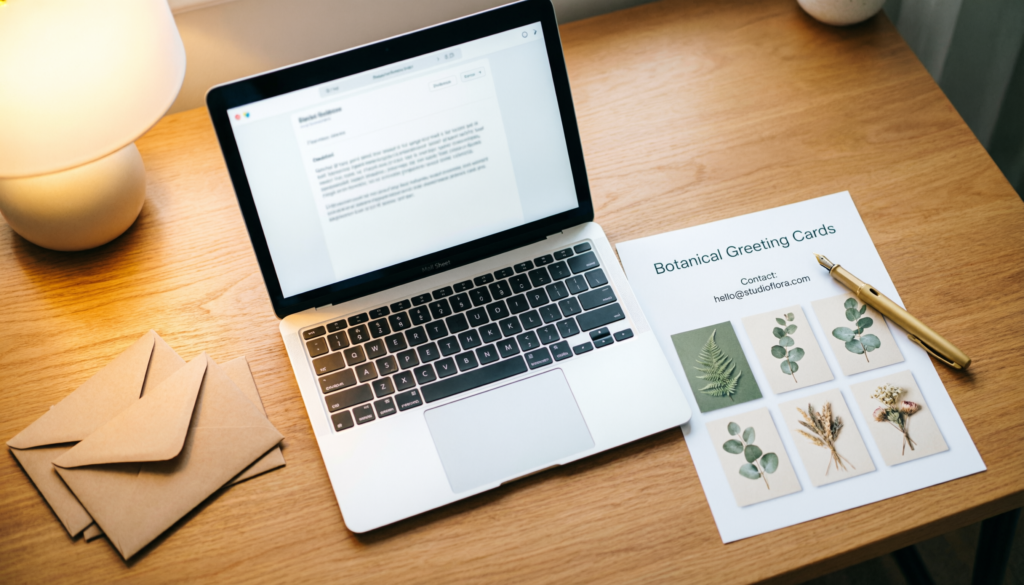
A Sell Sheet is your visual business card. It must be a single-page PDF containing:
- Header: Your name, logo, website URL, and direct contact details.
- Images: 6–10 of your strongest, thematically cohesive designs.
- Mockups: At least one or two high-quality product mockups.
- Collections: Art grouped by theme (e.g., “Botanical Birthday 2026”, “Mental Health & Empathy Range”).
Building your sell sheet is a direct extension of building your art brand — a process every licensing artist should treat as seriously as making the work itself.
Managing Submissions and Follow-Ups
Treat submissions like a professional job, not a hobby project. Maintain a spreadsheet with columns for: Company Name | Contact Email | Date Submitted | Follow-Up Date (4–6 weeks later) | Response / Status.
The industry works 12–18 months ahead of publication. If you are designing Christmas 2026 cards, pitch them now — in Q1 2026.
Navigating the Contract: Crucial Terms to Protect
Getting a “yes” is exciting. Signing blindly is dangerous. Here are the clauses that matter most.
Exclusivity and Territory
- Non-exclusive licence: The gold standard for independent artists. You can licence the same image to multiple companies simultaneously in non-competing categories (cards for Company A, fabric for Company B, mugs for Company C).
- Exclusive licence: The company is the only entity permitted to use that art during the licence term. This must command a significantly higher fee to compensate for lost licensing opportunities.
- Territory: Are you granting rights for the entire world? Or only North America? Always attempt to limit the territory — unlicensed territories remain yours to sell independently.
Duration and Termination
- Standard term: 2–5 years. Avoid “in perpetuity” (forever) in any context other than a full buyout at a premium price.
- Kill Fees: A critical safety net. If a publisher commissions work and then cancels the project, a kill fee ensures you are compensated — typically 25%–50% of the total agreed fee. Never work on a commissioned project without one.
Keeping Your Copyright
Unless the contract explicitly states “Work for Hire,” you retain your copyright and the company receives only a licence to use the image. “Work for Hire” means the company legally owns the work as if they created it themselves. Avoid this unless the compensation is substantial. Our art commissions guide covers how to handle work-for-hire requests professionally.
Payment Schedules
The contract must state clearly: when are you paid? Quarterly? Bi-annually? It should also mandate a Royalty Statement detailing units sold and the calculation used — so you can independently verify the numbers.
Advanced Strategy: Working with Art Licensing Agents

An art licensing agent represents your portfolio, pitches to publishers on your behalf, and handles contracts and payment chasing — freeing you to focus entirely on creating.
Pros and Cons
Pros: Access to buyer relationships at Hallmark, Target, and other accounts that are essentially closed to direct cold outreach. Agents handle negotiation, contracts, and collections.
Cons: Commission rates of 30%–50% of gross earnings. You also cede some control over where and how your art is pitched.
How to Find the Right Agent
Look for agencies representing artists with a similar aesthetic to yours, but not identical — you don’t want to be competing directly with their star client for the same accounts. Research directories such as the Art Licensing Info database and the Surtex exhibitor list. A good agent will want your style to complement, not duplicate, their existing roster.
Case Studies: Artists Who Built Licensing Empires
Rifle Paper Co. (Anna Bond): Anna’s gouache-and-gold illustrated style began as a small stationery boutique in Winter Park, Florida. She now licences that distinct aesthetic to Keds (footwear), Loloi (rugs), Rifle Paper × Cole & Son (wallpaper), and dozens of other major categories. A masterclass in owning a niche completely.
Emily McDowell: Identified a genuine market gap for “Empathy Cards” that spoke honestly to grief, illness, and difficult relationships — without the cheesy platitudes of mainstream sentiment. Her frank, typography-driven approach went viral, launched a major brand, and was ultimately acquired. A reminder that market insight is as valuable as artistic skill.
Conclusion: Building a Sustainable Licensing Business
Licensing art for greeting cards is a marathon. It requires patience to build a deep library of designs and the persistence to pitch consistently before significant income flows. But with market demand stabilising at a healthy level in 2026, renewed appetite for eco-conscious products, and the enduring human need for physical connection, the opportunity for artists with a strong voice has never been more real.
The path forward is straightforward, even if it isn’t fast: develop your technical skills to professional print standards, protect your intellectual property fiercely, build your brand with intention, and pitch without fear. Your art deserves to be seen, held, shared — and profitable.
For a complete roadmap on building the business side of your art practice, read our guide on how to start an art business in 2025/2026 and our broader overview of art market trends and dynamics.
Frequently Asked Questions
How much do greeting card companies pay for art in 2026? Companies typically pay a royalty of 3%–6% for mass-market cards and 7%–10% for boutique cards. Flat-fee licences usually range from $300–$550 per design, rising to $650–$900 for complex or highly detailed illustrations.
What are the best greeting card companies for artist submissions in 2026? For independent artists, the strongest starting points are Minted, Recycled Paper Greetings, Blue Mountain Arts, and eco-focused boutique brands. POD platforms like Zazzle, Redbubble, and Society6 are also excellent for building passive royalty income in parallel.
Do I need an agent to license my art? No — particularly for boutique and mid-market brands. An agent becomes genuinely important once you are targeting mass-market retailers like Target or Walmart, where established buyer relationships are the barrier to entry.
What is the difference between CMYK and RGB? RGB (Red, Green, Blue) is the colour system used by screens. CMYK (Cyan, Magenta, Yellow, Key/Black) is the system used by commercial printing presses. Designing in RGB and failing to convert to CMYK before submission is one of the most common technical errors artists make.
What is a “Kill Fee” in an art contract? A Kill Fee is a guaranteed payment — typically 25%–50% of the total agreed fee — that you receive if a publisher cancels a commissioned project after work has begun. It is a non-negotiable protection against working for free.
How long does it take to get a greeting card published? Publishers typically work 12–18 months ahead of the on-shelf date. If you are designing cards for Christmas 2026, submit your pitches in Q1 2026 at the latest.
How does AI affect my licensing prospects in 2026? AI tools have raised the volume of generic designs available to publishers — which means authentic, distinctive artistic voices are more valued, not less. Focus on developing a style that is unmistakably yours.
Sources: Greeting Card Association Industry Facts & Figures | Grand View Research Greeting Card Market Report | Copyright Alliance – Licensing vs. Assignment | Surtex Art Licensing Trade Show