
Fluid art is an accessible way to start painting without needing traditional brush skills. This guide covers everything you need to begin. We explain basic mixing ratios, essential supplies, and simple pouring techniques to create your first piece. Grab some acrylics and let gravity do the work.
Staring at a blank canvas is intimidating. Many people want to paint but freeze when it comes time to actually pick up a brush. Fluid art removes that pressure entirely.
This technique relies on gravity and simple chemistry to create patterns. You mix acrylic paints with a pouring medium, pour the mixture onto a canvas, and tilt it to spread the colors. It is messy, unpredictable, and incredibly fun. You do not need to know how to render realistic lighting or sketch perfect proportions. You just need a basic understanding of how liquids move. We will show you exactly how to get started with your first fluid art project today.
What Is Fluid Art?
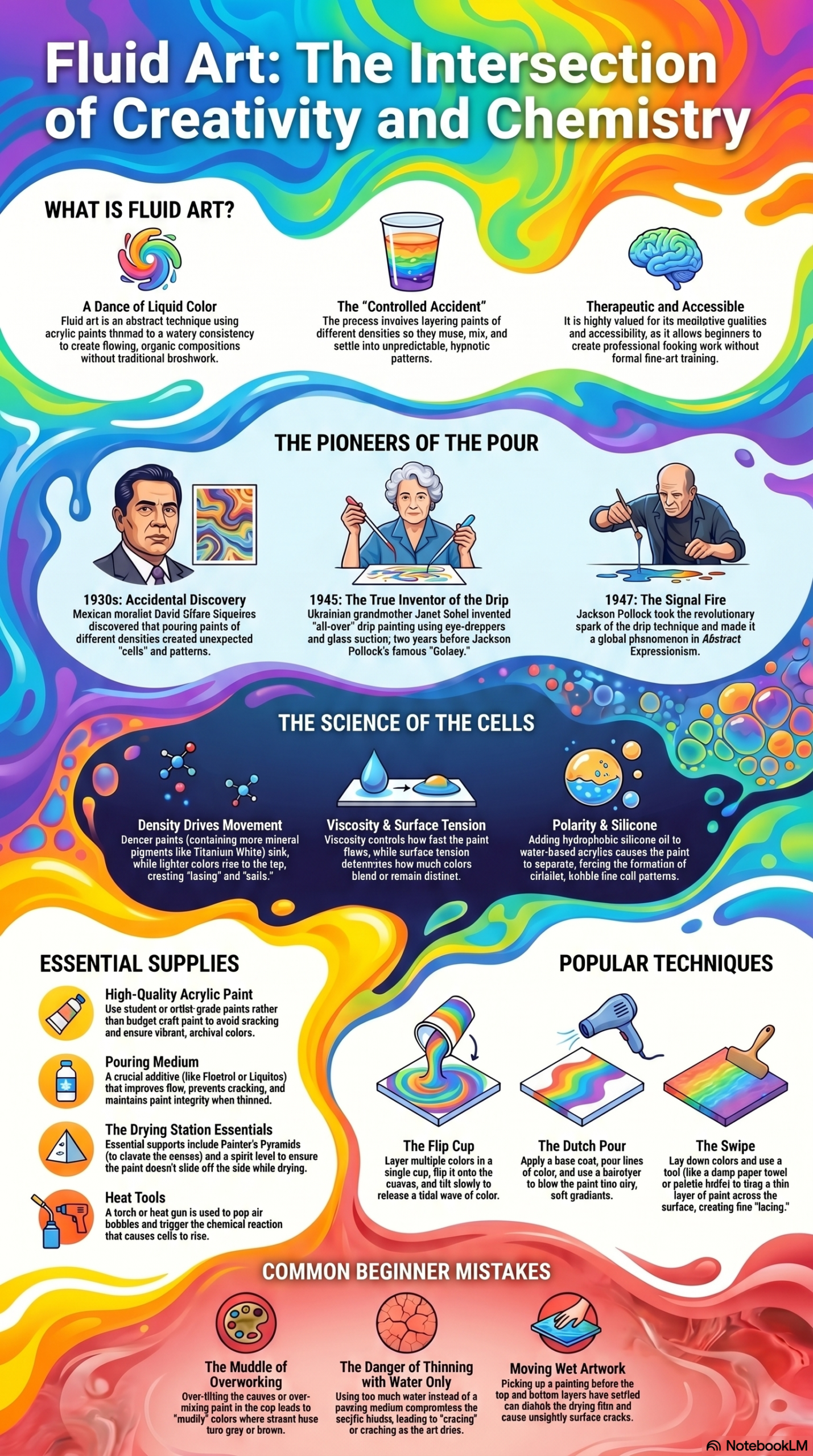
Fluid art is an abstract painting technique where acrylic paints are thinned to a liquid consistency and poured onto a surface. Artists manipulate the wet paint by tilting the canvas or using tools to create marbled, organic patterns instead of using traditional brushes.
This method is also commonly known as acrylic pouring. The appeal lies in its unpredictability. Because you rely on fluid dynamics and paint density, no two paintings will ever look exactly alike. It strips away the rigid rules of traditional studio work. If you want to understand the exact mechanics behind it, our guide to pour painting basics is a logical next step.
Essential Supplies for Your First Pour
You do not need a massive studio setup to try this. A few basic items are enough to get your first piece done.
Start with standard acrylic paints. Heavy body paints require a lot of thinning, so fluid acrylics or basic craft paints are much easier to work with. Next, you need a pouring medium. This is a special additive that thins the paint without breaking down its binding properties. Companies offer specific pouring medium formulations that dry clear and remain flexible.
You will also need plastic cups, wooden stirring sticks, and a surface to paint on. Canvas boards or stretched canvases work perfectly. For a complete look at studio gear, check out our list of painting supplies.
What Is the Best Paint to Medium Ratio?
The standard starting ratio for fluid art is one part acrylic paint to one part pouring medium. This 1:1 mix works well for most basic craft paints. Heavy body acrylics may require a 1:3 ratio of paint to medium to reach the right consistency.
Your goal is to make the paint flow like warm honey. It should run off the end of your stirring stick in a smooth, continuous stream. If it drips in clumps, it is too thick. If it splatters like water, it is too thin. Getting the consistency right takes a little trial and error.
Simple Techniques to Try Today
Once your paints are mixed, you are ready to pour. The most popular beginner method is the dirty pour. You take a clean cup and layer your mixed colors into it one by one. Do not stir them. You then pour that single cup over your canvas in a sweeping motion. This creates instant ribbons of color. Basic color mixing knowledge helps here. Pick colors that look good together so they do not turn into mud.
Another great method is the flip cup. You layer your colors in a cup just like the dirty pour. Place your canvas face down on top of the cup. Hold them together tightly and flip the whole thing over. Let the cup sit on the canvas for a minute so the paint settles. Then lift the cup straight up and watch the paint flood out.
How Long Does Fluid Art Take to Dry?
Fluid art typically takes 24 to 72 hours to dry to the touch. Because the paint goes on in a thick layer, it takes up to three weeks to fully cure. Avoid moving or touching the canvas during the first few days.
A stable environment is necessary while the paint dries. High humidity slows the process down. Extreme heat can cause the top layer to dry too fast and crack. Experts note that thick acrylic applications need controlled airflow to cure properly. Leave your piece in a level, dust-free area and practice patience.
Pioneers of Fluid Art
| Artist | Contribution | Key Era & Technique |
|---|---|---|
| David Alfaro Siqueiros | First to use liquid acrylic painting. He discovered “accidental painting” by combining art with fluid dynamics. | 1930s. Poured liquid colors onto one another to observe natural mixing. |
| Jackson Pollock | Learned liquid paint techniques from Siqueiros, leading to his Abstract Expressionist style. | 1940s-1950s. Developed the signature “drip” technique on floor-bound canvases. |
| Janet Sobel | An early experimenter whose fluid techniques directly influenced Pollock’s work. | 1940s. Pioneer of the all-over drip style. |
| Morris Louis | Developed techniques using Magna acrylics and dripped paint. | 1950s. Squeezed paint directly from tubes to draw with liquid lines. |
| Helen Frankenthaler | Pioneered the Color Field movement and the “soak-stain” method. | 1950s. Poured thinned paint onto unprimed canvas to let it spread naturally. |
Summary
Fluid art is about letting go of control. You mix your colors, pour them out, and watch what happens. It is a fantastic entry point for anyone intimidated by traditional brush techniques.
Your first few attempts might be messy. That is perfectly fine. The more you practice mixing and tilting, the better you will understand how the paint behaves. Set up a dedicated workspace, protect your table with a drop cloth, and experiment with different painting surfaces. Pick your favorite colors and start pouring.
Frequently Asked Questions
1. Can I use water instead of pouring medium? Water can thin acrylic paint, but using too much breaks down the acrylic binder. This leads to cracking and peeling when the paint dries. Always use a proper pouring medium for the best results.
2. Why did my paint crack when it dried? Cracking usually happens when the top layer of paint dries faster than the layers underneath. It can also occur if you use too much water in your mixture. Keeping your drying environment cool and away from direct sunlight helps prevent this.
3. How do I create cells in my fluid art? Cells form when paints of different densities interact. You can encourage cell growth by adding a drop or two of silicone oil to your mixed paints before pouring. A quick pass with a [suspicious link removed] over the wet paint will also pop bubbles and bring cells to the surface.
4. What kind of paint is best for fluid art? Soft body acrylics and liquid craft paints are ideal because they require less medium to thin out. Heavy body acrylics work too, but you will need a significantly higher ratio of pouring medium to reach a fluid consistency.
5. Do I need to seal my fluid art painting? Sealing is highly recommended. A good varnish protects the acrylic from dust, UV light, and moisture. Wait until the painting is fully cured (usually about three weeks) before applying a liquid or spray varnish.

Olly
Olly Farmer M.Sc, B.Sc, PGCE 25 years experience of Watercolor Painting and AI Art; teacher for 13 years; Creator of Art Tools; Art Gallery Contributor of Art Articles to Medium.com, LinkedIn and Facebook
Continue exploring


PROMINENT PAINTING
Keep your creative momentum
Get new painting guides, practical techniques and artist stories delivered without the noise.
Occasional emails. Unsubscribe whenever you like.