
Life moves fast. Between work, family, and endless to-do lists, carving out hours for a painting session can feel impossible. But what if you could reconnect with your creativity in just 10 minutes?
Quick painting exercises aren’t about finishing masterpieces. They’re about building a sustainable, joyful art habit that fits your real life. Whether you’re waiting for coffee to brew, taking a lunch break, or unwinding before bed, these micro-sessions help you practice skills, release tension, and rediscover the simple pleasure of making marks.
Best of all? You don’t need a studio, expensive supplies, or prior experience. Just a small surface, one color, and the willingness to begin.
Why Short Painting Sessions Work (Especially for Beginners)
Long practice sessions have their place—but for busy beginners, brevity is a superpower:
✅ Lowers the barrier to start: “Just 10 minutes” feels achievable, reducing procrastination
✅ Builds consistency: Daily micro-practice creates stronger neural pathways than occasional marathons
✅ Reduces performance pressure: Short sessions emphasize exploration over perfection
✅ Fits into existing routines: Pair with morning coffee, commute breaks, or bedtime wind-down
✅ Prevents burnout: Stop while you’re still curious, not exhausted
Research on habit formation shows that tiny, repeatable actions create lasting change. Painting for 10 minutes a day can transform your relationship with creativity—without adding stress to your schedule.
Your 10-Minute Setup: Minimal Supplies, Maximum Flexibility
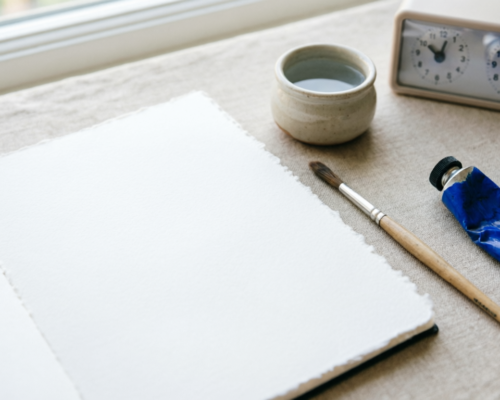
Keep a “quick paint kit” ready to eliminate decision fatigue:
🎨 Surface: Small watercolor pad (5×7″), index cards, or even sticky notes
🎨 Medium: One tube of acrylic, a watercolor pan, or a single colored pencil
🎨 Tool: One brush, a cotton swab, or your fingertip
🎨 Extras: Small water container, paper towel, timer (phone works!)
Pro Tip: Store your kit where you’ll see it—next to your coffee maker, in your work bag, or on your nightstand. Visibility = action.
5 Quick Painting Exercises You Can Start Today
Each exercise is designed for 10 minutes or less. Set a timer, focus on the process, and let go of outcomes.
🎨 Exercise 1: The One-Color Gradient Challenge

Skill focus: Value control, brush pressure
- Pick one color + white (or water for transparency)
- Paint a small rectangle divided into 5 sections
- Fill section 1 with pure color, section 5 with near-white
- Blend the middle sections by adjusting paint/water ratio
- Goal: Create a smooth transition—no harsh lines
Why it works: Teaches paint handling fundamentals while creating a calming, meditative rhythm.
🎨 Exercise 2: Blind Contour Brushwork
Skill focus: Observation, hand-eye connection
- Place a simple object nearby (a leaf, mug, or your hand)
- Look ONLY at the object—not your paper
- Slowly paint its outline without lifting your brush
- Don’t correct “mistakes”; let lines wander
- Goal: Capture essence, not accuracy
Why it works: Silences your inner critic and strengthens intuitive mark-making.
🎨 Exercise 3: 60-Second Shape Storm
Skill focus: Speed, composition, play
- Set timer for 60 seconds
- Paint as many simple shapes as possible (circles, triangles, waves)
- Overlap, vary sizes, let colors blend accidentally
- Repeat 3x with 1-minute rests between
- Goal: Quantity over quality; embrace happy accidents
Why it works: Builds creative momentum and reduces fear of the “blank page.”
🎨 Exercise 4: Mood Swatch Mini-Journal
Skill focus: Color-emotion connection, self-reflection
- Divide a small paper into 3 sections
- Ask: “What color matches my energy right now?”
- Paint a loose swatch for each emotion (e.g., calm blue, energized yellow, grounded brown)
- Add one word label per swatch if inspired
- Goal: Externalize feelings through color, no words required
Why it works: Creates a visual emotional checkpoint—therapeutic and insightful.
🎨 Exercise 5: Texture Tap-Off
Skill focus: Surface variation, experimental technique
- Dip brush in paint, then lightly tap/stipple/dab on paper
- Try 3 techniques: dry brush (less water), wet-on-wet, salt sprinkle (if handy)
- Label each texture sample
- Goal: Discover how tools + pressure create visual interest
Why it works: Turns “mistakes” into intentional texture studies—great for future projects.
Making Quick Painting a Sustainable Habit
Consistency beats duration. Try these strategies:

🔹 Anchor to existing habits: “After I pour my morning tea, I paint for 10 minutes”
🔹 Track visually: Mark an “X” on a calendar for each session completed—chain reactions motivate
🔹 Embrace imperfection: Cover or discard work afterward if it helps you stay process-focused
🔹 Rotate exercises: Keep a list of the 5 above; pick one randomly to maintain novelty
🔹 Celebrate showing up: Reward yourself with a favorite song or stretch post-session
Remember: The goal isn’t a portfolio. It’s strengthening your creative muscle—one tiny stroke at a time.
Troubleshooting Common Quick-Painting Hurdles
❌ “I get distracted and run over 10 minutes.”
→ Use a gentle timer sound. When it chimes, stop mid-stroke. This builds discipline and curiosity for next time.
❌ “My results feel messy or unsatisfying.”
→ Reframe: These are studies, not finished pieces. Save them in a “process journal” to track growth over weeks.
❌ “I forget to practice.”
→ Place your kit in a high-traffic zone. Add a phone reminder labeled “Creative Pause 🎨”.
❌ “I feel silly doing such simple exercises.”
→ Try this: Set an intention like “I’m exploring, not performing.” Playfulness unlocks progress.
When to Level Up (And When to Stay Small)
After 2–3 weeks of consistent 10-minute sessions, you might notice:
- Faster brush control
- More confidence mixing colors
- A desire to explore longer projects
That’s your cue to optionally extend one session per week to 20 minutes. But never feel pressured—micro-practice remains powerful at any skill level.
Final Thought: Your Creativity Deserves 10 Minutes
You don’t need permission to create. You don’t need hours. You only need a willingness to show up, brush in hand, for a brief moment of focus and flow.
In a world that glorifies busyness, choosing 10 minutes for painting is a quiet act of self-respect. It says: My curiosity matters. My calm matters. My creative voice matters—even in small doses.
Start today. Set a timer. Make one mark. Then another. Your future self will thank you.
Ready to expand your practice? Explore our guides on painting techniques for beginners or discover how to build a sustainable art habit. For more quick creative ideas, visit our beginner resources hub.

Olly
Olly Farmer M.Sc, B.Sc, PGCE 25 years experience of Watercolor Painting and AI Art; teacher for 13 years; Creator of Art Tools; Art Gallery Contributor of Art Articles to Medium.com, LinkedIn and Facebook
Continue exploring

PROMINENT PAINTING
Keep your creative momentum
Get new painting guides, practical techniques and artist stories delivered without the noise.
Occasional emails. Unsubscribe whenever you like.