This post explains how to master watercolor water control. You will learn the perfect pigment-to-water ratios, how to test your brush moisture, and ways to fix warped paper. The key takeaway is that managing your water stops puddles and gives you vibrant colors. Practice these simple steps to improve your painting today.
Have you ever watched your beautiful watercolor painting turn into a muddy, warped puddle? You are not alone. As an arts educator with over a decade of teaching experience, I see this daily. Watercolor water control is the biggest hurdle for new artists. You dip your brush, touch the paper, and suddenly the paint floods everywhere. It feels impossible to manage.
The secret is not about buying expensive supplies. It is about understanding the balance between pigment and moisture. When we implemented a strict moisture-checking routine for my art students, we saw their confidence skyrocket. Their colors stopped washing out. Their paper stayed flat. They finally felt in charge of their art.
In this guide, I will show you exactly how much water to use. We will break down the tea-to-butter ratio scale. You will learn how to fix mistakes when your brush is too wet. By the end, you will stop fighting the water and start working with it. Let’s dive into the techniques that make painting mindful and therapeutic again.
What Is Watercolor Water Control and Why Is It Hard?
Watercolor water control is the skill of managing exactly how much moisture is on your brush and paper. It dictates how your paint flows, blends, and dries. Beginners find it hard because every brush, pigment, and paper type absorbs moisture differently, making it unpredictable without practice.
Controlling your water is the foundation of good painting. Too much moisture leads to a lack of control, unexpected blooms, and pale colors. Too little makes your paint look dry and leaves hard edges where you do not want them. Every time you dip your brush in your water jar, you must swipe the bristles against the rim. This removes heavy drops that cause instant puddles. If you are struggling with your supplies, check out our guide on choosing the best paints for beginners.
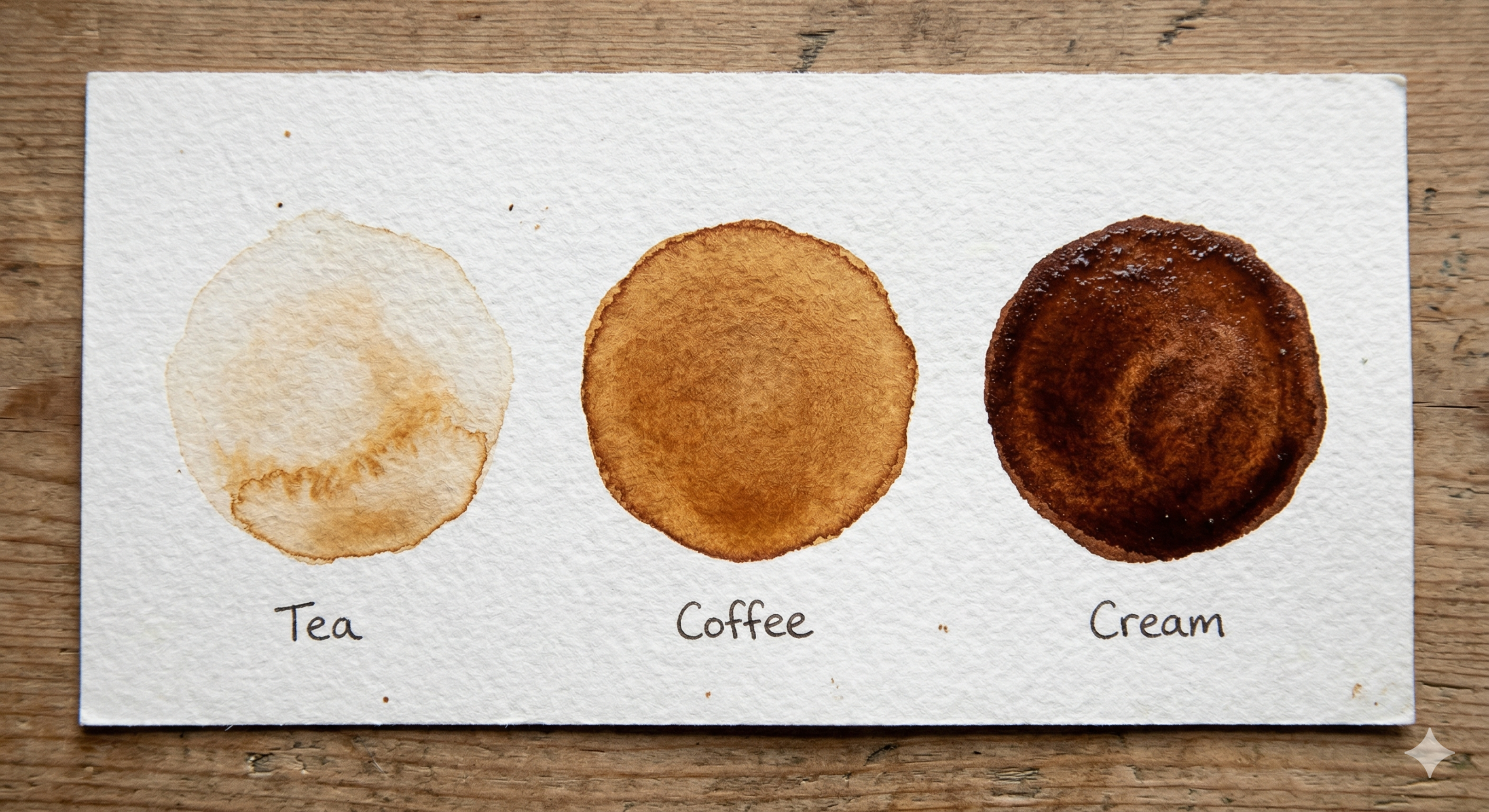
The Tea, Coffee, and Cream Consistency Scale
To get your mix right, you need to understand the pigment-to-water ratio. Teachers often use dairy or drink analogies to explain this. It sounds silly, but it helps you visualize the thickness of your paint.
- Tea: This is very watery and super transparent. It is perfect for light washes and soft backgrounds.
- Coffee: This is a medium mix. It is slightly denser and leaves a semi-transparent wash.
- Cream: This mix is thick, rich, and opaque. It contains very little water and is great for dark shadows or fine details.
When you test your mix on a palette, watch how it moves. If it drips everywhere and leaves wet puddles, it is too watery. If it stays mostly still, you are in the sweet spot.
How Do I Stop My Watercolor Paper From Warping?
You can stop watercolor paper from warping by using heavy paper, applying less water, and taping down the edges. Warping happens when paper fibers absorb moisture unevenly and expand. Managing your puddles and using paper weighing at least 300 gsm will keep your surface flat.
Paper choice is your first defense against buckling. Thin student papers under 140 gsm will warp almost instantly. I always tell my students to invest in heavier stock. For more help, read our tips on choosing watercolor paper pads. You should also avoid speeding up the drying process with a hair dryer. Uneven heat makes the buckling worse. Let it dry naturally.
Simple Tests to Check Your Brush Moisture
Before your brush ever touches your artwork, you need to know what is on it. The easiest way to check is to keep a paper towel in your non-painting hand. After loading your brush, gently rest the belly of the brush on the towel. Do not press hard. This absorbs the extra moisture while keeping the color juicy.
Another great trick is the shine test. Look at the wet paint on your paper. Very wet paint looks glossy and moves on its own. A medium wetness has a slight sheen and stays put. If it looks matte right away, it is barely wet. If you are unsure what tools hold water best, review our list of the best paint brushes for beginners.
What Should I Do If I Make a Puddle on My Painting?
If you make a puddle on your painting, you must soak up the excess water immediately. Clean and dry your brush, then touch the tip directly into the puddle. The dry bristles will act like a sponge and lift the extra moisture right off the paper.
Puddles are the enemy of smooth washes. If you leave a puddle to dry, it creates a hard, ugly line called a bloom or cauliflower. You can also use the corner of a clean paper towel or a cotton swab to wick away the flood. Just touch it lightly so you do not lift all the pigment away. To learn more rescue tricks, explore our guide to fix watercolor mistakes.
Water Control Masters
Studying master painters shows us that perfect water control is not about keeping the paper completely dry. It is really about timing and balance. By looking closely at the secret to John Singer Sargent’s watercolor technique or the art of Turner’s watercolors, we learn how to work with moisture instead of fighting against it.
| Artist Name | Era | Water Control Technique | Notable Subjects |
|---|---|---|---|
| John Singer Sargent | Late 19th / Early 20th C. | Flawless wet-on-wet execution. He knew exactly when to drop thick pigment into a wet wash to prevent it from spreading too far. | Venetian canals, travel landscapes |
| Winslow Homer | 19th Century | Mastered moisture timing to scrape, blot, and lift wet paint to create brilliant white highlights and rough textures. | Seascapes, maritime life, tropical scenes |
| Joseph Zbukvic | Contemporary | Uses a highly specific “watercolor clock” method to judge exactly how wet the paper is before applying the next layer. | Atmospheric cityscapes, misty landscapes |
| J.M.W. Turner | Late 18th / Mid 19th C. | Pushed the limits of the medium by soaking paper and applying massive washes of color to capture raw atmospheric effects. | Storms, dramatic skies, classical ruins |
| Charles Reid | Contemporary (d. 2019) | Allowed colors to mix directly on the paper in loose puddles while strictly controlling the boundary edges of the water. | Loose portraits, still life, figure studies |
Conclusion
Water control is a learning curve, but it is the most rewarding skill you can master. Remember to test your paint consistency using the tea, coffee, and cream scale. Always tap your brush on a paper towel or the rim of your jar before painting. And if you use quality paper, you will fight fewer warped edges.
Painting should be a joyful release, not a stressful battle against puddles. If you keep practicing these moisture tests, it will soon become second nature. I encourage you to set up a scrap piece of paper today and practice mixing different ratios of water and paint.
Frequently Asked Questions
Why does my watercolor look pale and washed out? Your watercolor looks pale because your pigment-to-water ratio is too low. You are using too much water and not enough paint. Try mixing less water into your palette to achieve a thicker consistency.
How can I fix hard edges in my watercolor painting? Hard edges form when water pools and dries unevenly. You can fix a hard edge by taking a soft, damp brush and gently scrubbing the line to reactivate the paint. In the future, soak up wet puddles with a dry brush before they dry.
Do natural hair brushes hold more water? Yes, natural hair brushes tend to hold much more water than synthetic ones. This makes them great for large, wet washes but harder for beginners to control. If you struggle with floods, try using a synthetic brush that releases water more predictably.
Why is my watercolor paper buckling so badly? Your paper is buckling because you are applying too much water to a thin sheet. Thin paper expands unevenly when wet, creating warps and valleys. Switching to a heavier 300 gsm paper and taping it down will solve most buckling issues.
Should I dry my watercolor painting with a hair dryer? It is best to avoid using a hair dryer on your watercolor paintings. The rapid, uneven heat can cause the paper to warp and buckle even worse. Let your painting dry naturally for a smooth, flat finish.