Watercolor mixing is an essential skill for any watercolor painter. It allows you to create a wide range of colors and effects, from delicate washes to bold accents. But it can be a daunting task to learn, especially for beginners.
That’s where video tutorials come in. Video tutorials offer a step-by-step guide to watercolor mixing, from the basics of primary and secondary colors to advanced techniques like glazing and scumbling. With the right tutorial, you can learn how to mix watercolors like a pro in no time.
Watercolor Mixing Guide for Beginners
In this comprehensive video tutorial, watercolor artist Diana Paints guides beginners through the essential techniques of mixing watercolors. She covers a wide range of topics, including the different types of watercolor pigments and how to choose the right ones for your needs, how to mix primary colors to create secondary and tertiary colors, and how to use different mixing techniques such as wet on wet, dry on wet, and glazing.
Additionally, Diana shares tips on how to avoid common mistakes when mixing watercolors, ensuring a smooth and enjoyable painting experience. Perfect for those new to watercolor painting or looking to refine their skills!
How to Mix Watercolors Like a PRO! Watercolor Painting for Beginners
In this tutorial, Maiko takes you through the process of mixing watercolors like a professional artist. She explains the basics of color families and how to avoid creating muddy colors. The video is designed to help beginners understand the principles of color mixing and how to apply them in their own artwork. It’s a comprehensive guide that covers everything from the color wheel to the importance of understanding warm and cool colors.
Watercolor Basics—Mechanics of Mixing:
This video tutorial focuses on the mechanics of mixing two colors in watercolor. It provides practical exercises that viewers can follow along with to achieve the color mixtures they want at the strength they desire. The tutorial is very hands-on and encourages viewers to practice along with the video, making it a great interactive learning experience.
Color Mixing Watercolor Tips For Beginners
This video tutorial offers a deep dive into the world of color theory and how it applies to watercolor painting. It covers topics such as undertones, temperatures, and how to become more of an observer of color. The video is a great resource for those who want to gain a deeper understanding of color and how to apply this knowledge to their watercolor paintings.
These top YouTube video tutorials for mixing watercolors offer a variety of approaches and techniques to help you improve your color mixing skills. From understanding the basics of color theory to learning different methods of mixing colors, these videos provide valuable insights for both beginners and experienced artists. By practicing and applying the tips and techniques shared in these tutorials, you’ll be well on your way to mastering watercolor mixing and creating beautiful, vibrant artwork. Remember, practice is key, so keep experimenting and enjoy the process of learning and growing as an artist.
Exploring Other Artistic Techniques: Introduction to Faux Art
Faux art, short for “faux finish” or “faux painting,” is a decorative technique that creates the illusion of materials or textures on surfaces. Artists use specialized tools and techniques to mimic the appearance of marble, wood grain, or aged patinas. This versatile art form allows for creative expression in interior design, transforming ordinary surfaces into extraordinary focal points. Learn more and use our interactive tool
FAQs: Master Watercolor Mixing
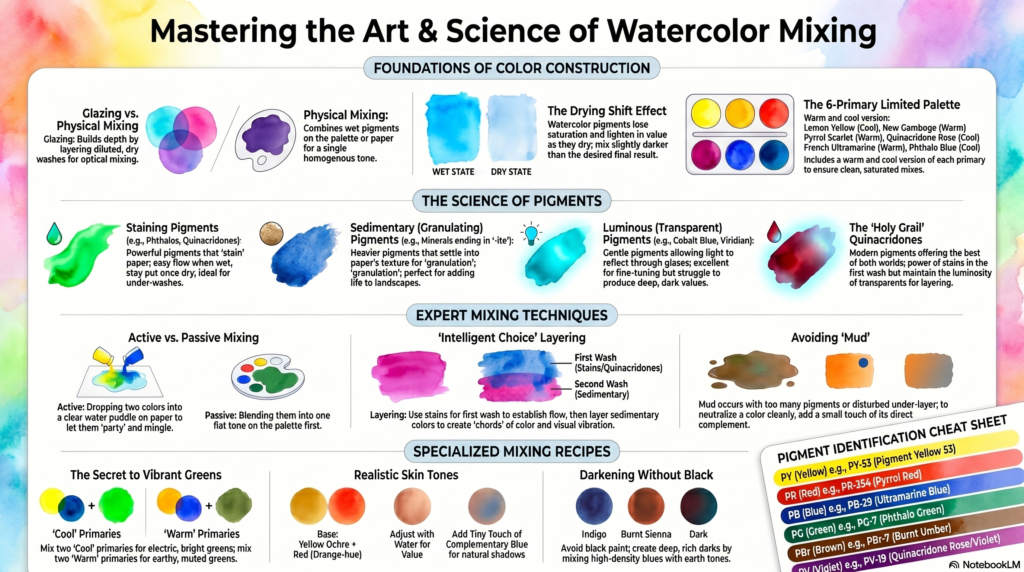
1. What are the basic colors I need to start mixing watercolors? To master watercolor mixing, you only need a basic primary palette: a warm and cool version of red, blue, and yellow. From these six colors, you can create a vast spectrum of secondary and tertiary hues without needing a large, expensive set of paints.
2. How do I avoid making my watercolor mixes look “muddy”? Muddy colors usually happen when you mix too many pigments together or combine colors that are opposites on the color wheel (complementary colors) without intention. To keep colors vibrant, try to limit your mixes to two or three pigments and ensure your water remains clean.
3. What is the difference between “glazing” and “wet-on-wet” mixing? Glazing involves applying a transparent layer of color over a completely dry layer, allowing the colors to mix optically. Wet-on-wet mixing involves adding wet paint to a damp paper surface, allowing the pigments to bleed and blend naturally for soft, unpredictable transitions.
4. Why do my colors look different once they dry on the paper? Watercolors are known for a “drying shift.” They typically appear lighter and less saturated once the water evaporates. Learning to compensate for this by applying slightly more pigment than you think you need is a key part of mastering the medium.
5. Do I need professional-grade paint to get good mixing results? While student-grade paints are great for practice, professional-grade watercolors contain higher pigment loads and fewer fillers. This makes it much easier to achieve clean, predictable mixes. If you are struggling with vibrancy, upgrading your primary colors can make a significant difference.
Happy painting! (Updated: May 2026)