
Key Takeaways
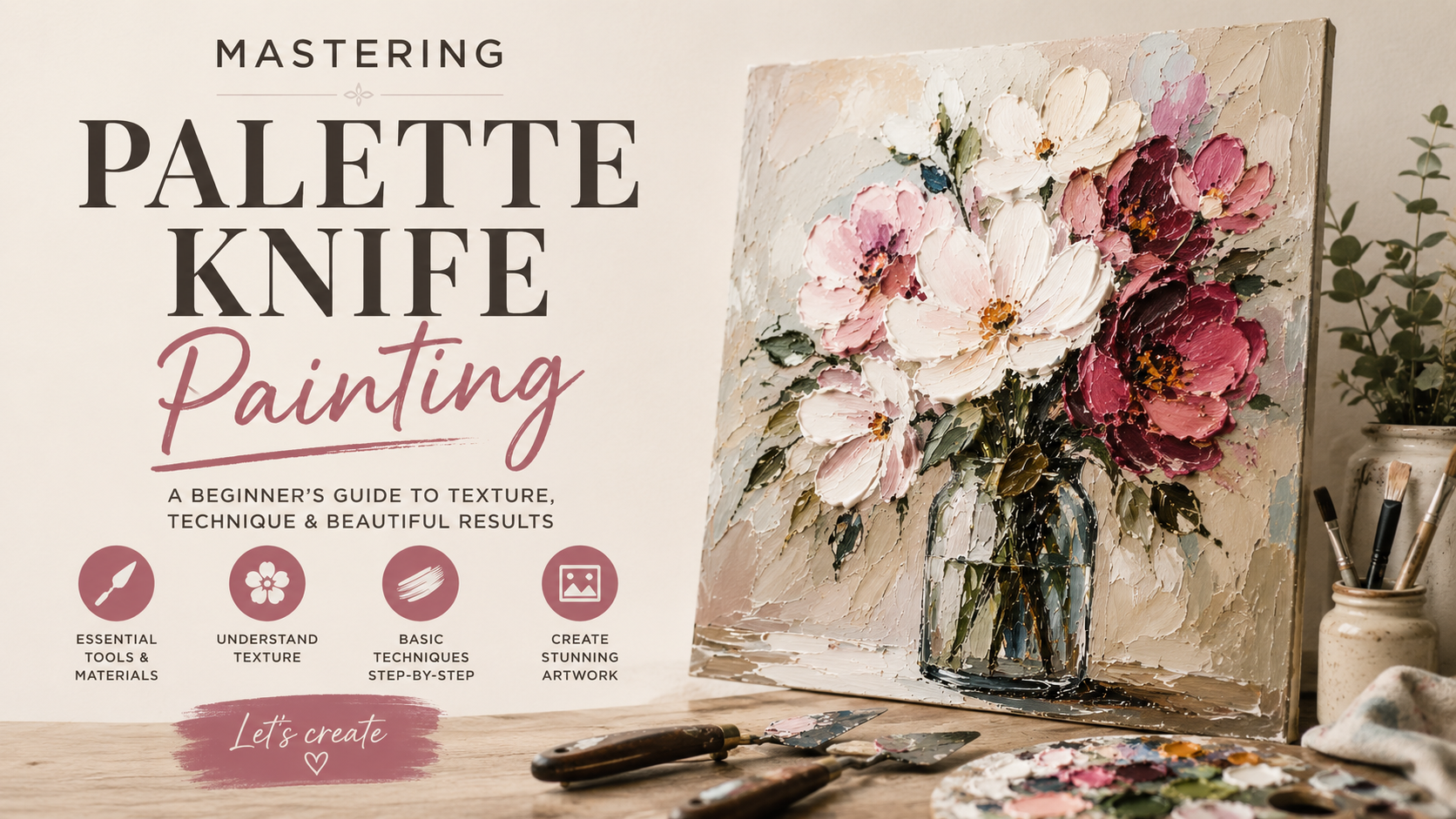
- Palette knife painting replaces traditional brushes with flexible metal or plastic blades to apply, mix, or scrape away paint.
- This technique is the foundation of impasto—a method of applying paint so thickly that it stands off the canvas, creating 3D volume and texture.
- Success relies on mastering three variables: the angle of your blade, your pressure control, and the physical viscosity of your paint.
- Beyond traditional oils and acrylics, palette knives are exceptional tools for exploring mixed media art ideas, allowing artists to seamlessly integrate modeling pastes, sand, and gels into their work.
What is Palette Knife Painting?

While the tool was historically used to mix paint on the palette before brush application, artists eventually realized the blade itself offered a dynamic way to construct an image. By applying heavy-body acrylics or oils directly with the metal edge, artists can achieve a sculptural quality that brushes simply cannot replicate.
This technique heavily features impasto, defined by the Tate as an area of thick paint or texture in a painting. Instead of blending colors into a smooth gradient, palette knife strokes sit sharply next to one another. Abstract Expressionists frequently utilized this; for example, Jackson Pollock completely abandoned traditional representation in his 1946 work Shimmering Substance, where he manipulated paint directly with a palette knife to create swirling, encrusted loops.
Expert Insight: As an art educator, I constantly remind students that a palette knife is not a broom—it’s a trowel. You are building, not sweeping. Think of yourself as a sculptor working in two dimensions. Every stroke should have structural integrity.
The Interdisciplinary Connection: Art and the Physics of Viscosity
When you scoop heavy-body paint with a flexible blade, you are engaging directly with fluid dynamics—specifically, non-Newtonian fluids. Thick oil and acrylic paints are thixotropic. This means they decrease in viscosity (become more fluid and spreadable) under physical stress—like the sheer force of a knife pressing against a canvas. Once that physical stress is removed, the paint thickens back up instantly. This scientific property is exactly what allows your sharp peaks of paint to stand tall against gravity without melting into flat puddles.
Essential Tools for Palette Knife Art
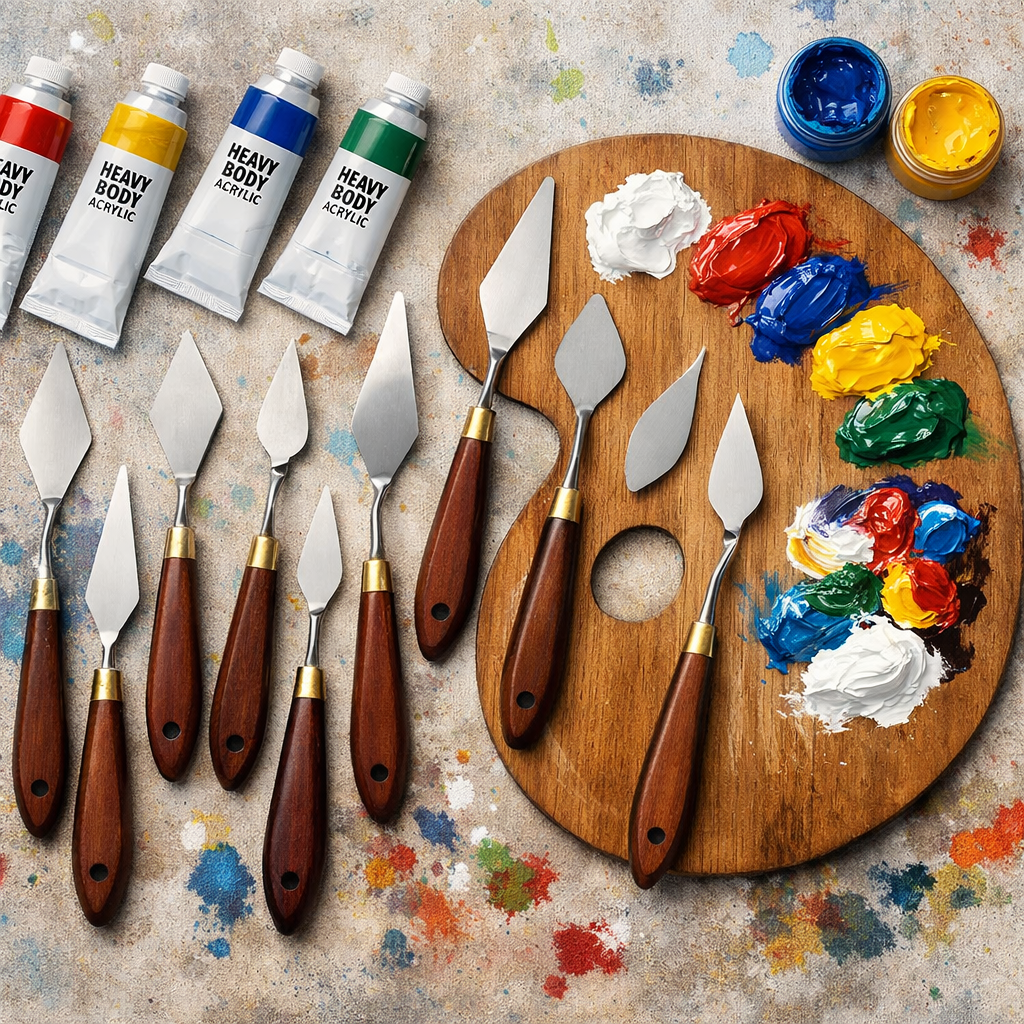
You don’t need a massive studio setup to begin, but you do need the right materials. Here are the core essential art supplies required to start building texture:
- The Knives: Avoid cheap plastic knives; they lack the “snap” and flexibility required for precision. Opt for a teardrop or diamond-shaped metal trowel knife with a cranked handle (which keeps your knuckles out of the wet paint).
- The Paint: Fluid paints will run off the blade. You need Heavy Body Acrylics or traditional Oil Paints.
- The Mediums: If using acrylics, invest in a heavy gel medium or modeling paste to bulk up your paint without wasting expensive pigment.
- The Support: Because impasto layers are heavy, standard stretched canvas can sag. Rigid supports like gessoed wood panels or heavy canvas boards are highly recommended to prevent your dried paint from cracking.
Step-by-Step Guide: How to Paint with a Palette Knife
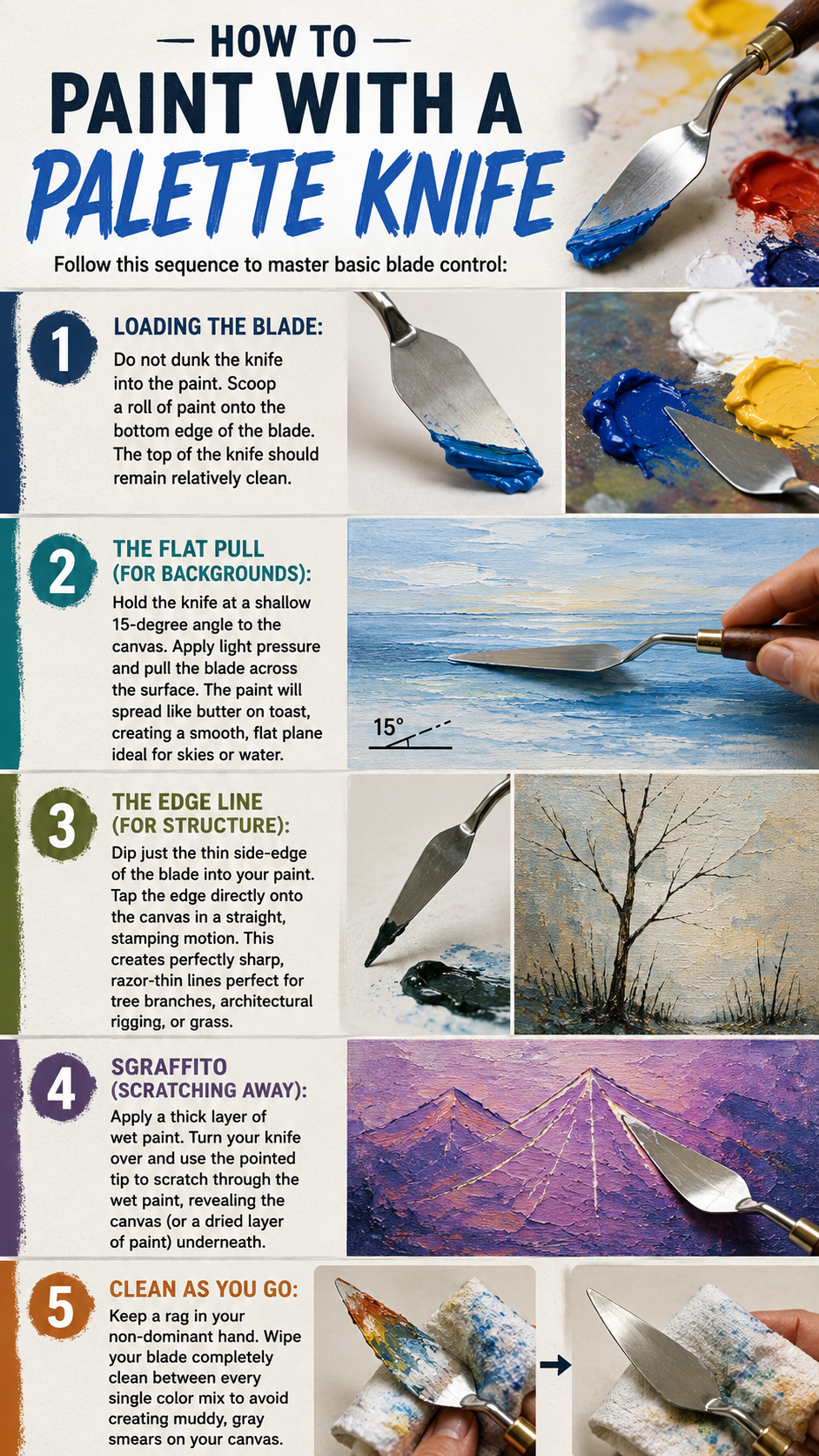
Ready to try these oil painting techniques for yourself? Follow this sequence to master basic blade control:
- Loading the Blade: Do not dunk the knife into the paint. Scoop a roll of paint onto the bottom edge of the blade. The top of the knife should remain relatively clean.
- The Flat Pull (For Backgrounds): Hold the knife at a shallow 15-degree angle to the canvas. Apply light pressure and pull the blade across the surface. The paint will spread like butter on toast, creating a smooth, flat plane ideal for skies or water.
- The Edge Line (For Structure): Dip just the thin side-edge of the blade into your paint. Tap the edge directly onto the canvas in a straight, stamping motion. This creates perfectly sharp, razor-thin lines perfect for tree branches, architectural rigging, or grass.
- Sgraffito (Scratching Away): Apply a thick layer of wet paint. Turn your knife over and use the pointed tip to scratch through the wet paint, revealing the canvas (or a dried layer of paint) underneath.
- Clean as You Go: Keep a rag in your non-dominant hand. Wipe your blade completely clean between every single color mix to avoid creating muddy, gray smears on your canvas.
Mixed Media Art Ideas: Elevating Your Palette Knife Work
Once you are comfortable with pure paint, the palette knife becomes your best friend for executing mixed media art ideas. Because the metal blade is highly durable and easy to wipe clean, you can use it to apply materials that would otherwise ruin the bristles of a traditional brush.
- Structural Pastes: Mix lightweight modeling paste with your acrylics to create dramatic, rock-like textures.
- Granular Additives: Stir fine sand, coffee grounds, or crushed eggshells into your paint before applying it with the knife. The blade will drag the grit across the canvas, creating aggressive, organic scoring marks.
- Metallic Foils: Use the knife to apply adhesive size in thick, raised patterns, then press gold or copper leaf over the dry ridges for an illuminated, 3D effect.

The Challenge Project: The Blue Grisaille Impasto
Your Task: Create a heavily textured landscape using a restricted, monochromatic color scheme—a variation of the classic “Blue Grisaille.”

Limit your palette entirely to Ultramarine Blue, Titanium White, and a tiny touch of Burnt Umber (to create deep, near-black shadows). By removing the complexity of mixing a full color wheel, you are forced to rely entirely on value (light vs. dark) and texture (thick vs. thin paint) to define your foreground, middle ground, and background.
Once your piece is dry, submit your artwork to our gallery to show off your structural masterpieces!
FAQs: Common Palette Knife Pain Points
Why are my colors turning to mud on the canvas? Muddy colors happen when you overwork the wet paint. Unlike brushes, which gently blend edges, knives scrape wet layers into each other. Pre-mix your exact color on your wooden palette, apply it to the canvas with one decisive stroke, and leave it alone.
How long does impasto oil paint take to dry? Depending on the thickness, pure oil impasto can take weeks to dry to the touch, and up to a year to cure completely. To speed this up, mix your oils with an alkyd, fast-drying medium.
Why is my thick paint cracking as it dries? Cracking (craquelure) occurs when the top layer of paint dries and hardens faster than the soft, wet layers underneath. To prevent this, always follow the “fat over lean” rule in oils, use rigid wood panels instead of flexible canvas, and avoid applying thick paint over highly diluted, oily washes. (P4AI)

Olly
Olly Farmer M.Sc, B.Sc, PGCE 25 years experience of Watercolor Painting and AI Art; teacher for 13 years; Creator of Art Tools; Art Gallery Contributor of Art Articles to Medium.com, LinkedIn and Facebook
Continue exploring
PROMINENT PAINTING
Keep your creative momentum
Get new painting guides, practical techniques and artist stories delivered without the noise.
Occasional emails. Unsubscribe whenever you like.