
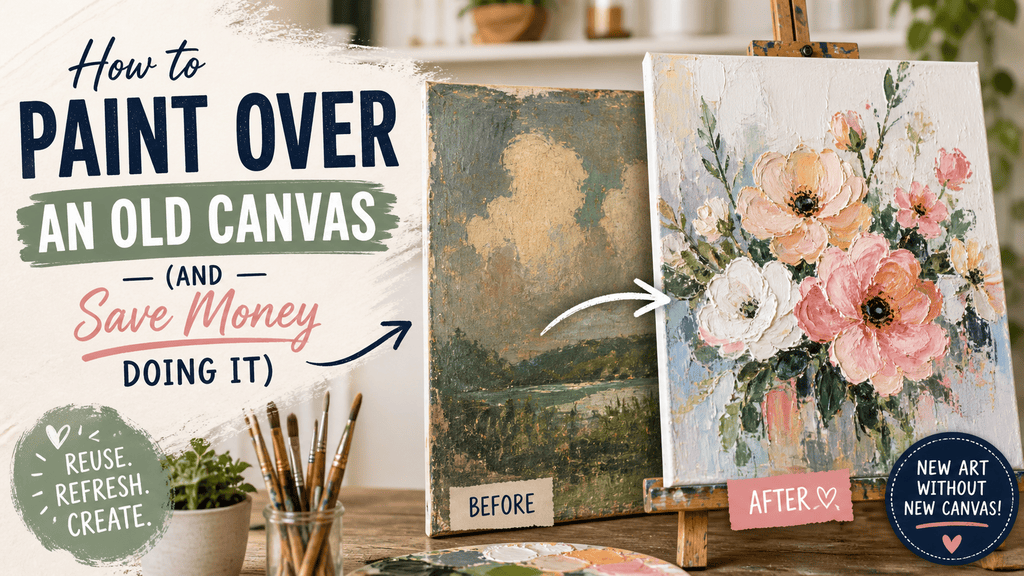
Summary: Do not throw away your ruined paintings. Reusing an old canvas is a smart way to save money and reduce waste. This guide shows you exactly how to evaluate your old artwork, sand down unwanted texture, and apply gesso for a fresh start. Learn how to transform your painting mistakes into a blank slate and get back to creating today.
You stare at a painting you just cannot stand anymore. It happens to every single artist. The colors look muddy. The composition feels wrong. You might feel tempted to throw the whole canvas in the trash.

Do not throw it away. Reusing an old canvas is a smart move that saves you money and reduces waste. Some of the greatest painters in history painted right over their old work. You can do the exact same thing today.
Learning how to paint over an old canvas gives you freedom to experiment without fear. It removes the pressure of ruining an expensive new surface. Let us walk through the simple steps to transform your rejected art into a beautiful blank slate.
Can You Paint Over an Acrylic Canvas?
Yes, you can easily paint over an acrylic canvas. Acrylic paint dries quickly into a flexible plastic polymer, which makes it an excellent base for new layers of either acrylic or oil paint once properly prepped.
Acrylics are incredibly forgiving. If your old painting is relatively flat, you are already halfway to a new masterpiece. You just need to ensure the surface is clean and free of dust before you begin. You can find more tips on saving troubled artwork in our guide on fixing painting mistakes.
Assessing Your Old Canvas for Reusability
Before you grab a brush, take a close look at your canvas. Run your hand over the surface. Is the paint applied in thin washes, or are there thick mountains of texture?
Thin, flat paintings are the easiest to paint over. You can often skip heavy sanding and move straight to priming. Heavy texture requires more work. If the paint is thick enough to cast a shadow, that texture will show through your new painting. If the old texture does not match your new vision, you will need to smooth it out. Preparing your surface correctly is a crucial step in the creative process. You can learn more about this in our guide to canvas preparation.
How Do You Prepare an Old Canvas for a New Painting?
To prepare an old canvas for a new painting, you must first lightly sand the surface to remove thick textures. Next, wipe away the dust with a damp cloth. Finally, apply two coats of acrylic gesso to create a fresh, textured surface.
This process ensures your new paint sticks perfectly. Skipping these steps can cause your new painting to peel or chip later on.
Sanding Down Textured Paint
Texture is great when you want it. It is terrible when it belongs to a painting you are trying to erase. Grab some fine-grit sandpaper. Gently rub it in circular motions over the thickest areas of paint.
You do not need to sand the canvas down to the bare fabric. Your goal is simply to knock down the sharpest peaks. Be gentle to avoid tearing the canvas fibers. Once the surface feels relatively smooth, wipe the entire canvas with a damp rag. Let it dry completely.
Do You Need to Gesso Over an Old Painting?
Yes, you need to apply gesso over an old painting. Gesso creates a slightly rough surface called “tooth” that allows new paint to grip the canvas properly while covering up the old colors underneath.
Gesso acts as a bridge between your old mistake and your new idea. Without it, your fresh paint might slide around or fail to adhere. Understanding the difference between primers and gesso is vital for long-lasting art. Use a wide flat brush to apply a thin even coat. Let it dry, then paint a second coat in the opposite direction.
Toning Your Canvas for a Fresh Start
A stark white gessoed canvas can feel incredibly intimidating. You can fix this by applying a toned ground. Mix a thin wash of burnt sienna or yellow ocher. Brush it quickly over the entire canvas.
This warm base layer removes the pressure of the blank white void. It also adds a beautiful underlying warmth to your final painting. Now you are ready to start creating again. You might even try something entirely different, like our beginner pointillism landscape tutorial.
Every ruined painting is just a stepping stone to your next success. Do not let a bad art day convince you to waste perfectly good materials. Grab your sandpaper and your gesso. Prep that old canvas right now and turn your past mistake into your next great creation.
FAQs: How to Paint Over an Old Canvas
Can you use white acrylic paint instead of gesso?
White acrylic paint does not have the same chalky tooth as gesso. Paint will slip on a surface primed only with acrylic. Always use real gesso for the best results.
Do I need to remove the old paint entirely?
No. You only need to reduce the texture and cover the colors. Stripping a canvas completely is unnecessary and often damages the fabric.
Can I paint oil over an old acrylic painting?
Yes. You can safely paint oil over acrylic. You cannot paint acrylic over oil because the water-based acrylic will not stick to the oily surface.
How many coats of gesso should I use?
Two coats are usually perfect. Apply the first coat horizontally and the second coat vertically to ensure an even texture.
Is it cheaper to reuse a canvas or buy a new one?
Reusing a canvas is much cheaper than buying a new one. A large tub of gesso costs the same as one medium canvas but will save dozens of old paintings.
More Resources:
1. Museum Conservation Institute (Smithsonian): Caring for Acrylic Paintings Link: https://mci.si.edu/caring-acrylic-paintings
2. Winsor & Newton: A guide to sizing and priming canvas Link: https://uk.winsornewton.com/blogs/guides/sizing-and-priming-canvas-guide
3. Golden Artist Colors (Just Paint): Wet Sanding Acrylics for Best Results Link: https://justpaint.org/wet-sanding-acrylics-for-best-results/
4. Golden Artist Colors (Just Paint): Revisiting Oils Over Acrylics Link: https://justpaint.org/revising-our-recommendations-for-using-oils-over-acrylics/

Olly
Olly Farmer M.Sc, B.Sc, PGCE 25 years experience of Watercolor Painting and AI Art; teacher for 13 years; Creator of Art Tools; Art Gallery Contributor of Art Articles to Medium.com, LinkedIn and Facebook
Continue exploring
PROMINENT PAINTING
Keep your creative momentum
Get new painting guides, practical techniques and artist stories delivered without the noise.
Occasional emails. Unsubscribe whenever you like.