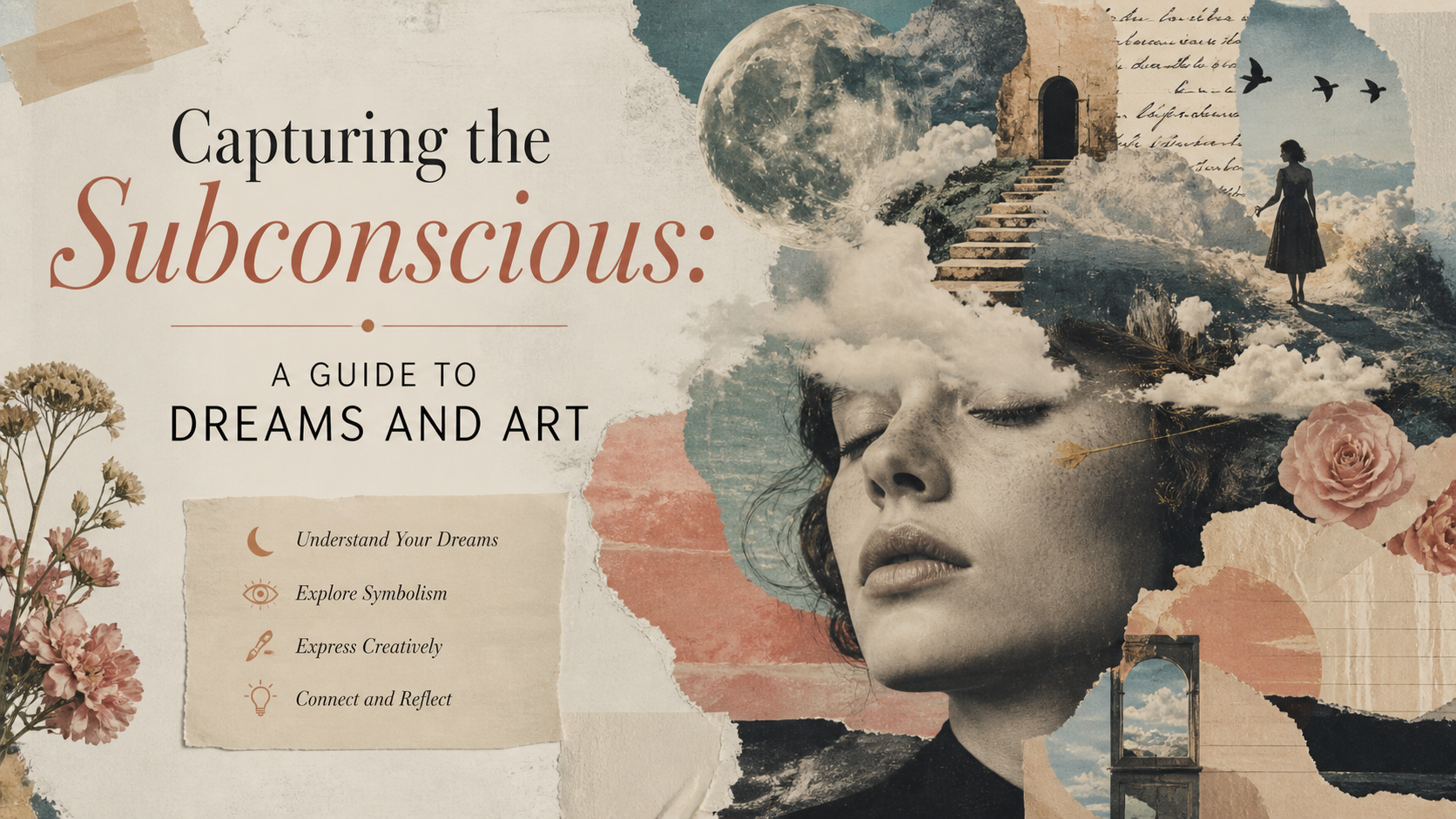
You wake up. A melting clock or a floating apple lingers in your mind’s eye. It’s already fading. You grab your sketchbook before logic erases the memory completely. This frantic translation from a sleeping mind to a waking canvas is the core of surrealist creation.
What is the relationship between dreams and art?
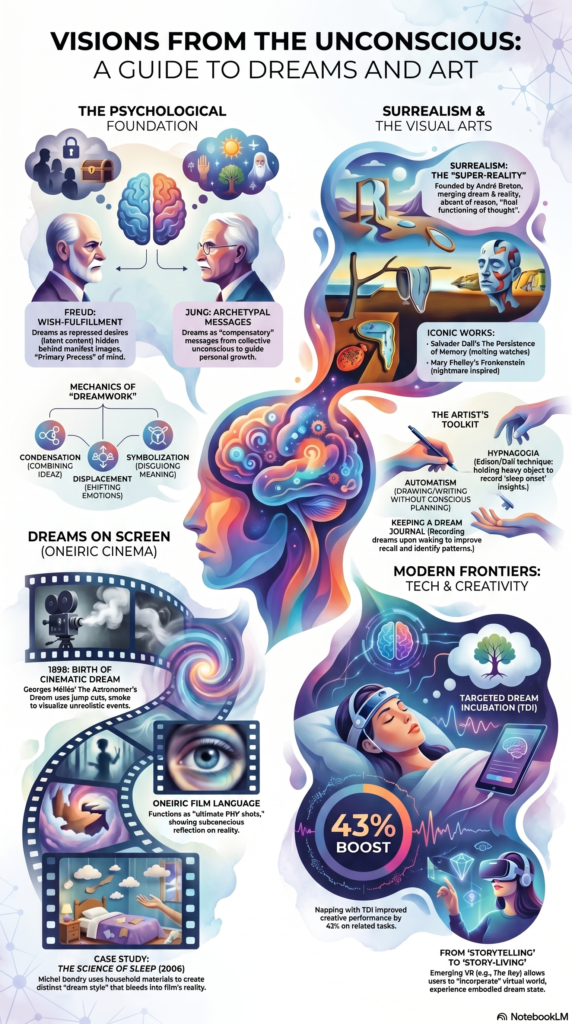
Dreams act as unfiltered blueprints for visual art. They provide artists with irrational imagery, deep emotional landscapes, and surreal symbols that bypass conscious logic. Translating these subconscious visions onto canvas allows painters to explore complex feelings without strict realistic constraints.
Throughout history, the sleeping mind has offered a massive wellspring of inspiration. When you stop worrying about perfect perspective, you open a door to raw, unfiltered expression. You aren’t tied to the rules of the waking world.
The Surrealist Rebellion
The early 20th century saw a dramatic shift in how we viewed the canvas. Artists decided that reality was simply too restrictive. They turned inward. If you explore our guide to surrealism art, you’ll see exactly how creators championed the bizarre. They painted impossible scenes with photographic precision.
Consider the lingering impact of these pioneers. You can decode the hidden symbolism in Salvador Dali’s art to understand how melting objects represented the fluidity of time. Alternatively, looking at Rene Magritte the master of surrealism shows us how everyday objects become deeply unsettling when placed in strange contexts. They didn’t paint what they saw. They painted what they dreamt.
How do you paint a dream?
You paint a dream by sketching immediately upon waking. Focus on capturing the primary emotion and the most striking visual elements rather than perfect details. Use a limited color palette to establish mood before refining the bizarre or fragmented compositions.
Don’t let the blank canvas intimidate you. Start with a messy, rapid block-in of shapes. The goal isn’t photographic realism; it’s capturing an elusive feeling before it vanishes.
Color and Emotion in the Subconscious
Dreams are rarely just visual experiences. They are intensely emotional. When you are painting emotions to express feelings through art, your color choices do all the heavy lifting. You don’t need to render a perfectly realistic face to convey a nightmare. Sometimes, a jagged streak of crimson is enough.
This is where letting go of strict form helps immensely. If you unlock the secrets of abstract painting, you learn that texture and hue speak much louder than anatomical accuracy.
| Dream Emotion | Suggested Palette Focus | Visual Technique |
|---|---|---|
| Anxiety | High contrast, harsh reds, deep blacks | Sharp angles, chaotic brushstrokes |
| Serenity | Soft blues, muted greens, pastels | Smooth blending, horizontal lines |
| Confusion | Clashing complementary colors | Overlapping, transparent layers |
Can painting dreams cure creative block?
Yes, painting dreams effectively breaks creative blocks. Because dream logic ignores the rules of gravity, proportion, and reality, it removes the pressure to create something perfect. This ultimate freedom jumpstarts your imagination and gets your brush moving across the canvas again.
Staring at a blank page is paralyzing. When you lean into the absurd, you successfully bypass your harsh inner critic. This makes dream work a fantastic strategy if you’re trying to figure out how to overcome creative blocks for painters. The standard rules simply do not apply here.
Your subconscious is a private gallery of bizarre and beautiful imagery. Stop trying to paint the bowl of fruit exactly as it sits on the table. Close your eyes, remember the fractured landscapes of your sleep, and put that chaos onto the canvas. Pick up your brush today and let your strangest thoughts dictate your next masterpiece.
Unlock the Artistry of Your Subconscious
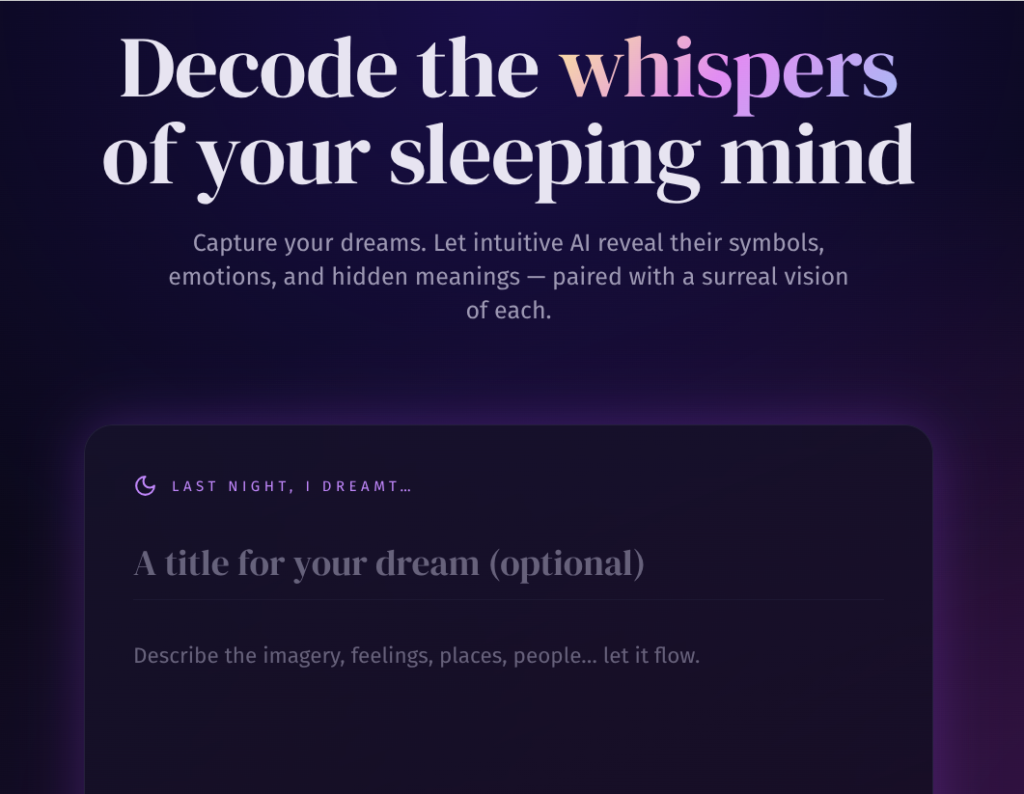
Transform the fleeting images of your sleep into tangible works of art. Our new tool, Art Dreams, invites you to capture the symbols, emotions, and hidden narratives of your dreams and witness them rendered into surreal, evocative visuals. By bridging the gap between your inner vision and external expression, Art Dreams offers a unique way to explore the deeper aesthetics of your imagination. Explore your subconscious canvas today at art-dreams.lovable.app.
Frequently Asked Questions
What is surrealism in art?
Surrealism is an art movement focused on releasing the creative potential of the unconscious mind. It often features dream-like, illogical scenes painted with highly realistic techniques.
How can I remember my dreams better for art?
Keep a sketchbook and pencil directly on your nightstand. Write down or sketch any fragments the exact moment you wake up before checking your phone.
Do I need to be good at drawing to paint my dreams?
Not at all. Dream art can be highly abstract and focused purely on color and emotion rather than realistic rendering.
Why are dreams a good subject for beginners?
Dreams remove the pressure of creating a perfectly accurate representation of reality. Mistakes can simply become part of the surreal landscape.
What colors work best for dreamscapes?
There are no strict rules, but muted, atmospheric colors often replicate the hazy feeling of a dream. Deep purples, blues, and soft grays are highly effective.