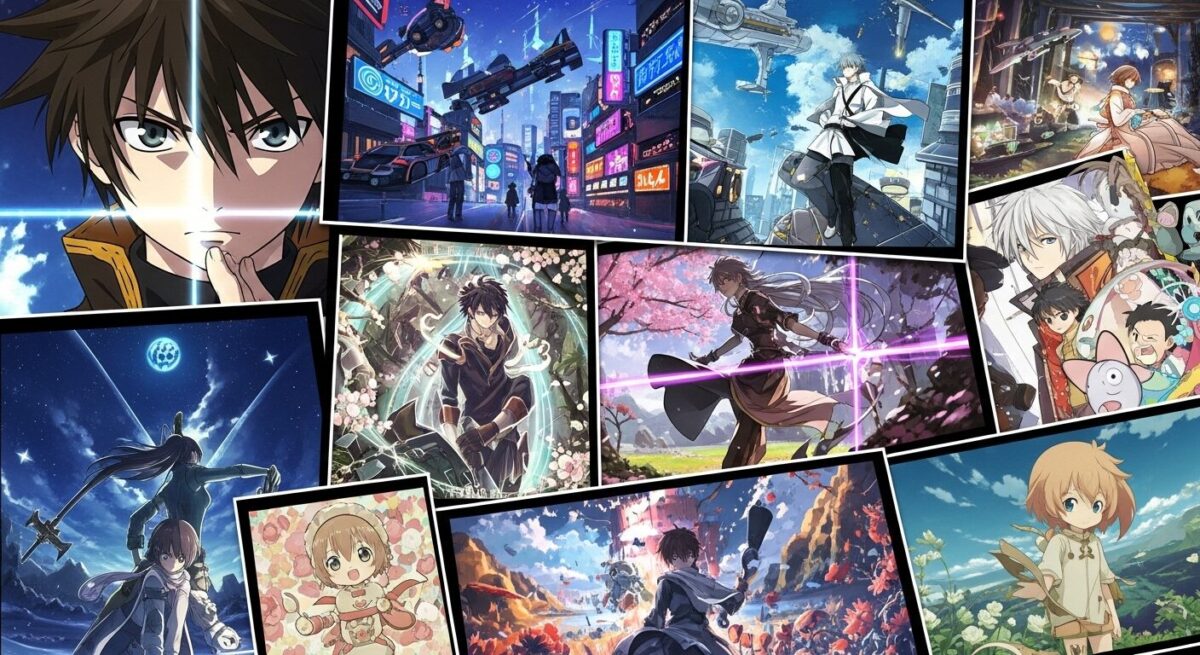
Learning how to draw anime characters opens up a world of creative possibilities that millions of artists worldwide have discovered. Whether you’re inspired by your favorite anime series or simply drawn to the expressive, stylized art form, anime character drawing offers a perfect blend of structure and creativity that beginners can master with the right guidance and practice.
QUICK LINK – ANIME DRAWING TOOL: Go to tool now!
Key Points Summary
- Start with basic shapes and proportions to build anime characters
- Master facial features, especially anime-style eyes and expressions
- Learn body structure and posing fundamentals
- Practice regularly with simple exercises and references
- Develop your unique style through experimentation and observation
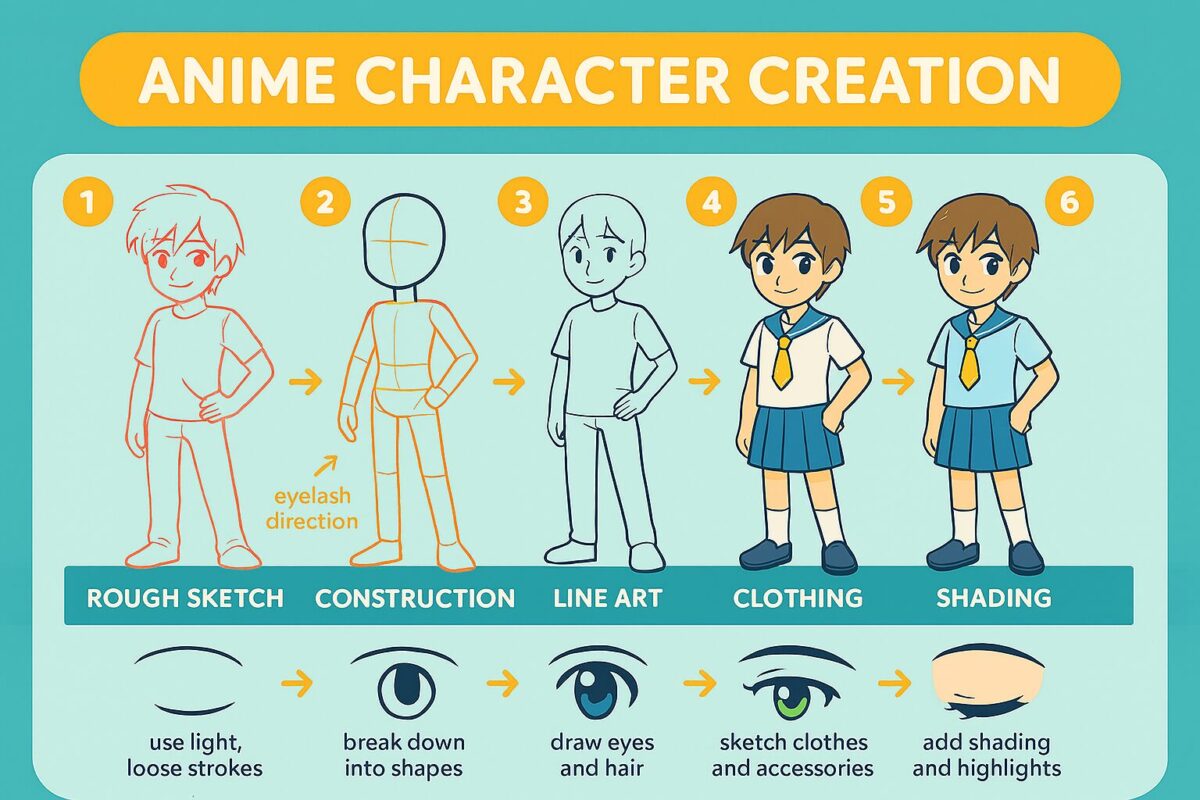
How to Draw an Anime Character in 10 Steps
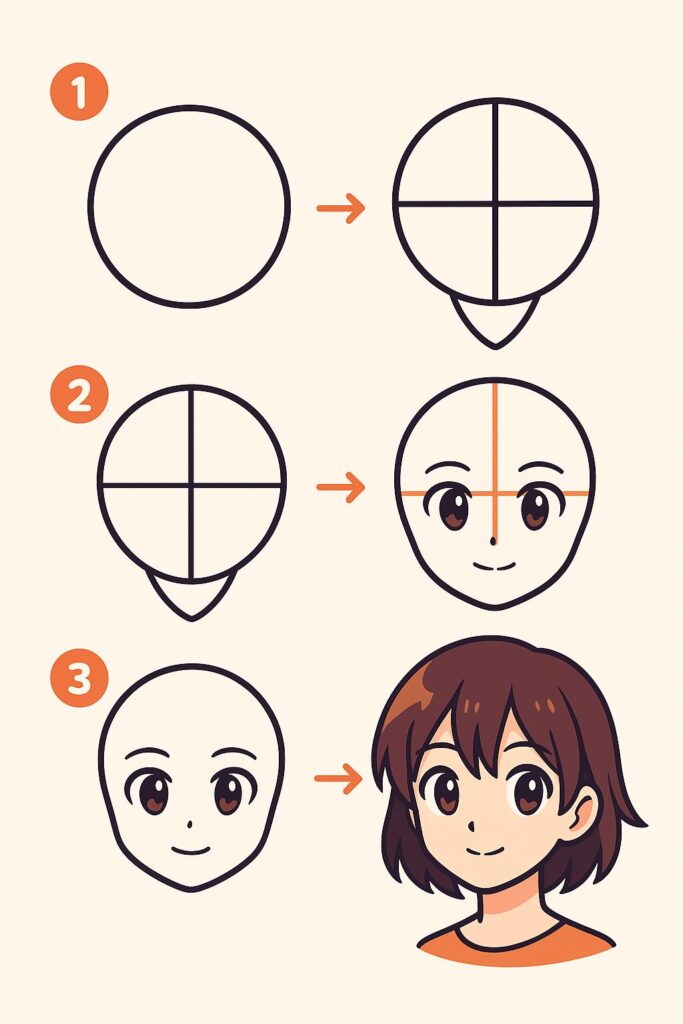
- Draw a circle for the head.
- Add facial guidelines.
- Sketch the jaw.
- Draw the eyes.
- Add the nose and mouth.
- Sketch the hair shape.
- Build the body.
- Add clothing.
- Ink the drawing.
- Add shading.
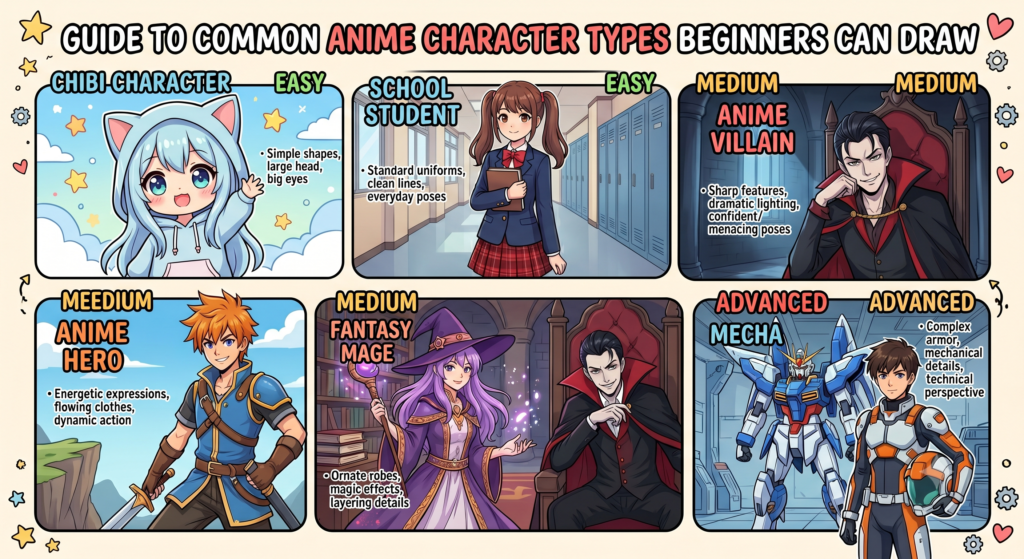
Common Anime Character Types Beginners Can Draw
| Character Type | Difficulty |
|---|---|
| Chibi Character | Easy |
| School Student | Easy |
| Anime Hero | Medium |
| Fantasy Mage | Medium |
| Anime Villain | Medium |
| Mecha Pilot | Advanced |
Getting Started with Anime Drawing
Anime drawing might seem intimidating at first, but it’s actually one of the most beginner-friendly art styles. Unlike realistic drawing, anime uses simplified forms and stylized features that are easier to learn and replicate. The key is understanding that anime characters are built from basic geometric shapes – circles, ovals, and triangles that form the foundation of every character you’ll create.
Before diving into complex character designs, you’ll need to grasp the fundamental concept that anime art prioritizes expression and emotion over realistic proportions. This stylized approach means you can focus on capturing personality and feeling rather than perfect anatomical accuracy.
Essential Anime Drawing Supplies
You don’t need expensive equipment to start your anime drawing journey. Here are the basic supplies that will get you started:
Traditional Drawing Tools
- Pencils: 2H for light sketching, HB for general drawing, 2B for darker lines
- Erasers: Kneaded eraser for gentle corrections, regular eraser for clean-up
- Paper: Smooth drawing paper or sketch pads
- Pens: Fine-tip pens (0.3-0.7mm) for inking final drawings
Basic Anime Character Proportions
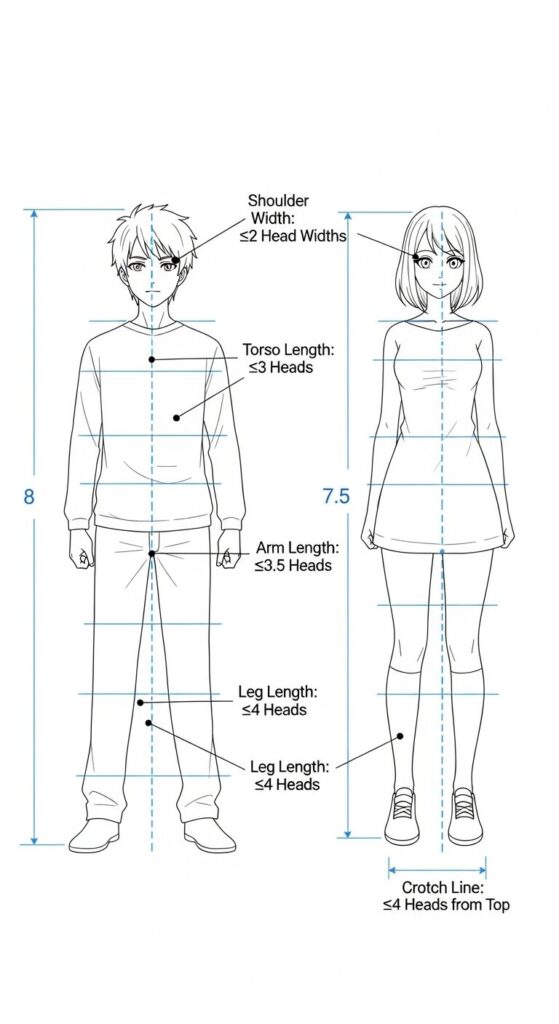
Understanding proportions is crucial for creating believable anime characters. Unlike realistic human proportions (which use an 8-head measurement system), anime characters typically use a 7-head system, making them appear more youthful and stylized.
The Head-to-Body Ratio System
Start by drawing a vertical line and marking off equal segments. The head occupies the top segment, with the remaining segments dividing the torso, hips, and legs proportionally.
| Character Type | Head-to-Body Ratio | Best For |
|---|---|---|
| Standard Anime | 7-7.5 heads tall | Teenagers, young adults |
| Chibi Style | 2-3 heads tall | Cute, simplified characters |
| Heroic Style | 8 heads tall | Action heroes, mature characters |
Drawing Anime Facial Features
The face is where anime characters truly come alive. Anime faces follow specific conventions that, once understood, become second nature to draw.
How to Draw Anime Characters – Face Construction Method
- Refine the chin to create the characteristic anime face shapeDraw Anime Characters – Face Construction Method
- Start with a circle for the basic head shape
- Add a vertical guideline down the center
- Draw a horizontal line slightly below the center for eye placement
- Add the jaw line by extending downward from the circle
Mastering Anime Eyes
Anime eyes are often the most striking feature of any character. They’re typically larger than realistic eyes and serve as windows to the character’s personality.
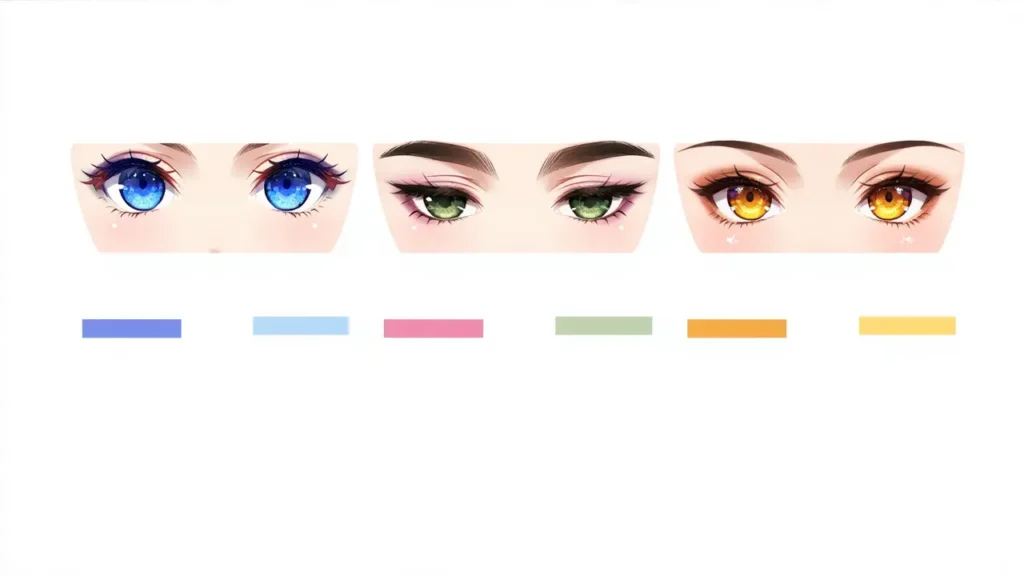
Basic Anime Eye Structure:
- Upper eyelid forms a curved line
- Lower eyelid is softer and less defined
- Iris is large and prominent
- Multiple highlights create depth and life
- Eyelashes add femininity or masculinity depending on style
“The eyes are the soul of your anime character. Master the eyes, and you’ve mastered half of character drawing.”
Professional Manga Artist Akira Yoshida
For additional techniques on eye drawing fundamentals, explore realistic eye drawing methods that can enhance your anime eye skills.
Anime Body Structure Fundamentals
Once you’ve mastered facial features, it’s time to tackle full-body anime character drawing. Anime bodies follow simplified anatomical rules that are forgiving for beginners yet capable of conveying dynamic poses and emotions.
Basic Body Construction Steps
![Anime hair drawing guide showing various hairstyles and techniques for creating realistic anime character hair]](https://prominentpainting.com/wp-content/uploads/2025/08/anime-hair-drawing-techniques-styles-tutorial-beginners.jpg "How to Draw Anime Characters: Easy Step-by-Step Tutorial for Beginners 8")
- Sketch the head using your preferred anime face style
- Draw the torso as a simplified geometric shape (oval or rectangle)
- Add the pelvis as a smaller shape below the torso
- Sketch basic limbs using simple lines and circles for joints
- Refine the silhouette by connecting shapes with flowing lines
- Add clothing and details to complete your character
Anime Hair Styling Techniques
Hair in anime defies gravity and reality, flowing in ways that enhance the character’s personality and the scene’s drama. Think of hair as separate chunks or sections rather than individual strands.
Popular Anime Hairstyles for Beginners:
- Straight bob cuts
- Spiky shonen-style hair
- Long flowing hair with movement
- Twin-tail pigtails
- Messy, casual styles
Anime Generation Tool
How to Draw Anime Characters for Beginners: A Step-by-Step Guide
Learning how to draw anime characters is easier than many beginners think. Anime art uses simplified shapes, expressive features, and stylized proportions that can be learned one step at a time.
The secret is not trying to draw a finished anime character immediately. Instead, build your character from simple shapes and gradually add details.
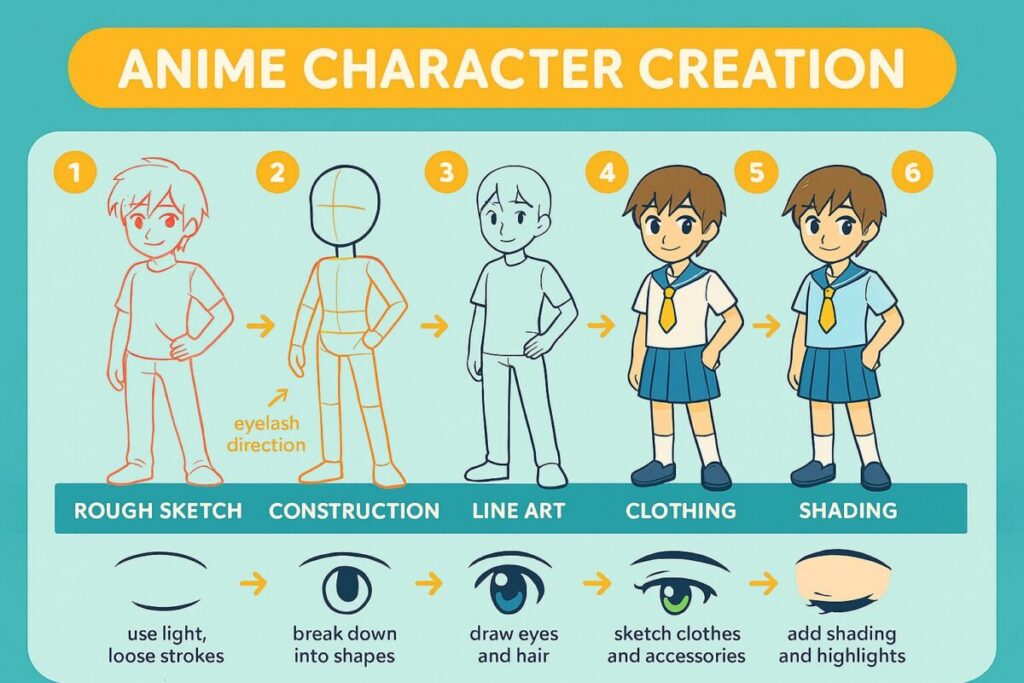
Step 1: Start with a Simple Head Shape
Draw a circle for the top of the head.
Next:
- Add a vertical centre line.
- Add a horizontal eye line.
- Extend the lower half into a jaw and chin.
This creates the basic anime head structure.
Tip: Keep your construction lines light so they can be erased later.
Step 2: Place the Eyes Correctly
Anime eyes are usually larger than realistic eyes because they help communicate emotion.
When drawing eyes:
- Place them slightly below the centre of the head.
- Leave one eye-width between both eyes.
- Draw the upper eyelid darker than the lower eyelid.
- Add highlights inside the iris.
Common beginner mistake:
Placing the eyes too high on the face.
Step 3: Draw a Simple Nose and Mouth
Anime noses are often simplified.
For beginners:
- Use a small line or dot for the nose.
- Draw the mouth lower than you think.
- Keep both features subtle.
Remember: the eyes carry most of the character's expression.
Step 4: Add Anime Hair
Instead of drawing individual hairs:
Think in large hair sections.
Start by drawing:
- The overall hairstyle shape.
- Large hair clumps.
- Smaller strands only near the edges.
Popular beginner hairstyles:
- Short spiky hair
- Simple bob cuts
- Medium-length layered hair
- Ponytails
Step 5: Build the Body Using Simple Shapes
Many beginners jump straight into anatomy.
Instead:
- Draw the head.
- Add an oval for the chest.
- Add a smaller shape for the hips.
- Connect them with a simple spine line.
- Sketch arms and legs with straight guide lines.
Anime characters are often built from simple geometric forms before details are added.
Step 6: Learn Basic Anime Proportions
| Character Type | Height |
|---|---|
| Chibi Character | 2–3 heads tall |
| Young Anime Character | 6–7 heads tall |
| Teen Character | 7–7.5 heads tall |
| Hero Character | 8 heads tall |
Beginners should start with 7-head proportions because they are easier to control.
Step 7: Draw Different Facial Expressions
Anime characters are known for expressive faces.
Practice:
- Happy expressions
- Sad expressions
- Angry expressions
- Surprised expressions
- Determined expressions
Try drawing the same character five times using different emotions.
This exercise improves character design faster than constantly creating new characters.
Step 8: Add Clothing
Keep clothing simple at first.
Start with:
- T-shirts
- Hoodies
- School uniforms
- Basic jackets
Focus on the overall silhouette before worrying about folds and wrinkles.
Step 9: Ink Your Drawing
Once you are happy with the sketch:
- Darken important outlines.
- Erase construction lines.
- Vary line thickness slightly.
- Keep the final drawing clean.
Step 10: Add Simple Shading
Anime artwork often uses cel shading.
Choose a light source.
Then:
- Add one shadow tone.
- Place shadows consistently.
- Keep edges sharp rather than blended.
This creates the clean anime look seen in manga and animation.
Common Anime Drawing Mistakes
Avoid these beginner errors:
- Making the head too small
- Drawing eyes too high
- Ignoring body proportions
- Overcomplicating hair
- Drawing stiff poses
- Skipping construction lines
Every artist makes these mistakes while learning.
30-Day Anime Drawing Challenge
Week 1:
Draw anime heads and facial features.
Week 2:
Practice eyes, hair, and expressions.
Week 3:
Learn body proportions and simple poses.
Week 4:
Create three original anime characters using everything you have learned.
🎨 Beginner Anime Drawing FAQs
Why do my anime eyes look wrong?
Even though anime eyes are stylized, they still follow basic facial anatomy. If they look "off," it is usually due to one of three common mistakes:
- Placement is too high: Beginners often place eyes on the forehead. In a standard front view, the eyes should sit right on the horizontal centerline of the head.
- The "Flat" look: Anime eyes aren't stickers pasted onto a flat face; they wrap around a curved skull. Make sure your eyelashes and pupils subtly curve with the roundness of the eyeball and face.
- Incorrect spacing: A good rule of thumb is that the distance between the two eyes should be roughly the width of one eye. If they are too close or too far apart, the face loses its balance.
How big should an anime head be?
The size of an anime head depends entirely on the proportions of the body you are drawing, measured in "head heights":
- Chibi Style (Cute/Exaggerated): The body is usually only 2 to 3 heads tall total. The head is massive compared to the body.
- Standard/Modern Anime: The average character is about 6 to 7 heads tall.
- Heroic/Realistic (e.g., JoJo, older shonen): Characters can be 8 heads tall or more, making the head look relatively small and the body highly elongated.
💡 Pro-Tip: When drawing just the face, the classic anime head shape is achieved by drawing a perfect circle for the cranium, then extending a tapered jawline down about half the circle's radius below the bottom edge.
Can I learn anime drawing without learning realism?
Yes, but with a major catch. You don't need to master hyper-realistic oil painting, but you do need to understand fundamental anatomy and construction.
Anime is fundamentally a simplification and exaggeration of real life. If you don't know the rules of how a real human shoulder rotates, how a hand bends, or how light hits a 3D object, your stylized drawings will likely look stiff or broken.
- The Short Answer: Skip the hyper-realism shading, but don't skip the basic skeletal structure and 3D shapes.
What is the easiest anime style for beginners?
The easiest style to start with is Chibi or modern Slice-of-Life/Cute styles (think K-On! or Lucky Star).
| Anime Style | Why it is Beginner-Friendly |
| Chibi | Features highly simplified bodies, minimal muscle definition, and large, expressive features that forgive minor proportional errors. |
| Slice-of-Life | Relies on clean, rounded lines, large eyes, and simplified shading without complex, sharp angles or hyper-detailed clothing folds. |
Additional Resources
- Manga Materials - Free reference poses and tutorials for manga artists
- Clip Studio Paint Community - Professional digital art tutorials and resources
- Anime News Network - Industry news and artistic inspiration
- How to Draw Manga by Katy Coope - Comprehensive beginner's guide book
- Senshi Stock - Pose references specifically for anime and manga artists
- YouTube: Mark Crilley's Channel - Popular anime drawing tutorials and techniques
Updated: June 26 GP