
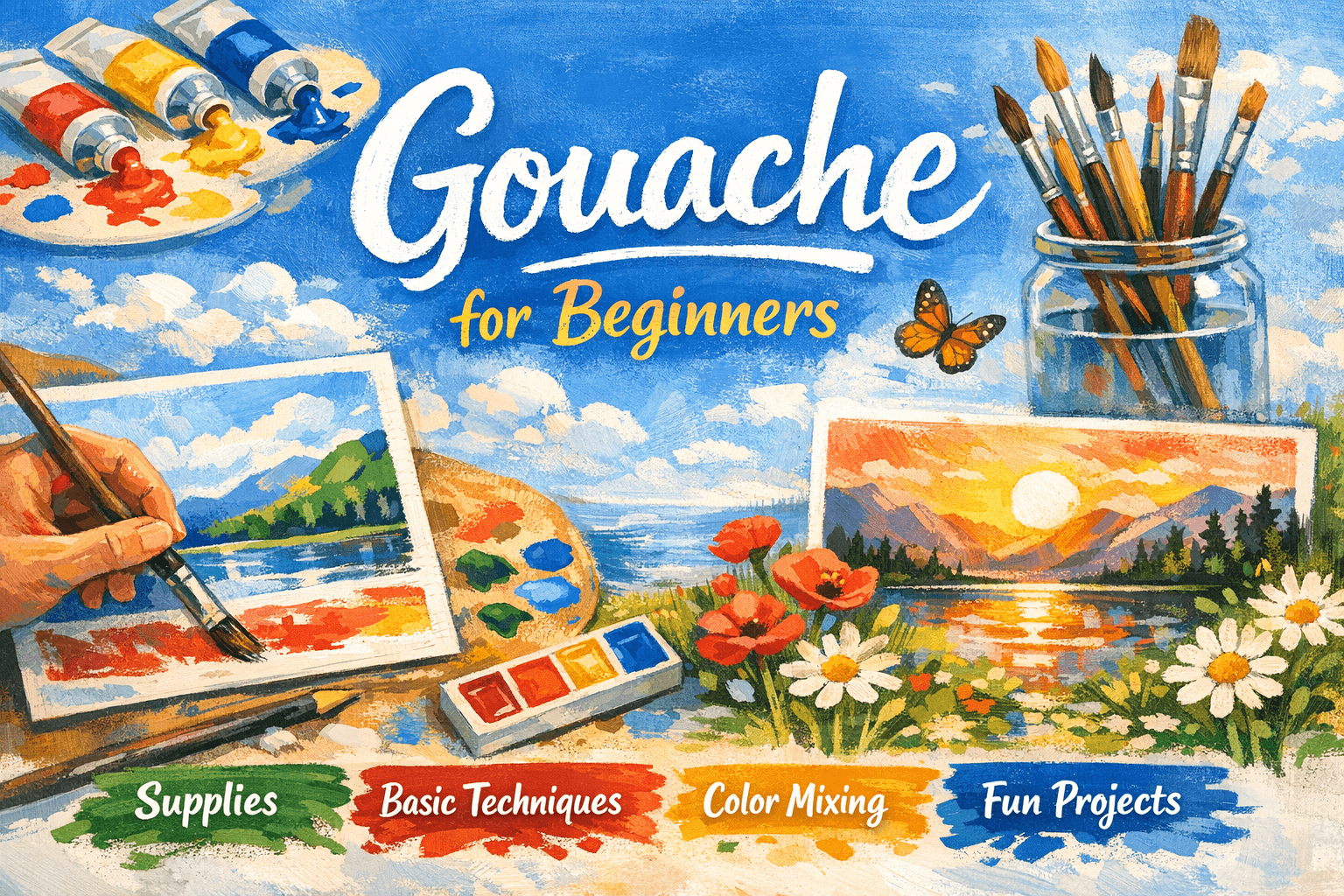
Discover why gouache is taking the art world by storm. This forgiving medium combines the best parts of watercolor and acrylic. It offers a completely stress-free way to paint. You’ll learn the core differences between these paints and how to reactivate your palette. I’ll also guide you through a simple five-step exercise to start painting today. Grab your brushes and let’s demystify this velvety paint.
You sit down with a fresh sheet of paper and a grand vision. Then you watch your colors bleed into a muddy puddle. Watercolor has a reputation for being ruthless. It dries fast. It layers unpredictably. It leaves you feeling like you’re fighting the paint instead of controlling it. Acrylics pose the exact opposite problem. They dry like plastic before you can even blend a sky. This is exactly why gouache for beginners is the perfect middle ground.
When we implemented this for my beginner painting classes, we saw a massive drop in student frustration. Gouache offers rare forgiveness. You can layer it thickly to cover mistakes. Yet it remains re-wettable on your palette for days. This medium is seeing a massive resurgence in 2026. If you’re tired of comparing the differences between painting mediums, it’s time to try something new.
What Is Gouache and How Does It Work?

Gouache is an opaque watercolor paint made with color pigment, gum arabic binder, and solid white chalk. The chalk stops light from passing through the paint. This allows you to paint light colors directly over dark backgrounds with a thick, creamy consistency.
This unique formulation creates a beautiful flat finish. Traditional watercolors rely on the white of the paper for brightness. Gouache relies entirely on its own opacity. The Tate Museum glossary confirms that this high opacity makes the paint completely non-reflective. You get bold, solid blocks of color. It’s truly magical. For a deeper dive, you can read my complete breakdown on what gouache is.
Why Is Gouache Easier Than Watercolor for Beginners?
Gouache is easier than watercolor because it acts just like an eraser. If you make an error, you simply wait for the layer to dry. Then you apply a fresh, opaque stroke right on top to completely cover the mistake.
Traditional watercolor relies on keeping areas of your paper pristine. Once you lose that light space, it’s gone forever. This permanence creates immense anxiety. Students who are getting started with watercolors often find themselves paralyzed by the fear of ruining their artwork. Gouache removes that fear entirely. Research from the American Psychological Association indicates that creative anxiety drops significantly when people use forgiving tools. You have absolute permission to make a mess.
The Matte Finish: Creating Velvety Bold Art
There’s a reason this paint is experiencing a massive resurgence right now. The paint dries to a completely matte, velvety finish. It looks striking both in person and on digital screens. Photographers and illustrators love it. The flat surface eliminates glare under harsh studio lights.
This flat finish is perfect for creating bold, graphic shapes. You get solid blocks of color without the visible, shiny brushstrokes left behind by heavy acrylics. Because the finish is so delicate, the Library of Congress preservation guidelines state that gouache requires framing under glass. The resulting texture is incredibly satisfying to look at.
How Do You Reactivate Dried Gouache Paint?
You reactivate dried gouache paint by misting it lightly with a spray bottle of clean water. After waiting two minutes, the water dissolves the gum arabic binder. This returns the solid paint to a creamy, highly usable consistency.
This specific feature makes the medium incredibly budget-friendly. You never have to scrape dried paint into the trash. The scientific composition of gum arabic allows for endless re-wetting without destroying the pigment. Keep a small spray bottle on your desk. Your palette will always be ready for you.
What Are the Essential Supplies for Your First Palette?
You don’t need to spend a fortune to build a professional-quality setup. Many beginners start with a popular jelly cup set like Himi. These sets offer great value and vibrant colors. Upgrading to artist-grade tubes later ensures better longevity.
When gathering your essential painting supplies, you should choose synthetic round brushes. Gouache can be too heavy for delicate natural hair bristles. You’ll also need heavy watercolor paper to handle the moisture. The American Watercolor Society recommends 300gsm paper to prevent buckling. A simple ceramic palette and clean water will complete your station.
Your First 5-Step Exercise: The Flat Wash to Gradient
The best way to understand this medium is to physically feel it on the page. We’ll create a simple gradient to master the water-to-paint ratio. This takes just a few minutes.

- Squeeze a pea-sized amount of blue paint onto your palette.
- Add just enough water to create the consistency of melted ice cream.
- Paint a solid stripe across the top of your paper.
- Dip your brush in clean water, tap off the excess, and paint a new stripe slightly overlapping the first one.
- Continue adding water and pulling the color down until it fades entirely.
This simple exercise builds immediate muscle memory. Once you master this creamy consistency, you’re ready to explore advanced gouache painting techniques.
Conclusion
Stop letting the fear of a ruined canvas keep you from painting. Gouache gives you the freedom to experiment, make mistakes, and fix them with a single brushstroke. It removes the pressure of perfection. Grab a basic starter set of tubes today. Squeeze out some color and feel that velvety paint drag across your paper. Don’t wait for the perfect moment. Paint your first gradient right now.
Frequently Asked Questions
1. Can you use watercolor brushes for gouache? Yes, you can use synthetic watercolor brushes safely. They hold enough moisture to keep the paint flowing smoothly across the paper. You should avoid expensive natural hair brushes. The Winsor & Newton care guide advises that heavy chalk pigments can cause excessive wear on delicate natural bristles.
2. Does gouache dry lighter or darker? Gouache plays a tricky visual game when drying. Light colors tend to dry slightly darker. Dark colors dry noticeably lighter. Testing your mixed colors on a scrap piece of paper before applying them is the best way to predict the outcome.
3. Can I mix gouache with watercolors? Absolutely. Both of these mediums use gum arabic as their primary binder. This shared chemistry means they mix beautifully together on the palette. Many artists lay down transparent watercolor washes first and add bold, opaque details on top.
4. Do I need a special canvas for gouache? Standard stretched canvases aren’t ideal for this medium. The flexible surface can cause the brittle, dried paint to crack. Instead, use heavy watercolor paper, a firm illustration board, or a rigid wooden panel.
5. How long does gouache take to dry? Gouache dries exceptionally quickly. A standard layer usually dries within three to five minutes. This rapid drying time allows you to build multiple colorful layers in a single painting session.

Olly
Olly Farmer M.Sc, B.Sc, PGCE 25 years experience of Watercolor Painting and AI Art; teacher for 13 years; Creator of Art Tools; Art Gallery Contributor of Art Articles to Medium.com, LinkedIn and Facebook
Continue exploring

PROMINENT PAINTING
Keep your creative momentum
Get new painting guides, practical techniques and artist stories delivered without the noise.
Occasional emails. Unsubscribe whenever you like.