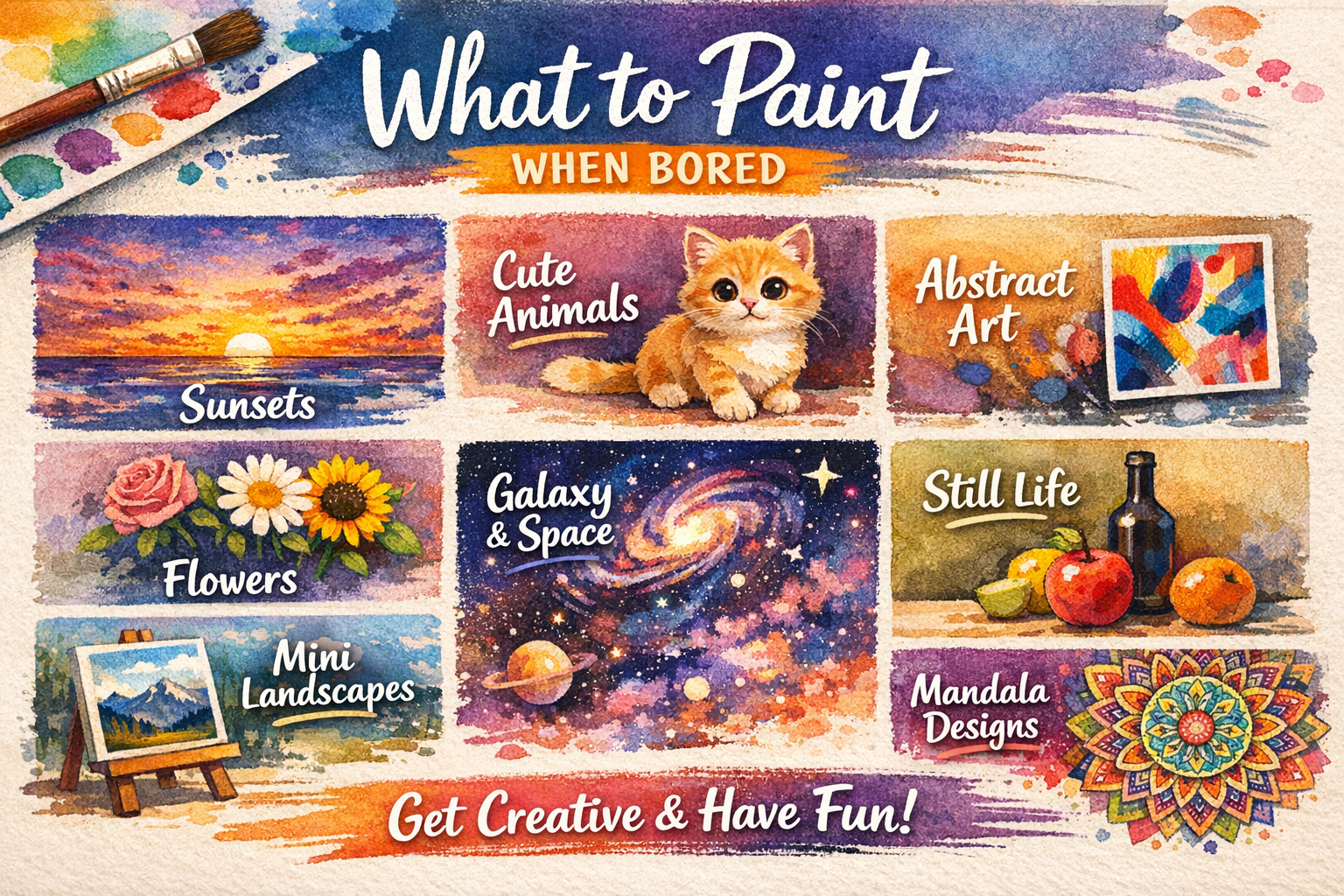
Feeling bored is the perfect excuse to pick up a brush and create without pressure. This guide offers quick, low-stakes painting ideas designed to spark joy and boost your confidence in under an hour. You will discover simple watercolor projects, AI tools for instant inspiration, and tips to embrace the creative process. Grab your paints and let boredom become your greatest artistic advantage.
The afternoon stretches out in front of you, thick and unhurried. You want to do something with your hands, but the thought of starting a massive masterpiece feels entirely too heavy. This is exactly where figuring out what to paint when bored comes in. We often treat idle time as an enemy to be defeated with mindless scrolling. In reality, boredom is a quiet invitation.
It is your brain asking for a low-stakes playground. You do not need to produce a gallery-ready canvas today. You just need to move some color around. When you create without rigid expectations, you unlock a profound sense of relief.
It breaks the cycle of intimidation that stops so many beginners from ever opening their paint tubes. This is about chasing confidence and joy. Grab whatever supplies you have nearby. We are going to turn this lazy afternoon into a quick, satisfying win.
Why Is Painting the Best Cure for Boredom?
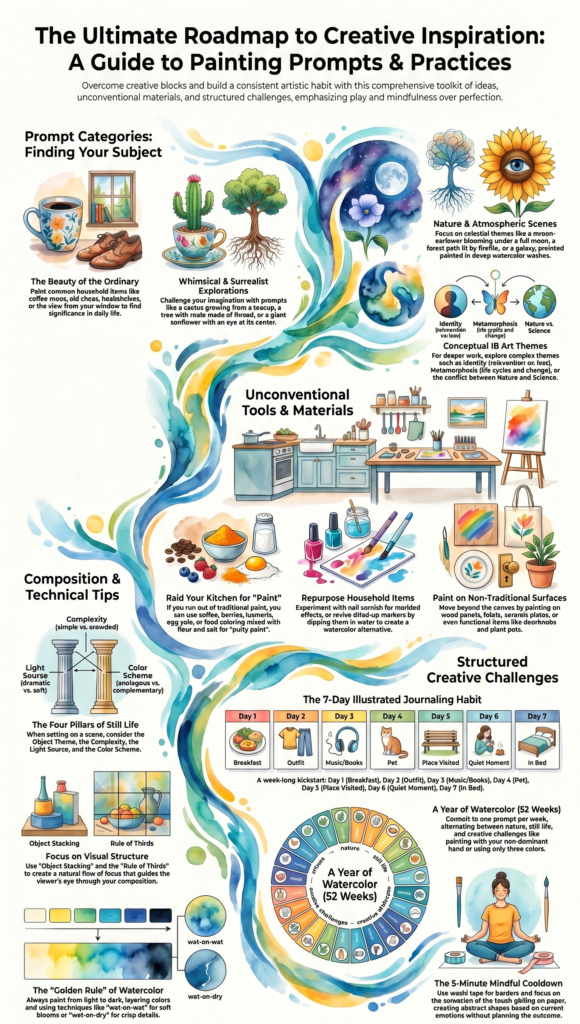
Painting is the best cure for boredom because it actively engages your brain while lowering stress. It transforms idle time into a mindful activity. It provides a screen-free psychological reset that rewards you with a tangible, satisfying result in minutes.
When your hands are busy mixing colors, your mind stops spinning. A well-known study confirmed that creative hobbies actively lower cortisol levels. It gives your nervous system a much-needed break from the digital noise.
You do not need to overthink it to improve your life through creativity. Just focus on how the brush feels against the paper. The act of doing is more important than the final product.
What Are the Easiest Things to Paint for Beginners?
The easiest things to paint for beginners include abstract color blocks, simple leaves, loose geometric shapes, and gradient skies. These subjects require zero strict proportions or precise drawing skills. They guarantee an immediate and stress-free creative victory.
Sometimes you just want to put paint on paper without a grand plan. Start by making a mess on purpose. Paint a grid of irregular squares. Try dropping different shades of blue into a wet circle and watching them bleed together.
The results are always surprisingly beautiful. If you want slightly more structure, look into easy things to draw and fill them with messy, expressive watercolor washes. You do not need a steady hand to make these look great.
Quick Watercolor Triumphs for Lazy Afternoons
Watercolors are practically built for lazy afternoons. They dry fast, clean up easily, and do half the work for you. Unstructured creative time is known to facilitate art making and stress reduction in adults.
If you are getting started with watercolors, try a wet-on-wet galaxy. Brush a wash of clean water across your page. Drop in heavy dots of indigo, magenta, and black. Watch the water carry the pigment across the page.
Alternatively, paint a monochrome pine forest. Mix one dark puddle of green. Paint a few tall triangles with jagged edges. Add a drop of water to your puddle to lighten it, then paint another row of trees slightly behind the first. The depth creates itself.
How Can AI Help Generate Instant Painting Ideas?
AI can help generate instant painting ideas by acting as a limitless brainstorming partner. It offers infinite visual prompts and compositional layouts. It removes the friction of a blank canvas by giving you a starting point to iterate on and modify.
Staring at a blank page is exhausting. Using AI as your art buddy completely bypasses that initial mental block. You do not have to copy a generated image perfectly.
You can use standard generative AI visual tools to instantly establish a color palette or scene. Generate a basic landscape, then challenge yourself to change the mood. Turn a generated bright blue sky into a stormy sunset using your own paints.
Celebrating Your Quiet Triumphs
Every time you pick up a brush instead of your phone, you win. It does not matter if the final result is slightly muddy. It does not matter if the perspective is entirely wrong. You showed up for yourself.
Painting is a practice of personal transformation. It isn’t a factory for producing perfect goods. Take a photo of your quick boredom-busting creation. Own it.
Be proud of the fact that you made something out of absolutely nothing. Sharing your art builds incredible confidence and reminds others that it is okay to just play.
You have everything you need to break the cycle of a dull afternoon. Stop waiting for the perfect surge of inspiration to strike. Just squeeze out a dime-sized drop of paint and see what happens. The goal is momentum, not perfection. If you found a spark today, upload your quick painting to our community gallery to celebrate your quiet triumph. If you want to keep the momentum going and overcome creative blocks for good, browse the mARTket for our favorite beginner art books. Pick up your brush.
Frequently Asked Questions
What should I paint when I have no motivation? Start with abstract color swatches or a simple gradient. You do not need motivation to simply test how two colors mix on a scrap piece of paper. This low-pressure action often naturally pulls you into a longer painting session.
How do I get over the fear of a blank canvas? Ruin it immediately. Make a stray mark, spill a drop of water, or paint the entire background a solid flat color. Once the canvas is no longer pristine, the pressure to make it perfect disappears.
What is the easiest painting medium for quick projects? Watercolor is the absolute easiest medium for fast, boredom-busting projects. It requires very little setup, dries in minutes, and is highly forgiving for absolute beginners.
Can doodling with paint help my mental health? Yes. Clinical psychology research confirms that unstructured art activities actively reduce anxiety. It gives your brain a meditative task to focus on, allowing you to process stress passively.
How long should a boredom-busting painting take? Keep it under thirty minutes. The purpose is to achieve a quick, satisfying result without getting bogged down in tedious details. Set a timer and force yourself to stop when it rings.