
Have you ever looked at a beautiful painting and thought, “I could never do that”? Think again! Simple acrylic painting for beginners is one of the most forgiving and versatile art forms, making it absolutely perfect for anyone just starting their creative journey. Its quick-drying nature, vibrant colors, and easy cleanup remove many of the common hurdles new artists face, allowing you to focus on the joy of creation rather than complex techniques.
Key Points:
- Acrylics are beginner-friendly due to water-based cleanup and fast drying times
- You only need basic supplies: paints, brushes, canvas, palette, and water
- Start with simple projects like abstracts, silhouettes, or single-object still lifes
- Common mistakes are easily fixable with proper techniques
- Practice and experimentation are more important than perfection
This comprehensive guide is designed to demystify the world of acrylic painting, providing you with a simple, step-by-step roadmap from choosing your first set of paints to completing your very own masterpiece. Whether you dream of painting serene landscapes, vibrant abstracts, or playful portraits, we’ll equip you with the knowledge and confidence to start your artistic journey today. Let’s grab our brushes and dive into the colorful world of simple acrylic painting!
Why Acrylics Are Perfect for Painting Beginners
Before we gather our supplies, let’s understand why acrylics are often recommended as the go-to paint for those just starting out. Unlike oil painting techniques, which have long drying times and require harsh solvents for cleanup, acrylics are water-soluble, meaning you only need water to thin them and soap and water to clean your brushes. This significantly simplifies the entire process, from setup to cleanup.
Furthermore, acrylics are incredibly versatile. They can be used on almost any surface – choosing the right canvas is easy, but you can also work on paper, wood, fabric, and more. They can be applied thinly like watercolors or thickly like oils. Their fast drying time allows for quick layering and experimentation, preventing colors from muddying if you work quickly. This flexibility encourages beginners to experiment without fear of making irreversible mistakes, making the learning curve much smoother and more enjoyable.
When comparing different paint mediums, acrylics strike the perfect balance between control and forgiveness. They’re affordable, readily available, and offer professional results even for complete newcomers to painting as a creative outlet.
Gathering Your Arsenal: Essential Acrylic Painting Supplies
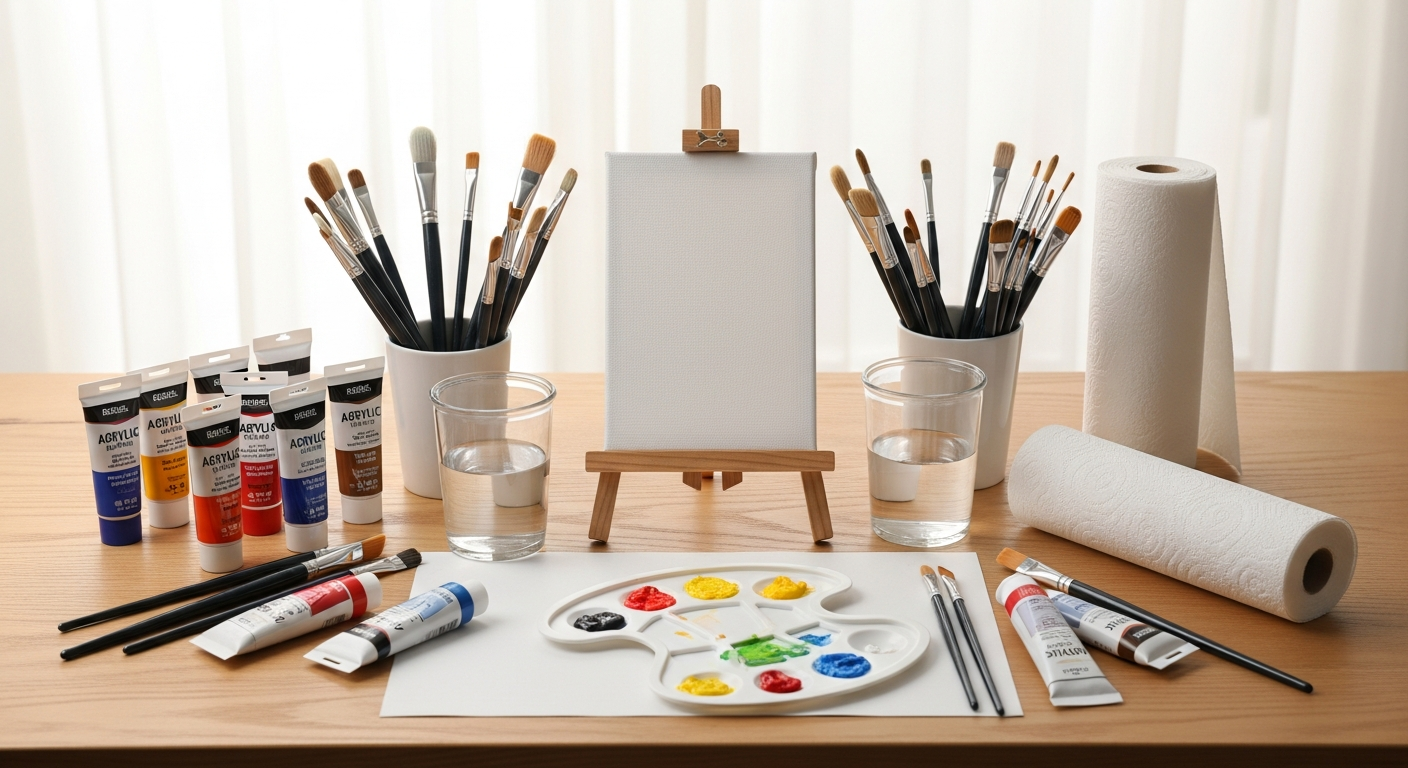
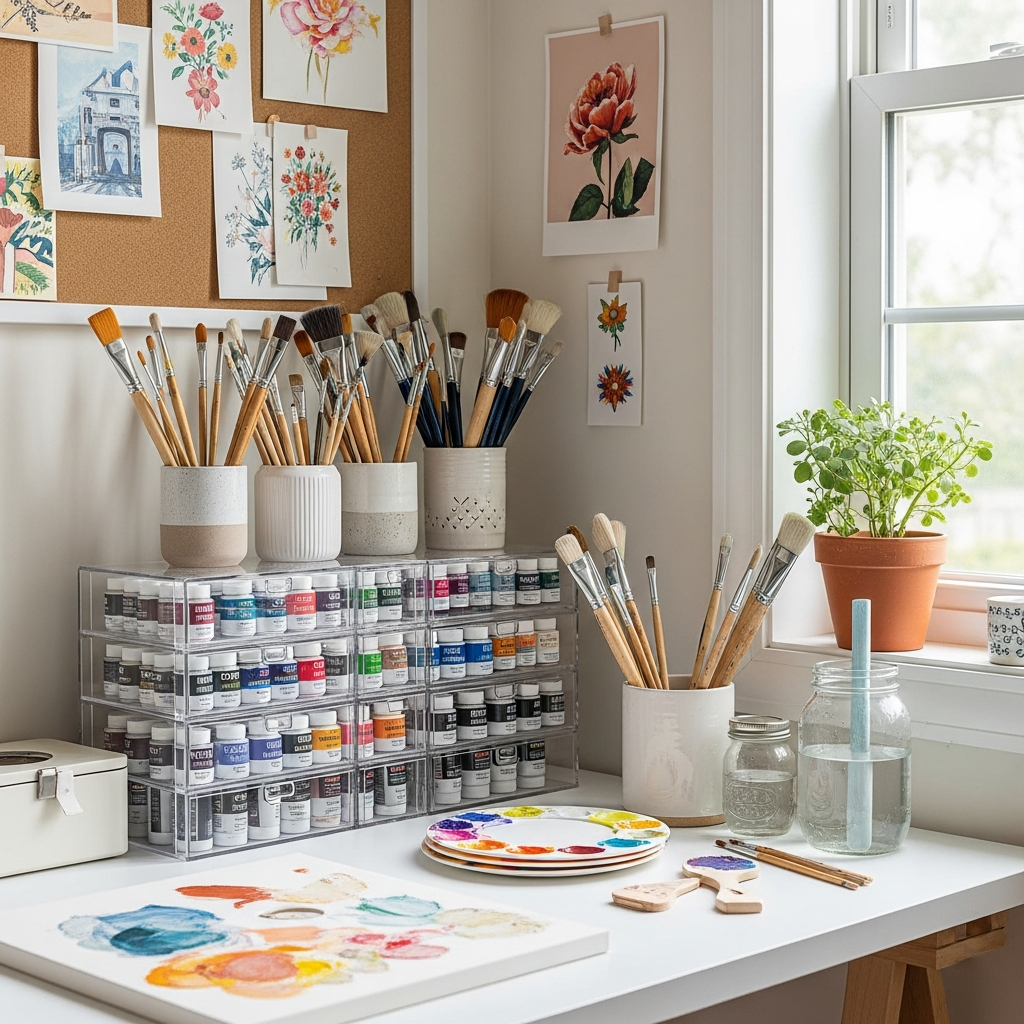
Starting with the right tools doesn’t mean breaking the bank. You only need a few key items to begin your acrylic painting adventure. Here’s a breakdown of the essential painting supplies:
Paints: Opt for a beginner’s set of acrylic paints. Look for sets with a good range of primary colors (red, blue, yellow), plus black and white. Choosing the best paints for beginners doesn’t have to be complicated. Artist-grade paints offer better pigment concentration, but student-grade paints are perfectly fine and more affordable for practice.
Brushes: A small variety of brushes will serve you well. Start with a flat brush (for broader strokes), a round brush (for details), and perhaps a filbert brush (for softer edges). Check out our guide on the best paint brushes for beginners for detailed recommendations. Don’t splurge on expensive brushes initially; synthetic brushes are durable and work well with acrylics.
Surface: Canvas panels or stretched canvases are popular choices, but you can also explore different acrylic painting surfaces like thick paper (like watercolor paper), wood panels, or even cardboard. For practice, a canvas pad is a great economical option.
Palette: A simple plastic palette, an old ceramic plate, or even a piece of wax paper can serve as your palette for mixing colors. Learning proper color mixing techniques will transform your artwork.
Water Container: Two cups of water are ideal: one for initial rinse, one for a cleaner rinse. Old yogurt containers or plastic cups work perfectly.
Paper Towels/Rags: Essential for drying brushes, blotting excess paint, and cleaning up spills.
With these basic supplies, you’re more than ready to start painting!
Simple Acrylic Painting for Beginners: Basic Techniques to Master
Understanding fundamental techniques is key to building confidence as you explore acrylic painting. These basic painting techniques for beginners will serve as your foundation for all future projects.
Beginner-Friendly Acrylic Painting Techniques & Their Uses
A comparison table outlining fundamental acrylic painting techniques, how to execute them, and their common applications for new artists.
| Technique | How to Do It | Best For |
|---|---|---|
| Flat Wash | Apply paint evenly across a surface, often thinned slightly with water. | Creating smooth, consistent backgrounds or large areas of single color. |
| Gradient/Blending | While paint is wet, gradually mix two or more colors on the surface to create a smooth transition. Master blending techniques for stunning effects. | Sunsets, skies, creating depth and smooth color changes. |
| Dry Brush | Apply a small amount of paint to a dry brush and lightly drag it across the surface, creating a textured, streaky effect. | Adding texture to landscapes (grass, trees), distressed looks, rough surfaces. |
| Stippling | Use the tip of a round brush to create small dots or dabs of paint. | Adding texture, creating foliage, pointillism, dappled light effects. |
| Sgraffito | While paint is still wet, scratch into it with the handle of your brush or a palette knife to reveal the layer underneath. | Adding fine lines, textures, or revealing underlying colors for interesting effects. |
Understanding color theory basics will help you make better decisions about which techniques to use and when. The science behind how colors work together can transform your paintings from basic to beautiful.
“The beautiful thing about learning to paint is that every single stroke teaches you something new. There are no mistakes, only happy accidents waiting to become features.”
Bob Ross-inspired wisdom for beginners
Your First Canvas: Easy Project Ideas to Get Started
Now that you have your supplies and a basic understanding of techniques, it’s time for the fun part: painting! Starting with simple projects is key to building confidence and honing your skills. Here are a few beginner-friendly ideas, along with more easy acrylic painting ideas:
Abstract Color Swatches: Don’t aim for a recognizable object. Instead, experiment with mixing colors, blending, and creating interesting shapes and textures. This is a great way to get comfortable with your materials without pressure. Learn more about creating abstract art.
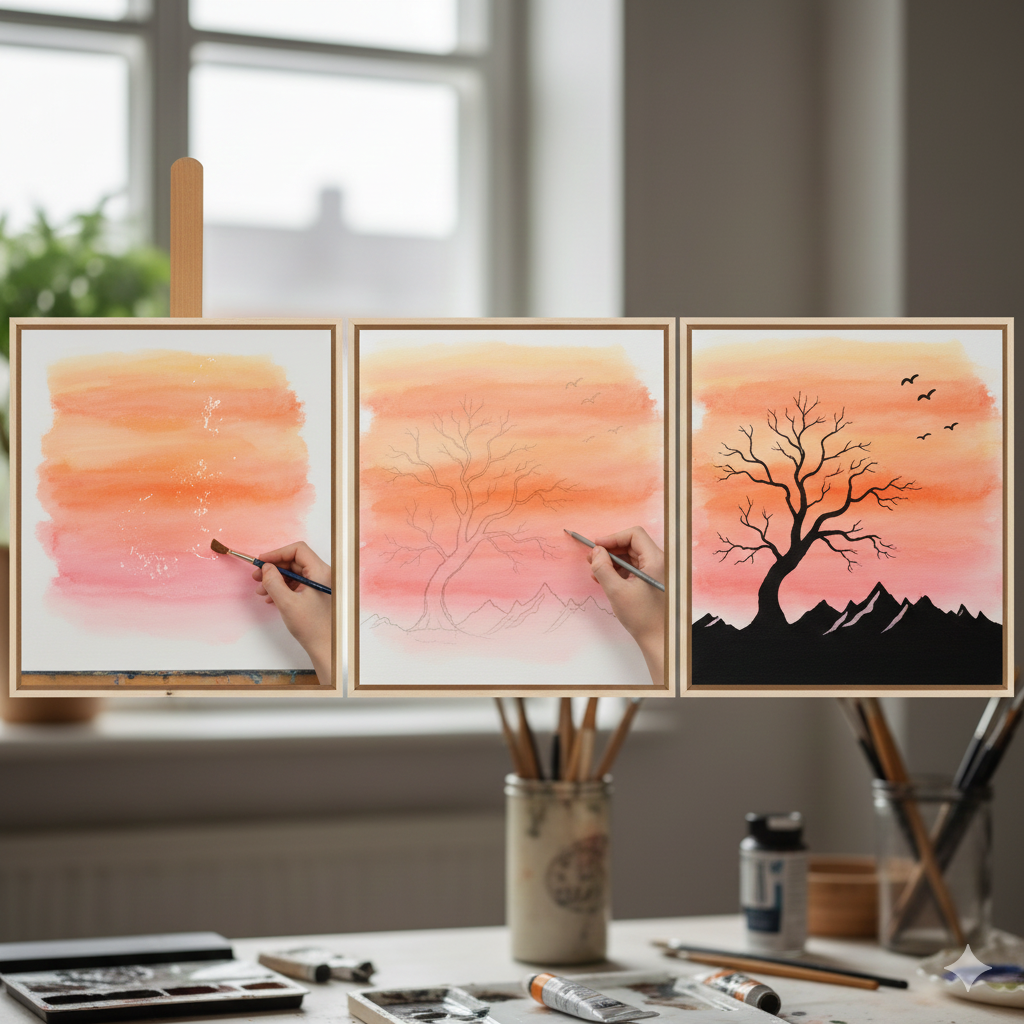
Simple Silhouette Landscapes: Paint a vibrant background (think sunset or starry night) using flat washes and gradients. Once dry, paint a dark silhouette of trees, mountains, or a city skyline on top. The contrast is striking and simple to achieve. For more inspiration, explore landscape painting techniques.
Dot Mandala Art: Using a round brush or even the back of a paintbrush, create colorful dots in concentric patterns. This is meditative and results in beautiful, intricate-looking pieces with minimal technical skill.
Paint a Single Fruit or Vegetable: Choose something simple like an apple, a pear, or a bell pepper. Focus on getting the basic shape, shading, and highlights. This teaches you about observation and creating form. This builds on still life painting basics.
Remember, the goal isn’t perfection, but exploration and enjoyment. Each stroke is a step in your artistic journey. If you need more project inspiration, check out these painting ideas on Pinterest.
Troubleshooting 101: Common Beginner Mistakes and How to Fix Them
Every artist, no matter how experienced, makes mistakes. Acrylic painting for beginners is all about learning from these moments. Understanding common painting mistakes beginners make will help you avoid frustration. Here are some common pitfalls and how to navigate them:
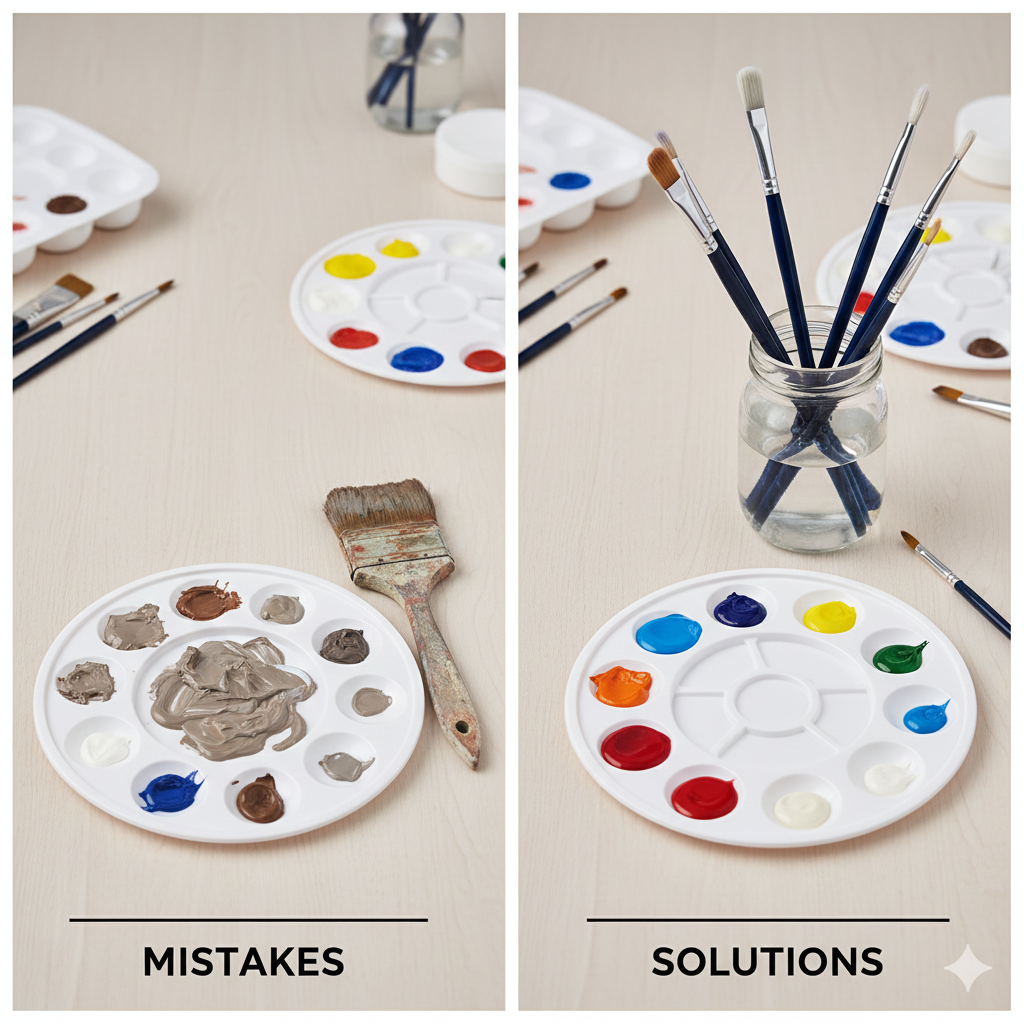
- Muddy Colors: This often happens when you overmix colors or try to blend too many wet colors together. The fix? Work in layers, allowing each layer to dry before adding the next. Also, avoid using too much black to darken colors; try mixing complementary colors (e.g., red and green) for richer, more natural shadows. Master color mixing to avoid this issue.
- Paint Drying Too Fast: Acrylics are fast, but sometimes too fast. You can slow drying time by adding an acrylic retarder medium (available at art stores) or by misting your palette and painting surface lightly with water. Working in smaller sections can also help. Learn more about paint mediums explained.
- Brushes Hardening: If you leave acrylic paint to dry on your brushes, they’ll become stiff and unusable. Always rinse your brushes thoroughly with soap and water immediately after painting. Store them bristle-up. Proper organization of your painting tools includes brush care.
- Fear of the Blank Canvas: This is a mental block! Start by toning your canvas with a light wash of color rather than painting on stark white. This takes away the intimidation and gives you a base to build upon. Check out tips for canvas preparation. Remember, it’s just paint; you can always paint over it!
- Overworking Your Painting: Sometimes knowing when to stop is the hardest part. If you find yourself continuously fiddling with your work, step back and take a break. Learn how to fix overworked paintings if this happens to you.
Building Your Skills: Moving Beyond the Basics
Once you’ve completed a few simple projects, you’ll naturally want to develop your skills further. The journey from beginner to confident artist is about consistent practice and gradual challenge. Here are some ways to continue growing:
Experiment with Texture: Try using texture painting techniques like palette knife application, adding texture mediums, or even using unconventional tools to create interesting surface effects.
Study Composition: Understanding essential elements of composition will dramatically improve your paintings. Learn about focal points, the rule of thirds, and visual balance to create more compelling artwork.
Practice Color Harmony: Move beyond basic color mixing and explore how to create mood with color choices. Understanding warm and cool colors, complementary schemes, and color psychology adds depth to your work.
Learn from the Masters: Study how famous artists worked with acrylics and similar mediums. While many historic masters used oils, you can adapt their techniques. Learning how to paint like Van Gogh or exploring famous artist styles can inspire your own unique approach.
Join a Community: Connect with other artists online or in local groups. Sharing your work, getting feedback, and seeing others’ progress can be incredibly motivating. Consider participating in fun art challenges to push your boundaries.
Watch and Learn: There are countless video tutorials available. Following along with introduction to painting resources and video demonstrations can provide valuable visual instruction.
Keep an Art Journal: Document your progress, experiments, and observations. This practice helps you see how far you’ve come and identifies areas for improvement. Try creative art prompts to keep your practice varied and interesting.

Essential Tips for Acrylic Painting Success
To help you succeed with simple acrylic painting for beginners, here are some practical tips that will make your painting experience more enjoyable and productive:
1. Work in Good Lighting: Natural daylight is ideal, but if that’s not available, use daylight-balanced bulbs to ensure you’re seeing colors accurately.
2. Prepare Your Workspace: Cover your work surface with newspaper or a drop cloth. Wear old clothes or an apron. Having everything set up before you start painting keeps you in the creative flow.
3. Start with a Limited Palette: Don’t feel pressured to use every color in your set. Working with just a few colors helps you learn color mixing and creates more harmonious paintings.
4. Keep Your Brushes Wet: Acrylics dry quickly on brushes. Keep them damp while working by misting with water or dipping them frequently. This preserves your brushes and maintains paint flow.
5. Work from Dark to Light: Generally, it’s easier to paint darker values first and add lighter highlights later. This approach gives you better control over your painting’s tonal range.
6. Thin Layers Are Better: Multiple thin layers create better results than one thick layer. This technique, called glazing, allows for more control and richer color depth.
7. Use References: Don’t rely solely on imagination when starting out. Use photographs, real objects, or even other artwork as reference material to understand form, light, and color.
8. Be Patient with Yourself: Progress takes time. Don’t compare your Day 1 to someone else’s Day 365. Every artist started exactly where you are now.
Resources for Continued Learning
As you develop your skills in simple acrylic painting for beginners, having access to quality resources makes a significant difference. Here are some recommendations:
- Books and Guides: Look for comprehensive guides that cover everything from mastering acrylic painting techniques to specific subjects like still life or abstract work.
- Online Communities: Join forums, Facebook groups, or Reddit communities focused on acrylic painting. These spaces offer support, critique, and inspiration.
- Video Tutorials: YouTube has countless free tutorials. Search for specific techniques or projects you’re interested in trying.
- Art Supply Reviews: Before investing in expensive supplies, read reviews and comparisons. Understanding the difference between student and artist grade materials helps you make informed purchases.
- Art Challenges: Participate in monthly painting challenges or themed projects. These structured activities provide motivation and creative direction.
- Local Classes: Check community centers, art supply stores, and adult education programs for hands-on classes. Learning in person with an instructor can accelerate your progress.
- Museum and Gallery Visits: Seeing artwork in person provides invaluable insights into technique, scale, and finish that photographs can’t capture. Plan art weekend trips to immerse yourself in art.
Conclusion: Your Artistic Journey Has Just Begun!
Congratulations! You’ve taken the first exciting steps into the wonderful world of simple acrylic painting for beginners. From understanding why acrylics are your best friend to gathering essential supplies, mastering basic techniques, and tackling your first projects, you now have a solid foundation to continue your artistic exploration.
Remember, art is a journey, not a destination. Embrace every brushstroke, every color mix, and every ‘mistake’ as a learning opportunity. The most important thing is to enjoy the process and allow your creativity to flow freely.
Don’t be afraid to experiment with different painting techniques, try new subjects, and develop your own unique style. Keep practicing, keep experimenting, and don’t be afraid to paint what inspires you. Whether you’re painting for relaxation, self-expression, or with dreams of selling your work someday, the skills you’re building now with simple acrylic painting for beginners will serve you throughout your creative life.
Your masterpiece awaits! Pick up that brush, squeeze out some paint, and let your imagination guide you. The canvas is yours to fill with color, joy, and your unique artistic vision.
Frequently Asked Questions (FAQs)
Is acrylic paint really easy for beginners?
Yes, absolutely! Acrylic paint is widely considered one of the best mediums for beginners due to its versatility, quick drying time, and easy cleanup with just water. It allows for quick experimentation and layering without long waiting periods or complex solvents. The water-based formula means mistakes can often be painted over once dry, making it very forgiving for new artists.
What are the absolute basic supplies I need to start acrylic painting?
To start, you’ll need a basic set of acrylic paints (primary colors, black, white), a few synthetic brushes (flat, round), a canvas or thick paper, a palette for mixing, two water cups, and some paper towels or rags. That’s it! You can find affordable starter kits at craft stores or online for under $30-50 that include everything you need.
How do I prevent my acrylic paint from drying too fast on the palette?
You can slow down drying by periodically misting your palette with a fine spray of water using a spray bottle. Some artists use a ‘stay-wet’ palette (a special palette with a damp sponge layer), or you can add a small amount of acrylic retarder medium to your paints. Working in smaller batches and only squeezing out the paint you need for immediate use also helps minimize waste.
Can I use water to thin acrylic paint?
Yes, you can use water to thin acrylic paint! Adding a small amount of water will make the paint more fluid, allowing for washes similar to watercolor effects. However, adding too much water (more than 30%) can break down the acrylic binder, making the paint less durable and prone to poor adhesion once dry. For heavily thinned paint, consider using an acrylic medium instead.
What are some simple subjects to paint for my first acrylic painting?
Great first subjects include abstract color explorations (no recognizable objects, just shapes and colors), simple silhouette landscapes (like trees against a sunset), geometric shapes and patterns, a single piece of fruit (apple or orange), or basic floral designs. These allow you to practice techniques like color mixing, blending, and layering without the pressure of perfect realism.
How long does acrylic paint take to dry?
Acrylic paint typically dries to the touch in 10-30 minutes, depending on how thickly it’s applied and the humidity in your environment. Thin layers may dry in just 5-10 minutes, while thick impasto applications might take several hours. The paint is usually fully cured and ready for varnishing within 24-48 hours. This quick drying time is one of acrylics’ greatest advantages for beginners.
Do I need to prepare my canvas before painting with acrylics?
Most pre-stretched canvases come pre-primed with gesso and are ready to use immediately. However, if you’re using raw canvas, wood panels, or cardboard, you should apply 2-3 coats of gesso (allowing each to dry) before painting. This creates a suitable surface that helps paint adhere properly and prevents the surface from absorbing too much paint.
Can I paint over mistakes in acrylic painting?
Yes! One of acrylics’ best features is that once paint dries, you can paint right over it. If you make a mistake, let it dry completely, then paint over it with your correction. For larger changes, you might want to apply a layer of gesso over the area first to create a fresh start. This forgiving quality makes acrylics ideal for beginners who are still learning.
Citations:
- Blick Art Materials – Acrylic Painting Guide – Comprehensive information on acrylic painting supplies, techniques, and beginner tips from a leading art supply retailer
- Winsor & Newton – Acrylic Painting Techniques – Professional-grade techniques and guidance from a renowned paint manufacturer with over 190 years of experience
- The Spruce Crafts – Beginner Acrylic Painting Guide – Easy-to-follow tutorials and practical advice for new artists starting with acrylics

Olly
Olly Farmer M.Sc, B.Sc, PGCE 25 years experience of Watercolor Painting and AI Art; teacher for 13 years; Creator of Art Tools; Art Gallery Contributor of Art Articles to Medium.com, LinkedIn and Facebook
Continue exploring

PROMINENT PAINTING
Keep your creative momentum
Get new painting guides, practical techniques and artist stories delivered without the noise.
Occasional emails. Unsubscribe whenever you like.