
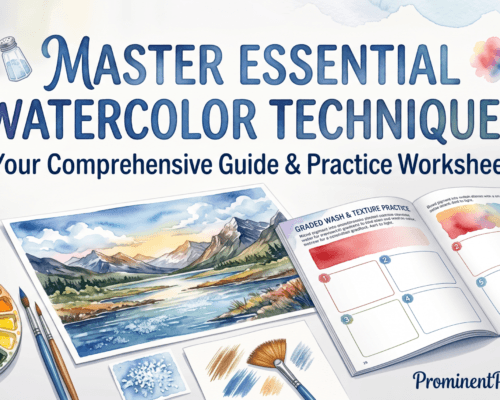
Summary: This comprehensive guide breaks down nine essential watercolor techniques to help beginners build confidence and control. You will learn how to manage water, mix seamless gradients, and add stunning textures like salt and splattering to your artwork. Read through the step-by-step methods, practice each box, and start creating beautiful watercolor pieces today.
Water behaves like a living thing on the page. It flows, pushes pigment, and dries into unpredictable shapes if you let it. Mastering essential watercolor techniques is not about forcing the water into complete submission. It is about learning to partner with its natural fluid movement to create light, depth, and striking textures.
What Are the Essential Watercolor Techniques for Beginners?
The essential watercolor techniques for beginners are foundational methods used to control paint distribution, water ratios, and paper moisture. They include flat washes, graded gradients, wet-on-wet blending, sharp wet-on-dry detailing, and texture manipulations like salting, splattering, and lifting pigment. Learning these allows you to paint everything from smooth skies to rugged landscapes.
When starting out, a visual template helps immensely. Our custom worksheet, titled watercolor techniques image below, illustrates these core skills side by side so you can practice your brush control in structured stages. Experts at the Royal Watercolour Society recommend practicing your water-to-pigment ratios on dry scrap paper before diving into a full composition. This builds muscle memory and helps you understand how different paper weights absorb moisture.
Mastering the Three Core Watercolor Washes

A wash forms the background of almost every watercolor painting. The template in watercolor techniques image (above) highlights three distinct wash styles that every artist must know.
1. The Flat Wash
To create a flat wash, apply an even coat of pigment onto completely dry paper using a large, soft brush. Keep your brush fully loaded with wet paint. Move horizontally across the practice box to avoid streaks.
2. The Graded Wash
A graded wash relies on a smooth gradient that transitions seamlessly from a dark tone to a light tone. Start with a heavy, saturated mix of pigment at the top. Gradually blend more water into your brush as you pull the paint downward.
3. The Variegated Wash
This technique involves blending multiple distinct colors directly on wet paper. The pigments will bleed into one another naturally, creating beautiful, soft transitions without distinct edges. It is highly useful for vibrant sunsets or atmospheric backgrounds.
For a deeper dive into establishing your home setup before tackling these washes, take a look at our comprehensive guide on getting started with watercolors.
Wet-on-Wet vs Wet-on-Dry: What Is the Difference?
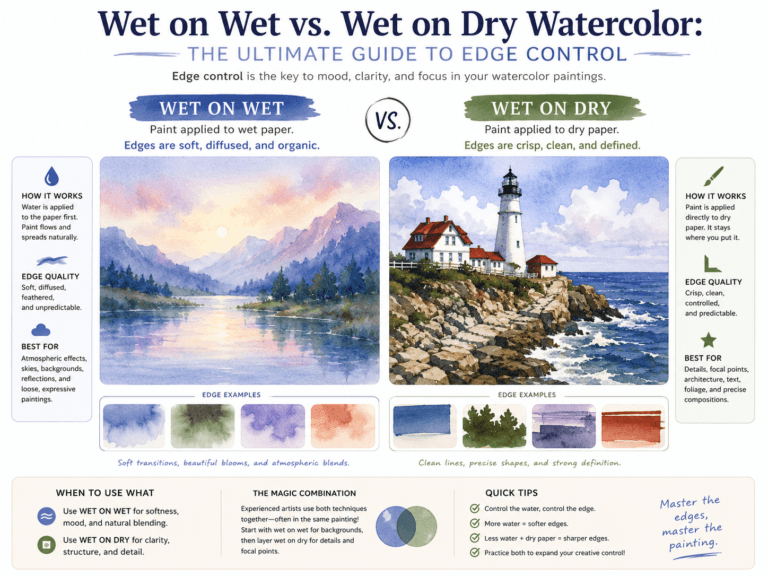
The difference between wet-on-wet and wet-on-dry techniques is the moisture level of the paper. Wet-on-wet applies wet paint onto wet paper to create soft, organic, flowing edges. Wet-on-dry applies wet paint onto dry paper to produce crisp details, sharp edges, and precise shapes.
As shown in watercolor techniques image, wet-on-wet allows colors to flow completely freely across the wet fibers. This behavior mimics natural elements like atmospheric fog or distant hills. If you want to master these fluid backgrounds, read our dedicated tutorial on simple wet-on-wet watercolor techniques for beginners.
| Feature | Wet-on-Wet Technique | Wet-on-Dry Technique |
|---|---|---|
| Paper State | Damp or thoroughly wet | Completely bone dry |
| Edge Quality | Soft, blurry, organic edges | Crisp, hard, sharp outlines |
| Best Used For | Clouds, mist, soft foliage | Fine lines, foreground, shapes |
Conversely, the wet-on-dry approach gives you ultimate precision. Use it when painting geometric patterns, sharp silhouettes, or structural highlights.
How Do You Add Texture to a Watercolor Painting?
You add texture to a watercolor painting by using specialized techniques like dry brushing, salt application, and paint splattering. Dry brushing leaves rough, linear marks. Salt absorbs water to create starburst patterns. Splattering flicks pigment onto the page to form random drops and atmospheric speckles.
According to materials data from the Tate Museum archives, historic watercolor masters frequently manipulated their paint surfaces using everyday physical objects. You can achieve these exact textural effects by following the bottom row of our template in watercolor techniques image:
- Dry Brush: Use less water and more pigment on a stiff brush. Drag it lightly across textured cold-press paper to simulate wood grain, rough grass, or tree bark.
- Salt Texture: Sprinkle coarse salt grains onto a wet wash. Wait for the paint to dry completely before brushing the crystals away. This creates gorgeous starburst snowflakes or rocky patterns.
- Splattering: Hold a wet brush and flick the bristles with your finger to spray tiny droplets across the page. This injects fun, spontaneous movement and atmosphere into fields of flowers or star-filled night skies.
Can You Fix Mistakes in Watercolor?
Yes, you can fix mistakes in watercolor by using the lifting color technique, which removes pigment from the paper using a clean, damp brush or sponge. This process works on both wet and dry paint to create soft corrections, highlights, or realistic clouds.
Many beginners fear that watercolor is completely permanent. However, lifting color is a built-in rescue strategy highlighted in box nine of watercolor techniques. If an area dries too dark, simply re-wet it gently with clean water and blot it up using a soft paper towel or a damp sea sponge.
For a complete breakdown on recovering from accidental puddles or muddy colors, explore our practical troubleshooting guide to fix watercolor mistakes and turn oops into masterpieces.
Grab your favorite brush, fill up a clean jar of water, and test these techniques inside the practice boxes of our template. Do not worry about perfection on your first attempt. Watercolor is all about exploring boundaries, finding joy in the happy accidents, and enjoying the mindful rhythm of the fluid medium.

Frequently Asked Questions
1. What type of paper is best for practicing these watercolor techniques?
Cold-press watercolor paper with a weight of 300gsm (140lb) is highly recommended for practicing these steps. It is thick enough to handle heavy wet-on-wet washes without warping or tearing under moisture.
2. Can I use ordinary table salt for the salt texture technique?
Yes, ordinary fine table salt works perfectly well for this technique. Coarser varieties like kosher salt or sea salt will absorb more water and yield larger, more dramatic crystalline starburst patterns on your page.
3. Why does my paint bleed uncontrollably during the wet-on-wet phase?
This usually means your paper is completely flooded with standing puddles of water. The paper should look like a shiny, damp satin sheet rather than an open swimming pool before you introduce your pigment.
4. How do I stop my flat wash from drying with streaky lines?
You can prevent streaks by mixing a large puddle of paint beforehand so you do not run out mid-wash. Work quickly with a large brush while keeping a wet edge as you move down the practice box.
5. Is it possible to lift staining colors like Phthalo Blue?
Staining pigments penetrate deeply into paper fibers and are difficult to remove completely. You can lighten them slightly by scrubbing gently with a stiff, damp synthetic brush, but they rarely return to pure white paper.

Olly
Olly Farmer M.Sc, B.Sc, PGCE 25 years experience of Watercolor Painting and AI Art; teacher for 13 years; Creator of Art Tools; Art Gallery Contributor of Art Articles to Medium.com, LinkedIn and Facebook
Continue exploring
PROMINENT PAINTING
Keep your creative momentum
Get new painting guides, practical techniques and artist stories delivered without the noise.
Occasional emails. Unsubscribe whenever you like.