Summary: Neurographic art is a simple drawing method designed to relieve stress and rewire your brain. This guide covers the basic steps to create your own mindful art. You’ll learn how to draw neuro lines, round your corners, and use color to find calm. Grab a pen and let your mind unwind.
You stare at a blank piece of paper and feel your chest tighten. The pressure to create something beautiful can paralyze even the most eager beginner. Neurographic art removes that pressure entirely. It’s a mindful drawing technique requiring zero artistic skill. You just need a pen, some paper, and a willingness to let your hand move freely.
I’m dedicated to making painting accessible, mindful, and therapeutic. When we implemented this simple line exercise for a group of anxious beginners, we saw immediate physical relaxation in the room.
The tight grips on pens loosened up. Shoulders visibly dropped. If you’re ready to find that same calm, this guide will walk you through the process step by step.
What Is Neurographic Art?
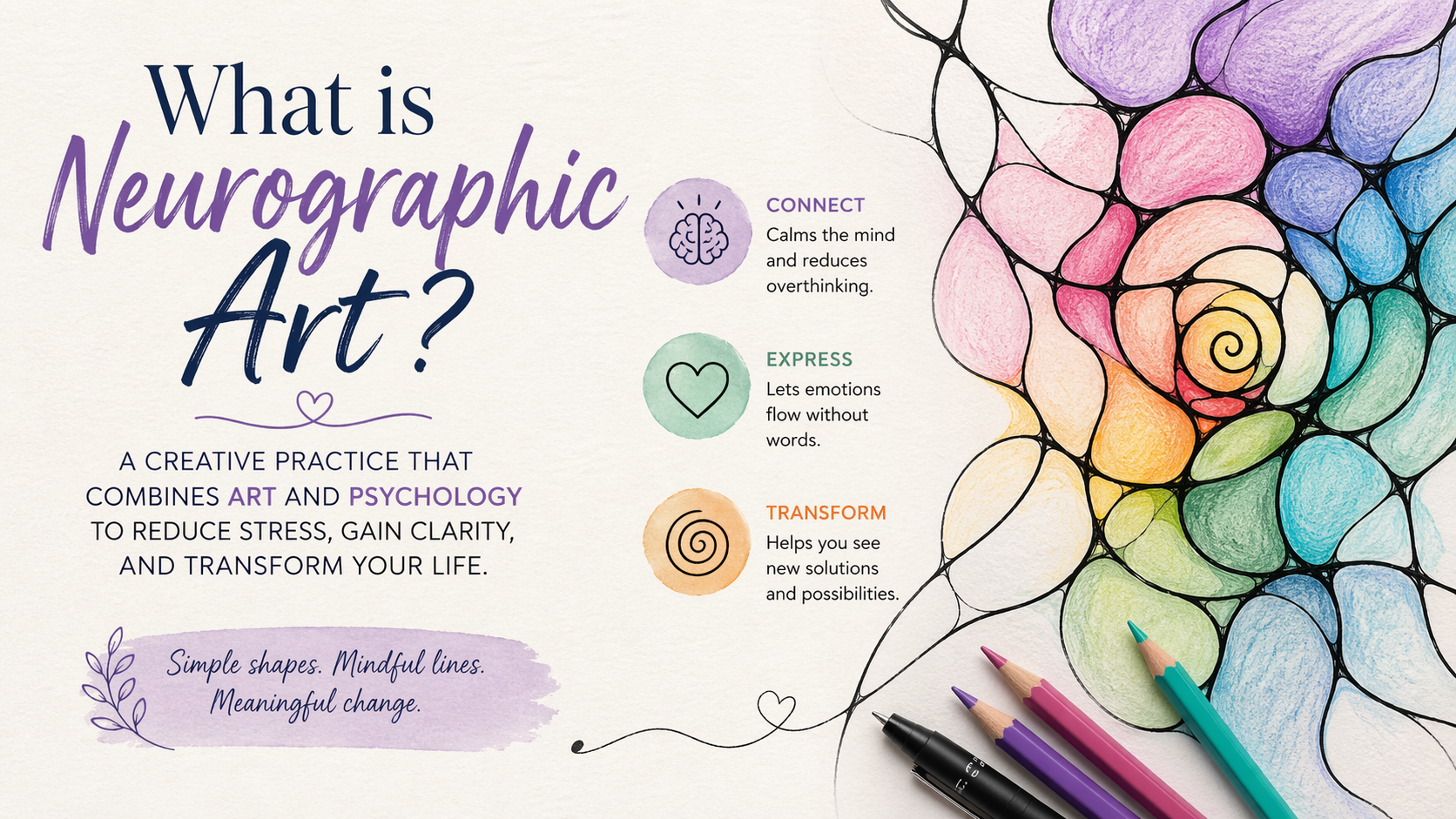
Neurographic art is a therapeutic drawing process created in 2014 by psychologist and architect Pavel Piskarev. It uses spontaneous, wandering lines to connect the conscious and subconscious mind. You transform stress into beautiful abstract patterns by mindfully smoothing out intersecting lines on paper to gain perspective on current challenges.
When you explore understanding art therapy, you learn the act of creating is often more important than the final result. The core of this method is the “neuro line.” This line moves naturally and unpredictably. It mimics the look of neurons in the brain or roots growing in the earth. You don’t control the destination.
The Science Behind the Scribble
Drawing random lines might feel silly at first. However, there’s real psychology at play here. Specific psychobiological techniques are used in this art form to dissolve negative neural patterns and develop healthier pathways in the brain.
Smoothing out the sharp corners where lines cross sends a signal of safety to your mind. It visually resolves the conflict on the page. Engaging in creative activities like this has been shown to calm the amygdala, the part of your brain related to the fear and stress response. Researchers at Drexel University even found that 75 percent of participants had lowered cortisol levels after 45 minutes of making art. If you’re looking into art for mental health, this technique is a fantastic starting point.
How Do You Start a Neurographic Drawing?
You start a neurographic drawing by setting a clear intention and creating a spontaneous scribble. Write a problem or thought on the back of your paper. Then, take a deep breath and let your pen wander across the page for exactly three seconds.
Don’t overthink the movement. Let your hand flow naturally. If you struggle with the blank page, creative art prompts can also help spark that first movement. Your lines should cross over each other several times. If your page looks like a chaotic mess, you’re doing it perfectly.
Essential Supplies for Your First Session
You don’t need an expensive studio setup to start. The beauty of this method lies in its simplicity.
Here’s a quick look at what you’ll need:
| Supply | Purpose | Recommendation |
| Paper | Provides a sturdy base for wet or dry mediums. | Heavyweight mixed-media or watercolor paper. |
| Black Markers | Used for drawing the initial neuro lines and rounding. | Waterproof fine-tip permanent pens. |
| Colors | Adds emotion and depth to the finished shapes. | Watercolors, colored pencils, or markers. |
Make sure your black pen is waterproof. This prevents smudging when you add colors later.
The 5-Step Beginner Exercise
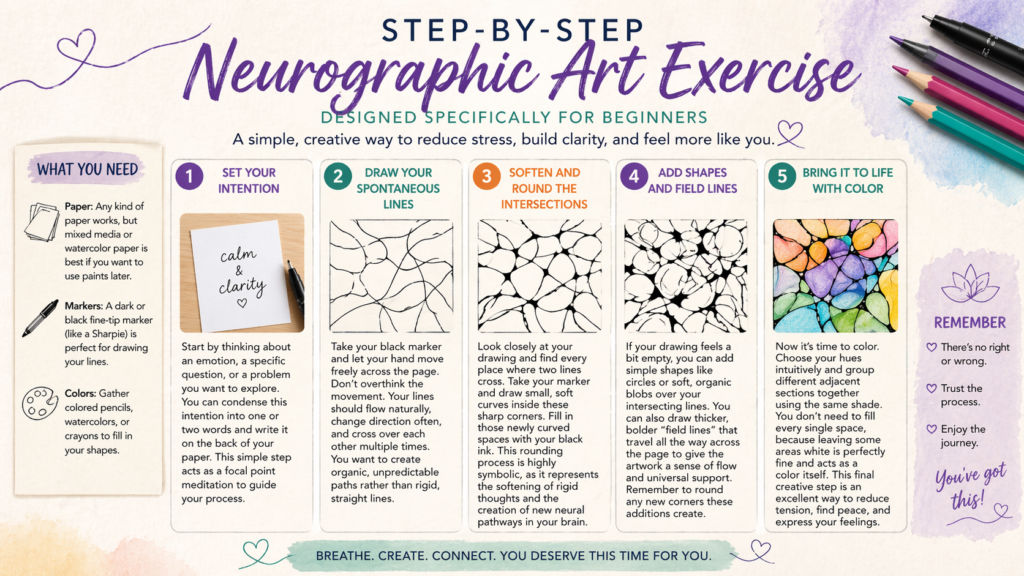
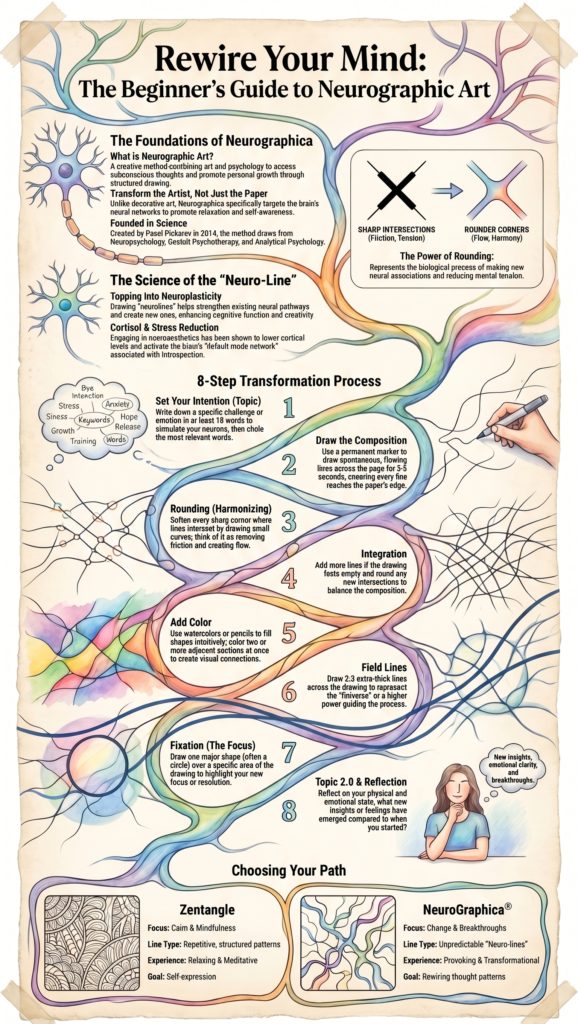
1. Set Your Intention
Start by thinking about an emotion, a specific question, or a problem you want to explore. You can condense this intention into one or two words and write it on the back of your paper. This simple step acts as a focal point meditation to guide your process.
2. Draw Your Spontaneous Lines
Take your black marker and let your hand move freely across the page. Don’t overthink the movement. Your lines should flow naturally, change direction often, and cross over each other multiple times. You want to create organic, unpredictable paths rather than rigid, straight lines.
3. Soften and Round the Intersections
Look closely at your drawing and find every place where two lines cross. Take your marker and draw small, soft curves inside these sharp corners. Fill in those newly curved spaces with your black ink. This rounding process is highly symbolic, as it represents the softening of rigid thoughts and the creation of new neural pathways in your brain.
4. Add Shapes and Field Lines
If your drawing feels a bit empty, you can add simple shapes like circles or soft, organic blobs over your intersecting lines. You can also draw thicker, bolder “field lines” that travel all the way across the page to give the artwork a sense of flow and universal support. Remember to round any new corners these additions create.
5. Bring It to Life with Color
Now it’s time to color. Choose your hues intuitively and group different adjacent sections together using the same shade. You don’t need to fill every single space, because leaving some areas white is perfectly fine and acts as a color itself. This final creative step is an excellent way to reduce tension, find peace, and express your feelings.
Why Is Rounding Corners So Important?
Rounding corners is important because it visually resolves the conflicts represented by intersecting lines. Filling in these sharp angles with smooth curves softens rigid aspects of thought, signaling safety to your brain and conveying a journey from tension to tranquility.
Look at your page and find every place where two lines cross. Your task is to soften these sharp angles. Draw a small curve inside each corner and fill it in with ink. This transforms harsh grids into organic, flowing shapes. The repetitive motion grounds you in the present moment. This process provides the exact benefits you expect from art therapy activities for stress relief.
How Should You Add Color to Neurographic Art?
You should add color to neurographic art by highlighting specific sections that cross over your initial lines. Use watercolors, colored pencils, or markers to group different shapes together. Choose colors intuitively based on how you feel.
Color brings your drawing to life. A recent psychological study demonstrated that individuals who colored daily showed lower levels of anxiety and depressive symptoms. You might decide to add thick “field lines” that travel across the entire page before you start shading. If you’re new to shading and blending, reviewing some drawing for beginners basics can build your confidence. Don’t worry about staying perfectly inside the lines. Let the color flow naturally. Focusing on these creative tasks actually increases blood flow to areas of the brain associated with pleasure and reward.
Conclusion
Grab a marker, set a timer for ten minutes, and let your hand explore the paper today. Your first neurographic drawing might look completely abstract to anyone else. That doesn’t matter at all. The quiet triumph comes from finishing the process and feeling the tension leave your shoulders. Share your first neurographic piece with a friend, and encourage them to try unwinding with a pen.
Frequently Asked Questions
What kind of pen is best for neurographic art?
Fine-tip permanent markers work best for this technique. They won’t smudge when you add watercolor or wet mediums later. Having a few different thicknesses on hand helps with adding field lines.
Do I need to be good at drawing?
You don’t need any drawing skills to start. The process relies entirely on random lines and filling in corners. It’s designed to be accessible for complete beginners.
How long does a neurographic drawing take?
A small piece can take just fifteen minutes to complete. Larger pieces with intricate rounding and coloring might take a few hours. You can always pause and return to your drawing later.
Can kids do neurographic art?
Yes, children can easily participate in this activity. It’s a wonderful way for them to practice mindfulness and calm their minds. The simple act of rounding corners helps them focus and relax.
What is a field line?
A field line is a thicker, bolder line drawn over your initial sketch. It represents a larger flow of energy connecting the smaller shapes. Adding them helps unify the entire composition.