David Hockney is one of the most famous artists in the world today. Known for his bright colors and famous paintings of swimming pools, he has inspired millions of people to pick up a brush. Whether he is painting the sunny hills of California or the green woods of England, his work always feels full of life. In this guide, we will show you how to paint like David Hockney by exploring his favorite tools, his unique style, and his love for bright, bold colors.
Summary
In this post, you will learn the secrets behind David Hockney’s iconic style. We will cover:
- Why his colors look so bright and how you can use color theory to make your art pop.
- A step-by-step look at his famous swimming pool techniques, including how to paint a splash.
- Tips for painting landscapes using acrylics to capture the beauty of nature.
- How to use modern technology like an iPad to create art just like Hockney does today.
- The secret to getting that clean, “flat” color look that makes his paintings stand out.
By the end of this guide, you will have the confidence to start your own Hockney-inspired masterpiece!
Why are David Hockney’s Colors so Vibrant?
If you look at a David Hockney painting, the first thing you probably notice is the color. His paintings aren’t just colorful; they seem to glow! This is because Hockney understands color theory for beginners better than almost anyone. When he moved from the gray, rainy streets of England to the sunny landscapes of Los Angeles in the 1960s, his world changed. He started using colors that were much brighter than what most people were used to seeing in art.
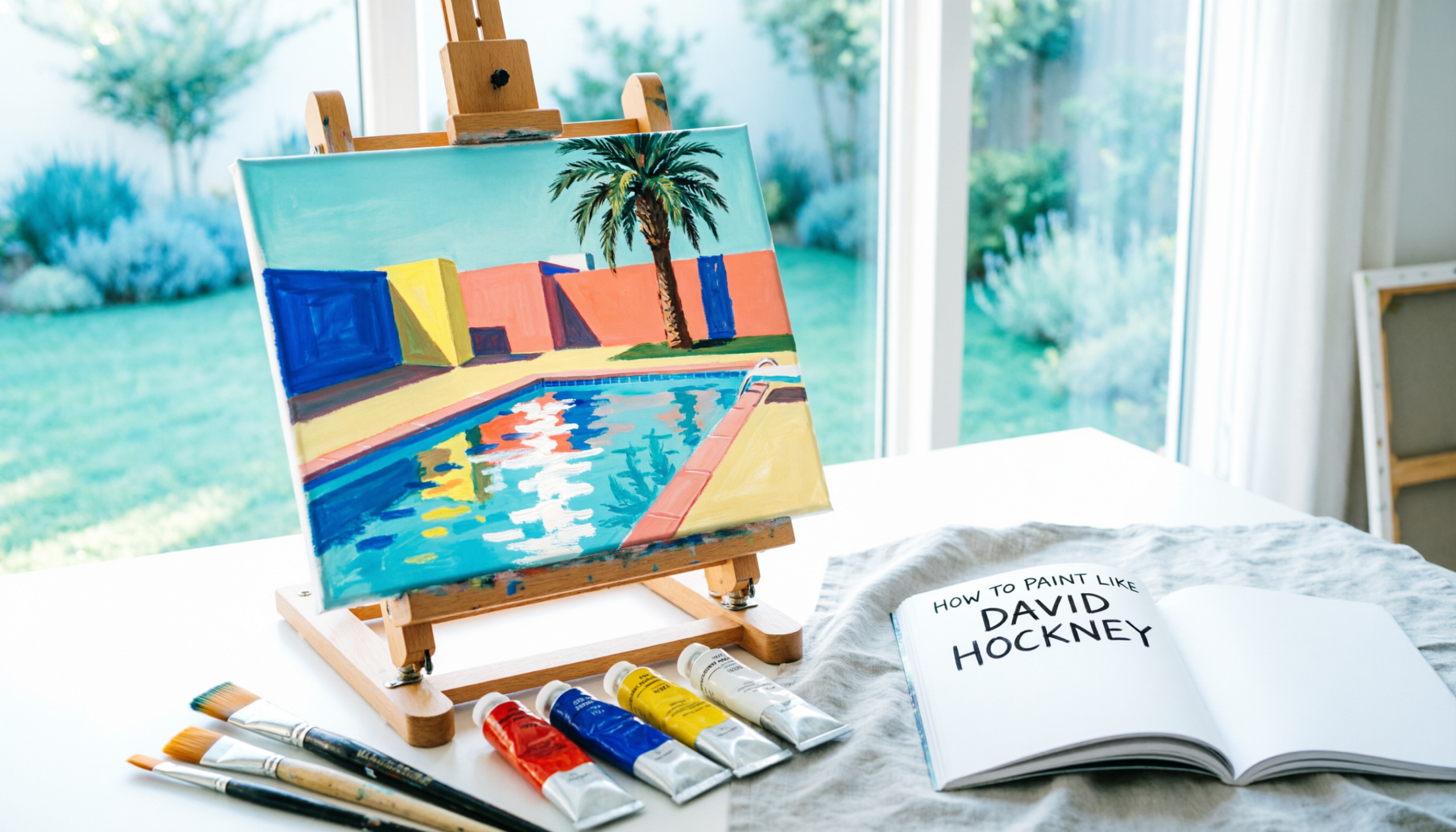
Hockney often uses “complementary colors.” These are colors that sit opposite each other on the color wheel, like blue and orange or purple and yellow. When you put these colors next to each other, they make each other look even brighter. For example, in many of his pool paintings, he uses a bright orange diving board against a deep blue pool. This contrast makes the blue look wetter and the orange look hotter. To paint like Hockney, don’t be afraid to use paint straight from the tube. He often avoids mixing colors too much because mixing can make them look muddy or dull.
David Hockney Swimming Pool Painting Technique Tutorial
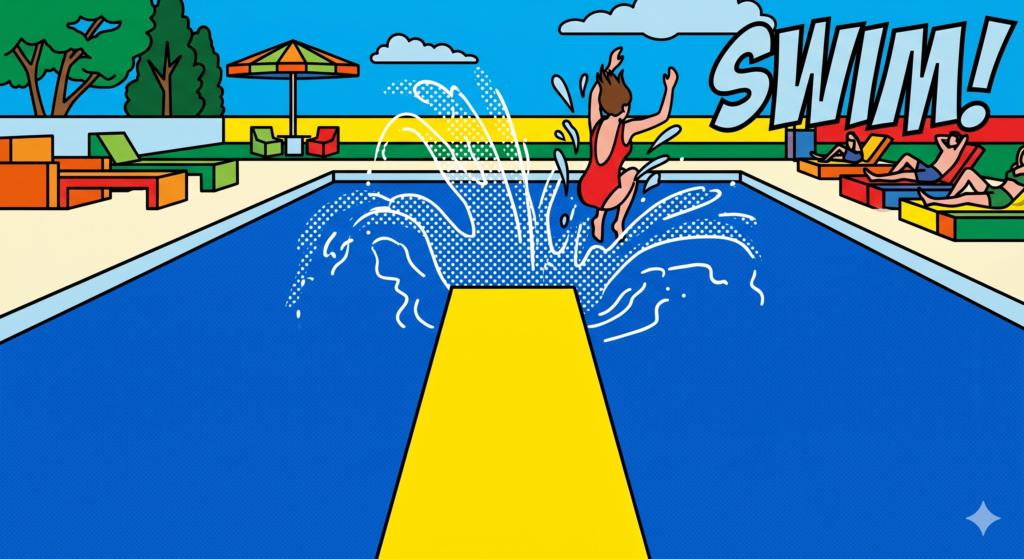
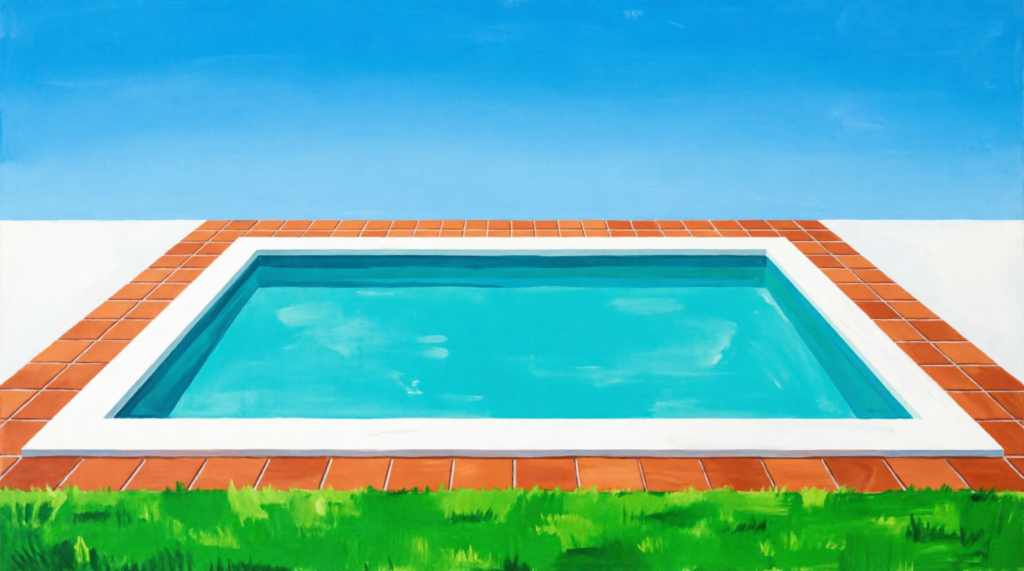
One of Hockney’s most famous paintings is called A Bigger Splash. It shows a diving board and a big splash of water in a pool, but there are no people in the picture. To recreate this style, you need to think about two things: clean lines and messy splashes. Hockney used masking tape to get the edges of the pool and the house perfectly straight. This creates a very calm, still feeling in the background.
To try this yourself, start by using a large flat brush to lay down a solid block of blue for the water. Once that is dry, use masking tape to mark off a rectangular shape for a diving board. Paint it a bright yellow or orange. The “splash” is the fun part! Hockney spent two weeks painting the splash in A Bigger Splash using tiny brushes. He wanted to capture a moment that only lasts a second by painting it very slowly. You can use a small round brush and white paint to create little dots and wiggly lines to show the water jumping into the air. If you need the right tools for this, check out our guide on the best acrylic paints to get started.
How to Paint David Hockney Style Landscapes with Acrylics
Later in his life, Hockney moved back to Yorkshire, England, and began painting the countryside. But these weren’t normal green and brown landscapes. He used bright purples, pinks, and oranges to show the trees and fields. He wanted to show the “joy of nature.” To landscape painting like Hockney, you should look for the patterns in nature. Instead of painting every single leaf, look at the shapes the branches make or the way the rows of a farm field lead your eye into the distance.
Acrylic paint is perfect for this because it dries fast. Hockney loved acrylics because he could layer colors quickly without waiting days for them to dry. When painting a Hockney-style forest, try using a bright purple for the shadows instead of black. Use a bright lime green for the grass where the sun hits it. This “exaggerated” color makes the landscape feel exciting and new. You can learn more about our mission to help artists at our about us page.
David Hockney iPad drawing Techniques for Beginners
Even though he is over 80 years old, David Hockney loves new technology. He was one of the first major artists to start drawing on an iPhone and later an iPad. He uses an app called “Brushes” (and now his own custom version) to paint with his fingers or a stylus. The best part about iPad art is that you can carry your whole studio in your backpack! This allowed Hockney to sit in the middle of a field and capture the sunrise without carrying heavy canvases and messy paints.
For beginners, the key to iPad art is layering. Just like with real paint, you can put a background color down and then add details on top. Hockney likes the iPad because it “paints with light.” Since the screen is glowing, the colors look even more intense than they do on paper. If you are interested in trying this, look into different digital art tools to see which tablet or app fits your style. Remember to use bold strokes and don’t worry about making things look perfect – Hockney’s digital art is all about the movement of the hand.
How to Achieve the David Hockney Flat Color Effect?
A big part of the Hockney look is the “flat color” effect. In traditional oil painting, artists often spend a lot of time blending colors so that one shade fades perfectly into another. Hockney often does the opposite. He paints large areas of a single, solid color. This gives his work a graphic, almost poster-like feel that is very common in the Pop Art movement. This style is great for beginners because it focuses on simple shapes rather than complex shading.
To get this effect, you should use a soft, flat brush and plenty of paint. Try to cover the canvas so that you can’t see any of the white underneath. If your paint is too thin, it might look streaky. You want it to look like a smooth sheet of colored paper. This technique works best when you are following acrylic painting basics, as acrylics are naturally more opaque than watercolors or oils. By keeping your shapes simple and your colors flat, your paintings will have that modern, clean Hockney vibe.
FAQs: Paint like David Hockney
Is David Hockney’s style considered Pop Art?
Yes, David Hockney is often linked to the Pop Art movement of the 1960s. Pop Art used bright colors and subjects from everyday life, like advertisements or swimming pools. However, Hockney also liked to experiment with other styles, like Cubism and traditional landscape painting, so he isn’t just a Pop Artist.
What kind of paint does David Hockney prefer?
Hockney is famous for using acrylic paint, especially in the 1960s and 70s. He liked it because it dried quickly and allowed him to create those famous flat, bright surfaces. However, he has also used oil paints, watercolors, and even digital tools like the iPad throughout his long career.
How does David Hockney use perspective in his art?
Hockney loves to play with perspective. Sometimes he uses “reverse perspective,” where things get wider as they get further away. He also creates “joiners,” which are photo collages made of many different pictures of the same scene from different angles. This makes the viewer feel like they are moving through the space rather than just looking at a flat image. Update: Nico