Summary: Want the thick, painterly look of impressionism without wasting expensive paint tubes? The impasto technique creates stunning, three-dimensional texture on your canvas. This guide reveals how beginners can use affordable modeling paste and palette knives to build bold, expressive art. Learn to stop over-blending and start frosting your canvas with confidence.
Absolute beginners love the thick, painterly look of impressionism. You probably stare at Van Gogh masterpieces and wonder how the paint leaps right off the canvas. As the experts at The Met Museum note regarding his famous Wheat Field with Cypresses, those thick layers of paint actually convey the rush of the wind.
Those thick ridges of color look incredible. They also look incredibly expensive. When you are just starting out, squeezing half a tube of premium Titanium White just to paint a single textured cloud feels like a crime.
You hesitate. You blend it flat.
Stop doing that. You do not have to bankrupt yourself to paint boldly. You can get that same expressive depth using a few structural tricks.
What Is the Impasto Technique in Art?
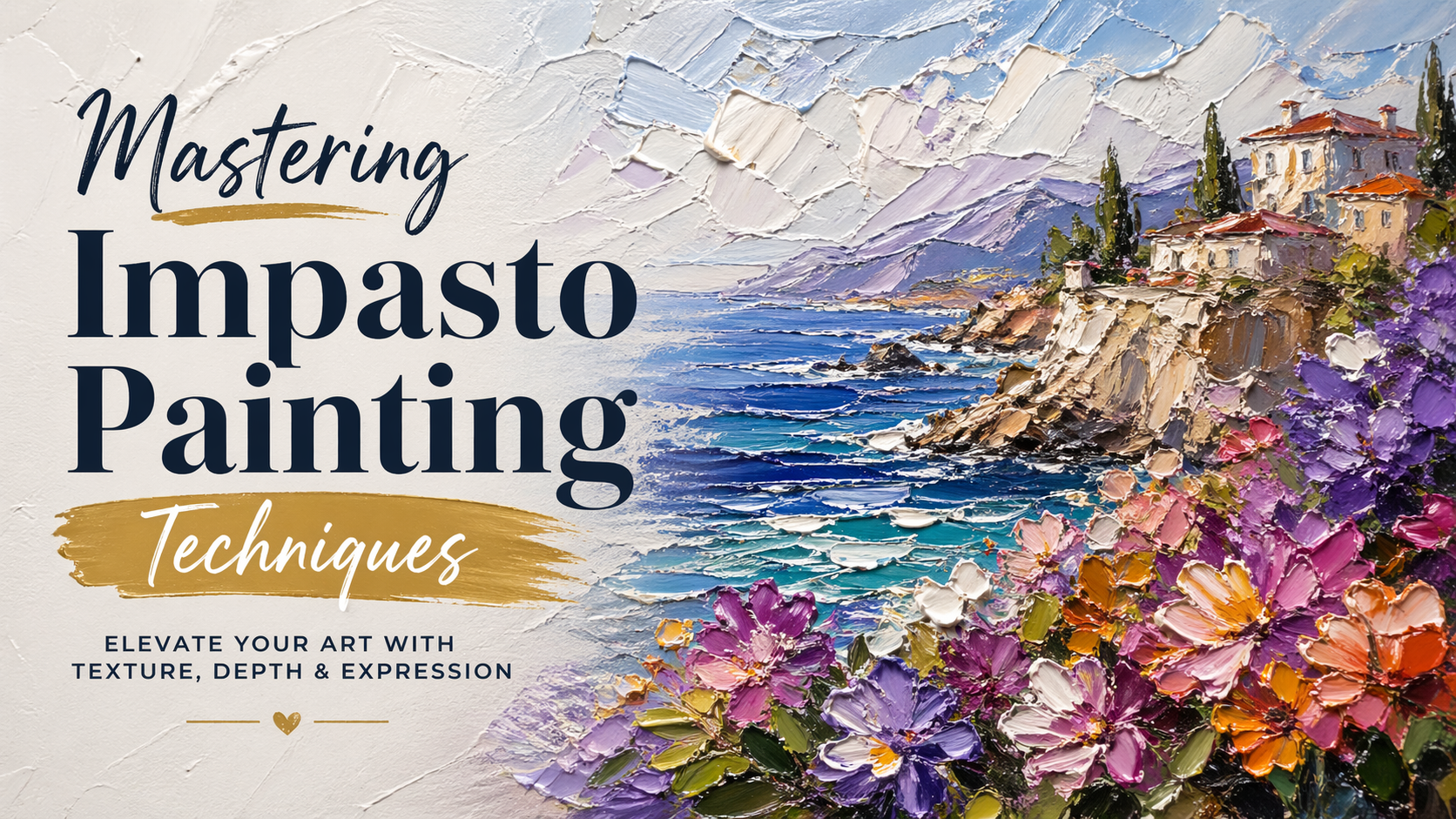
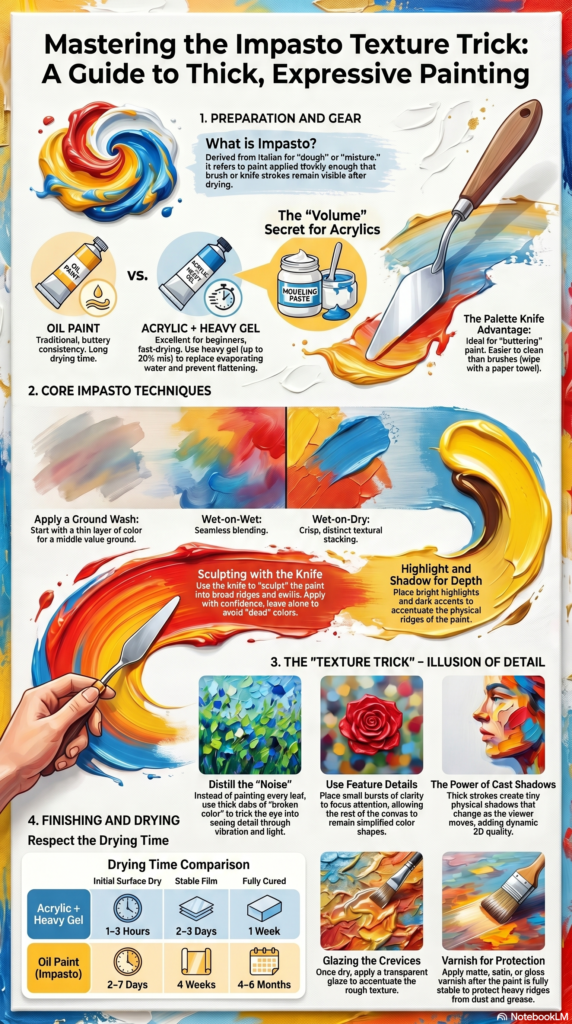
Impasto is a painting technique where you apply paint to the canvas so thickly that it stands out from the surface. This creates a three-dimensional effect that makes your brush or palette knife strokes highly visible.
This method defines the heavy brushwork seen in classic post-impressionism. According to the Tate gallery, impasto refers to an area of thick paint where the texture itself helps to convey feeling. You can explore a deeper dive into this historical method in our guide on impasto techniques.
Applying paint this way changes the entire feel of your artwork:
- It creates physical shadows on the canvas itself.
- It adds a distinct sense of movement and energy to the image.
- It forces you to use bold, deliberate strokes rather than timid washes.
The Fear of the Empty Tube
Texture requires volume. The reality of creating that volume terrifies new artists. Heavy body acrylics cost a premium.
You want to experiment, but watching your favorite color vanish in three strokes is physically painful. This fear traps artists in a frustrating cycle. You apply thin washes. You overwork the canvas. You ruin the spontaneity of the piece.
Understanding your tools helps, which is why choosing the best paints for beginners matters so much. Beyond picking the right starter set, you need a clever hack to stretch your materials.
How Do You Thicken Acrylic Paint Cheaply?
You can thicken acrylic paint cheaply by mixing it with an affordable texture additive like modeling paste. This allows you to bulk up the volume of your paint drastically without losing the underlying color vibrancy.
Modeling paste acts like structural filler for your artwork. When you mix it with a heavy-bodied professional acrylic, it adds incredible volume and extends your expensive colors. You scoop the paste out, mix in a tiny dab of your chosen color, and suddenly you have a large pile of workable paint.
This directly addresses one of the most common painting mistakes beginners make: being far too stingy with the paint.
| Method | Volume of Paint Used | Cost Impact | Texture Result |
| Pure Heavy Body Paint | High | Very Expensive | Bold, 3D peaks |
| Paint + Modeling Paste | Very Low | Highly Affordable | Bold, 3D peaks |
Modeling Paste Versus Gel Mediums
Not all thickeners are the same. Walk into an art store and the additives aisle is completely overwhelming.
Gel mediums are essentially acrylic paint without the color pigment. They dry translucent and glossy. Modeling paste is entirely different. According to Cass Art, flexible modeling paste is an opaque preparation made of polymer emulsion and marble dust. It dries to a hard, matte white finish.
Because of that white base, modeling paste will slightly tint your vivid colors into pastels. Our breakdown of paint mediums explains exactly how to balance these chemistry mixtures on your palette.
| Feature | Modeling Paste | Heavy Gel Medium |
| Finish | Matte and opaque | Glossy and clear |
| Color Shift | Lightens colors slightly (tints) | Maintains original deep color |
| Best Used For | Extreme 3D peaks and structural forms | Thickening paint while keeping it clear |
Should Beginners Use Palette Knives or Brushes?
Beginners should use palette knives to create thick texture because they prevent the natural instinct to over-blend. A flexible palette knife allows you to lay down paint like frosting, preserving bold ridges that wet brushes destroy.
Brushes are fantastic for details and thin layers. We even have a complete brush guide to help you choose the right ones. However, stiff brushes can sometimes flatten the heavy texture you just carefully built.
A plastic or metal palette knife forces you to be decisive:
- Knives build volume: They allow you to apply thick consistency paint with bold, gestural strokes.
- Brushes blend volume: They naturally push the paint around and flatten it out.
- Knives save time: You make one confident mark instead of ten tiny adjustments.
Stop treating your canvas like a flat coloring book. It is time to add some physical weight to your art. Grab a beginner set of plastic palette knives and a starter jar of modeling paste from the mARTket. Frost that canvas and build your clouds. Once your three-dimensional masterpiece is completely dry, snap a photo and share your tactile progress in the Community Gallery!
Frequently Asked Questions
What kind of paste is best for impasto?
Acrylic flexible modeling paste is the best choice for beginners. It is highly affordable, dries relatively quickly, and holds sharp peaks extremely well.
Can you do impasto with watercolor?
No. Watercolor is far too fluid and thin to hold a physical three-dimensional shape on paper.
Does impasto take a long time to dry?
Yes. Thick applications of acrylic paste will slow the drying time of your colors significantly.
Can I use a regular spoon instead of a palette knife?
You can certainly experiment with household items for fun. However, a flexible palette knife gives you much better control over spreading and shaping the paint.
Will thick acrylic paint crack when it dries?
Not usually. Modern flexible modeling pastes are formulated to dry to a very hard yet flexible surface, which prevents cracking.