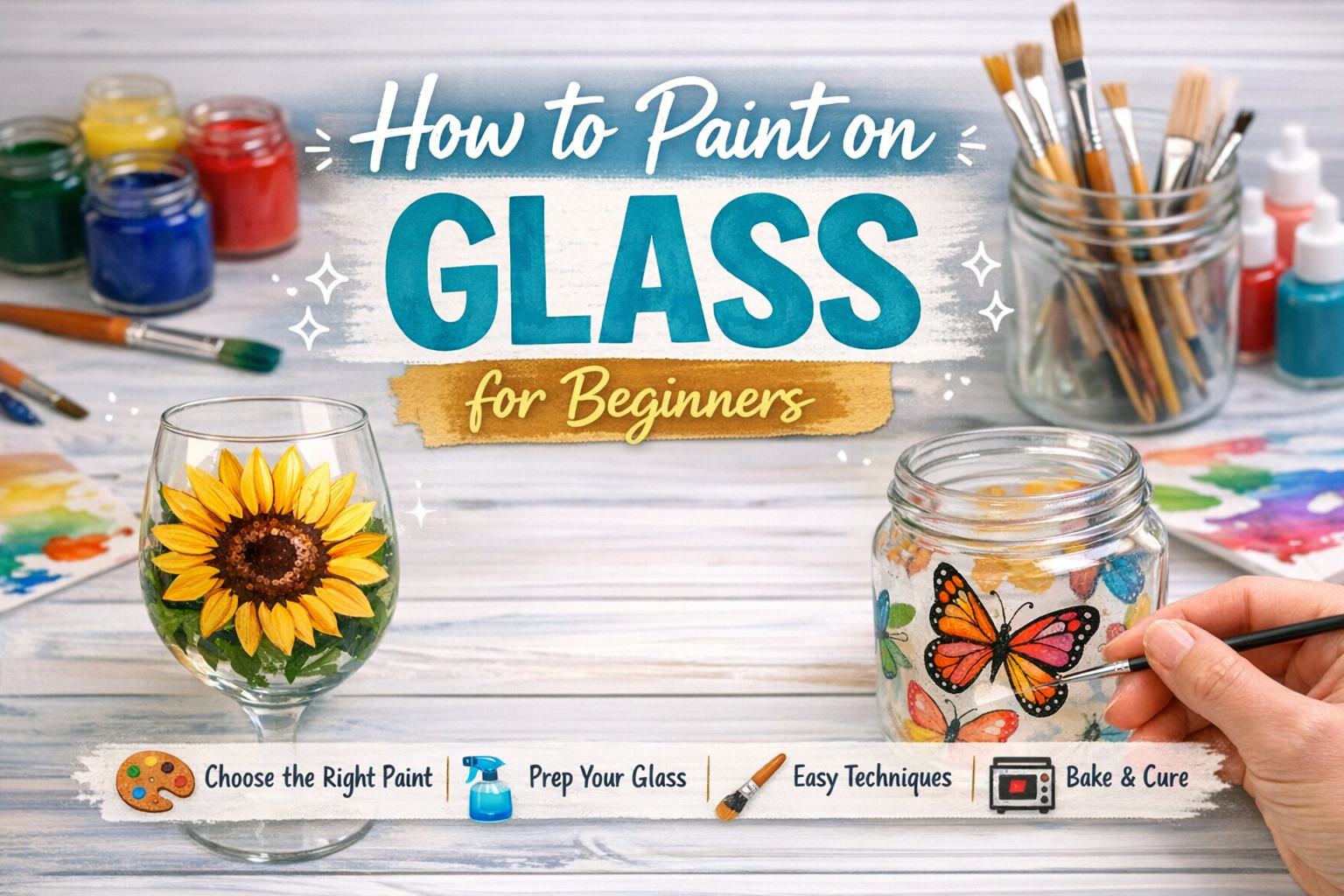
Learn how to paint on glass for beginners with this straightforward guide to supplies, surface prep, and simple techniques. We cover the best paints for slick surfaces and the secret to making your art permanent. By the end, you will have the confidence to turn any recycled jar into a colorful masterpiece that catches the light beautifully. It is time to start creating without intimidation.
Hold an old pasta jar up to the window. That translucent, green-tinted surface is not trash; it is a canvas waiting for a spark of color. Learning how to paint on glass for beginners is one of the most rewarding ways to begin your art journey because the stakes are low and the “glow” is high. You do not need a studio or expensive canvases to make something beautiful. I have found that starting with a recycled bottle removes the fear of making a mistake. Glass is forgiving and produces a unique effect that looks professional even on your first try.
What Is the Best Paint for Glass Beginners?
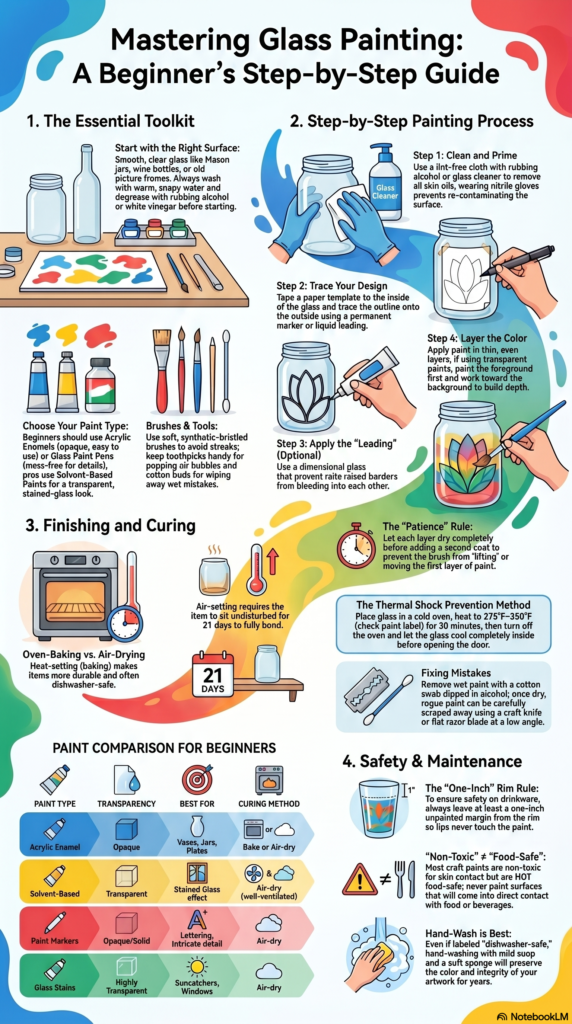
Beginners should use multi-surface acrylics or specialized enamel glass paints. Enamels are best for durability and a translucent finish, while multi-surface acrylics offer an easy, opaque alternative for decorative items. Look for “gloss” or “glass” on the label of reputable brands like FolkArt Enamels or Pebeo Vitrea 160 to ensure proper adhesion.
Standard watercolor or oil paints will simply slide off a non-porous surface. Most reviews suggest starting with water-based enamels because they clean up with soap and water but dry to a hard finish. If you want your design to look like real stained glass, choose transparent enamels that allow light to pass through the pigment. For a solid, bold look, essential painting supplies like multi-surface acrylics work best.
Essential Supplies for Your First Project
You do not need a massive kit to get started. A few soft-bristled synthetic brushes will do the trick because natural hair can be too stiff for slick glass. You also need a palette, some rubbing alcohol, and a few cotton pads for cleaning the surface.
| Item | Purpose | Beginner Tip |
| Recycled Glass | The Canvas | Start with a flat-sided jar for easier control. |
| Rubbing Alcohol | Preparation | Essential for removing finger oils that ruin adhesion. |
| Painter’s Tape | Clean Lines | Use this to mask off stripes or geometric patterns. |
| Outliner Paint | Definition | Also called liquid lead, it creates the borders for your colors. |
How Do You Prepare Glass for Painting?
To prepare glass for painting, wash it with warm soapy water and then wipe the entire surface with rubbing alcohol. This removes invisible oils and fingerprints that prevent paint from sticking. Avoid touching the painting area once it is clean to ensure the paint forms a perfect bond with the surface.
A clean surface is the difference between a masterpiece and a peeling mess. Research on non-porous surfaces shows that even tiny amounts of residue can cause acrylics to delaminate from glass over time. Once you have wiped the glass with alcohol, let it air dry for a few minutes. From this point on, handle the glass only by the base to keep it pristine.
The Reverse Painting Technique for Beginners
One of the coolest ways to work is through “reverse painting.” This is a historic method where you apply the details first and the background last. This technique dates back to the 13th century in Italy and was later adopted by masters like Kandinsky to create depth.
Confidence Tip: Use a paper template taped to the inside of the glass to trace your design easily.
It is like having training wheels for your hand.
While you trace, remember mastering color theory will help you choose shades that harmonize when the sun shines through them.
How Do You Seal Glass Paint for Longevity?
Seal glass paint by air-drying it for 21 days or by baking it in a home oven if the paint label allows. Baking involves placing the glass in a cool oven, heating it to 350°F (180°C) for 30 minutes, and letting it cool inside the oven. This process chemically bonds the enamel to the glass for a permanent finish.
Check your paint bottle first because not all paints are bakeable. If you use a no-bake paint, you must wait the full three weeks before washing it. Current data suggests that only 21% of recyclable material is actually recycled in residential systems. By upcycling your old jars, you help reduce waste while creating something new.
Why Glass Painting Is Good for Your Brain
Art is not just about the final product; it is about how you feel while making it. The smooth, repetitive motion of a brush on glass is incredibly grounding. A recent 2025 study found that viewing original art reduces cortisol levels by 22% in the body.
This process can lead to a flow state where your worries fade into the background. Research from 2026 highlights that flow states are crucial for self-regulation and managing daily stress. Using art for well-being is a core part of our philosophy here.
Stop worrying about being the next Picasso. Just pick up a brush and feel the paint glide across the glass. It is a quiet triumph that belongs only to you. If you ever feel stuck, remember that overcoming creative blocks starts with the simplest of steps: just starting.
Frequently Asked Questions
1. Can I use regular acrylic paint on glass?
You can, but it will likely peel off once dry because regular acrylics are not designed for non-porous surfaces. It is much better to use a multi-surface acrylic or an enamel specifically formulated for glass to ensure your hard work stays put.
2. Is painted glass safe to drink from?
Most glass paints are for decorative use only and should not come into contact with food or lips. Always leave a $3/4$ inch ($2$ cm) gap at the rim of wine glasses or jars if you plan to use them for drinking.
3. How do I fix a mistake while painting?
While the paint is still wet, you can simply wipe it away with a damp cloth or a Q-tip dipped in rubbing alcohol. If the paint has dried but not yet cured, you can carefully scrape it off with a craft knife or a toothpick.
4. Does the paint wash off in the dishwasher?
Only if the paint specifically says “dishwasher safe” and has been cured according to the manufacturer’s instructions. Even then, hand-washing with mild soap is always the best way to preserve the vibrancy of your art.
5. Do I need a primer for glass?
Usually, no. Specialized glass paints are designed to act as their own primer. The most important primer step is the rubbing alcohol wipe-down to ensure the surface is chemically clean.