
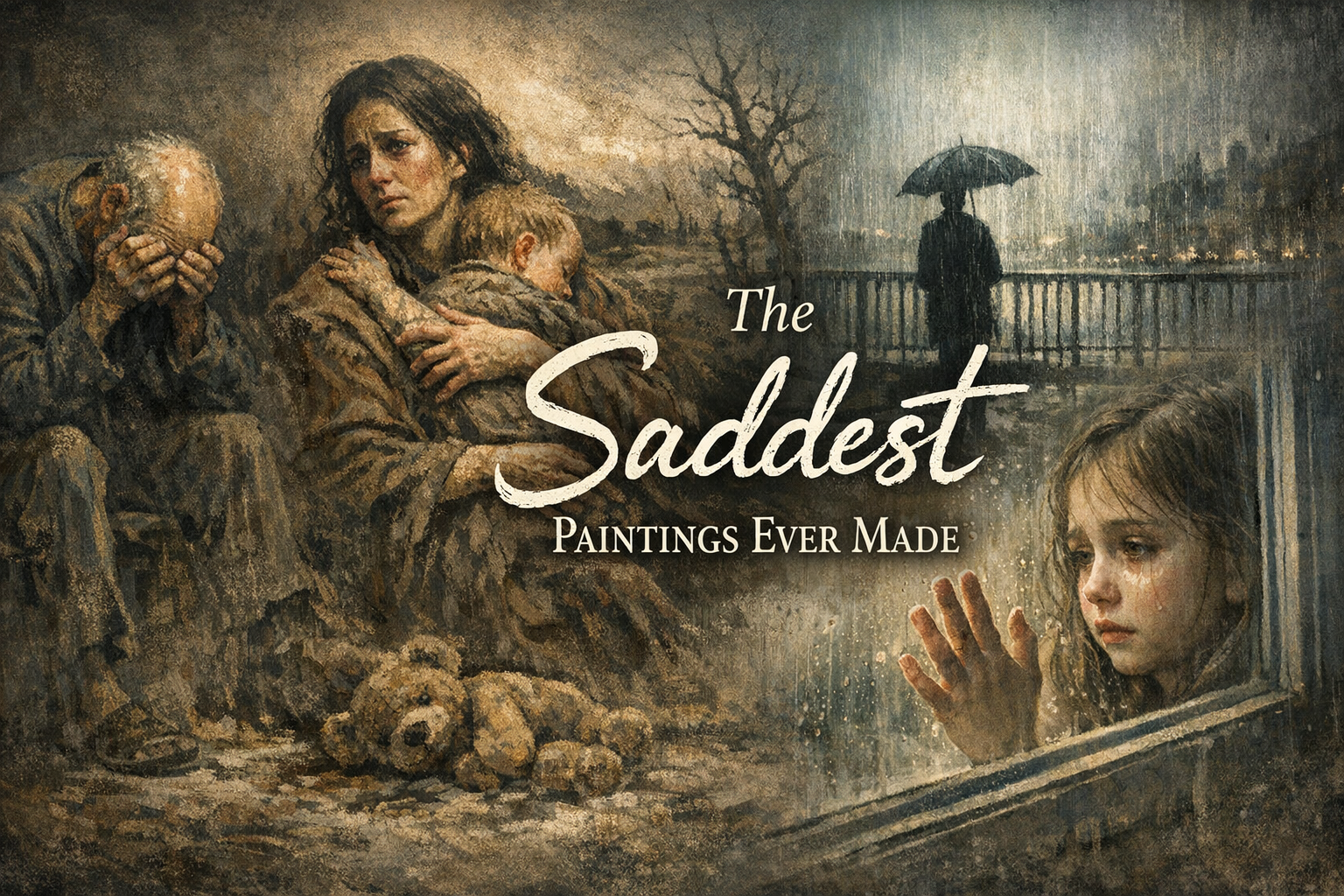
Discover the profound connection between art and human suffering. We explore the saddest paintings ever made, uncover the mental health struggles of famous artists like Van Gogh and Gauguin, and learn how pain fuels enduring masterpieces. You will leave with a new perspective on how raw emotion transforms a blank canvas into a timeless story.
Pain makes good art. The history of painting is full of brilliant minds who struggled to survive their own lives. We stare at their canvases in museums and feel their grief. Art is not just pretty pictures. It is a record of human suffering.
Many famous creators used their work to survive intense emotional darkness. They bled their sadness onto the canvas. This gives us a window into their troubled minds. Understanding their pain changes how you view their work. You stop seeing just colors and shapes. You start seeing the artist. Let us look at the darkest corners of art history and the people who painted them.
What Is the Saddest Painting Ever Made?

Vincent van Gogh painted At Eternity’s Gate in 1890, and critics widely consider it the saddest painting of all time. The artwork shows a bald old man sitting by a fire, burying his face in his hands.
It projects intense despair. The posture is universally recognized as a sign of complete defeat. Van Gogh painted it while recovering from a severe mental health crisis. The image forces the viewer to confront raw hopelessness. It shows what it feels like to have nothing left. If you want to understand expressing feelings through art, this piece is the ultimate example.
Who Was the Most Depressed Painter?
Vincent van Gogh is often cited as the most depressed painter in history. He suffered from a severe, incapacitating mental illness that included deep depression, hallucinations, and anxiety.
Van Gogh fought his own mind constantly. He documented his struggles extensively in letters to his brother Theo. His mental state deteriorated rapidly in the last few years of his life. He eventually checked himself into an asylum in Saint-Rémy. Despite his intense suffering, he produced hundreds of masterpieces during his darkest periods. His work is a core part of the history of famous painters and paintings.
What Mental Illness Did Gauguin Have?
Psychiatrists believe Paul Gauguin suffered from Narcissistic Personality Disorder and cyclical depression. His letters reveal profound dissatisfaction and suicidal thoughts.
Gauguin famously abandoned his family to live in Tahiti. He sought an escape from modern society and his own misery. In 1897, his depression consumed him completely. He walked into the mountains and attempted suicide by drinking arsenic. He vomited the poison and survived, later creating some of his most famous existential works. His story is a dark chapter among rebellious artists.
How Artists Turn Suffering Into Masterpieces

Not all artists suffer, but those who do often use the canvas as therapy. Creating something tangible gives shape to invisible pain. It moves the sadness out of the mind and into the physical world.
This process is why art for mental health is a recognized therapeutic practice today. Putting paint on canvas requires focus and physical action. It forces the artist to sit with their feelings and process them. Even a beginner can feel the relief of brushing heavy colors across a surface. You do not have to be a master to use art as an emotional release.
Who Is the Most Faked Artist in History?
Jean-Baptiste-Camille Corot holds the record as the most faked artist in history. The French landscape painter created about 5,000 works, but an estimated 10,000 exist in the United States alone.
Corot was incredibly generous and often let students copy his work. He even signed their paintings to help them sell. This generosity created a massive problem for modern art historians. His style was also relatively easy to mimic. If you plan to buy classic works, learning how to detect forgery in painting is an absolute necessity.
Conclusion
Art tells the truth about human suffering. Masterpieces are rarely born from perfect happiness. They come from the messy, painful reality of living.
Van Gogh and Gauguin left behind beautiful things built on immense personal pain. You do not need to be tortured to create good art. But understanding their struggle makes their work undeniably powerful. Grab a brush and put your own feelings on canvas today.
Frequently Asked Questions
1. What is the saddest painting of all time? Vincent van Gogh’s At Eternity’s Gate is widely considered the saddest painting ever made. It features an old man weeping with his head in his hands. The piece captures raw human despair.
2. Who was the most depressed painter? Vincent van Gogh is frequently named the most depressed painter. He battled severe mental illness, including debilitating depression and anxiety, throughout his short career. He documented his intense suffering in letters to his brother.
3. What mental illness did Gauguin have? Experts diagnose Paul Gauguin with Narcissistic Personality Disorder and cyclical depression. His mental health struggles led to a failed suicide attempt using arsenic in 1897. He survived and continued to paint.
4. Did painting cure Van Gogh’s depression? Painting did not cure his depression, but it acted as a temporary release. He produced his most famous works while battling intense psychological pain. He ultimately succumbed to his illness.
5. Who is the most faked artist in history? The French landscape painter Jean-Baptiste-Camille Corot is the most faked artist. He painted roughly 5,000 original works. However, experts believe over 10,000 pieces bearing his name exist in the United States alone.
Update June 26 CTR

Olly
Olly Farmer M.Sc, B.Sc, PGCE 25 years experience of Watercolor Painting and AI Art; teacher for 13 years; Creator of Art Tools; Art Gallery Contributor of Art Articles to Medium.com, LinkedIn and Facebook
Continue exploring


PROMINENT PAINTING
Keep your creative momentum
Get new painting guides, practical techniques and artist stories delivered without the noise.
Occasional emails. Unsubscribe whenever you like.