
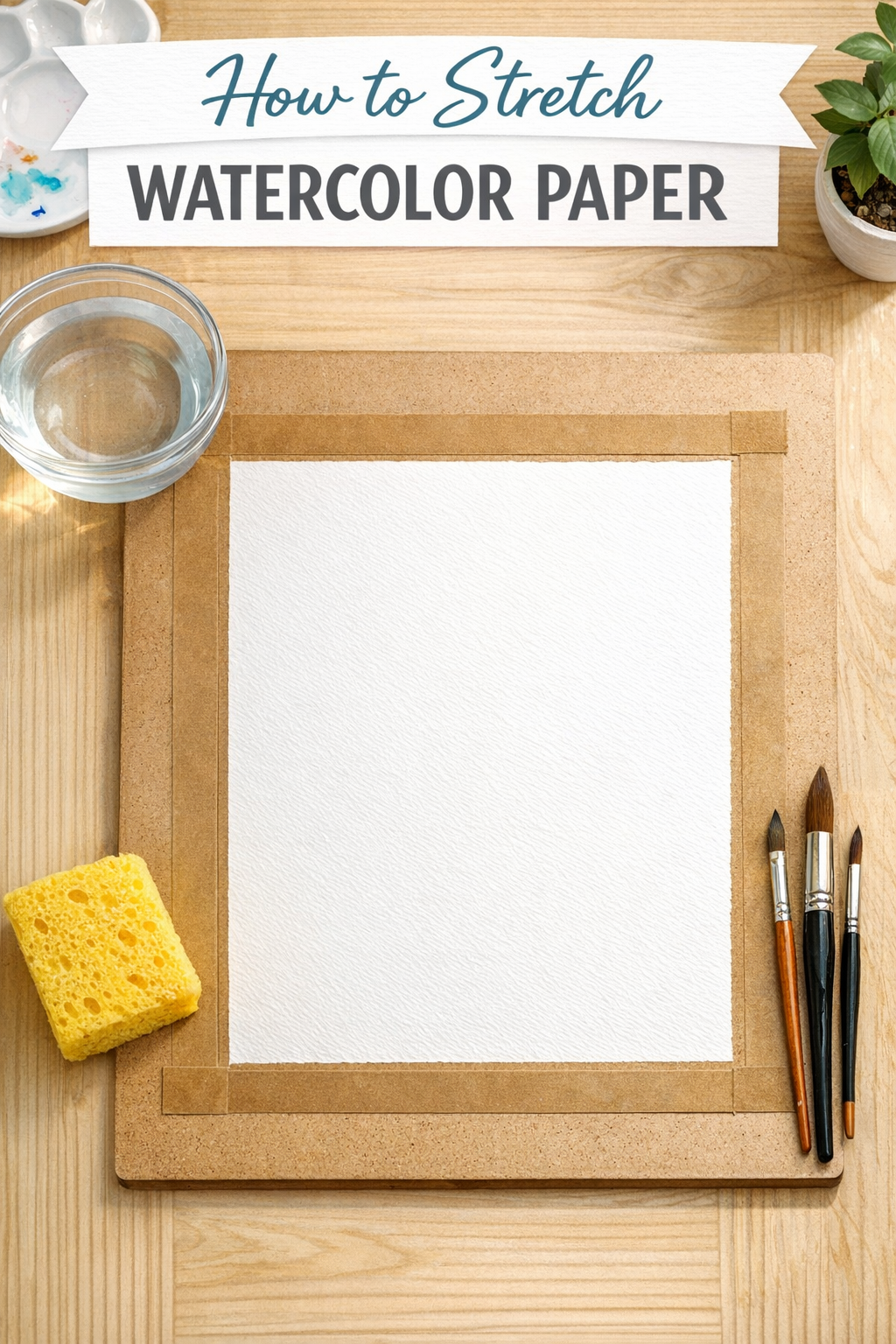
Learn how to stretch watercolor paper to prevent frustrating buckling and warping. This guide covers the essential supplies, correct soaking times, and step-by-step techniques to keep your canvas drum-tight. By the end, you will know exactly how to prepare a smooth, flat surface so you can paint with total confidence.
Have you ever painted a beautiful sky, only to watch the water pool into annoying puddles? It is a common struggle for many artists. When watercolor paper gets wet, its fibers expand. This causes hills and valleys that ruin an otherwise perfect wash.
The secret to a smooth surface is simple: you need to learn how to stretch watercolor paper.
When I first started teaching, I saw countless students battle their paper instead of enjoying their art. When we implemented this stretching method for beginner workshops, we saw a massive drop in frustration and a huge boost in painting confidence. Stretching your paper makes painting mindful and therapeutic again.
In this post, we will explore exactly why stretching helps. We will also cover the tools you need and walk you through the entire process step by step. Let us dive in and demystify the preparation process so you can get back to creating.
Why Do You Need to Stretch Watercolor Paper?
You need to stretch watercolor paper to prevent it from buckling and warping when it gets wet. Stretching involves soaking the fibers so they expand, then securing the edges while it dries flat. This creates a tight surface that handles heavy water washes without creating frustrating puddles.
Water is the lifeblood of this medium. If you want to master watercolor painting basics, you need a surface that cooperates. Paper under 200 lb will naturally ripple when exposed to water. These ripples create deep valleys where wet pigment collects and dries as harsh, unintended lines.
By stretching the paper, you force it to dry flat under tension. It becomes as tight as a drum. This means you can use as much water as you like without fighting your materials. Experts agree that paper fibers expand significantly when wet, making stretching a mandatory step for thinner sheets.
Materials You Need for Stretching
Before you start, gather all your supplies in one place. Preparation is key to a smooth process.
- Watercolor Paper: Standard 140 lb (300 gsm) paper is perfect for most artists. Paper at this weight requires stretching to handle heavy washes. Before you begin, you might want to read our guide on how to choose watercolor paper pads.
- Clean Water Basin: You need a plastic tub or a clean bathtub large enough to submerge your paper flat.
- Rigid Board: Look for sturdy supports like gatorboard or MDF. It must not bend when the wet paper pulls against it.
- Gummed Paper Tape or Staples: You will need a way to secure the paper. Heavy-duty staples or water-activated tape are the best choices.
- A Clean Sponge: You will use this to smooth the paper and activate your tape.
How Long Should You Soak Watercolor Paper?
You should soak 140 lb watercolor paper in cold water for 5 to 10 minutes. The paper is ready when it feels soft and pliable but not totally floppy. If a gently bent corner holds its shape slightly, it has soaked for the perfect amount of time.
Soaking times will vary slightly based on the brand of your paper. However, soaking for 5 to 10 minutes is the golden rule. Cold water is always best. Hot water can dissolve the paper’s sizing, which is the gelatin coating that stops paint from sinking too deep into the fibers.
To check your paper, lift it by a corner to see if it drapes nicely. If it feels too stiff, put it back. Do not over-soak it. If it stays in the water too long, it will lose its sizing and absorb paint like a sponge. This can lead to dull colors and make it difficult to fix watercolor mistakes.
Step-by-Step Guide to Stretching Your Paper
Now that your materials are ready, let us walk through the process.
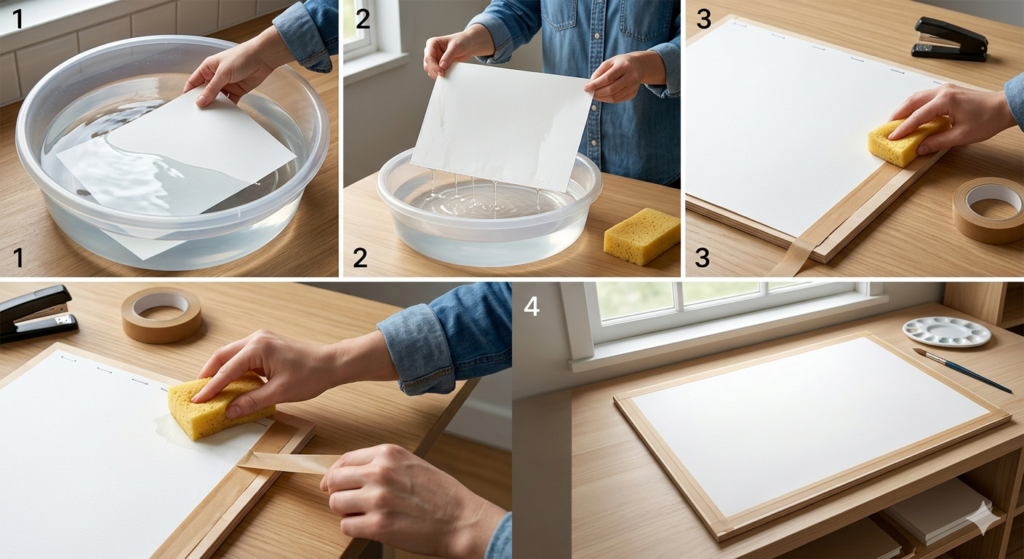
Step 1: Submerge the Paper Fill your clean basin with a few inches of cold water. Gently slide your paper under the surface. Make sure it is completely covered and let it soak.
Step 2: Transfer to the Board Lift the paper by two corners and let the excess water drip off. Gently lay it flat on the center of your rigid board. Smooth it gently from the center outward with clean hands or a damp sponge to remove any trapped air bubbles.
Step 3: Secure the Edges If you use staples, start in the middle of each side and work your way to the corners. Space them about an inch apart. If you use gummed tape, wet the adhesive side with a damp sponge. Press the tape down so it covers half an inch of the paper and sticks firmly to the board.
Step 4: Let It Dry Leave the board flat horizontally. This ensures the water evaporates evenly. It will usually take a few hours or overnight to dry completely. Once dry, your paper is ready for you to practice your elements of composition.
What Is the Best Tape for Stretching Watercolor Paper?
The best tape for stretching watercolor paper is water-activated gummed paper tape. Masking tape and blue painter’s tape are not strong enough to hold wet paper as it shrinks. Gummed tape creates a permanent bond with the board to withstand the heavy tension of drying paper.
Many beginners try to use masking tape, only to watch it peel up as the paper dries. Wet paper pulls with a surprising amount of force when it shrinks.
Gummed tape is coated with a dry adhesive that activates with water. You must use a damp sponge to activate it. Do not wipe the glue away or hold it under a tap, or it will fail to stick. Once the gummed tape dries, it is locked in place.
Tips for Drying and Removing Your Paper
Patience is the hardest part of stretching paper. You must wait until the paper is completely bone dry before you begin painting. Leaving the board flat horizontally ensures the moisture does not pool at the bottom edge.
If the paper feels cool to the touch, it is still damp inside. Painting on damp paper will cause your colors to bleed unpredictably. Let it sit overnight for the absolute best results.
Once your masterpiece is finished and dry, removing it is easy. If you used staples, use a flat tool to gently pry them out. If you used gummed tape, take a ruler and a sharp craft knife and cut carefully along the inside edge of the tape. You will lose a small border of paper where the tape was attached, so keep this in mind when planning your layout.
Conclusion
Stretching your paper is a simple habit that will transform your painting experience. It eliminates the stress of warped surfaces and lets you focus completely on the joy of creating.
Remember to use cold water, soak your paper for 5 to 10 minutes, and secure it firmly with gummed tape or staples. Once you try painting on a drum-tight surface, you will never want to go back to buckling paper.
Now that your paper is perfectly prepped, it is time to start painting. If you need more guidance, check out our tips on getting started with watercolors. Grab your brushes, pick your favorite colors, and start having fun today.
Frequently Asked Questions
1. Can you stretch paper after you start painting? No, you cannot stretch paper once you have started painting. The soaking process would wash away your paint. You must stretch and completely dry the blank paper before applying any pigment.
2. Do I have to stretch 300 lb watercolor paper? No, 300 lb paper is very thick and behaves almost like a piece of cardboard. It is heavy enough to absorb water without buckling. You generally only need to stretch paper that is 140 lb or lighter.
3. Why did my gummed tape peel off while drying? Gummed tape usually fails because it was either too wet or not wet enough. If you soak the tape, you will wash the water-activated glue completely off. Use a slightly damp sponge to lightly moisten the adhesive side.
4. Can I speed up the drying time with a hairdryer? It is best to let the paper air dry naturally overnight. Using a hairdryer can cause the paper to dry unevenly and shrink too fast. This rapid shrinking might cause the tape to tear or the staples to pop out.
5. Can I reuse my stretching board? Yes, you can reuse your stretching board for years. If you use gummed tape, you can simply apply the new tape directly over the old tape residue. If you use staples, just make sure to remove all the old metal pieces before starting again.