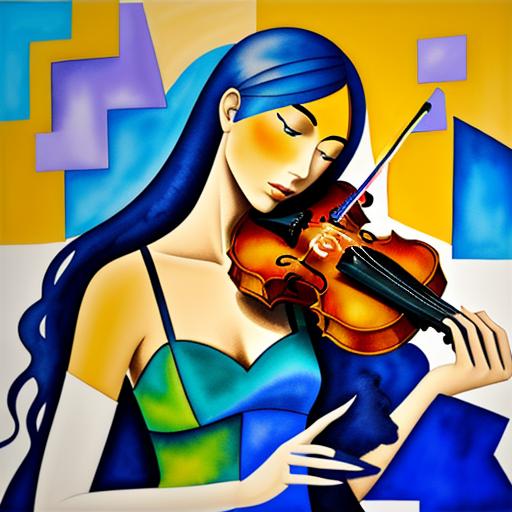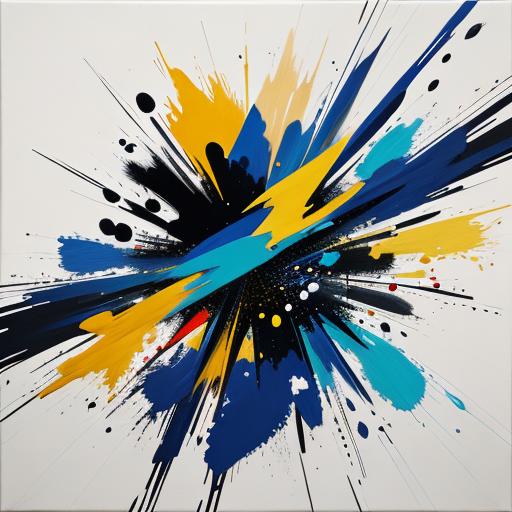
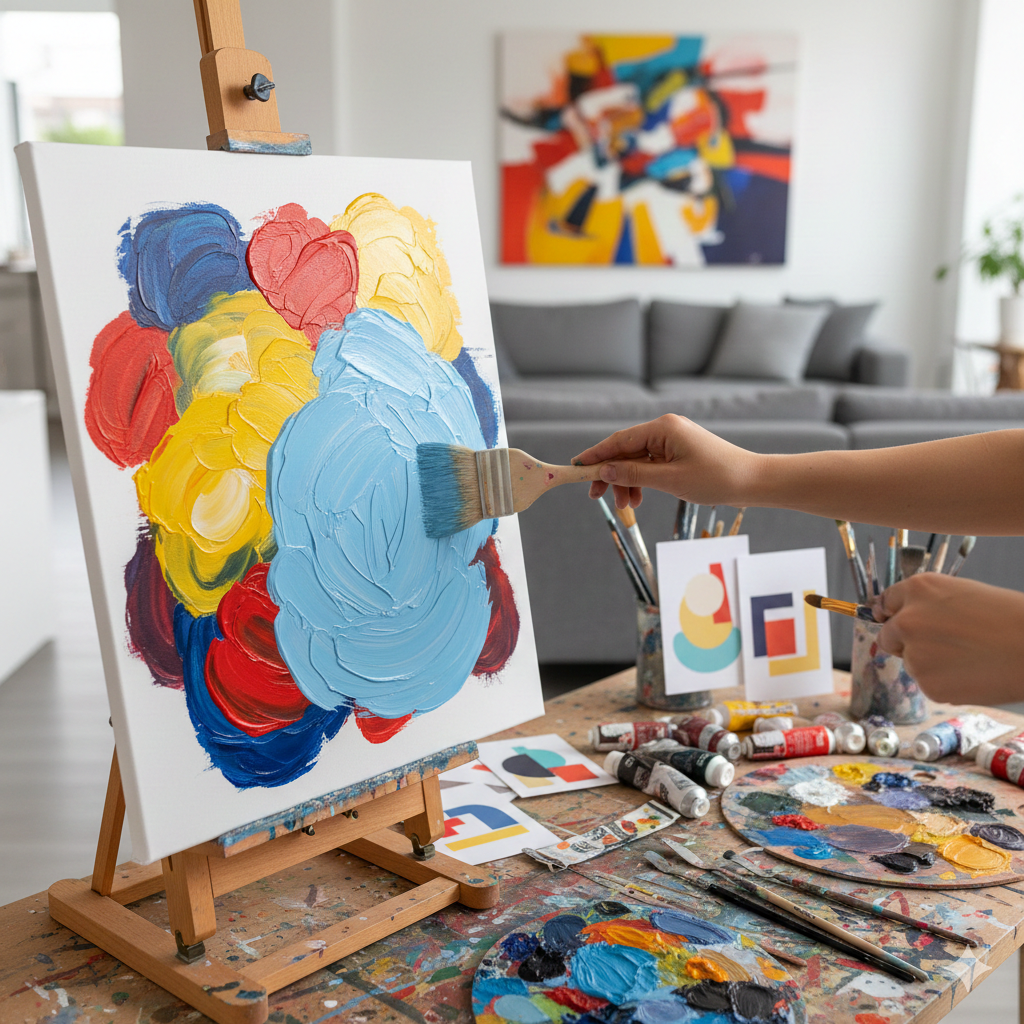
Have you ever looked at a painting that didn’t feature a person, a house, or a bowl of fruit, but instead pulsed with colorful energy or a puzzle of bold shapes? That is the fascinating world of abstract art. Unlike traditional realism, abstraction uses the language of color and form to express feelings that words often can’t capture. The best part? You don’t need years of formal training to participate. If you’ve ever felt intimidated by a blank canvas, exploring easy abstract painting for beginners is the perfect way to unlock your creativity without the pressure of “perfection.” Whether you are a student of art history or a hobbyist ready to pick up a paintbrush, understanding abstract art opens a universe where the only rule is that there are no rules.
Key Points Summary
- Definition: Abstract art does not attempt to represent an accurate depiction of a visual reality but instead uses shapes, colors, forms, and gestural marks to achieve its effect.
- Emotional Connection: Because there is no specific subject matter, the viewer connects with the artwork through emotion, memory, and personal interpretation.
- Historical Shift: The movement began in the late 19th and early 20th centuries as artists moved away from traditional realism to explore the spiritual and psychological aspects of painting.
- Major Styles: The genre includes various sub-categories such as Geometric Abstraction, Abstract Expressionism, Minimalism, and Action Painting.
- Collecting & Creating: Anyone can learn to appreciate, collect, or create abstraction by understanding the fundamental elements of composition and color theory.

Introduction to the World of Abstraction
Defining abstract art can sometimes be tricky because it covers such a wide range of styles. At its core, abstraction is a departure from reality. Think of it like music. When you listen to a song without lyrics, you still feel happy, sad, or excited just by the melody and the rhythm. You don’t need words to tell you what to feel. Abstract art works the same way. It uses the “melody” of color and the “rhythm” of lines to communicate without using the “lyrics” of realistic images.
The emotional and psychological impact of non-objective forms is profound. When an artist paints a realistic dog, you might think, “That is a cute dog.” But when an artist uses jagged red lines and chaotic black splashes, you might feel danger, anger, or excitement without ever seeing a specific object. This allows the artwork to be universal. A painting of a specific city might only appeal to people who know that city, but an abstract art piece about the feeling of “loneliness” or “joy” can be understood by anyone, anywhere in the world.
The movement’s significance in modern art history cannot be overstated. Before abstraction, art was largely judged on how well it could copy real life. If you painted a tree that didn’t look like a tree, it was considered “bad” art. The pioneers of abstraction broke these chains. They argued that art should be about the artist’s internal world, not just the external world. This shift changed everything, paving the way for the modern design, architecture, and digital art we see today.
The Evolution of Abstract Art: A Historical Timeline
To truly understand abstract art, we have to look at where it came from. It didn’t just appear overnight. It was a slow evolution that started when artists got bored with just painting what they saw.
Early Roots: From Romanticism to Impressionism
In the 1800s, the invention of the camera changed the art world forever. Suddenly, a machine could capture a perfect likeness of a person or a landscape in seconds. Artists began to ask, “If a camera can copy reality, what is the point of painting it?” This led to movements like Impressionism. Artists like Monet started painting the light and the feeling of a scene rather than the exact details. As time went on, artists pushed this further, distorting reality more and more to express deeper emotions.
The 20th-Century Explosion: Kandinsky, Hilma af Klint, and Malevich
The real explosion of abstract art happened in the early 1900s. Wassily Kandinsky is often credited as the father of abstract painting. He had a condition called synesthesia, where he could “hear” colors. He wanted his paintings to look like music sounded. Around the same time, a Swedish artist named Hilma af Klint was creating massive, colorful abstract paintings inspired by spiritualism, long before the men of the era caught up. Kazimir Malevich took it to the extreme with his “Black Square,” a painting that was literally just a black square, proving that art could be pure feeling and zero representation. For a deeper dive into how these pioneers changed everything, check out this guide on the abstract revolution.
Post-War Developments: Abstract Expressionism and the New York School

After World War II, the center of the art world shifted from Paris to New York City. This era gave birth to Abstract Expressionism. Artists like Jackson Pollock and Willem de Kooning treated the canvas as an arena for action. It wasn’t just about the finished picture; it was about the physical energy of throwing, dripping, and smearing paint. This period cemented abstract art as a symbol of freedom and individual expression.
Key Styles and Movements Within Abstraction
Abstract art is a big umbrella term. Underneath it, there are many different “flavors” or styles. Recognizing these can help you understand what you are looking at in a museum or gallery.
| Style | Focus & Characteristics | Famous Example |
|---|---|---|
| Geometric Abstraction | Uses simple shapes like squares, triangles, and circles. Focuses on math, logic, and structure. | Piet Mondrian |
| Lyrical Abstraction | Softer, more fluid, and romantic. It feels like visual poetry with loose brushwork. | Wassily Kandinsky |
| Color Field Painting | Large areas of solid color meant to envelope the viewer and create a meditative state. | Mark Rothko |
| Action Painting | The focus is on the physical act of painting. Drips, splashes, and energetic strokes. | Jackson Pollock |
| Minimalism | Stripping art down to the bare essentials. Often monochromatic and very simple. | Agnes Martin |
| Suprematism | Focuses on fundamental geometric forms expressing the “supremacy” of pure artistic feeling. | Kazimir Malevich |
| Orphism | A branch of Cubism focusing on bright colors and abstract shapes, inspired by music and harmony. | Robert Delaunay |
| Tachisme | The European equivalent of Action Painting; focuses on spontaneous dabs, blobs, and “stains.” | Jean Fautrier |
| Hard-Edge Painting | Abrupt transitions between color areas with sharp, clear edges and no visible brushwork. | Ellsworth Kelly |
Geometric Abstraction: Focus on Math and Structure
This style is all about precision. Artists use rulers and tape to create crisp edges. It feels clean, organized, and logical. It appeals to people who love order and symmetry. Piet Mondrian is the king of this style, known for his grids of black lines and blocks of primary colors.
Lyrical Abstraction: Emphasis on Emotion and Fluidity
If Geometric Abstraction is math, Lyrical Abstraction is poetry. It is looser and more expressive. The artist might use curvy lines and soft edges to suggest a mood. It often looks like it was painted quickly and spontaneously, capturing a fleeting feeling.
Color Field Painting: The Power of Large-Scale Hue
This style relies on the massive impact of color. Artists like Mark Rothko painted huge rectangles of fuzzy, floating colors. The idea was that if you stood close to the painting, the color would fill your vision and make you feel a deep emotion, like awe or sadness. To understand the science behind this, read about color theory basics.
Action Painting: The Physical Process
Action painting is exactly what it sounds like. The art is a record of an action. Jackson Pollock would lay his canvas on the floor and dance around it, dripping paint from a stick. The result is a chaotic web of lines that captures the energy of his movement.
Mastering the Elements of Abstract Composition
If you want to create abstract art, or just judge if a piece is “good,” you need to understand composition. Just because it doesn’t look like a house doesn’t mean you can just slap paint anywhere.
Color Theory and Its Role
Color is the most powerful tool in the abstract artist’s kit. Warm colors (reds, oranges, yellows) tend to come forward and feel energetic. Cool colors (blues, greens, purples) recede and feel calm. An artist uses these relationships to guide your eye around the canvas. If you want to learn how to mix these effectively, look at this guide on mastering acrylic painting.
Line, Shape, and Form
In the absence of realistic objects, lines and shapes become the characters in the story. A sharp, jagged line feels dangerous or fast. A slow, curvy line feels gentle and organic. Good abstract art balances these elements. If a painting is too chaotic, the eye has nowhere to rest. If it is too simple, it might be boring. The artist tries to find “balance in chaos.” For more on arranging these elements, see the essential elements of composition.
Texture and Impasto
Since there is no picture to look at, the surface of the painting becomes very important. Texture adds physical depth. “Impasto” is a technique where paint is applied so thickly that it stands up off the canvas. You can see the brushstrokes or knife marks. This makes the viewer want to reach out and touch the art (but don’t do that in a museum!). Learn more about adding texture with the impasto technique.

Famous Abstract Artists You Need to Know
To sound like an expert, you should know the heavy hitters of the genre. These artists revolutionized the way the world sees abstract art.
Wassily Kandinsky: The Pioneer of Spiritual Abstraction
Kandinsky wrote books about how art should be spiritual. He believed that colors had souls. His work started as landscapes but eventually dissolved into pure shapes and colors. He is essential to knowing the roots of the movement. You can read more about his impact in this article on Kandinsky’s influence.
Piet Mondrian: The Beauty of the Grid
Mondrian started painting trees, but over time, he simplified the branches into horizontal and vertical lines. Eventually, he arrived at his famous style: black grids with red, yellow, and blue squares. He believed this simplicity represented the underlying harmony of the universe.
Mark Rothko: Immersive Color and Human Emotion
Rothko didn’t want his art to be “pretty.” He wanted it to be tragic and timeless. He said, “I’m interested only in expressing basic human emotions—tragedy, ecstasy, doom.” His floating blocks of color are meant to be experienced in silence. Learn about his journey in The Secret Life of Watercolors: Mark Rothko.
Joan Mitchell: The Energy of Landscape-Inspired Abstraction
Joan Mitchell was a powerhouse of the Abstract Expressionist movement. Her work was inspired by landscapes and memories, but she translated them into fierce, energetic brushstrokes. Her paintings feel like storms or blooming gardens, full of aggressive beauty.
The Process: How to Create Abstract Art for Beginners
Creating abstract art is a fantastic way to relax and express yourself. You don’t need to be able to draw a perfect hand or face. You just need to be willing to experiment.
Choosing the Right Medium
For beginners, acrylics are usually the best choice. They dry fast, mix well, and clean up with water. Oils are beautiful but take a long time to dry and require chemicals. Digital art is also a growing field for abstraction. If you are interested in digital tools, check out how to create your first digital artwork.
Developing a Concept
Don’t just start painting blindly. Start with a prompt. Pick an emotion (like “anxiety” or “peace”) or a sound (like “thunder” or “jazz”). Try to paint what that feels like. If “peace” had a color, what would it be? Blue? White? If “thunder” had a shape, would it be round or jagged? This gives your abstract work a purpose. For inspiration, look at finding art inspiration.
The Importance of ‘Layering’ and ‘Editing’
Great abstract art often has history on the canvas. Don’t be afraid to paint over things. Layering creates depth. You might paint a bright yellow background, let it dry, and then scrape blue paint over it so the yellow peeks through. “Editing” means knowing when to stop. Step back frequently. If the painting feels too busy, paint over a section with a solid color to give the eye a place to rest. For a structured guide, read unlock the secrets of abstract painting.

A Collector’s Guide to Buying Abstract Art
Buying art is exciting, but buying abstract art can be intimidating. Since it doesn’t “look like” anything, how do you know if it’s good?
How to Evaluate Quality
Look for confidence in the brushstrokes. A professional artist makes marks with intention. If the lines look shaky or uncertain, it might be amateur work. Also, look at the composition. Does the painting feel balanced? Does your eye move around the canvas, or does it get stuck in one corner? Finally, quality materials matter. Professional canvas and paint will last a lifetime; cheap materials will fade.
Navigating Galleries vs. Buying Online
Galleries are great because you can see the texture in person. However, they can be expensive. Online marketplaces allow you to buy directly from independent artists, often for much lower prices. Just make sure to check the dimensions—it’s hard to judge size on a screen! For tips on building a collection, read the art of building a private art collection.
Understanding Investment Value
While you should buy what you love, some art is an investment. “Blue-chip” artists (the famous ones) are safe bets but cost millions. “Emerging” artists are riskier but cheaper. If you spot a young artist with a unique style who is starting to get attention in magazines or shows, their work might increase in value over time. Check out art market trends for 2025 to see what is hot.
Incorporating Abstract Art into Modern Interior Design
Abstract art is a favorite tool for interior designers because it sets a mood without dominating the narrative of a room.
Selecting the Right Scale
Size matters. A tiny painting on a huge empty wall looks sad. A massive painting in a tiny hallway feels cramped. Generally, artwork should cover about two-thirds of the width of the furniture it hangs above (like a sofa or bed).
Color Matching and Contrasting
You don’t need to match the art perfectly to your pillows. In fact, it’s better if you don’t. If your room is mostly neutral (beige, gray, white), choose a piece of abstract art with bold colors to create a focal point. If your room is already colorful, choose a more minimal, monochromatic abstract piece to calm the space down. For more tips, see art for interior design.
Lighting Techniques
Abstract paintings often rely on texture. To show this off, use “raking light”—light that hits the canvas from an angle. This creates shadows in the brushstrokes and makes the painting look 3D. Avoid hanging art in direct sunlight, as UV rays will fade the colors over time.

Common Misconceptions About Abstract Art
There are many myths about abstract art that make people dismiss it. Let’s bust a few of them.
Debunking the ‘My Child Could Paint That’ Myth
This is the most common complaint. “It’s just scribbles! My toddler does that.” While a child creates abstract shapes innocently, a professional artist does it with intent and consistency. A child might make one lucky drawing, but an artist like Pollock could create hundreds of complex compositions that all shared a distinct style and philosophy. The skill lies in the composition, color balance, and the ability to evoke emotion intentionally.
The Technical Skill Required
‘Abstracted’ vs. ‘Pure Abstraction’
There is a difference. “Abstracted” art takes a real object (like a flower) and distorts it until it looks strange. “Pure Abstraction” (or Non-Objective art) doesn’t start with an object at all—it starts with geometry or color. Understanding this difference helps you appreciate what the artist was trying to do.
The Future of Abstraction: AI and Digital Frontiers
Abstract art is not stuck in the past. It is evolving right now with technology.
Generative AI and Abstract Forms
Artificial Intelligence is creating a new wave of abstraction. Tools like Midjourney or DALL-E can generate millions of abstract patterns in seconds. This challenges human artists to push boundaries even further. Is art created by a robot still art? Most experts say yes, as long as a human guides the vision. Read more about this in AI art generation.
NFTs and Digital Collectibles
Digital abstract art is being sold as NFTs (Non-Fungible Tokens). This allows artists to sell files that can be verified as “original.” This has created a massive market for animated abstract art—loops of moving colors and shapes that live on screens rather than walls.
Conclusion: Timeless and Universal
Abstract art remains timeless because it deals with things that never change: color, light, and emotion. As long as humans have feelings, we will need art that expresses them without words. Whether you are looking at a 100-year-old Kandinsky or a brand new AI-generated image, the power of abstraction is its ability to bypass your brain and speak directly to your heart.
FAQs:
Is abstract art real art?
Yes, absolutely. Art is defined by expression and creativity, not just by how realistic it looks. Abstract art requires skill, planning, and emotional intelligence.
Why is abstract art so expensive?
Prices are driven by the artist’s reputation, the historical significance of the work, and the demand from collectors. Just like a rare baseball card, the value comes from its history and scarcity.
How do I start painting abstract art?
Start with a simple medium like acrylics. Choose a limited color palette (maybe just 3 colors) and focus on making marks that feel good to you. Don’t worry about the result; enjoy the process.
What is the difference between modern and abstract art?
“Modern art” is a time period (roughly 1860s to 1970s). “Abstract art” is a style. You can have modern art that is abstract, but you can also have contemporary art (art made today) that is abstract.