When we look at a painting, we usually see emotions, colors, and landscapes. We rarely think about the math, the chemistry, or the sheer weight of the materials involved. But the art world is filled with numbers that are just as fascinating as the masterpieces themselves.
Welcome to a collection of unusual art statistics that peels back the canvas to reveal the data underneath. From the physics of the blackest black to the staggering weight of paint on the Eiffel Tower, these numbers tell a story of human obsession, extreme economics, and chemical wonders.
Whether you are an artist worried about the odds of success or a trivia lover looking for your next conversation starter, this deep dive into 2025 research brings you over 50 mind-blowing facts.
Key Takeaways:
- The Cost of Nothing: Invisible art has sold for thousands, while a single painted brushstroke has been valued at over $30 million.
- Deadly Colors: Up until 1964, artists were still buying paint made from ground-up mummies.
- Heavy Art: The Eiffel Tower requires a 60-ton paint job every seven years just to survive.
- Theft Stats: Over 50,000 pieces of art are stolen annually, with a recovery rate of less than 10%.
- Visitor Attention: The average museum visitor looks at a masterpiece for less than 30 seconds.
The Economics of the Absurd: Market & Auction Anomalies
The art market is often described as a playground for the wealthy, but the data shows it is also a playground for the absurd. When we crunch the numbers on auction records, we find that value is often completely detached from the physical reality of the object.
The Most Expensive “Nothing” Ever Sold
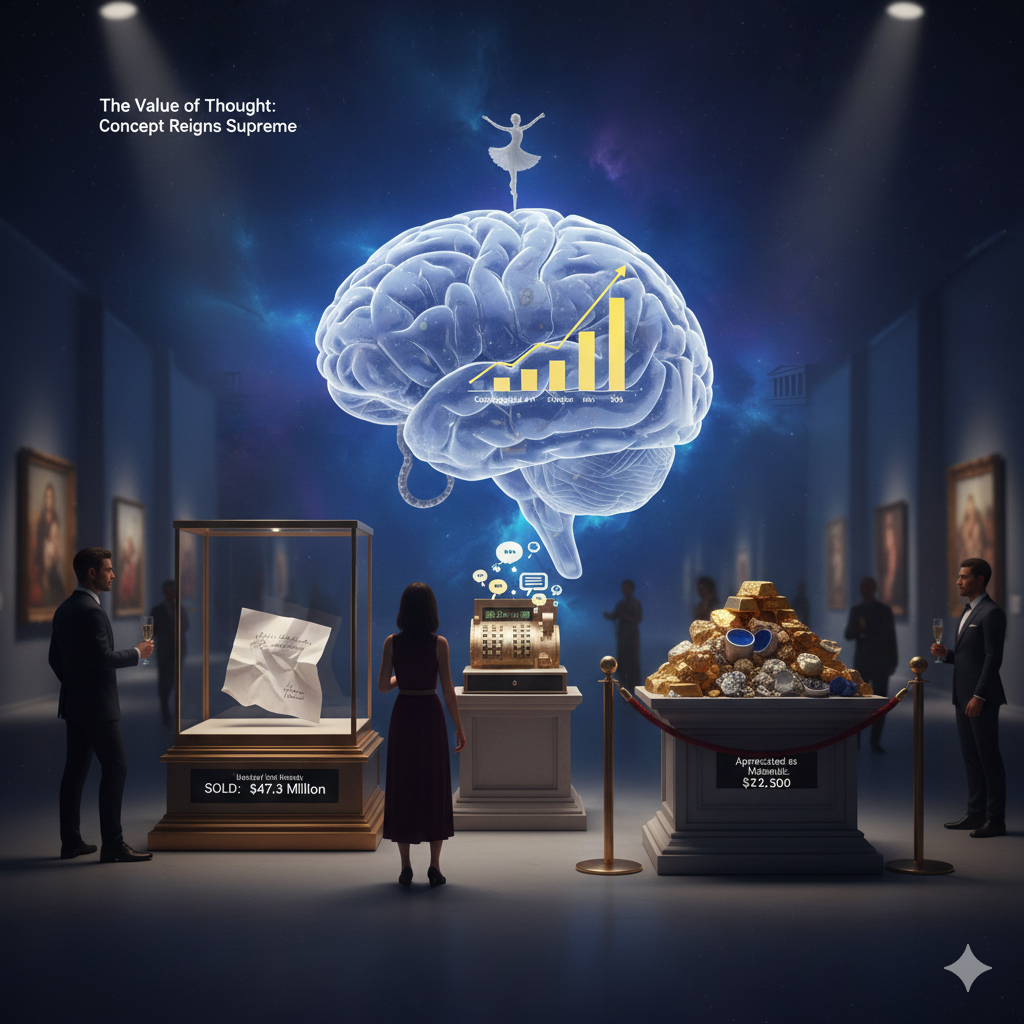
Can you sell air? In the art world, the answer is yes. In 2021, Italian artist Salvatore Garau sold an “invisible sculpture” titled Io Sono (I Am) for roughly $18,000. The buyer received a certificate of authenticity for a vacuum of space.
However, the economics get even wilder when we look at Roy Lichtenstein. His painting White Brushstroke I is famous for depicting a single, cartoonish smear of paint. It sold for roughly $27 million (and variants have been valued similarly). If you break down the market trends for 2025, you realize that collectors paid millions per square inch of canvas, effectively valuing the idea of a brushstroke higher than the cost of a luxury mansion.
Price Per Square Inch: The “Weight” of Masterpieces
Let’s talk about the Salvator Mundi, attributed to Leonardo da Vinci. It sold for a world-record $450.3 million.
If we analyze this physically, the painting weighs very little. If you were to buy gold bullion with that same amount of money, you would have roughly 7 to 8 tons of solid gold. The paint and wood of the masterpiece are worth more than their weight in diamonds, gold, or plutonium. This highlights what makes paintings valuable: it is history and scarcity, not the raw materials.
However, not all stats are about high prices. A staggering statistic from a study of 1.9 million auction transactions reveals a 42% gender pay gap in auction sales. Work by female artists sells for significantly less than their male counterparts, a disparity far wider than in most other industries. For a deeper look at this issue, check out our article on women in art.
The Chemistry of Color: Pigment Statistics & Material Science
Before synthetic colors arrived in the 19th and 20th centuries, artists had to rely on nature—and sometimes death—to get their colors. The statistics regarding historical pigments are some of the most gruesome and expensive in history.
The Deadliest & Most Expensive Pigments in History
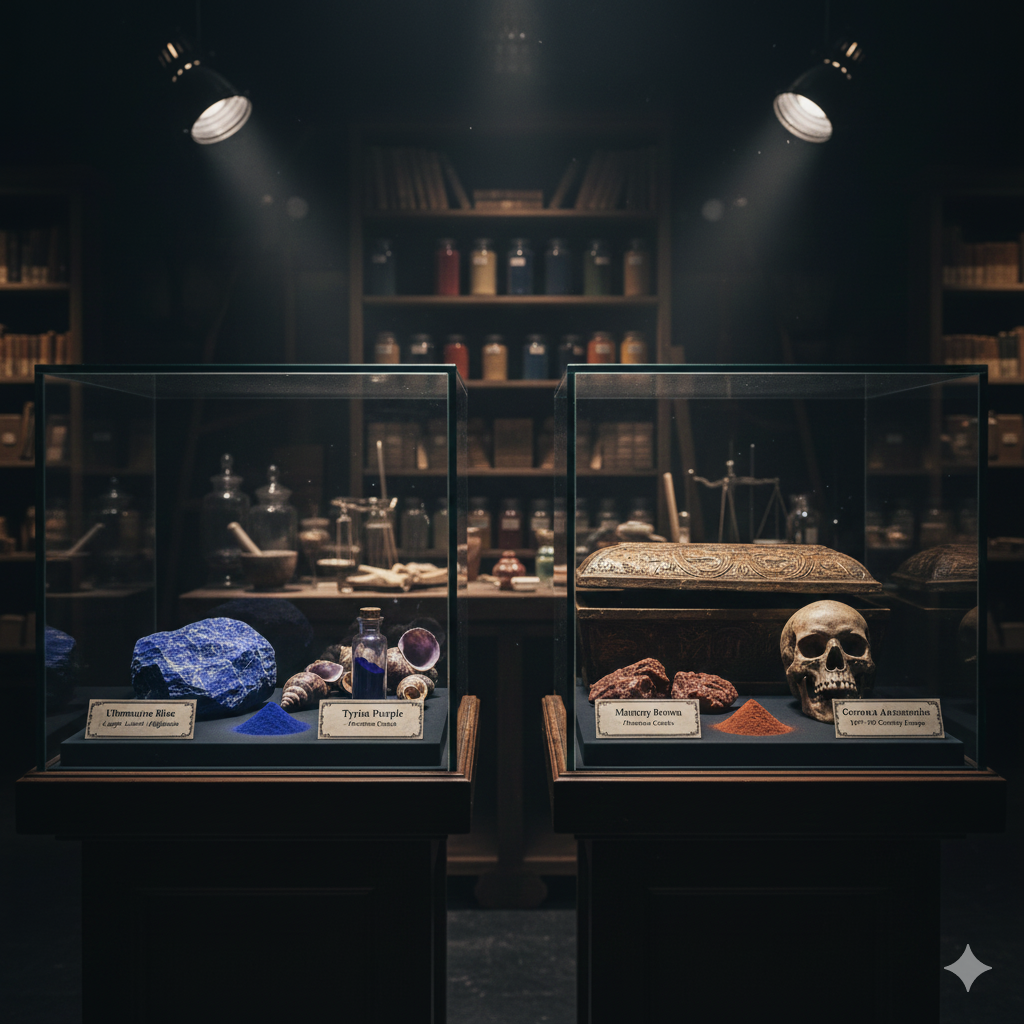
The most shocking statistic in pigment history belongs to Mummy Brown. This rich, asphalt-like brown paint was made by grinding up actual Egyptian mummies (both human and feline).
- The Stat: One single mummy could reportedly fuel a paint manufacturer’s supply for 20 years.
- The Shock: While you might think this ended in the 1800s, production of Mummy Brown actually continued until 1964, when the manufacturer C. Roberson finally ran out of mummies.
Then there is Tyrian Purple, the color of royalty. This dye was so expensive that it was often illegal for commoners to wear it.
- The Data: To produce just 1.4 grams of this dye (enough for the trim of a single garment), it required crushing 12,000 predatory sea snails (Murex).
Lapis Lazuli, used to make Ultramarine Blue, was historically priced higher than gold per ounce because it could only be mined in a specific valley in Afghanistan. For more on how these colors work, read about the science of pigments.
Modern Material Extremes
Today, science gives us Vantablack. Developed by Surrey NanoSystems, this isn’t just a dark paint; it is a forest of carbon nanotubes.
- The Stat: Vantablack absorbs 99.965% of visible light. If you painted a 3D object with it, your eyes would perceive it as a flat, 2D void because no light reflects off the contours to show depth.
We also have better data on oil paint drying times. Many beginners ask how long oil paint takes to dry.
- Surface Dry: 2 to 7 days.
- Full Cure (Safe to Varnish): 6 to 12 months.
- Chemical Hardening: The oxidation process continues for decades. A thick layer of white paint on a 50-year-old painting might still be chemically shifting deep inside.
Massive Scale: Weight, Area, and Volume Records
Art isn’t always delicate. Sometimes, it is measured in tons and acres.
The Heaviest & Largest Artworks on Record
In 2020, British artist Sacha Jafri created the world’s largest canvas painting, The Journey of Humanity.
- The Size: It covered 17,000 square feet (roughly four basketball courts).
- The Sale: It sold for $62 million, with proceeds going to charity.
However, regarding sheer weight, we look at Swedish artist David Aberg. His work Mother Earth is an outdoor painting that covers 8,000 square meters.
- The Weight: It reportedly required 100 tons of paint to complete.
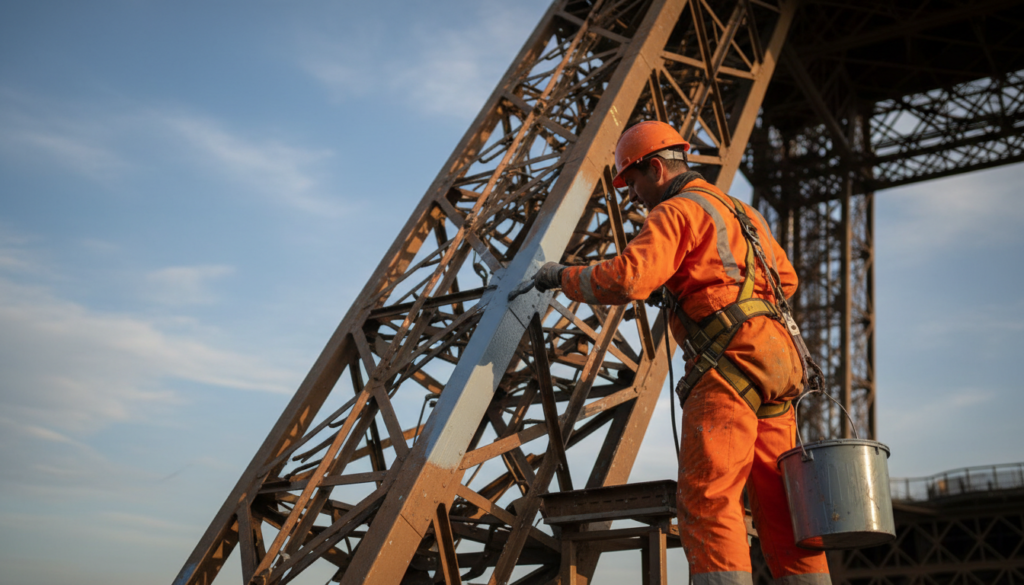
But the most famous “paint job” in the world belongs to the Eiffel Tower. It is not a traditional canvas, but the application of paint is vital for its survival.
- The Stat: Every seven years, the tower is repainted to prevent rust. This process requires 60 tons of paint, 1,500 brushes, and 25 painters working by hand (no spray guns allowed).
Micro-Statistics: The Mona Lisa’s Hidden Numbers
From the massive to the microscopic, let’s look at the Mona Lisa. Leonardo da Vinci used a technique called sfumato (smoky blending).
- The Layers: X-ray fluorescence spectroscopy has shown that there are over 30 layers of glaze and paint on her face.
- The Thickness: Some of these layers are only 1 to 2 micrometers thick (thinner than a human hair).
- The Brushstrokes: It is estimated that the painting contains roughly 12 million individual microscopic brushstrokes, many invisible to the naked eye. This level of detail is why Da Vinci’s influence remains unmatched.
Crime & Punishment: The Dark Side of Art Stats
The high value of art attracts high-stakes crime. The statistics surrounding art theft are surprisingly high, and the recovery rates are depressingly low.
The FBI Art Crime Team & Global Theft Data
According to the FBI and international police organizations:
- Volume: Approximately 50,000 pieces of art are stolen worldwide every year.
- Recovery: The recovery rate is brutal—less than 10% of stolen art is ever recovered. Some experts peg this number as low as 5%.
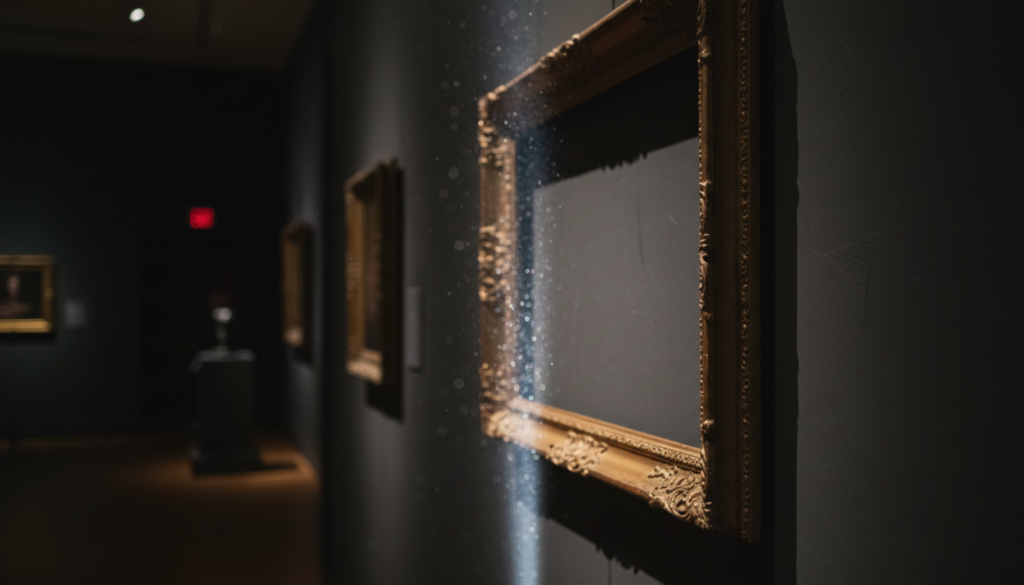
The “Holy Grail” of art crime statistics is the Isabella Stewart Gardner Museum heist of 1990. Two men dressed as police officers stole 13 works of art.
- The Value: The haul is valued at over $500 million, making it the single largest property theft in history. Despite a $10 million reward, the frames remain empty today.
Forgeries & Fakes
If you buy art, you might want to check the provenance. The Fine Art Expert Institute in Geneva released a startling statistic:
- The Stat: They estimate that 50% of the artwork circulating on the market is either forged or misattributed. Even if that number is conservative (say, 20%), it means millions of dollars are spent annually on fake history. Read more about famous painting mistakes and fakes here.
The Human Element: Artist & Visitor Demographics
Behind the canvas and the auction block are the people: the creators and the viewers. The statistics here reveal the anxiety of the artist and the short attention span of the modern observer.

The Odds of Success
If you are reading introduction to painting guides, you might wonder about your career prospects.
- Exhibition Odds: Roughly 1 in 5 art graduates will achieve a gallery exhibition in their lifetime.
- Superstar Status: Only 1 in 10,000 artists achieve “superstar” financial status (where works resell for high profit).
There is also a biological anomaly in the art world regarding handedness.
- The Stat: While only about 11% of the general population is left-handed, a disproportionately high number of famous artists (Leonardo da Vinci, Michelangelo, Raphael, M.C. Escher) were lefties. This suggests a link between laterality and creativity.
Museum Visitor Behavior
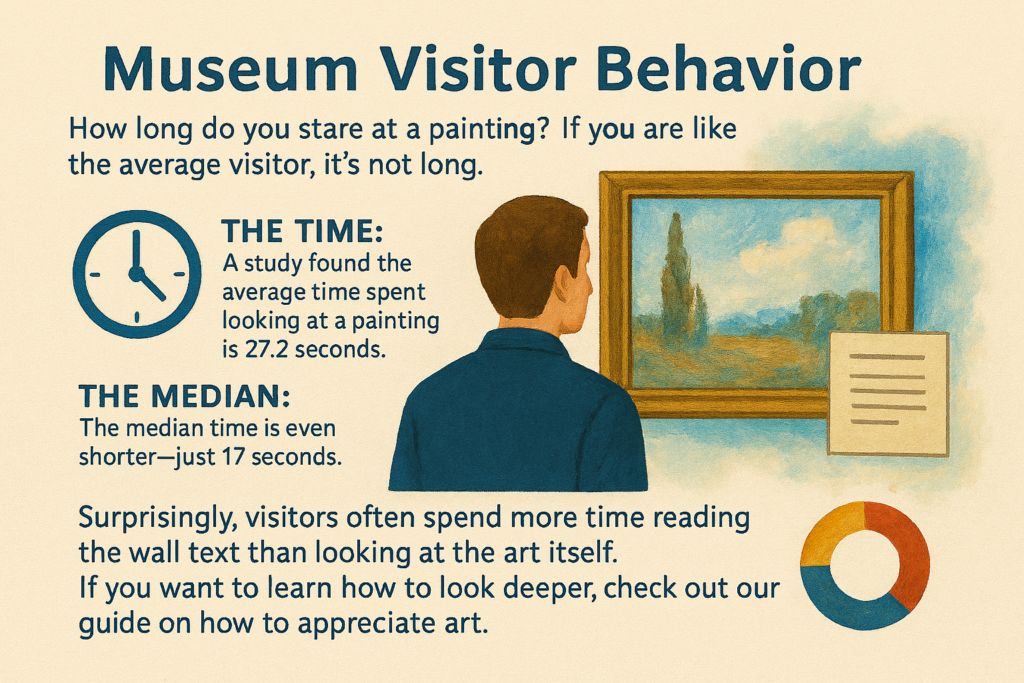
How long do you stare at a painting? If you are like the average visitor, it’s not long.
- The Time: A study found the average time spent looking at a painting is 27.2 seconds.
- The Median: The median time is even shorter—just 17 seconds.
- The Text: Surprisingly, visitors often spend more time reading the wall text than looking at the art itself. If you want to learn how to look deeper, check out our guide on how to appreciate art.
Demographics in Collections
A survey of major U.S. museums revealed a lack of diversity that the industry is trying to correct:
- Gender: 87% of artists in major permanent collections are male.
- Ethnicity: 85% of artists are white.
This data highlights why initiatives supporting women in art and global diversity are currently reshaping the market.
Summary of Mind-Blowing Art Data
Here is a quick reference table for the most startling statistics we’ve covered.
| Category | Statistic | Context |
|---|---|---|
| Pigment Cost | 12,000 Snails | Required to make 1.4g of Tyrian Purple dye. |
| Material Weight | 60 Tons | Amount of paint applied to the Eiffel Tower every 7 years. |
| Detail | 12 Million | Estimated microscopic brushstrokes in the Mona Lisa. |
| Crime | $500 Million | Value of the unrecovered Gardner Museum heist. |
| Crime | < 10% | Percentage of stolen art that is ever recovered. |
| Physics | 99.965% | Percentage of light absorbed by Vantablack. |
| Behavior | 17 Seconds | Median time a person spends looking at an artwork. |
| Market | 42% Gap | The auction price difference between male and female artists. |
| Career | 1 in 10,000 | Odds of an artist reaching “superstar” financial status. |
| History | 1964 | The year production of “Mummy Brown” paint finally ended. |
Conclusion: What These Numbers Tell Us About Value
These unusual art statistics prove that art is more than just oil on canvas. It is a massive global industry driven by scarcity, chemistry, and human psychology. Whether it is the 60 tons of paint protecting a monument or the invisible brushstrokes of a master, the data reveals the immense weight we place on creativity.
As the art market grows, these numbers will change. New pigments will be invented, records will be broken, and hopefully, that 17-second viewing time will increase as we learn to slow down and look closer.
Frequently Asked Questions (FAQ)
What is the most expensive paint pigment in history?
Historically, Lapis Lazuli (Ultramarine) was the most expensive, often costing more than its weight in gold during the Renaissance. In modern times, Tyrian Purple remains incredibly expensive to produce naturally, though synthetic versions exist.
How many brushstrokes are in the Mona Lisa?
While impossible to count exactly, rigorous analysis suggests there are roughly 12 million microscopic brushstrokes applied over years of layering glazes.
Is Mummy Brown paint still available?
No. The production of authentic Mummy Brown ceased in 1964 when the manufacturer ran out of mummies. Modern “Mummy Brown” paints are synthetic blends of kaolin, quartz, and iron oxides.
How much paint is on the Eiffel Tower?
The Eiffel Tower is painted with approximately 60 tons of paint every seven years. This is essential to protect the iron from rust and corrosion.
What are the odds of becoming a successful artist?
Statistically, about 1 in 5 art graduates will exhibit their work. However, achieving high-net-worth “superstar” status (where art serves as a major investment asset) is estimated at 1 in 10,000.
What is the value of unsolved art heists?
The total value is in the billions, but the most famous single unsolved case, the Isabella Stewart Gardner Museum heist, is valued at over $500 million.