Starting a new art hobby can feel intimidating. You stare at the white paper, and the paper stares back. But here is the secret that professional artists know: Abstract art is the ultimate cheat code for beginners.
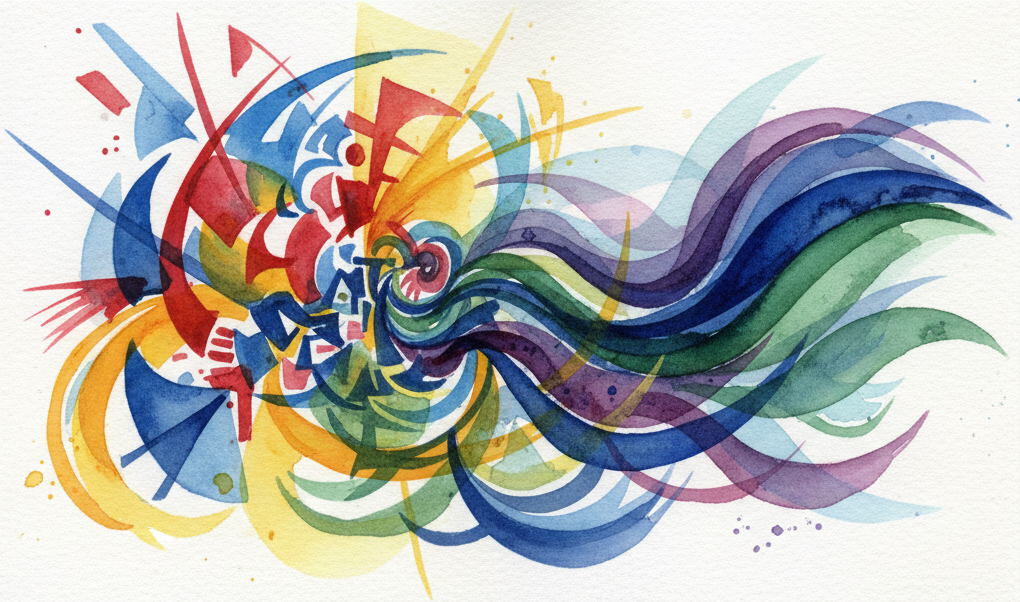
Unlike realistic painting, where a tree has to look like a tree, simple abstract watercolor painting ideas for absolute beginners focus on color, texture, and the sheer joy of watching paint move in water. There are no mistakes here—only “happy accidents.”
In this comprehensive guide, updated for the 2025 art market, we will strip away the complicated jargon. We’ll explore affordable supplies, break down the science of drying times, and give you 21 actionable projects you can finish in under 30 minutes.
Why Abstract Watercolor is the Perfect Entry Point
Many beginners think they need “talent” to paint. This is a myth. Painting is a skill, like typing or cooking. Abstract watercolor is particularly forgiving because the medium—water—does half the work for you.
Overcoming the “Fear of the Blank Page”
The biggest hurdle is making the first mark. Abstract art removes the pressure of perfection. You aren’t trying to capture a likeness; you are capturing a feeling. By focusing on abstract painting genres, you give yourself permission to play.
The “No Mistakes” Mindset: Embracing Blooms and Bleeds
In traditional painting, a “backrun” or “bloom” (where water pushes pigment away, creating a cauliflower edge) might be considered an error. In abstract art, this is a desirable texture! We actually try to create these effects on purpose.
Art Therapy Benefits: Stress Relief Stats
Did you know that just 45 minutes of art-making can significantly lower cortisol (stress hormone) levels? Engaging in wellbeing and mental health art exercises creates a state of “flow,” helping to quiet a busy mind.
Essential Supplies for the Budget-Conscious Beginner
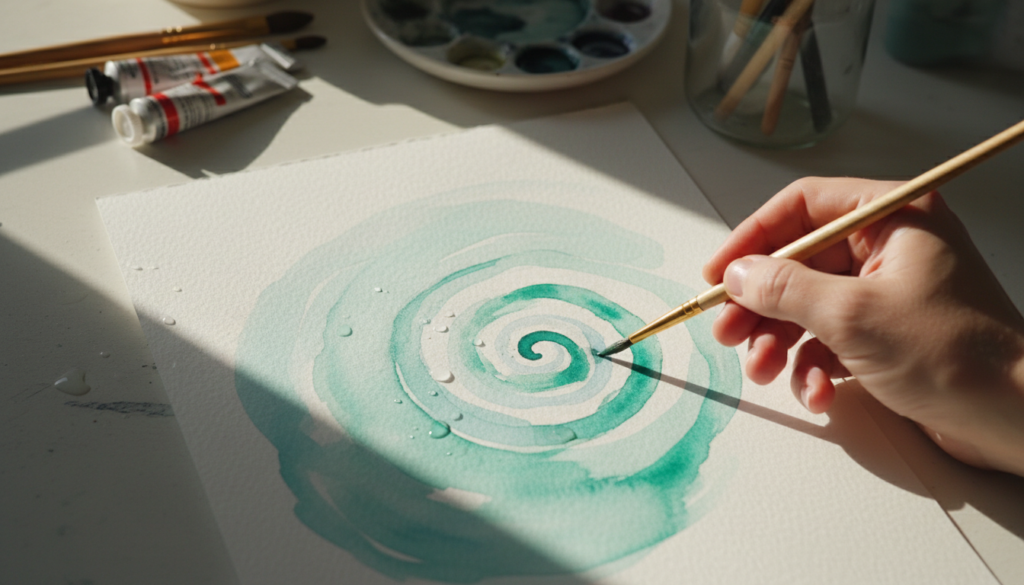
You do not need to spend hundreds of dollars to start. However, buying the wrong cheap supplies will make your life harder. Here is the breakdown of what is actually worth your money in 2025.
Paper Matters: 140lb vs. 300lb (The Buckle Factor)
Paper is the most important supply. Regular printer paper will fall apart. You need paper designed to hold water.
- 140lb (300gsm): The standard. It is affordable but will “buckle” (warp) if you use too much water. You often need to tape it down.
- 300lb (640gsm): Thick like cardboard. It can hold tons of water without warping, but it is expensive.
Paints: Student Grade (Cotman/Van Gogh) vs. Professional
“Student Grade” paints contain more filler and less pigment, but the technology in 2025 has made brands like Winsor & Newton Cotman or Van Gogh excellent for beginners. Avoid the $5 chalky sets from the toy aisle; they will look faded and frustrating.
Cost vs. Quality Comparison Table (2025 Market Data)
| Category | Product Type | Est. Cost (Set) | Pros | Cons |
|---|---|---|---|---|
| Paint | Kids/Toy Grade (e.g., Prang) | $6 – $10 | Very cheap | Chalky finish, fades fast (ASTM III), hard to mix. |
| Paint | Student Grade (Cotman/Van Gogh) | $21 – $40 | Vibrant, good flow, affordable | Less pigment load than pro, some fillers. |
| Paint | Pro Grade (Daniel Smith/Schmincke) | $80+ | Intense color, ASTM I Lightfastness | Expensive for practice. |
| Paper | 140lb (300gsm) | ~$0.50/sheet | Industry standard, easy to find | Buckles with heavy washes. |
| Paper | 300lb (640gsm) | ~$3.00/sheet | No warping, holds heavy texture | High cost per mistake. |
The Only 3 Brushes You Actually Need
Don’t buy the giant set of 50 brushes. You only need:
- Round Size 8: Your workhorse for everything.
- Round Size 4: For details.
- Flat Wash (1 inch): For wetting the paper quickly.
Check out this guide on the best paint brushes for beginners for specific recommendations.
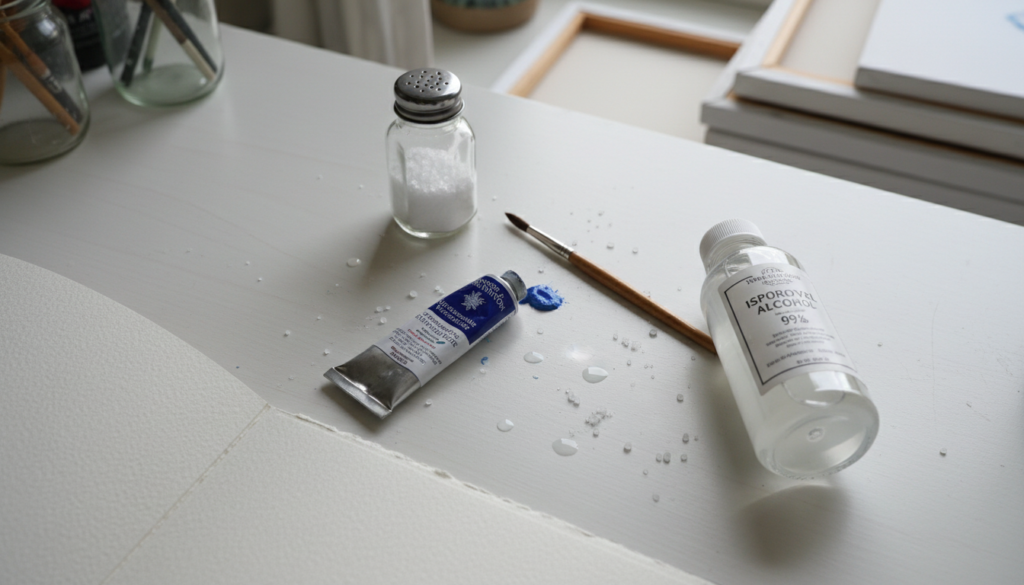
Unexpected Tools: Salt, Alcohol, Plastic Wrap, and Credit Cards
You have texture tools in your kitchen right now!
- Table Salt: Absorbs water, creating star-like speckles.
- Rubbing Alcohol: Repels water, creating lighter circles.
- Plastic Wrap: Traps pigment to create vein-like textures.
5 Foundational Techniques Before You Start
Before diving into the projects, let’s master the basics. You can read more about mastering watercolor painting techniques here.
The Wet-on-Wet “Magic Carpet”
Paint clear water onto your paper first. Then, touch your brush loaded with paint to the wet area. Watch the color explode and spread! This is the signature look of watercolor.
Wet-on-Dry Control
Paint on dry paper. The edges will be crisp and hard. This is great for geometric shapes or adding details over a dried background.
Creating Texture with Salt (Timing is Key)
The mistake beginners make is adding salt when the paint is too wet (it dissolves) or too dry (it bounces off). You want the paper to be glossy but not dripping (the consistency of melted butter).
The Alcohol Drop Effect
While the paint is wet, drop a single droplet of rubbing alcohol into the color. It will push the pigment away, creating a perfect light circle—great for bubbles or abstract cells.
Lifting & Glazing: How to Fix “Mud”
- Lifting: Use a thirsty (damp but clean) brush to “mop up” a mistake while it’s wet.
- Glazing: Waiting for one color to fully dry, then painting a transparent layer of a different color over it. This optical mixing prevents muddy colors.
21 Step-by-Step Abstract Project Ideas
Ready to paint? These simple abstract watercolor painting ideas for absolute beginners require zero drawing skills.
1. The “Lazy Landscape” (Stripes of Color)
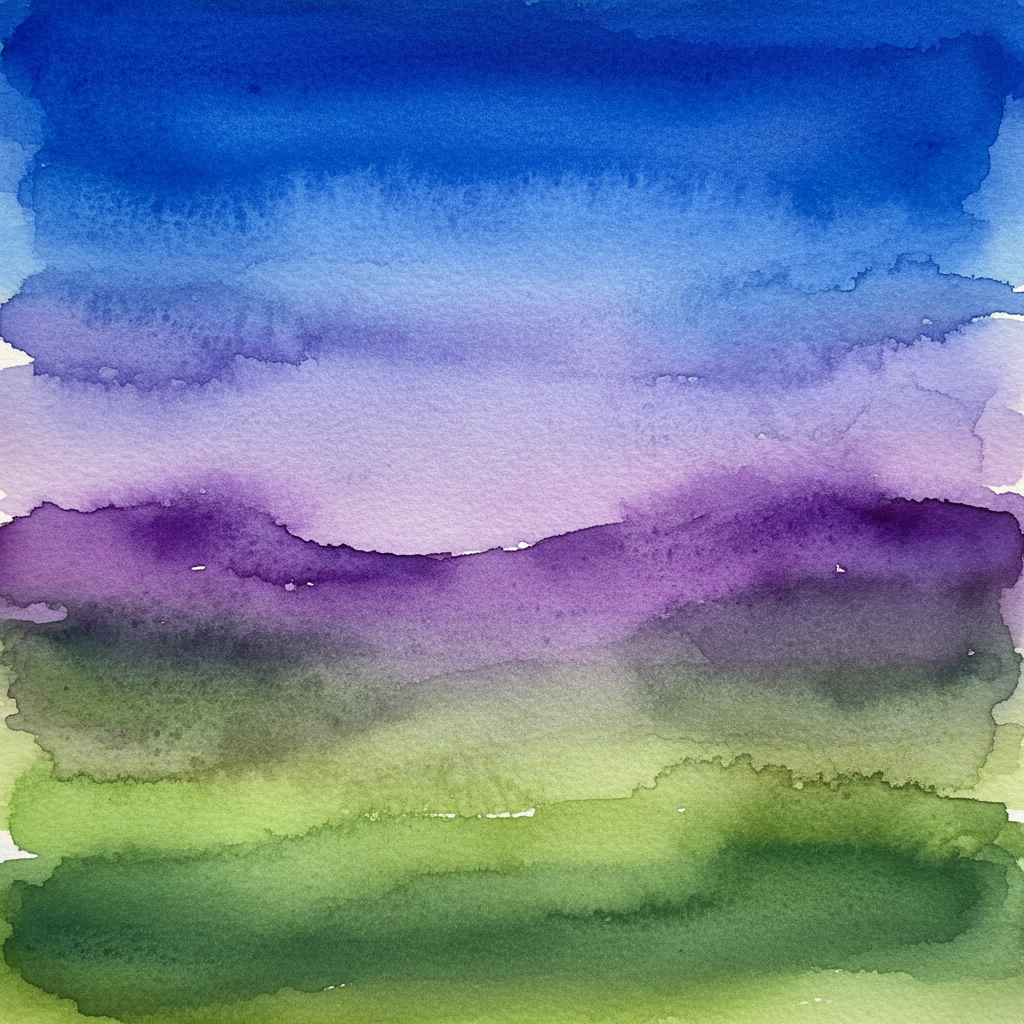
Paint a thick stripe of blue at the top (sky), a stripe of purple in the middle (mountains), and green at the bottom (ground). Let them touch and bleed into each other while wet. It implies a landscape without needing to paint details.
Related Guide: How to create a realistic landscape painting.
2. Geometric Gemstones (Washi Tape Resist)
Use Washi tape (or masking tape) to create a random geometric pattern on dry paper. Paint inside the shapes with different colors. Once dry, peel the tape to reveal crisp white lines.
3. The Bokeh Effect (Circles on Wet)
Wet your paper. Paint soft circles of yellow and pink. While wet, drop in smaller circles of darker red. The soft edges look like out-of-focus photography lights.
4. Galaxy Nebula (Black + Brights + Salt)
Paint patches of bright pink and blue. While wet, fill the rest with black or indigo. Throw table salt on the wet mix. When it dries and you rub the salt off, it looks like stars!
Learn more about color: Color Theory Basics.
5. The “Stained Glass” Spiderweb
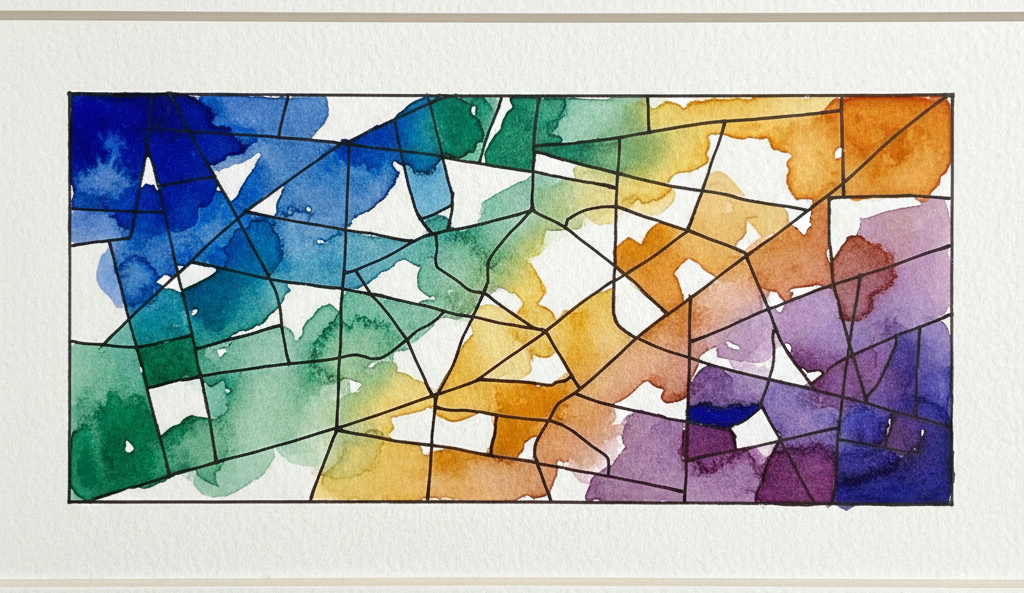
Draw random intersecting lines with a waterproof pen. Fill each resulting shape with water, then drop in two different colors and let them mix naturally within the lines.
6. Neurographic Art Lines (Relaxation Technique)
Draw a long, wandering line that crosses itself multiple times. Round out the sharp corners where lines intersect (thickening the connection). Paint the empty spaces. This is a powerful art therapy method.
7. Plastic Wrap Veins (Marble Texture)
Paint a juicy, wet wash of 2-3 colors. Immediately crumple a piece of plastic wrap and press it onto the wet paint. Leave it there until fully dry. Peel it off to reveal crystal/marble textures.
See texture tips: Watercolor sponge texture guide.
8. Negative Space Leaves
Paint the shape of a leaf with clean water. Then, paint the background around it with color. The white paper becomes the leaf. This teaches you to see negative space.
9. The “Bleeding Heart” Drips
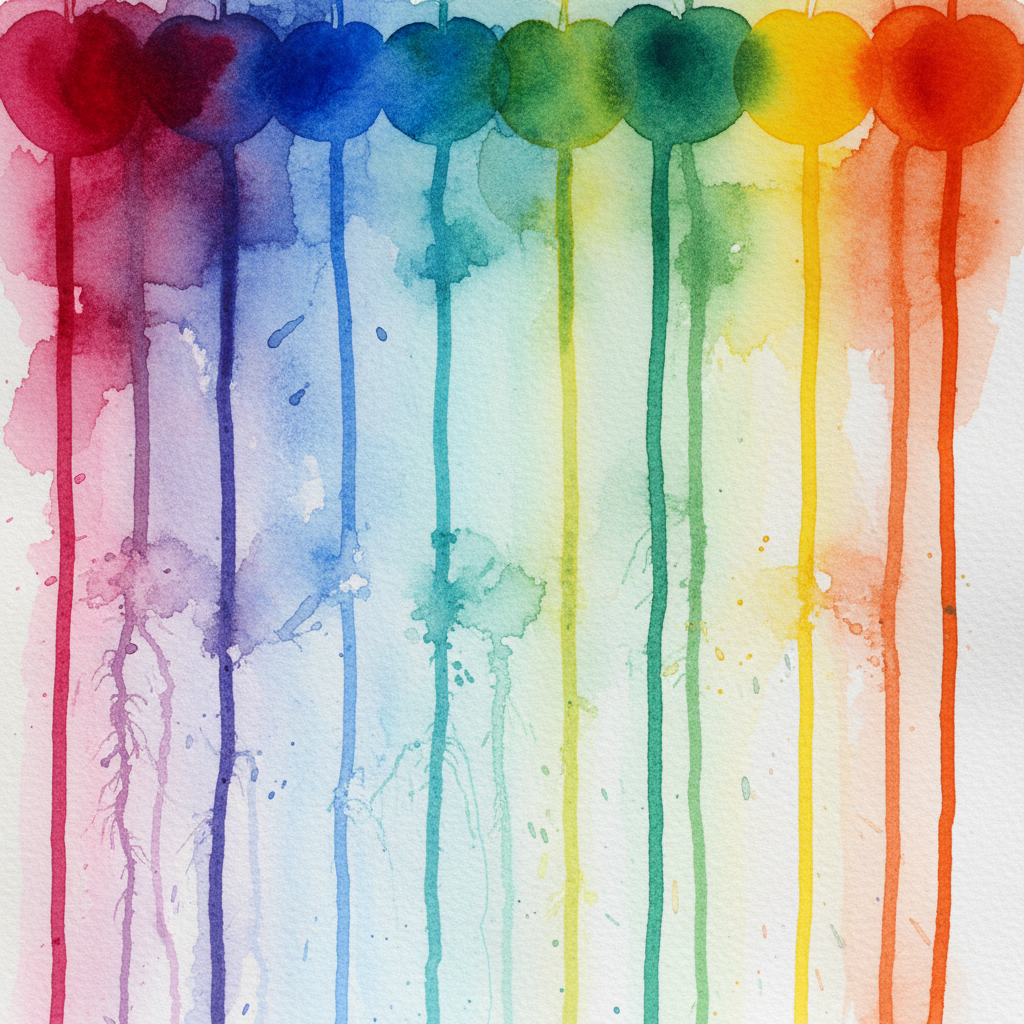
Paint a row of saturated circles at the top of your paper. Tilt the paper vertically and spray a little water. Watch the paint drip down in long, colorful streaks.
10. Metallic Accent Geodes
Paint concentric wobbly circles (like rings in a tree trunk) using earth tones. Once dry, add thin lines of metallic gold watercolor or marker between the layers for a geode look.
11-21. Rapid Fire Abstract Prompts
- Blind Contour: Look at an object, draw it without looking at the paper, then color the weird shapes.
- Splatter Art: Cover portions of the paper with scraps, splatter paint over the rest.
- Monochrome Study: Use only one color, but vary the amount of water to get light and dark values.
- Bubble Wrap Stamp: Paint on bubble wrap, flip it over, and press onto paper.
- Straw Blowing: Drop wet paint and blow on it with a straw to create “branches.”
- Color Blocking: Rectangles of solid color that do not touch.
- Wet-on-Wet Gradient: Practice fading one color smoothly into white.
- Bloom Garden: Intentionally drop water into drying paint to create “flowers.”
- Pixel Art: Paint a grid of small squares, varying the hue slightly in each.
- Brushstroke Drills: Fill a page with different marks your brush can make.
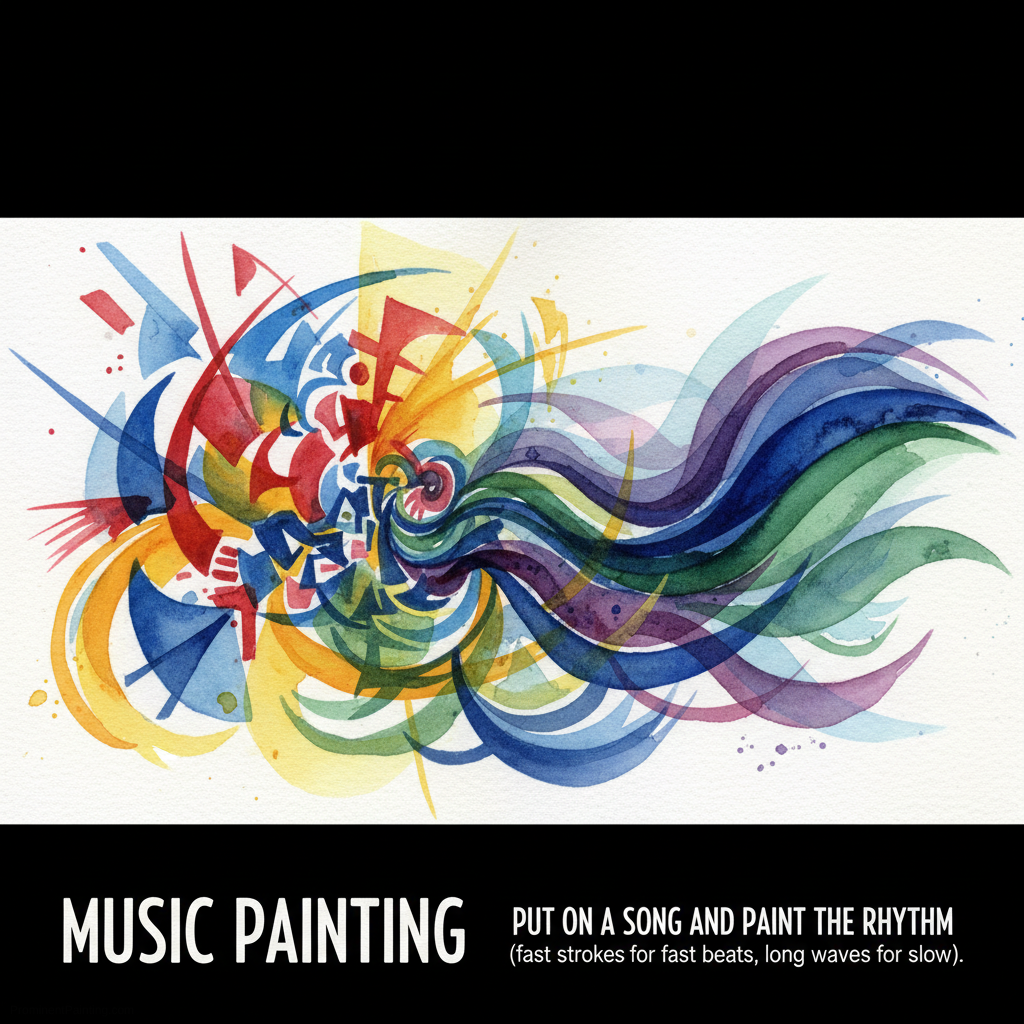
- Music Painting: Put on a song and paint the rhythm (fast strokes for fast beats, long waves for slow).
The Science of Drying: Patience vs. Humidity
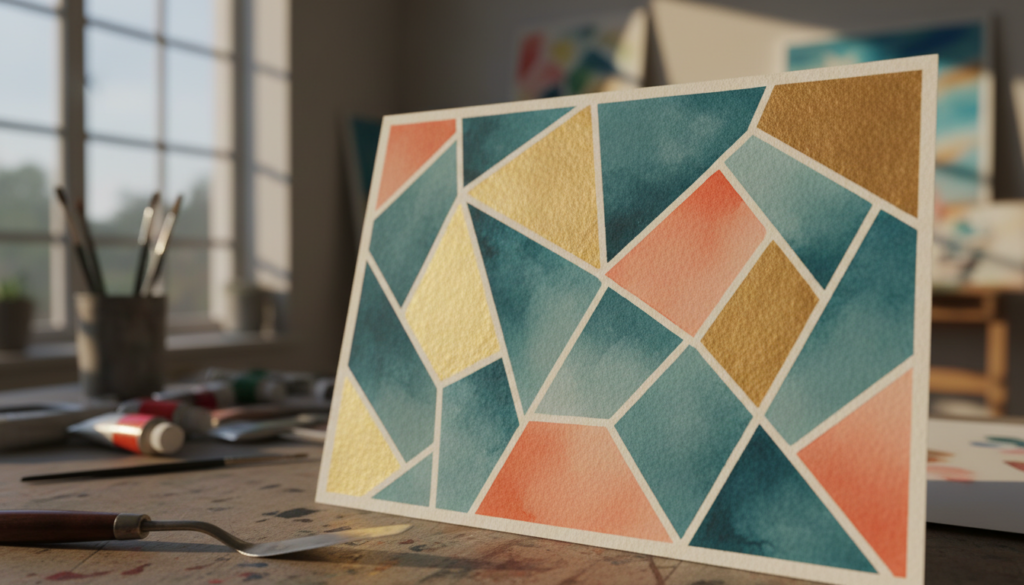
A common question is, how long does watercolor take to dry?. The answer depends on your environment.
Understanding Drying Phases
- Glossy: Wet and shiny. Do not touch! Ideally used for adding salt or wet-in-wet.
- Satin: Looks dull but feels cool to the touch. Danger Zone! If you touch this now, you will ruin the texture.
- Matte: Room temperature and dry. Safe to add new layers (Glazing).
How Humidity Affects Your Workflow
- Low Humidity (<40%): Paint dries in 5-10 minutes. You must work fast.
- High Humidity (>60%): Can take 45-60 minutes. Paper stays wet longer, increasing the risk of unwanted “blooms.”
- Pro Tip: If you are impatient, use a hair dryer on the low/cool setting, held 12 inches away.
Troubleshooting: The “Stupid Questions” You Were Afraid to Ask
Don’t worry, every artist has asked these. For more fixes, check out our guide on fixing painting mistakes.
“Why is my paper peeling/pilling?”
You are overworking the paper. If you scrub the same spot with your brush too many times, the paper fibers break and roll up into little balls (pilling). Lay the stroke down and leave it alone.
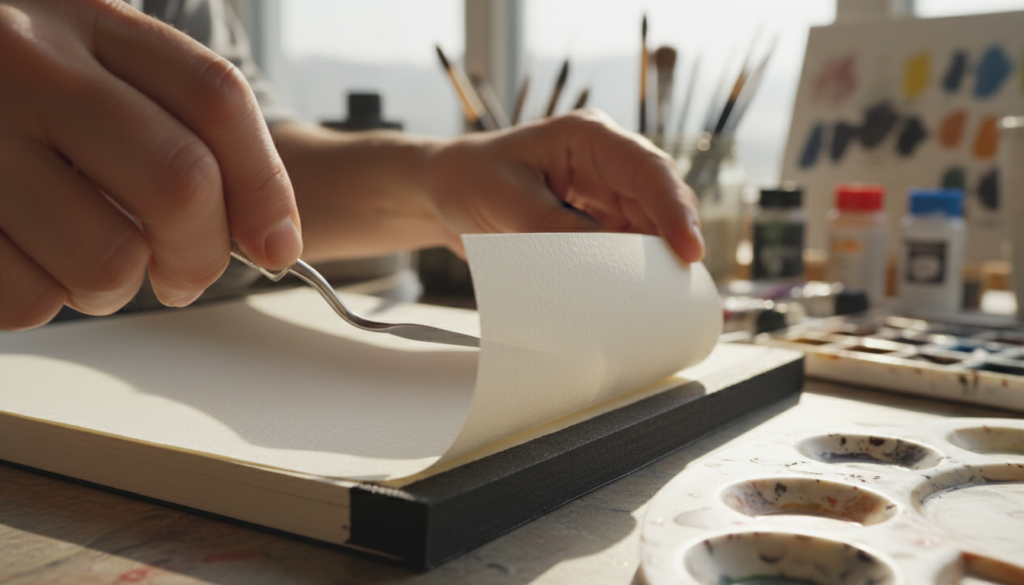
“How do I separate sheets from a watercolor block?”
A “block” is a pad of paper glued on all four sides to prevent buckling. Look for a small gap in the glue (usually at the top center). Insert a palette knife or a dull credit card (not a sharp blade!) and slide it around the edge to pop the sheet off.
“My brush water is black, am I ruining my brush?”
No. But dirty water makes dirty paintings. Use two jars: one for “dirty” rinsing and one for “clean” water to mix fresh paint.
“Can I paint over a mistake?”
Unlike acrylics or oils, watercolor is transparent. You can’t just paint white over a mistake. However, you can “lift” color with a damp sponge or turn the mistake into a darker abstract shape.
Conclusion: Building Your Daily Practice
The most difficult part of watercolor is consistency. To keep the momentum going, set up a “5-Minute Station.” Keep a small pad, a water cup, and a small paint set on your desk. If you have to dig supplies out of a closet, you won’t paint.
Start with these 21 ideas. Experiment with abstract painting styles, and remember: if you enjoyed the 20 minutes you spent painting, the painting is a success, regardless of how it looks.
[YOUTUBE: 5 Easy Abstract Watercolor Techniques for Beginners]
FAQ
How do I keep my watercolor paper from buckling?
The best way is to use 300lb (640gsm) paper, which is thick enough to resist warping. If you use standard 140lb paper, tape all four edges down to a board using masking tape before you start, and leave the tape on until the paper is 100% dry.
Is expensive watercolor paper worth it for beginners?
Yes. Cheap paint on great paper looks good; expensive paint on cheap paper looks bad. If you have a limited budget, prioritize 100% Cotton Rag paper over expensive paints.
Why are my watercolor paintings muddy?
Mud happens when you mix too many colors, specifically complementary colors (like red and green) together. To prevent this, let your first layer dry completely before painting over it (glazing), or limit your color palette to 3 colors.
How do you clean watercolor brushes properly?
Rinse them in water until clear. Reshape the tip with your fingers and lay them flat to dry. Never leave a brush sitting bristles-down in a water cup; it will permanently bend the bristles and ruin the point.