Protecting valuable paintings has never been more critical for collectors and institutions worldwide. Imagine waking up one morning to discover your beloved painting—the one you’ve cherished for years—has vanished from your wall. Unfortunately, art theft isn’t just something that happens in movies. Every year, thousands of valuable paintings disappear from homes, galleries, and museums around the world, making protecting valuable paintings a top priority for anyone who owns fine art. Whether you’re safeguarding a treasured family heirloom, building a growing art collection, or managing an institution responsible for cultural masterpieces, understanding the essential strategies for protecting valuable paintings will help you secure your investment and preserve your artistic legacy for generations to come..
Key Points Summary:
- Art theft affects both private collectors and institutions, with insider threats being the most dangerous risk
- Multi-layered security combines physical protection, electronic monitoring, and strict operational procedures
- Proper documentation and insurance coverage are just as important as alarms and locks
- Modern technology like RFID tags and LiDAR systems provide advanced protection
- Immediate registration on global databases dramatically reduces stolen art’s resale value
- Environmental monitoring protects paintings from both theft and damage
- Professional mounting systems and security hardware deter opportunistic theft
Understanding the Real Threats to Your Valuable Paintings
How Art Thieves Really Operate
You might picture art thieves as sophisticated criminals rappelling through skylights like in heist movies. While external break-ins do happen, the reality is often more concerning. The biggest threat to valuable paintings today comes from people who already have access to them—what security experts call “insider threats.”
An insider is anyone connected to your collection who knows where your paintings are kept and understands your security setup. This could be employees, contractors, maintenance workers, or even security guards. These individuals become threats when they’re motivated enough to steal artwork or help outside accomplices access it.
The famous 1911 theft of the Mona Lisa from the Louvre happened because an employee simply walked out with it hidden under his coat. More recently, the 1990 Isabella Stewart Gardner Museum heist saw thieves dressed as police officers gain entry when a guard broke protocol by letting them through an employee entrance. These cases prove that even the most famous paintings need protection beyond just fancy alarm systems.
The Smart Approach: Making Stolen Art Worthless
Modern security experts use something called “reward reduction strategy.” Here’s the brilliant idea behind it: instead of just trying to stop thieves from taking your painting, you make it so difficult for them to sell it afterward that stealing becomes pointless.
Think about it—if a thief steals a painting that’s immediately recognizable and registered in global databases, they’re stuck with something they can’t sell. It becomes a liability rather than a valuable prize. This is why documentation and provenance are so critical to security.
The Three Essential Layers of Painting Protection
Protecting valuable paintings requires thinking like both an architect and a security guard. You need three distinct but interconnected defense layers working together:
1. Physical Protection: The Foundation
Secure Mounting Systems
Your first line of defense is physically attaching your paintings to the wall. Regular picture wire won’t cut it for valuable artworks—thieves can remove those in seconds.
Professional security mounting uses specialized hardware with three mounting plates (two on top, one on the bottom of the frame) that connect to wall brackets. The real magic is the T-Head security screw that locks everything in place. You need a special security wrench to unlock it, which adds precious minutes that thieves don’t have when alarms are blaring.
This might seem like overkill for your home, but remember: most thieves rely on speed. Adding just a few minutes to their timeline often means they’ll give up and flee empty-handed. If you’re interested in framing your paintings properly, security mounting should be part of that conversation.
Structural Protection
For extremely valuable pieces (we’re talking about paintings worth substantial amounts), consider creating dedicated vault spaces with reinforced walls. These professional storage areas include independent climate control and secure communication systems that serve both preservation and security goals.
If you need to move or temporarily store paintings—maybe during renovations—always use a locked room that’s dry, well-ventilated, and doesn’t contain any water or steam pipes.
2. Electronic Monitoring: Your Digital Watchdog
Wireless Art Protection Systems
Modern art security has become incredibly sophisticated yet surprisingly discreet. Systems like Fortecho and Art Guard MAP use invisible wireless sensors that won’t damage your paintings or interfere with how they look on your wall.
These sensors use advanced RFID (Radio Frequency Identification) technology to detect movement or tampering in real-time. They’re proven on blue-chip art and are actually certified by insurance companies, which means they meet strict professional standards.
Environmental Monitoring—The Hidden Benefit
Here’s something fascinating: the best security systems do double duty. RFID tags don’t just track if someone’s moving your painting—they also monitor temperature and humidity around it.
Why does this matter for security? If environmental conditions suddenly change, it could signal a security breach. Maybe someone disabled your HVAC system as a distraction, or cut power to security systems. But more commonly, these sensors protect your painting’s value by alerting you to conditions that could damage delicate canvas or oil paint layers before permanent harm occurs.
Advanced Detection: LiDAR Technology
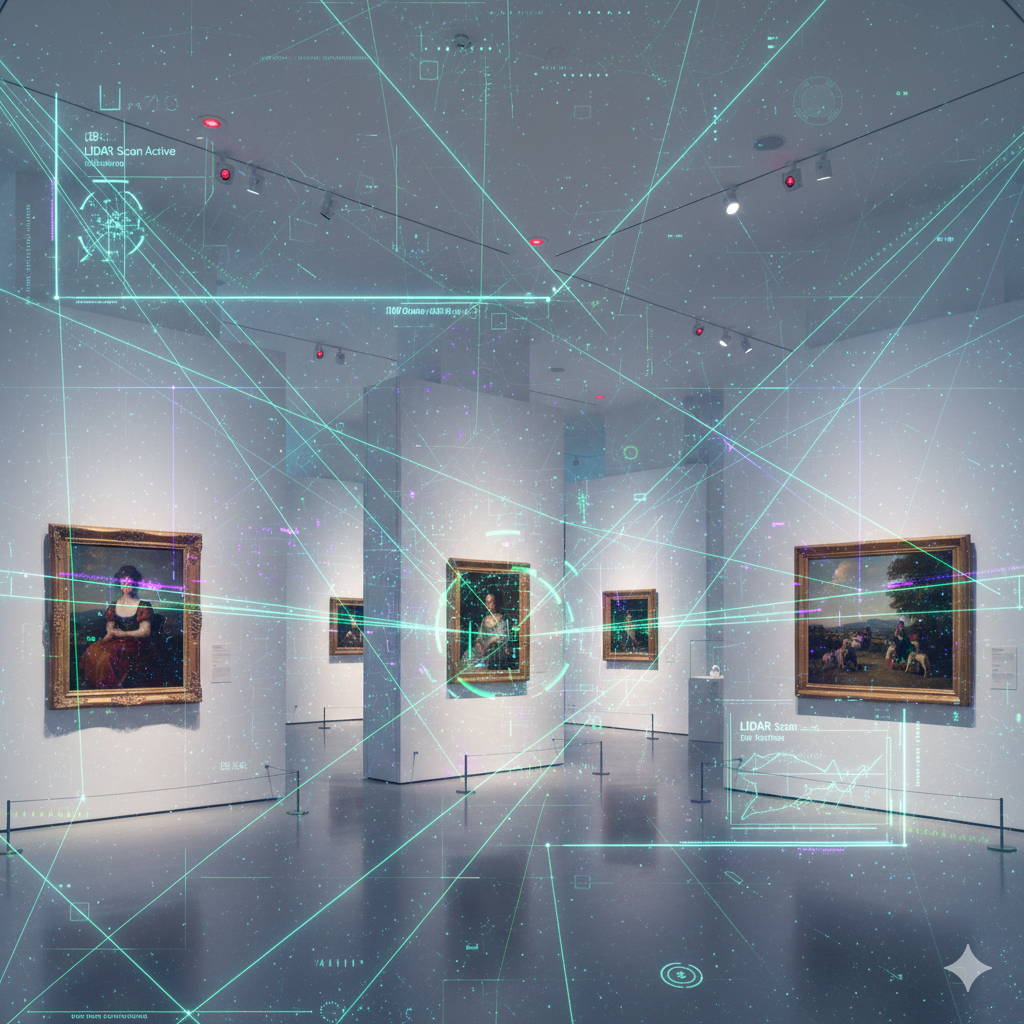
For institutions and serious collectors, LiDAR (Light Detection and Ranging) represents the cutting edge of art security. This technology uses rapid laser pulses to create detailed 3D maps of protected spaces, detecting both moving and stationary objects with incredible precision—regardless of lighting conditions.
The real advantage? LiDAR dramatically reduces false alarms. Traditional motion detectors often trigger on shadows, pets, or environmental changes. LiDAR’s spatial accuracy means fewer false alarms, which leads to faster police response times when real threats occur.
3. Operational Protocols: The Human Element
Technology alone can’t protect your paintings. You need solid procedures and trained people to make security work.
Staff Vetting and Training
Anyone with access to your collection needs thorough background checks. For institutions, this includes contacting references and verifying employment history and credentials before hiring.
Museums and galleries must enforce ethical guidelines. The ICOM Code of Ethics is clear: museum personnel cannot borrow items from collections for personal use, even temporarily. Staff should also be restricted from personal art dealing or accepting loans from their own collections to the institution—these situations create conflicts of interest that open doors to insider theft.
Training is crucial too. Staff should know how to spot and report suspicious behavior, what to do if keys or access badges go missing, and why they should never discuss security systems or artwork values publicly.
Access Control
In collection spaces, implement a “request and receive” policy—no browsing through stored works alone. Lock high-value items in secure cabinets, and consider requiring physical checks when people leave, like bag inspections.
Here’s an important tip that many collectors overlook: don’t publish floor plans or detailed collection maps online. This information becomes a blueprint for criminals planning surveillance and attacks. While digitizing collections is important for cataloging, internal security details must stay confidential.
Protecting Your Investment: Documentation and Insurance
Creating Bulletproof Documentation
Security begins not with installing alarms, but with meticulous record-keeping. You need comprehensive documentation for both insurance claims and recovery efforts if theft occurs.
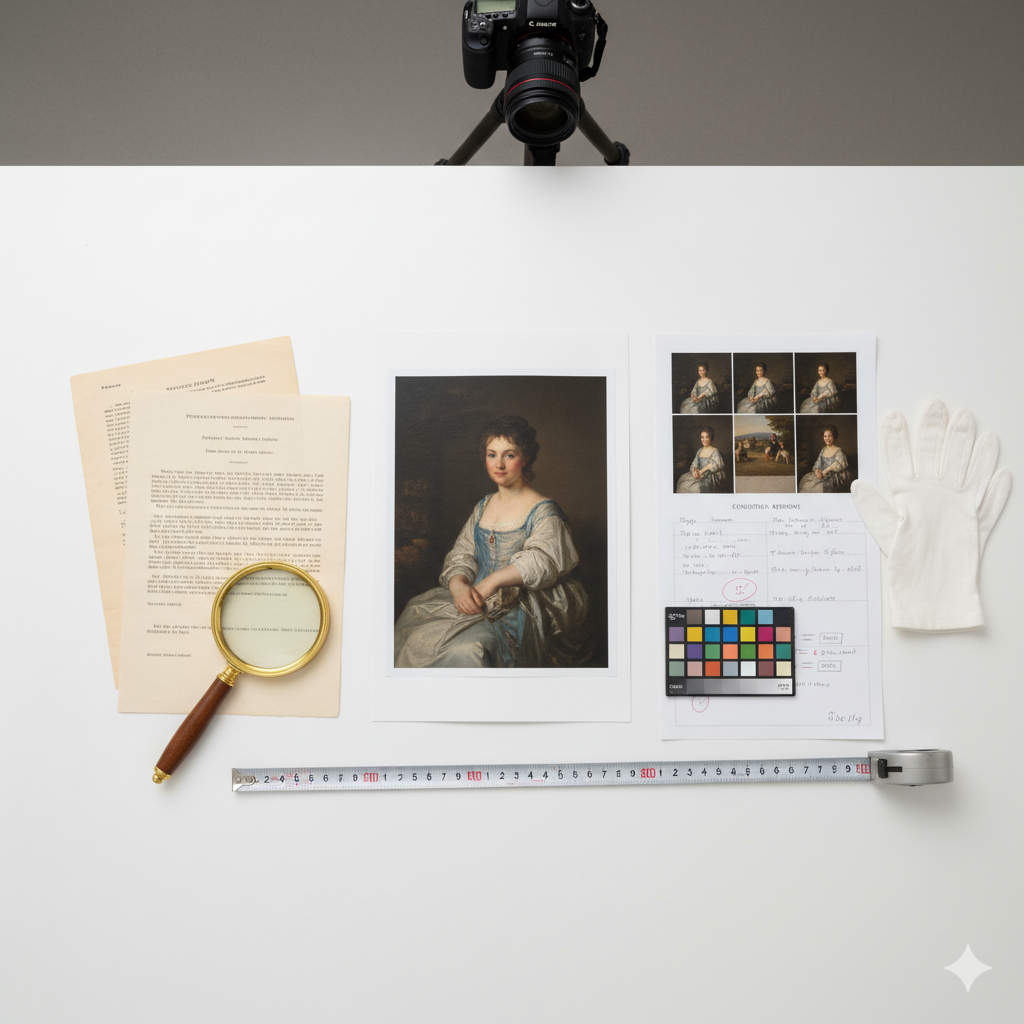
Your documentation checklist should include:
- Artist information: Full name, dates, nationality
- Artwork details: Title, creation date, medium (e.g., oil painting on canvas)
- Physical specifications: Exact dimensions, weight
- Frame details: Material, style, condition, any special features
- Identifying marks: Signatures, inscriptions, stamps, labels
- Condition report: Existing damage, restoration history, wear patterns
- Provenance: Complete ownership history, exhibition history, publication records
- High-resolution photographs: Multiple angles, close-ups of signatures and unique features
This documentation transforms from paperwork into a powerful security tool. When you promptly register these details on global databases after a theft, you tank the painting’s market value. Thieves can’t sell what everyone’s looking for.
Choosing the Right Insurance Coverage
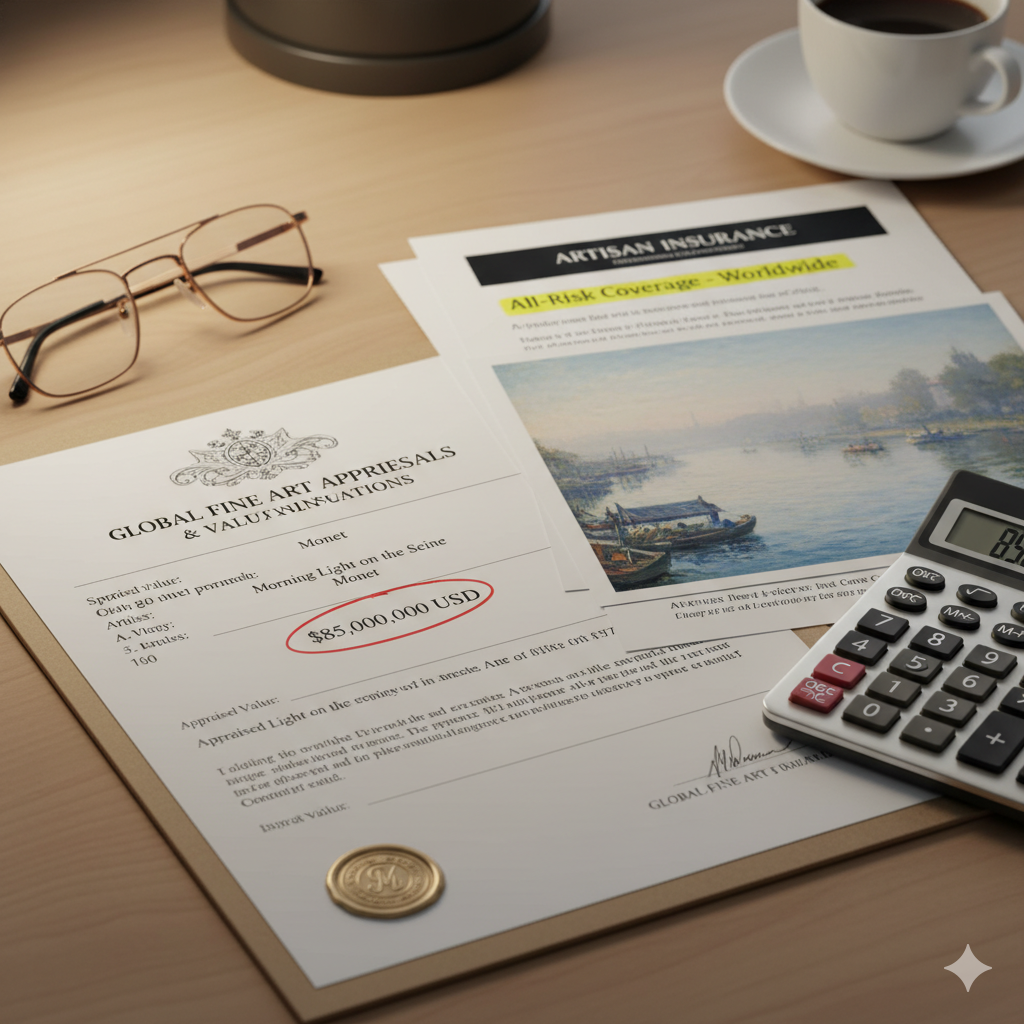
Standard homeowners insurance won’t adequately cover valuable art collections. You need specialized art insurance, typically added as a separate “rider” to your policy.
The gold standard is “All-Risk” coverage, which protects against everything except specifically excluded perils (like war, neglect, or inherent deterioration). Quality policies should include:
- Theft coverage: Full replacement value if stolen
- Accidental damage: Protection for drops, spills, or mishaps
- Loss-of-use coverage: Compensation if your painting is temporarily unavailable
- Forgery protection: Financial protection if you unknowingly purchase a fake
- Loan coverage: Protection when lending pieces to exhibitions
Insurance companies require detailed security information before issuing policies. They want to know about your alarm systems, lock quality, whether you have a concierge or security service, and your location specifics. Better security equals better insurance rates and coverage options.
Advanced Security for Institutions: Museums and Galleries
Meeting Professional Standards
Museums and galleries face unique challenges. They must balance public access with protecting irreplaceable masterpieces, often including loaned works from national collections.
To qualify for significant loans or government programs like the UK’s Government Indemnity Scheme, institutions must demonstrate strict adherence to security requirements covering perimeter protection, display fixture strength, alarm monitoring, and internal zoning. Failing to meet these standards means missing out on important exhibitions and vital funding.
Smart Exhibition Design
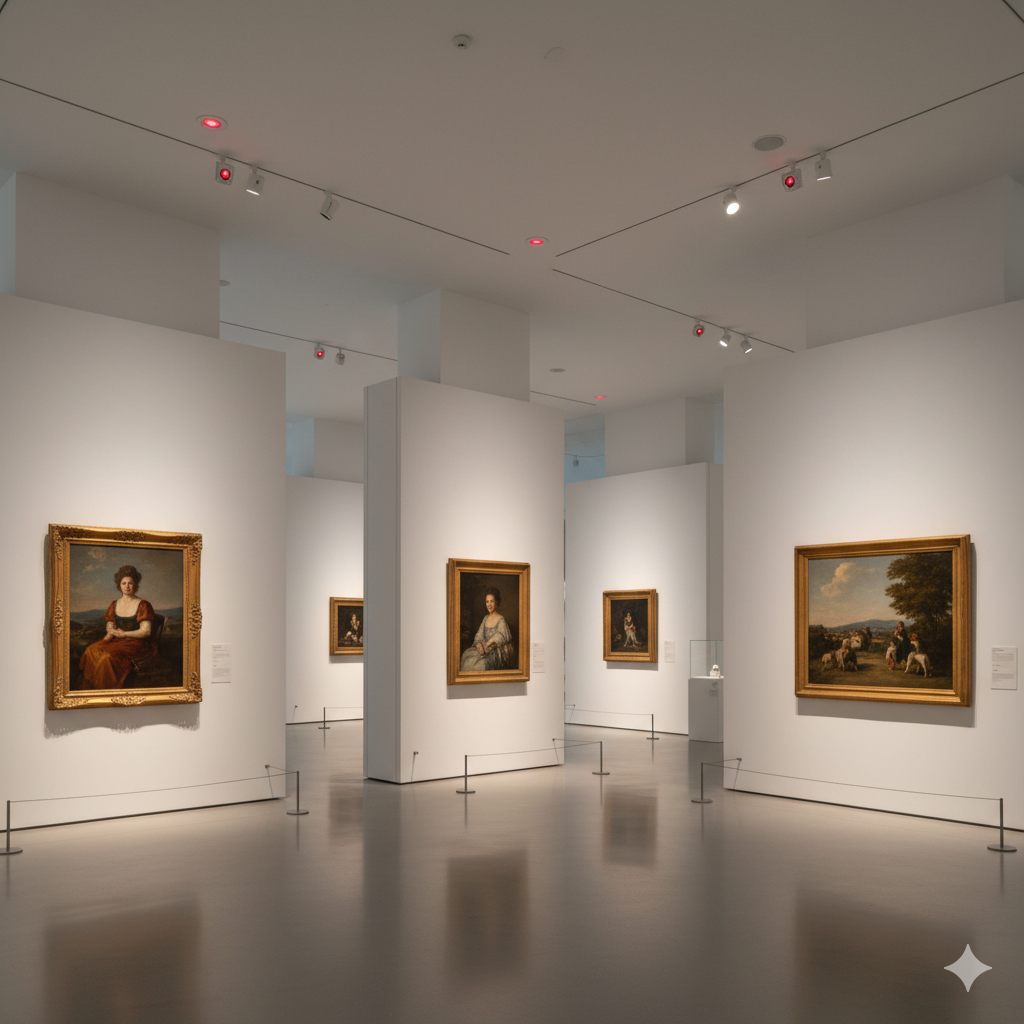
Security starts with spatial planning. Exhibition layouts directly affect how well staff can monitor artwork. Design spaces with clear sightlines for passive surveillance, allowing invigilators to watch large areas efficiently.
Never place valuable works near exits or small objects in poorly-visible alcoves. Modular barriers and signage give staff flexibility to quickly adapt security configurations when visitor patterns change or certain pieces prove unexpectedly popular.
The smartest institutions involve security consultants early during building design, ensuring the architecture supports security needs rather than requiring expensive retrofitting later. This is especially important for contemporary art institutions dealing with diverse artwork types.
Advanced Detection Systems
Laser Curtain Sensors
These specialized sensors cast invisible laser beams around valuable pieces. If anyone breaks these beams, the system immediately activates alarms. They’re perfect for museum settings because they don’t damage artwork and work independently of ambient lighting conditions.
Perimeter Hardening
All exterior doors, windows, and hatches need high-quality, pick-resistant locks. Doors with windows or adjacent to windows require double cylinder locks to prevent easy break-ins.
Advanced access control—including card readers and biometric systems—restricts unauthorized personnel from sensitive areas like storage rooms, conservation labs, and vault spaces. Visitor management systems track who enters collection spaces, maintaining secure entry and exit logs.
Anti-Theft Hanging Systems
Unlike residential mounting, museums often need flexibility for frequent rehangings while maintaining security. Professional systems like STAS j-rail max are specifically designed as anti-theft picture rails, incorporating security hooks that prevent unauthorized lifting or manipulation of heavy paintings.
Technology Comparison: Choosing Your Security System
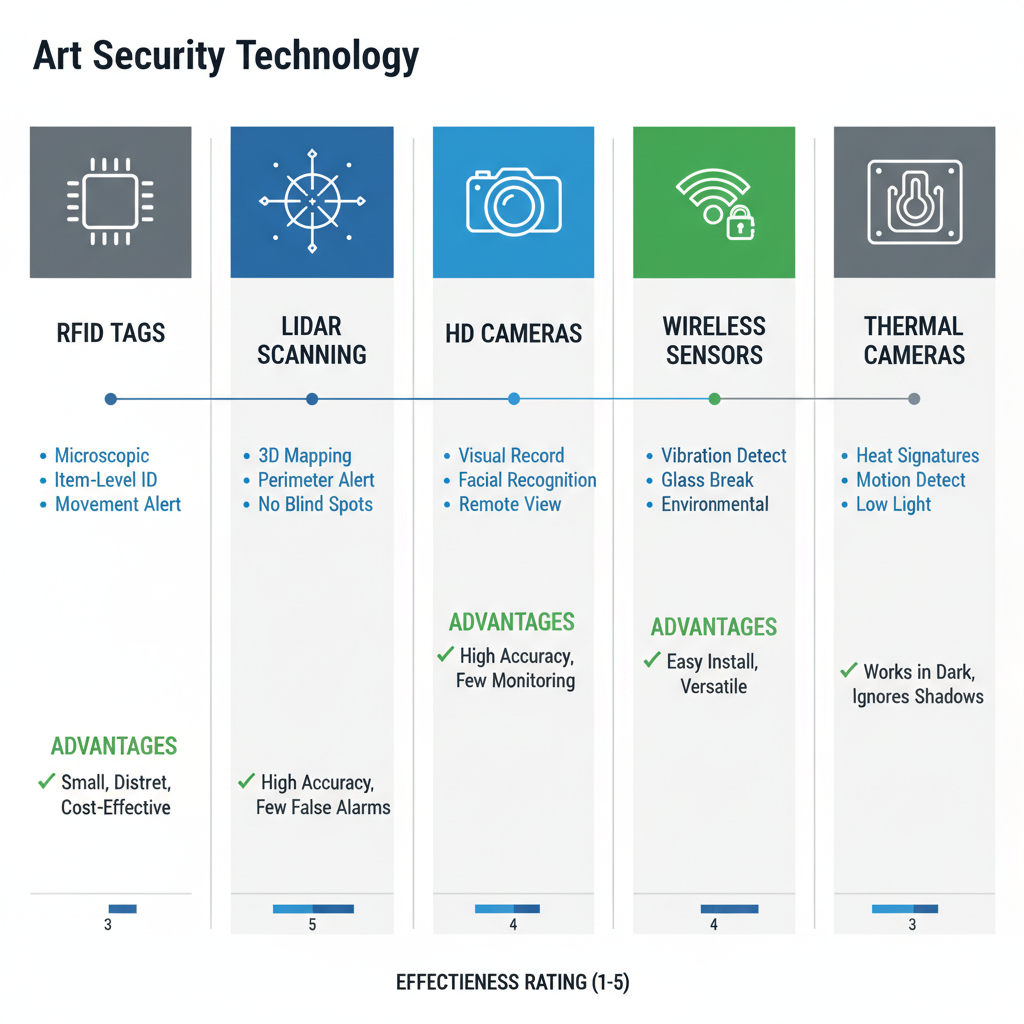
| Technology | Best For | Primary Function | Key Advantages |
|---|---|---|---|
| RFID/RTLS Tags | Homes, galleries, museums | Real-time location tracking, environmental monitoring | Discreet, non-destructive, provides continuous position and climate data |
| LiDAR Systems | Galleries, museums, storage | Precise 3D zone detection | Immune to lighting changes; minimizes false alarms |
| Laser Curtains | Gallery displays, museums | Invisible detection fields | Non-contact; immediate signaling; lighting-independent |
| Fortecho/Art Guard MAP | Private collections, small galleries | Wireless object-level monitoring | Insurance-certified; proven on valuable art |
| Thermal Detection | Museum perimeters, outdoor spaces | Outdoor intrusion detection | Functions in extreme temperatures (-40°F to 138°F) |
Post-Theft Recovery: Your Action Plan
Immediate Registration on Global Databases
If the unthinkable happens and your painting is stolen, speed is everything. Immediately registering the theft on global databases makes the painting nearly impossible to sell legitimately.
The Art Loss Register (ALR)
The ALR maintains the world’s largest private database of stolen art. Here’s how it works:
- Registration: Report the theft immediately. There’s a small administrative fee (around $20), with additional fees only if they successfully locate your painting.
- Search and Due Diligence: The ALR conducts hundreds of thousands of searches annually. Dealers, auction houses, and experts worldwide check items against this database before buying or handling artwork.
- Recovery Assistance: If your painting surfaces, the ALR’s specialist team helps negotiate its return. They charge a location fee (5% of ultimate benefit) if they find it, or a recovery fee (20% of ultimate benefit, waiving the location fee) if you hire them to handle negotiations.
Law Enforcement Databases
Also register with official international databases:
- FBI National Stolen Art File (NSAF): Accepts submissions from law enforcement agencies globally
- INTERPOL Works of Art Database: Features image-matching software and is recognized in the 1995 UNIDROIT Convention for cultural property
This multi-database approach creates a global net that catches stolen artwork when thieves attempt to sell it.
Security Technology in Action: Real-World Applications
Learning from Security Failures
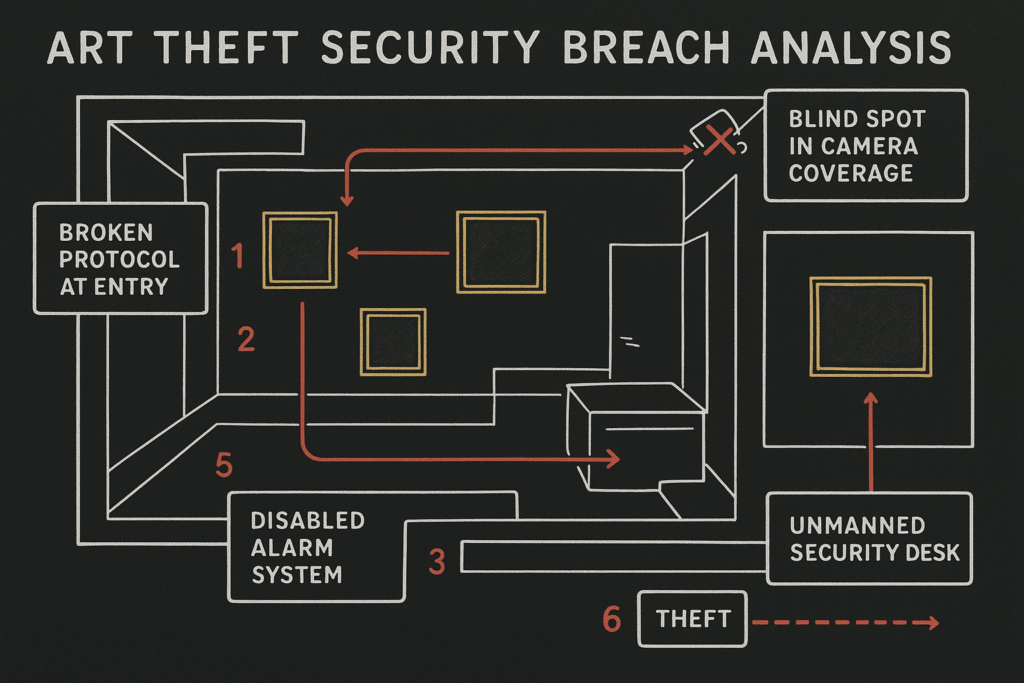
The 1990 Isabella Stewart Gardner Museum heist remains unsolved because procedural failures trumped technology. Two thieves dressed as police officers gained entry when the guard broke protocol by allowing them through an employee entrance and stepping away from the security desk.
This $500 million theft—including works by Rembrandt and Vermeer—proves that even advanced technology becomes useless when human error or protocol failure gives criminals access. The most important lesson? Security is only as strong as your procedures and the people following them.
Recent concerns about “aging infrastructure, outdated security systems, and gaps in perimeter protection” at major institutions like the Louvre underscore the necessity of ongoing investment in security maintenance and modernization. Never fall into the “Not In My Organization” mentality regarding insider threats—that complacency creates systemic risk.
Practical Security Recommendations for Every Collection
For Private Collectors
- Install professional mounting hardware with T-head security screws for all valuable pieces
- Choose insurance-certified wireless monitoring systems like Fortecho or Art Guard MAP
- Maintain detailed documentation with high-resolution photos and provenance records
- Upgrade exterior door locks to pick-resistant models
- Add window security with appropriate locks, especially near entry doors
- Keep security details private—don’t discuss your protection systems with visitors
- Review and update insurance coverage annually as collection values change
Understanding how to choose the right canvas and materials affects not just creation but also long-term preservation and security planning.
For Institutions
- Prioritize insider threat mitigation through comprehensive background checks and ethical standards enforcement
- Implement advanced object-level sensing using RFID/RTLS or LiDAR systems
- Design exhibitions with security in mind—incorporate clear sightlines and controlled access points
- Conduct regular and random inventory audits to minimize detection lag after theft
- Integrate security consultants early in building design and renovation projects
- Maintain strict information security—never publish collection maps or security system details
- Train all staff to recognize and report suspicious activity immediately
Universal Best Practices
- Document everything meticulously—it’s free security that pays dividends
- Layer your defenses—combine physical, electronic, and procedural protection
- Test systems regularly to ensure everything functions properly
- Update security as technology evolves—what worked five years ago may be obsolete
- Plan for recovery, not just prevention—know your action steps if theft occurs
Environmental Protection: Safeguarding Value Beyond Theft
Often overlooked in security discussions, environmental stability protects your painting’s intrinsic value. Temperature fluctuations, humidity swings, direct sunlight, and air pollution cause far more artwork damage than theft attempts.
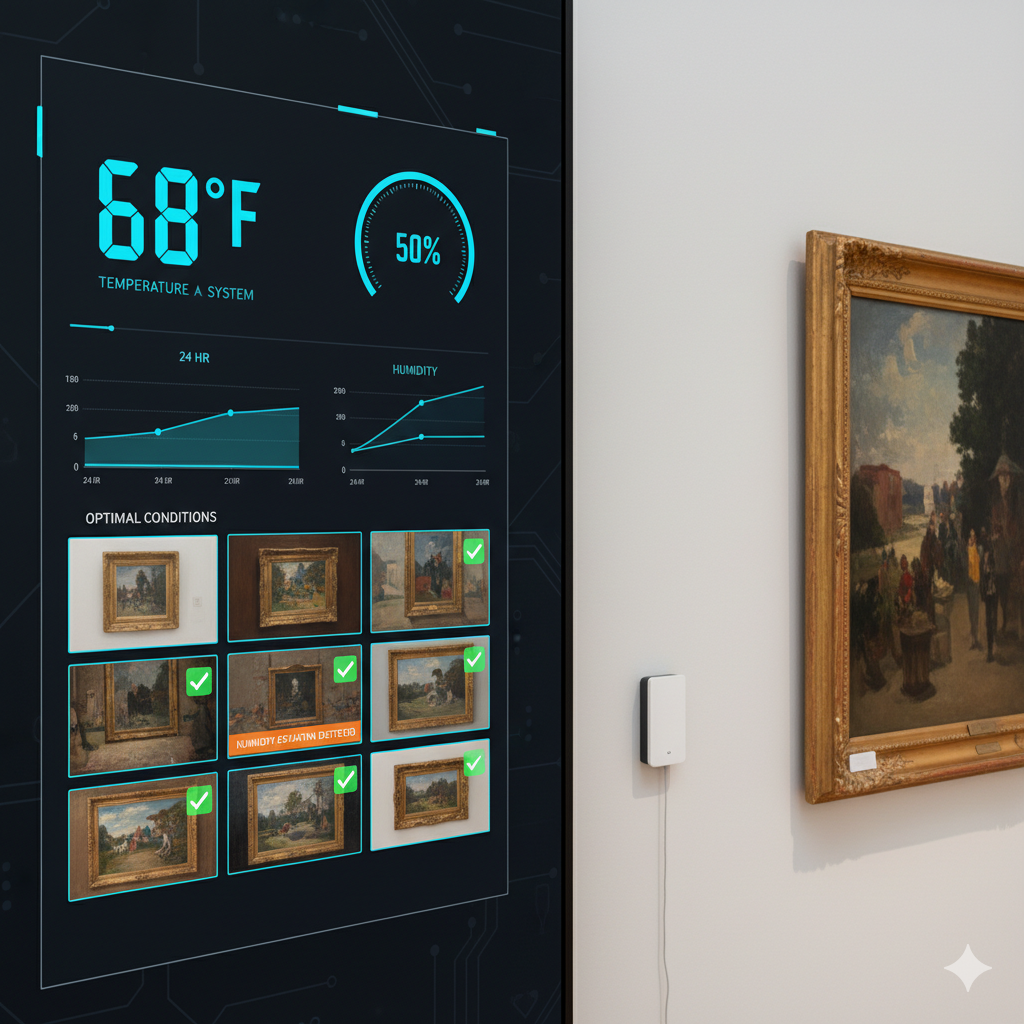
Modern RTLS systems excel here because they continuously monitor environmental conditions around your paintings. Sudden temperature or humidity deviations trigger alerts—either signaling potential security breaches (like disabled HVAC systems) or warning of conditions that could crack oil paint, warp canvas, or damage delicate watercolor layers.
Proper environmental controls include:
- Stable temperature: 65-75°F (18-24°C)
- Controlled humidity: 45-55% relative humidity
- UV protection: Filtered lighting or UV-protective glazing
- Air quality: HEPA filtration to remove pollutants and dust
- Proper spacing: Adequate air circulation around frames
 Caption: Environmental monitoring protects paintings from gradual damage that can be as costly as theft
Cost-Benefit Analysis: Is Security Worth the Investment?
Many collectors hesitate when they see security system price tags. But consider this perspective:
A professional wireless monitoring system might cost $2,000-5,000 to install. Professional mounting hardware adds another $200-500 per painting. Insurance premiums might be $500-2,000 annually depending on collection value.
Now compare that to losing a single valuable painting worth $50,000, $100,000, or more. Beyond financial loss, many paintings have irreplaceable sentimental value—family heirlooms, gifts from influential artists, or works you’ve cherished for decades.
The real question isn’t whether security is expensive—it’s whether you can afford to risk losing your collection without it. Insurance won’t replace the emotional value. It won’t recover pieces with personal significance. Proper security is the only way to truly protect what matters.
Frequently Asked Questions
How often should I update my painting security documentation?
Update documentation immediately after any changes: new acquisitions, sales, condition changes, restoration work, or changes to provenance. Additionally, conduct comprehensive reviews annually to ensure photographs remain current and appraisals reflect current market values. Insurance companies typically require updated appraisals every 3-5 years.
Can I install security systems myself or should I hire professionals?
While simple physical mounting might be DIY-friendly for less valuable pieces, professional installation is strongly recommended for valuable paintings. Security experts ensure proper positioning of sensors, correct integration with alarm systems, and compliance with insurance requirements. Improper installation can create security gaps or trigger constant false alarms.
What’s the most important security measure for valuable paintings?
There’s no single “most important” measure—effective security requires layered protection. However, if forced to prioritize, detailed documentation combined with immediate registration on recovery databases provides the best recovery chances post-theft. Physical mounting and wireless monitoring systems provide the strongest theft deterrence.
How do I protect paintings during moves or renovations?
Temporarily relocate valuable paintings to a secure, locked room with controlled temperature and humidity—no water pipes. Use professional art movers who carry adequate insurance. Document the painting’s condition before and after moving with time-stamped photographs. Never leave valuable works in moving trucks overnight.
Are smart home security systems adequate for protecting valuable art?
Standard smart home systems provide basic perimeter security but lack art-specific protection. Valuable paintings require object-level monitoring with sensors designed for artwork that won’t cause damage. Consider combining general home security with specialized art protection systems for comprehensive coverage.
What should I do immediately if I discover a painting has been stolen?
- Call local police immediately—don’t touch anything in the area
- Contact your insurance company
- Register the theft with the Art Loss Register and INTERPOL
- Provide law enforcement with all documentation, photographs, and provenance records
- Alert local galleries, auction houses, and dealers
- Monitor online marketplaces and social media
- Contact the FBI Art Crime Team if the value exceeds $100,000
Protecting Your Legacy: Final Thoughts on Painting Security
Protecting valuable paintings isn’t about installing the fanciest gadgets or creating fortress-like homes. It’s about understanding threats, implementing layered defenses, maintaining detailed records, and following consistent procedures.
Whether you’re a private collector with a few cherished pieces or an institution stewarding cultural treasures, security is an ongoing responsibility. Technology evolves, criminal tactics change, and art market dynamics shift. Your security approach must adapt accordingly.
Remember: the goal isn’t just preventing theft—it’s making stolen paintings so difficult to sell that criminals lose interest in targeting your collection. Through comprehensive documentation, proper physical protection, advanced monitoring systems, and strict operational procedures, you create multiple barriers that work together to keep your valuable paintings exactly where they belong: safely in your care.
Start today by documenting your collection thoroughly, reviewing your insurance coverage, and assessing your current security measures. Your paintings represent not just financial investment but artistic heritage, personal memories, and cultural value worth protecting for generations to come. With the right approach, you can enjoy your collection with confidence, knowing you’ve taken every reasonable precaution to keep it secure.
Citations:
- Famous Art Heists and Recoveries – Composition Gallery
- Insider Threat in the Art World – ICOM ICMS
- Preventing Theft from Museums – EUCPN
- Art Gallery Inventory Appraisal Checklist – ChecklistGuro
- Art Loss Register – Stolen Art Database – Art Loss Register
- Fine Art Insurance Guide – The Basler Registrar
- Art Insurance Coverage Types – Flaster Greenberg
- Fortecho Art Protection System – Fortecho
- Advanced Art Security Systems – Art Guard
- Artwork Security with RFID – Avante International Technology
- Museum Security Best Practices – Conserv.io
- LiDAR Museum Security – Blickfeld
- Collection Theft and Security Monitoring – SPNHC
- ICOM Code of Ethics for Museums – ICOM
- Isabella Stewart Gardner Museum Theft – Gardner Museum
- FBI National Stolen Art File – FBI
- INTERPOL Stolen Works of Art Database – INTERPOL
- Insuring Artwork & Collectibles – Progressive