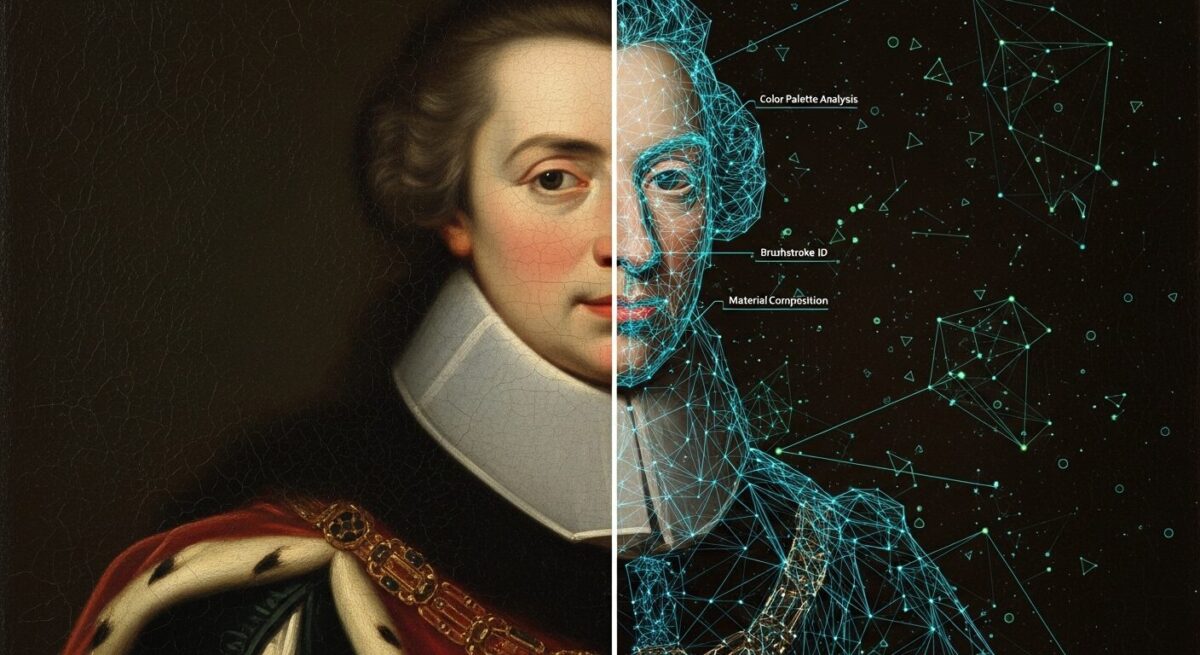
In a world where technology is constantly evolving, it might seem strange to think that something as futuristic as Artificial Intelligence (AI) could have a place in preserving the masterpieces of the past. But what if we told you that how AI helps in the preservation of art is one of the most exciting developments in the art world today? From uncovering hidden details in centuries-old paintings to restoring damaged works with incredible precision, AI is becoming an invaluable tool for art historians, conservators, and museums. This isn’t about replacing the human touch but enhancing it, allowing us to protect and understand our shared cultural heritage in ways we never thought possible.
Key Points: How AI is Revolutionizing Art Preservation
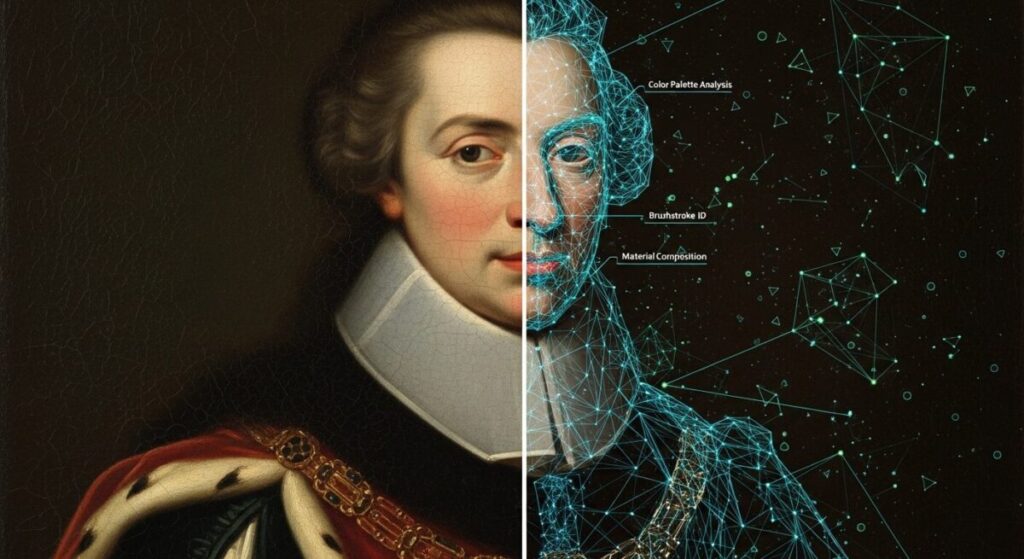
- Revealing the Unseen: AI-powered imaging techniques can see through layers of paint, uncovering original sketches, and revealing changes made by the artist.
- Restoring the Damaged: Machine learning algorithms can analyze an artist’s style and predict how to fill in missing or damaged sections of a painting with remarkable accuracy.
- Authenticating Masterpieces: By analyzing brushstrokes and pigment composition, AI can help experts determine if a work of art is genuine or a clever forgery.
- Predicting the Future: AI can analyze the condition of an artwork and its environment to predict how it will age, allowing for preventative conservation measures.
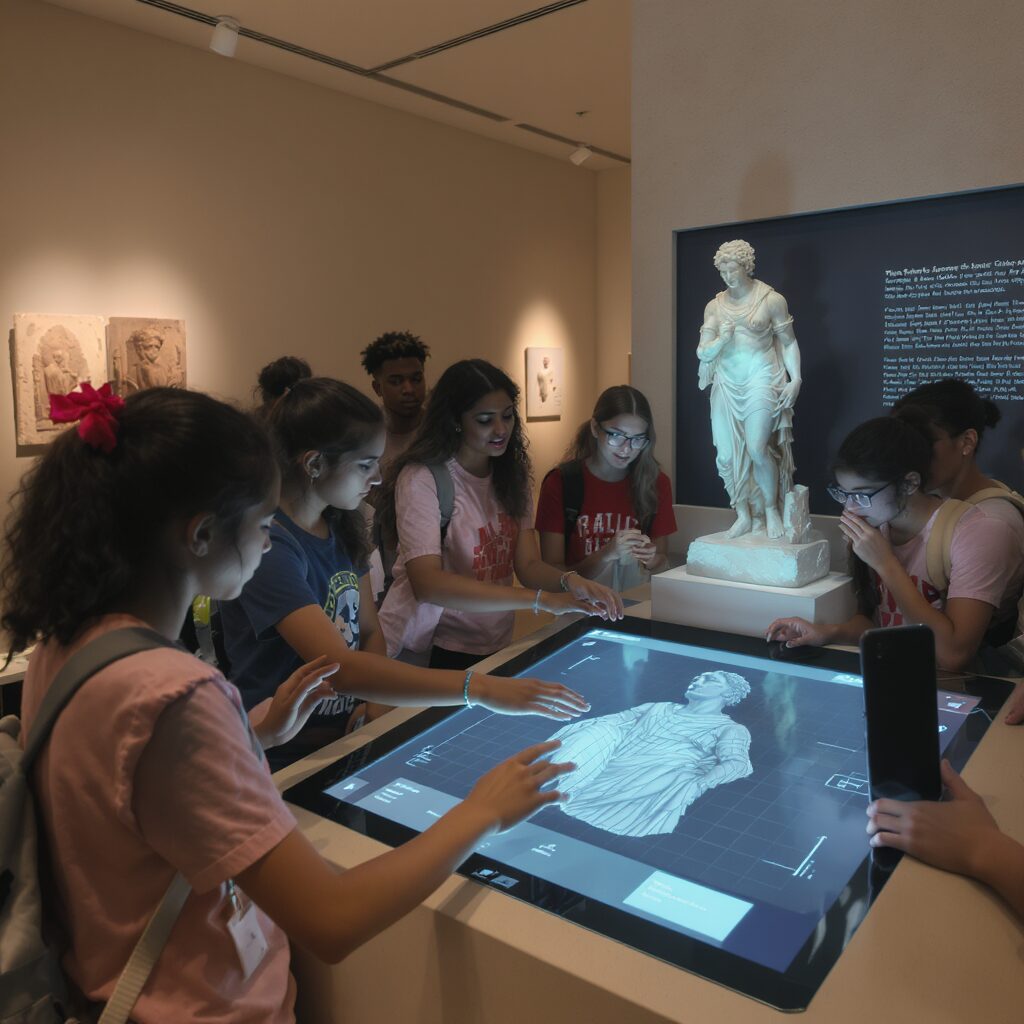
- Making Art Accessible: AI is used to create detailed digital records and virtual tours of artworks, making them accessible to a global audience.
Unlocking the Secrets of Masterpieces
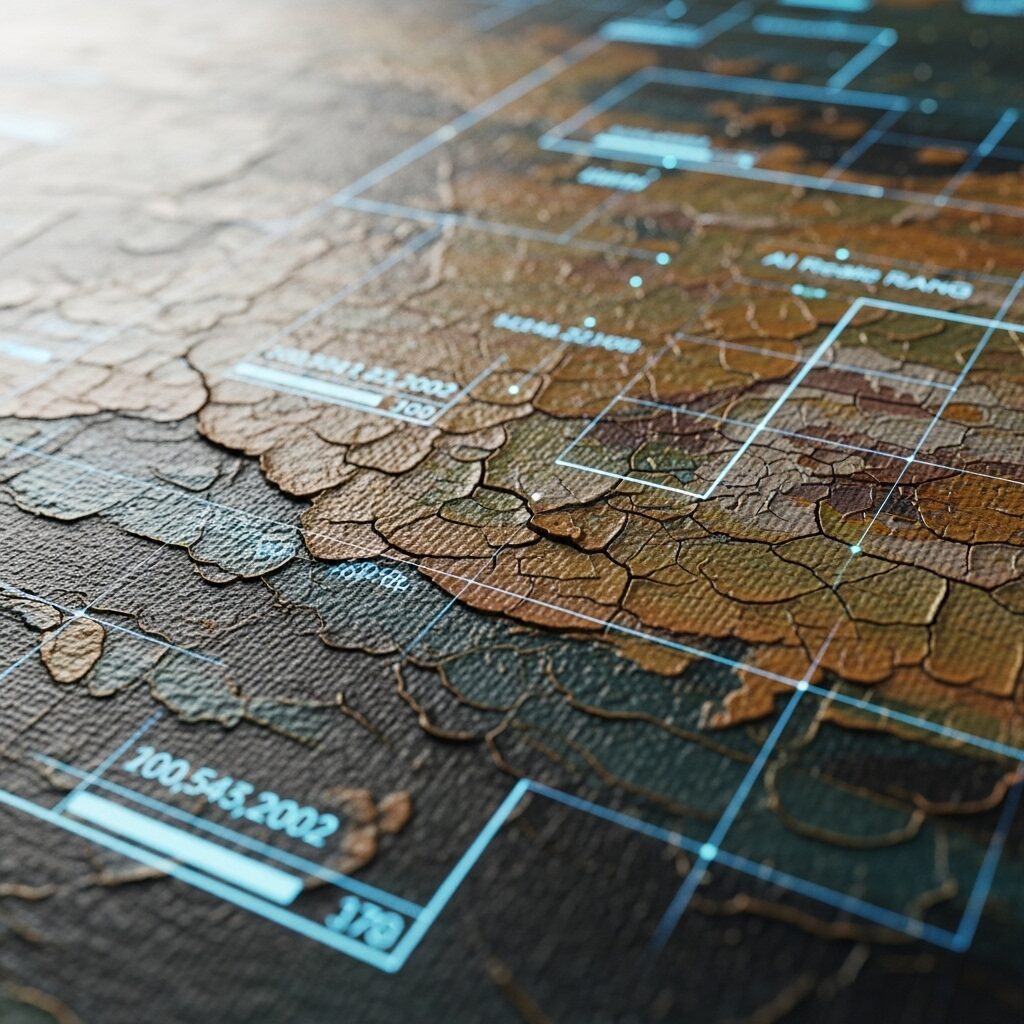
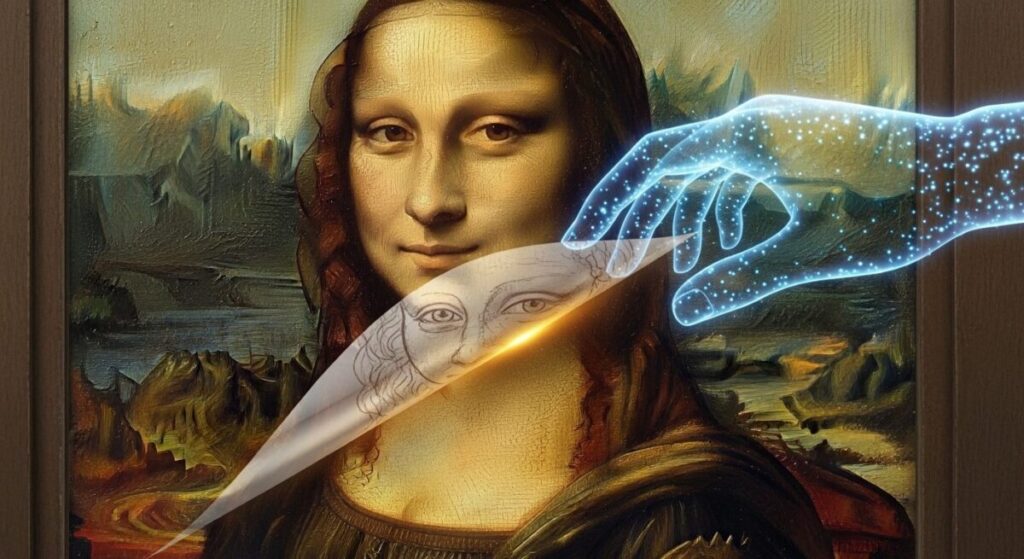
Have you ever looked at a painting and wondered what secrets it holds? Artists often change their minds, painting over their initial ideas. For centuries, these hidden layers remained a mystery. But now, thanks to how AI helps in the the preservation of art, we are beginning to see what lies beneath the surface.
Scientists and art historians use special cameras that can take pictures of a painting in different kinds of light, like X-rays and infrared. These images reveal different layers of the painting. The problem is that it can be very difficult for the human eye to make sense of all this information. This is where AI comes in.
AI algorithms can be trained to analyze these complex images and separate the different layers. It’s like having a superpower that allows you to peel back the layers of a painting one by one. This technology has been used to uncover lost portraits by famous artists like Rembrandt and to see the original sketches of iconic works, giving us a fascinating glimpse into the creative process of these masters.
“The computer can be a powerful tool in the arts, but it will never replace the creative spirit of the human being.”
John Lasseter
A Digital Restorer’s Toolkit
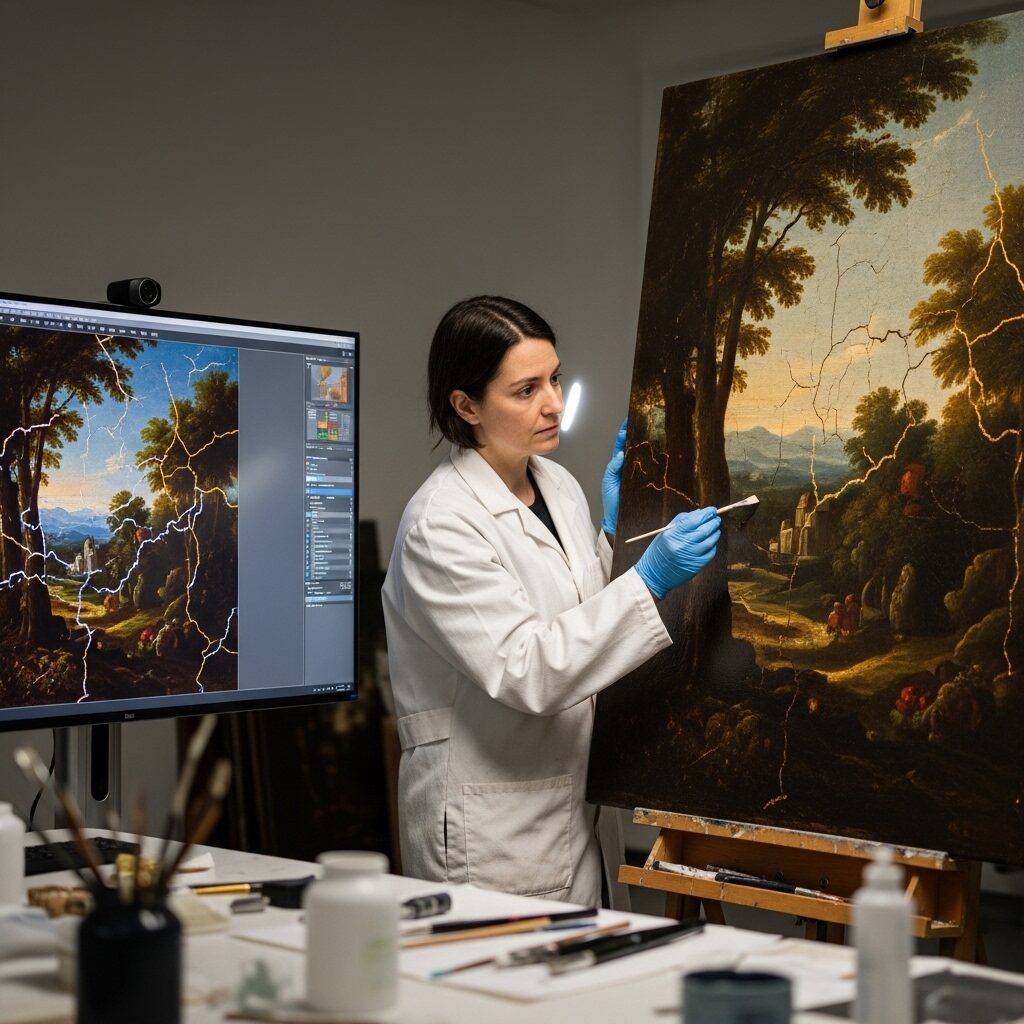
Over time, paintings can become damaged. Colors fade, paint cracks, and parts of the canvas can be lost altogether. Art conservators, the highly skilled people who repair and preserve artworks, have traditionally spent countless hours meticulously restoring these pieces by hand. Now, how AI helps in the preservation of art is offering them a powerful new set of tools.
Imagine a painting with a missing piece. An AI program can be trained on thousands of images of the artist’s other works. It learns the artist’s unique style, from the way they painted a face to the specific colors they used. The AI can then use this knowledge to predict what the missing section of the painting would have looked like and generate a digital version to guide the conservator.
This doesn’t mean a robot is painting on a priceless Van Gogh. Instead, it provides a highly accurate guide for the human expert, ensuring that the restoration is as true to the original artist’s vision as possible. This technology is not only more accurate but also much faster, meaning more of our world’s artistic treasures can be saved.
The Art of Authentication
The art world has always been plagued by forgeries. Clever fakes can sometimes fool even the most experienced experts. How AI helps in the preservation of art extends to tackling this very problem. Every artist has a unique “fingerprint” in their work – the way they apply their brushstrokes, the materials they use, and even the way they mix their paints.
AI can be trained to recognize these subtle patterns that are often invisible to the human eye. By analyzing a high-resolution scan of a painting, an AI system can compare it to a database of the artist’s known works and determine with a high degree of accuracy whether it is genuine. This is not only helping to clean up the art market but is also ensuring that artists get the credit they deserve for their work.
Comparing Traditional and AI-Powered Art Analysis
| Feature | Traditional Analysis | AI-Powered Analysis |
| Speed | Can take months or even years. | Can be done in a matter of hours or days. |
| Accuracy | Relies on the subjective opinion of experts. | Provides objective, data-driven results. |
| Scope | Limited to what the human eye can see. | Can analyze details at a microscopic level. |
| Cost | Can be very expensive and time-consuming. | More cost-effective in the long run. |
The Future of Art Preservation is Here
The use of AI in art preservation is still a relatively new field, but its potential is enormous. As the technology continues to develop, we can expect to see even more amazing applications. Imagine being able to virtually walk through a recreation of an artist’s studio or see a sculpture as it would have looked centuries ago, complete with its original vibrant colors.
How AI helps in the preservation of art is a perfect example of how the past and the future can come together. By embracing these new technologies, we are not only protecting the art of the past but also ensuring that it can be enjoyed by generations to come.
To see AI in action, check out this fascinating video on how technology is being used to restore Rembrandt’s “The Night Watch”:
Frequently Asked Questions (FAQs)
How is AI used to restore old paintings?
AI is used to analyze high-resolution scans of paintings to identify areas of damage. It can then predict what the missing or faded parts would have looked like based on the artist’s style, creating a digital guide for conservators to follow during the physical restoration.
Can AI detect art forgeries?
Yes, AI can be trained to recognize the unique characteristics of an artist’s work, such as their brushstrokes and use of color. By comparing a painting to a database of the artist’s known works, AI can help authenticate artworks and identify forgeries with a high degree of accuracy.
What are the ethical concerns of using AI in art preservation?
Some concerns include the potential for AI to be used to create highly convincing forgeries and questions about the role of the human conservator. However, the goal of using AI in this field is to assist and enhance the work of experts, not to replace them.
Will AI replace art conservators?
No, AI is a tool to help art conservators in their work. The skill, knowledge, and ethical judgment of a human expert are still essential for the preservation of art.
Resources
- AI in Art Restoration and Conservation: Revolutionising Preservation Techniques – ProfileTree
- AI in Art and Cultural Heritage Conservation – Ultralytics
- Can A.I. Restore a Renaissance Painting? Yes, Says This MIT Student – Artnet News
- How AI is Transforming Museums – Locatify
- Artificial intelligence in the context of cultural heritage and museums – European Parliament
- AI in Art Restoration – Creative Flair Blog