Understanding the elements of art is the first step to becoming a confident painter. This guide covers line, shape, form, space, color, value, and texture. You’ll learn what these essential building blocks are and how to use them to improve your artwork. Grab your brushes and let’s explore how these simple concepts can transform your creative process today.
Have you ever looked at a masterpiece and wondered how the artist created it? The secret isn’t just raw talent. It actually comes down to a few basic building blocks. We call these the elements of art. Whether you are holding a brush for the first time or looking to refine your skills, mastering these elements will completely change how you paint.
As an arts educator with over a decade of teaching experience, I see beginners get overwhelmed by technical terms. But art should be accessible, mindful, and therapeutic for everyone. That is why we are breaking down the core concepts today. You’ll discover how line, shape, form, space, color, value, and texture work together. When we implemented this back-to-basics approach in my classes, we saw students gain immediate confidence in their brushwork.
You don’t need a fine arts degree to understand these ideas. Let’s look at how you can use these tools to unlock your inner artist.
What Are the 7 Elements of Art?
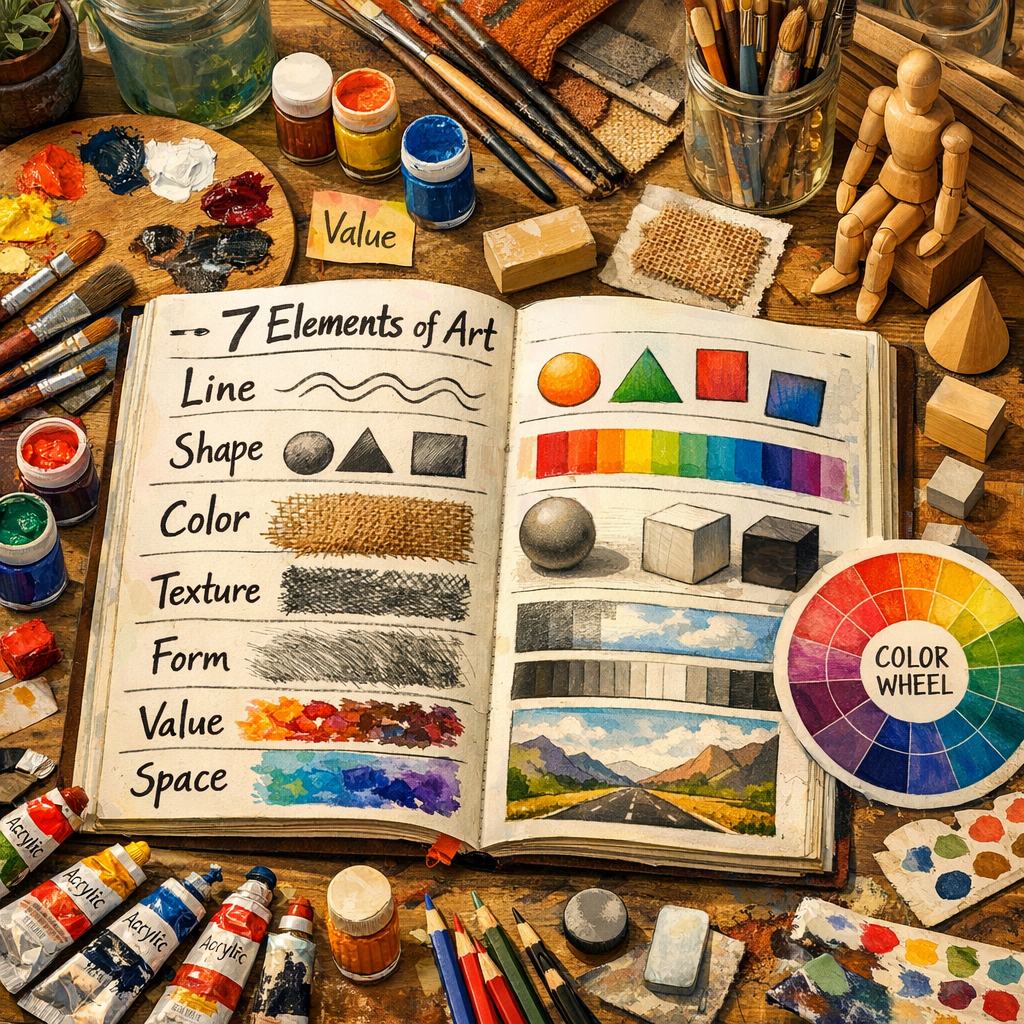
The seven elements of art are line, shape, form, space, color, value, and texture. They act as the visual ingredients artists use to build a composition. By mixing and matching these components, you can create any style of artwork imaginable.
Think of these elements like letters in an alphabet. You need them to form words and tell a compelling story on your canvas. Educational institutions like MassArt note that these visual components form the foundation of all creative work. You don’t need to use all seven perfectly in every piece. However, knowing how they function gives you ultimate control.
| Element | Description | Practical Application |
| Line | A point moving through space. | Guiding the viewer’s eye. |
| Shape | A flat enclosed area. | Outlining basic subjects. |
| Form | A three-dimensional object. | Adding realistic volume. |
| Space | The area around objects. | Creating depth and distance. |
| Color | Reflected light. | Setting the mood. |
| Value | Lightness or darkness. | Building contrast and shadows. |
| Texture | The surface quality. | Making the painting feel tactile. |
If you want to dive deeper into how these parts are arranged on your canvas, checking out the essential elements of composition is a fantastic next step.
Line and Its Role in Your Artwork
Lines are the most basic tool in your artistic kit. A line is simply a point moving through space. It can be thick, thin, curved, or jagged. Lines guide the viewer’s eye directly across your painting.
They also help express emotion. Horizontal lines bring a sense of calm and peace. Diagonal lines create energy and fast movement. A recent breakdown from the Getty Museum highlights that lines can even be implied, meaning your eye connects the dots naturally without a solid stroke. If you are exploring non-traditional styles, seeing how artists use shapes and lines in abstract art can spark some truly amazing ideas.
What Is the Difference Between Shape and Form?
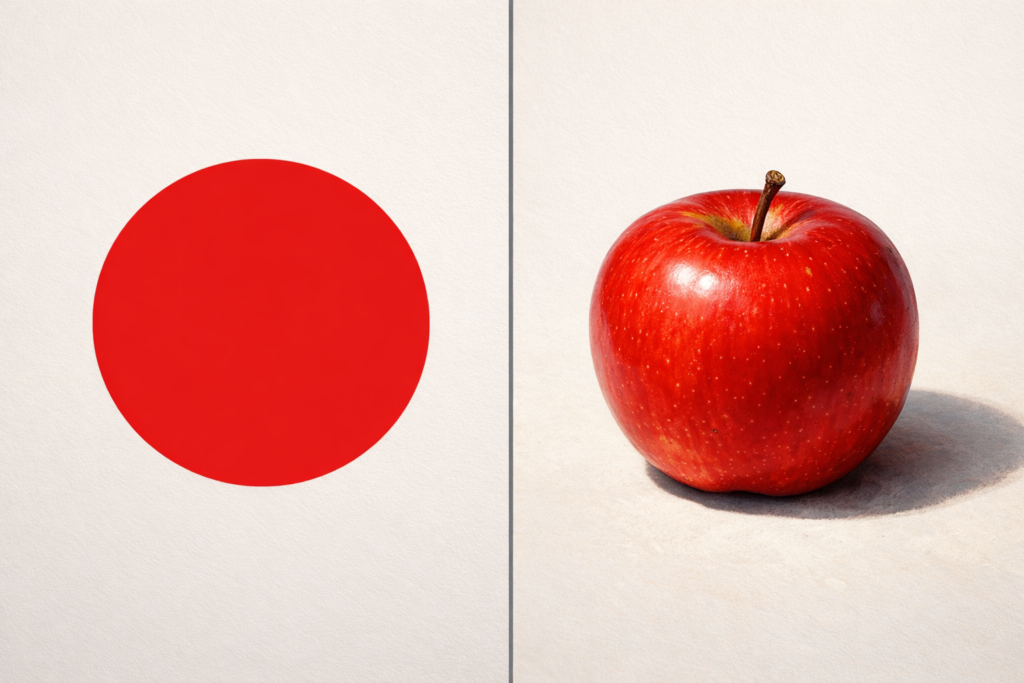
Shape is a flat, two-dimensional area enclosed by a line, having only height and width. Form is three-dimensional, having height, width, and depth. Shapes look like flat cutouts, while forms look like objects you could pick up.
Shapes can be geometric like circles and squares. They can also be organic like the outline of a leaf. The HelloArtsy platform points out that shape and form are so closely related they are often grouped together in modern discussions. When you want your painting to look realistic, you must turn those flat shapes into forms. Adding highlights and shadows is the easiest way to achieve this.
Space and How to Create Depth
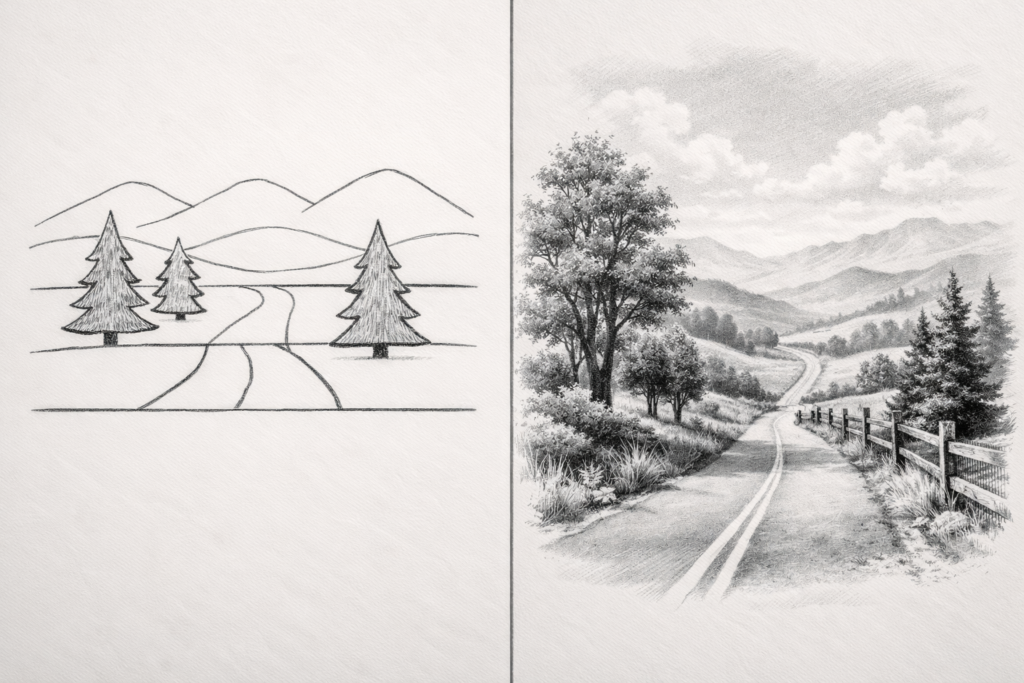
Space refers to the area around and between objects in your artwork. We call the main objects the positive space. The empty background is the negative space. Balancing both is crucial for a strong, readable painting.
You can also use space to create the illusion of distance. Things further away appear smaller and less detailed. Overlapping your subjects is another simple trick to show depth. Studies show that understanding spatial depth is critical for helping beginners grasp three-dimensional concepts. If you struggle with making your paintings look real, learning how to master visual depth will make a massive difference.
Why Do Color and Value Matter in Art?
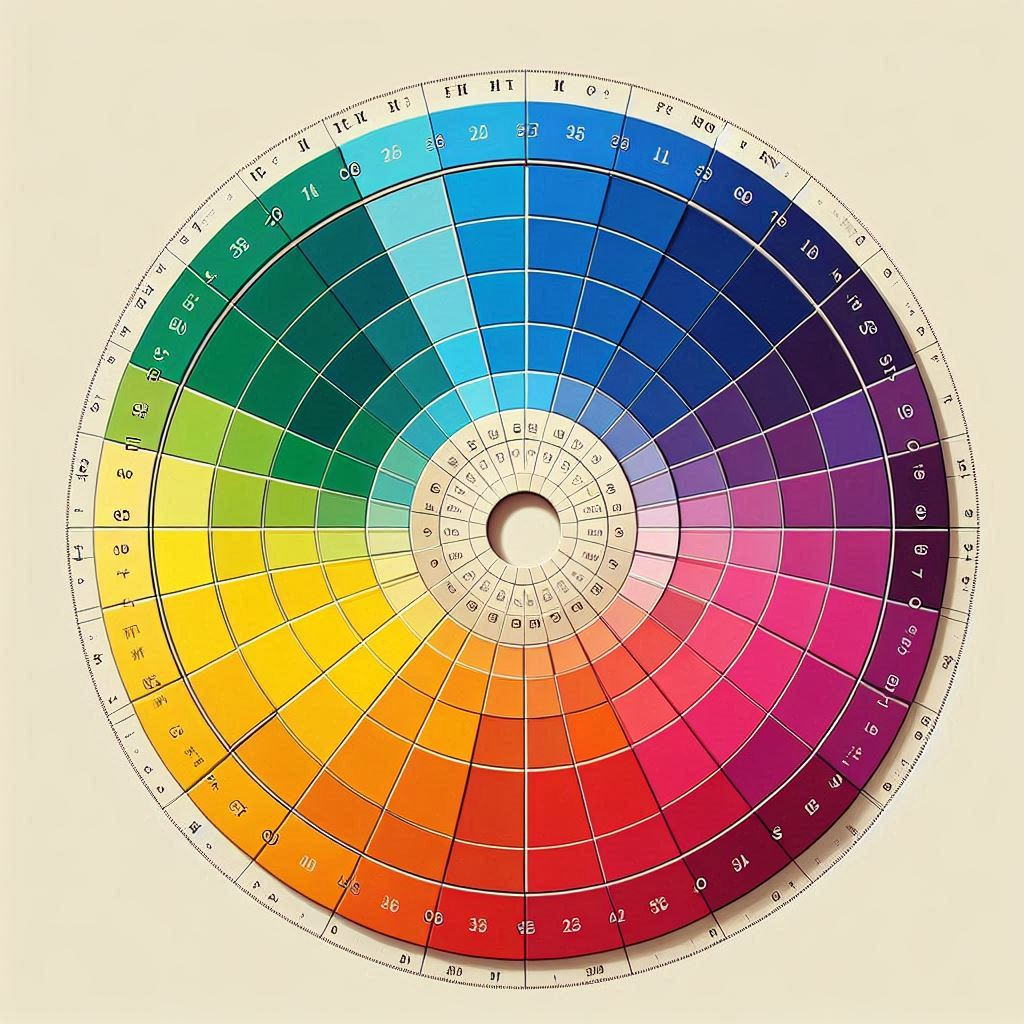
Color is the light reflected off an object, characterized by its hue, intensity, and value. Value measures how light or dark a color is. Together, they create mood, highlight focal points, and give a painting its emotional power.
Color is often the very first thing people notice. According to Lindenwood University, color and light are essential for setting the atmosphere of an artwork. Value is arguably even more important than the hue itself. The Getty Museum explains that value is critical for expressing volume in any two-dimensional piece. Dark values create heavy shadows, while light values create bright highlights. You can learn more about picking the right hues by understanding color theory in art.
How Does Texture Bring Your Painting to Life?
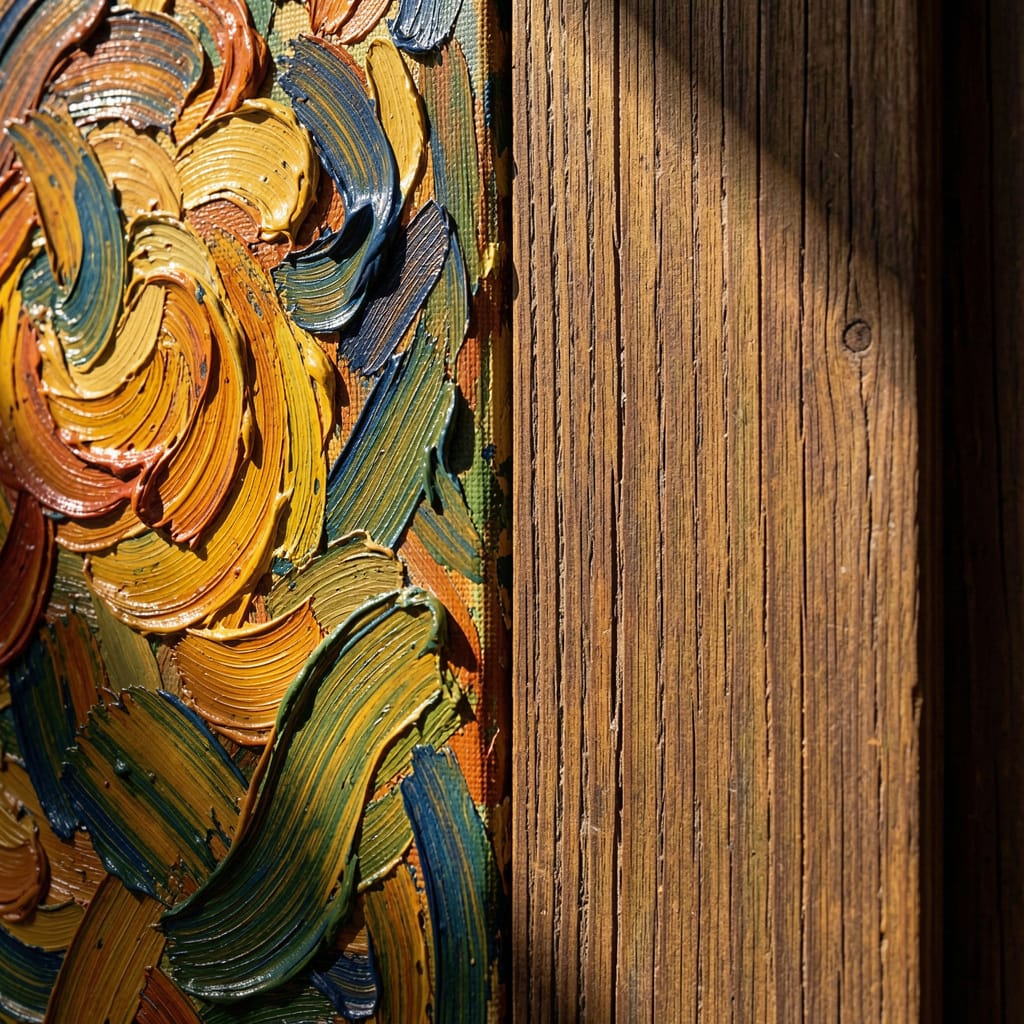
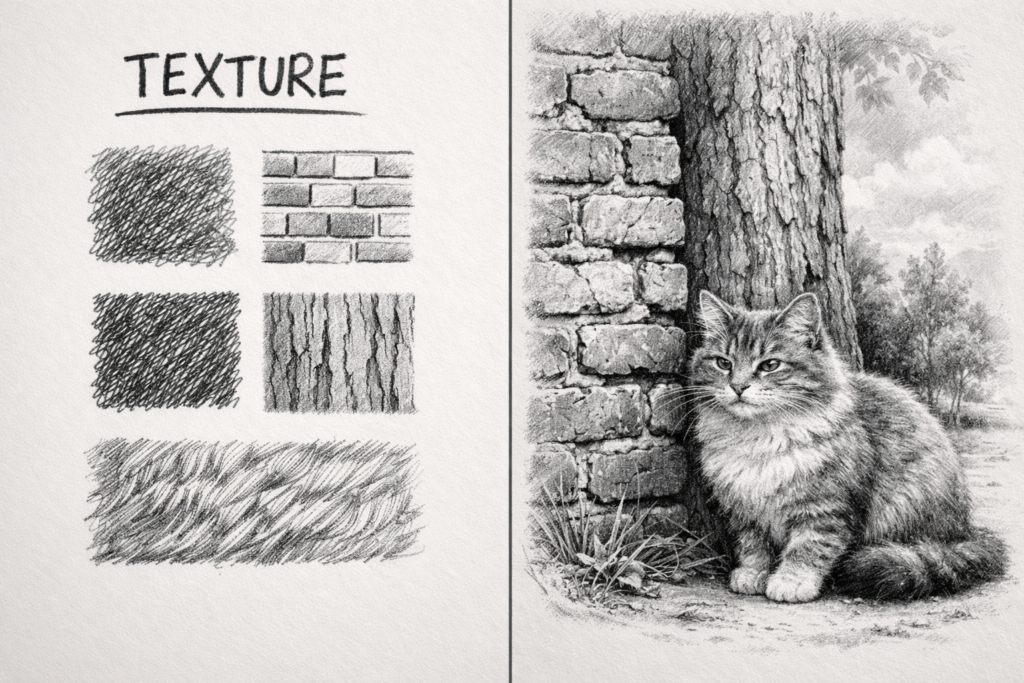
Texture describes the surface quality of your artwork. It can be actual, like thick ridges of dried acrylic paint, or implied, where flat brushstrokes create the illusion of a rough or smooth surface.
In painting, actual texture is physical. You might leave thick strokes of paint on the canvas. Visual texture is a clever trick of the eye. You can paint a fluffy cloud or a rough brick wall on a completely flat surface. Educational resources note that creating implied texture requires a solid grasp of lighting and brush control. If you are ready to experiment with this, practicing texture painting techniques is highly rewarding.
Conclusion
The elements of art are your ultimate toolkit for creative success. Line, shape, form, space, color, value, and texture give you the power to translate your ideas onto canvas. You don’t have to master them all at once.
Take it one simple step at a time. Try focusing on a single element in your next painting session. If you found this helpful, grab your brushes and start experimenting today. Let your newfound knowledge guide your next beautiful creation!
Frequently Asked Questions
- What is the difference between an element and a principle of art? Elements are the visual tools you use to create art. Principles are the rules for how you organize those tools within your piece. For example, color is an element, while balance is a principle.
- What are the 7 elements of art? The seven elements are line, shape, form, space, color, value, and texture. They serve as the foundational building blocks for creating any piece of visual art. Artists use them to structure their compositions and convey meaning.
- Why are the elements of art important? They give you a clear vocabulary to understand and discuss artwork. Using these elements helps you make intentional choices when you paint. Research indicates that foundational art knowledge improves creative problem solving and boosts confidence.
- How do you create texture in a painting? You can create actual texture by applying thick layers of paint to your canvas. You can also create visual texture by using different brush strokes to mimic surfaces like wood or fur. Both methods add wonderful interest to your artwork.
- Can you have shape without form? Yes, a shape is strictly two-dimensional and flat. Once you add volume and depth, that shape becomes a form. Drawing a flat circle creates a shape, while shading it realistically makes it a form.