Every painter has experienced that sinking feeling: you’re hours into a session, and suddenly you step back to find muddy colors, awkward composition, or a focal point that’s completely lost. The piece you started with excitement now feels beyond repair. Learn How to Rescue a Painting ….
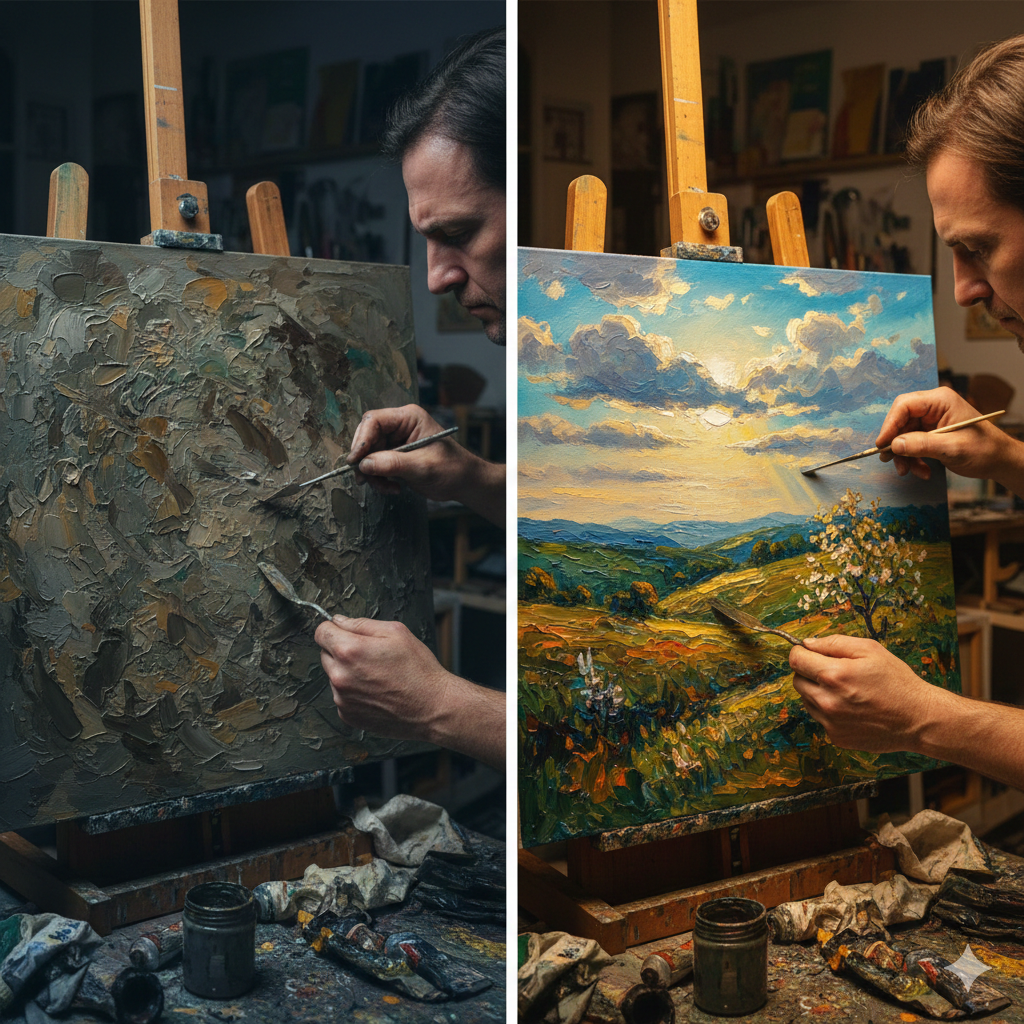
Before you consider abandoning the canvas, pause and reconsider.
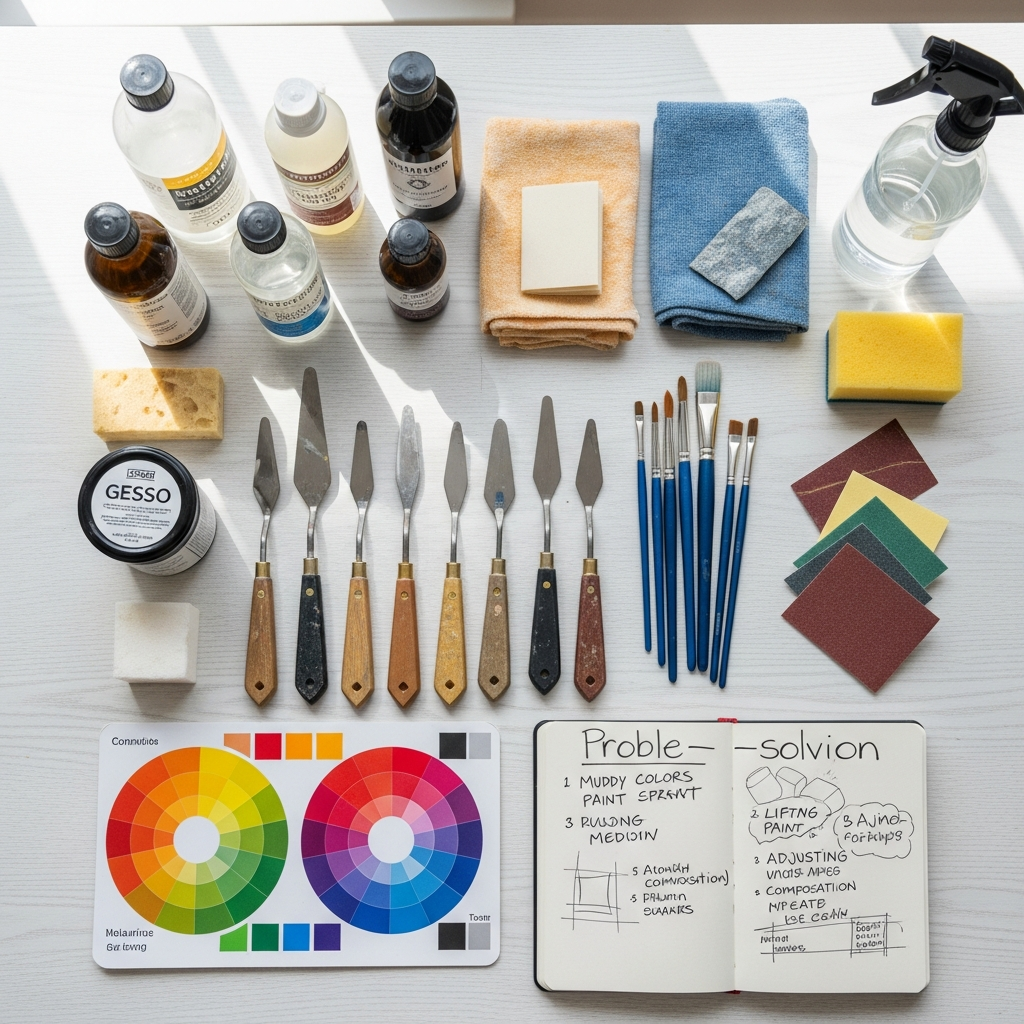
“The ‘ugly phase’ is not a failure—it’s a proving ground. Every painting that survives it becomes stronger, and so does the artist who saved it.”
What You Will Learn
In this comprehensive guide, you’ll discover practical strategies for rescuing paintings across all major mediums. You’ll learn how to diagnose what went wrong with your artwork, master correction techniques specific to oil painting, acrylic painting, and watercolor painting, and understand when to use radical rescue methods versus subtle adjustments.
You’ll explore universal techniques that work across mediums, including compositional corrections and color theory solutions for muddy palettes. We’ll examine which materials offer the best correction capabilities and how their unique properties affect your rescue options. You’ll also learn the critical decision-making process for determining when to save a painting versus when to start fresh. By the end, you’ll have a complete toolkit for transforming creative roadblocks into breakthroughs.
The Diagnosis: Understanding What Went Wrong
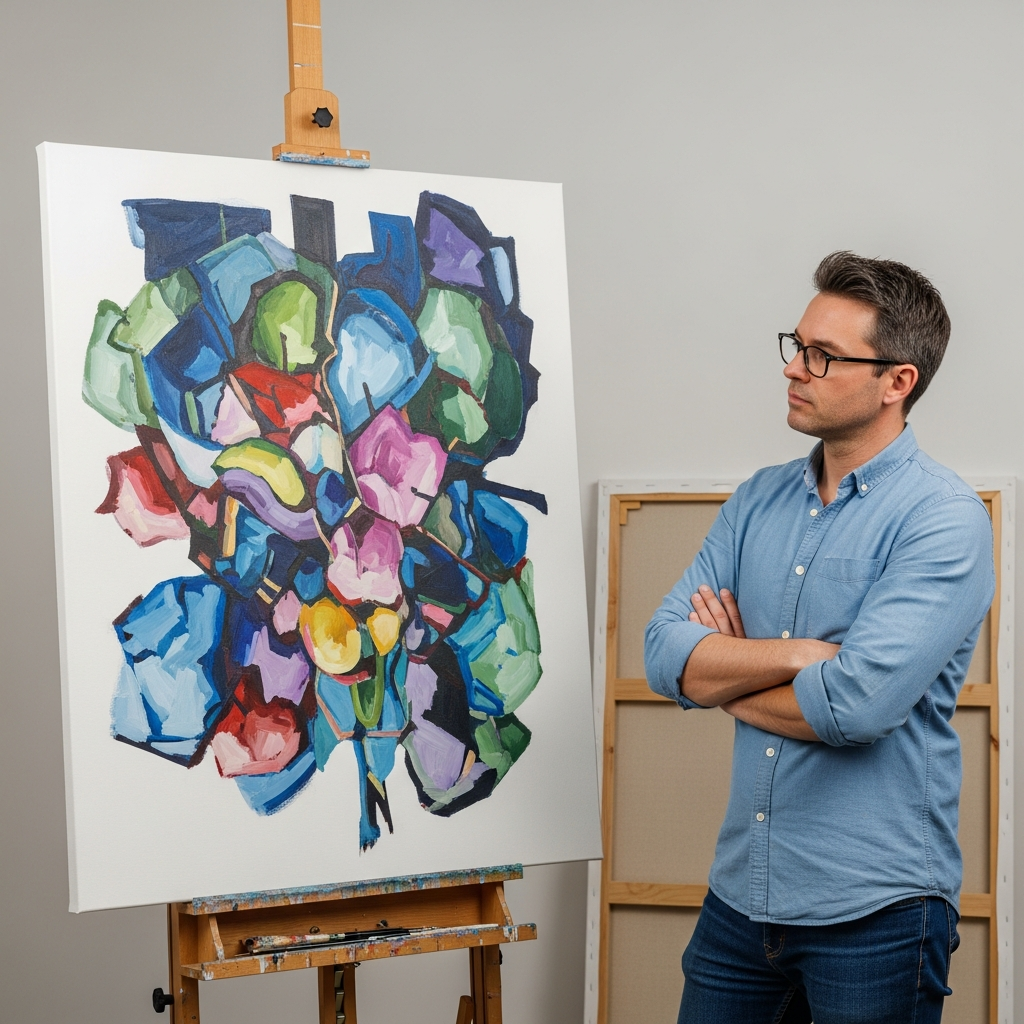
Effective repair begins with accurate diagnosis. Attempting to fix painting mistakes without identifying the root cause often creates additional problems. Most failed paintings suffer from one of three core issues:
Value Problems: Insufficient contrast between light and dark areas creates flat, lifeless imagery that lacks visual impact. When working on landscape paintings, value becomes especially critical.
Compositional Weaknesses: The viewer’s eye wanders aimlessly, or the focal point competes with distracting elements throughout the canvas. Understanding essential elements of composition helps identify these issues.
Muddy Color: Excessive mixing on the palette or canvas produces desaturated, lifeless grays that drain energy from the work. This common problem plagues beginners working with color mixing.
Overcoming these creative blocks starts with objective analysis. Try turning your painting upside down or viewing it in a mirror. This simple shift helps your brain move from object recognition to seeing pure shapes, values, and relationships—a technique many influential artists have used for self-critique.
Rescuing Oil Paintings: Leveraging the Slow-Dry Advantage
Oil painting offers perhaps the most forgiving workflow due to its extended drying time. The rich, buttery consistency allows for extensive manipulation and correction.
The Scrape-Down Technique
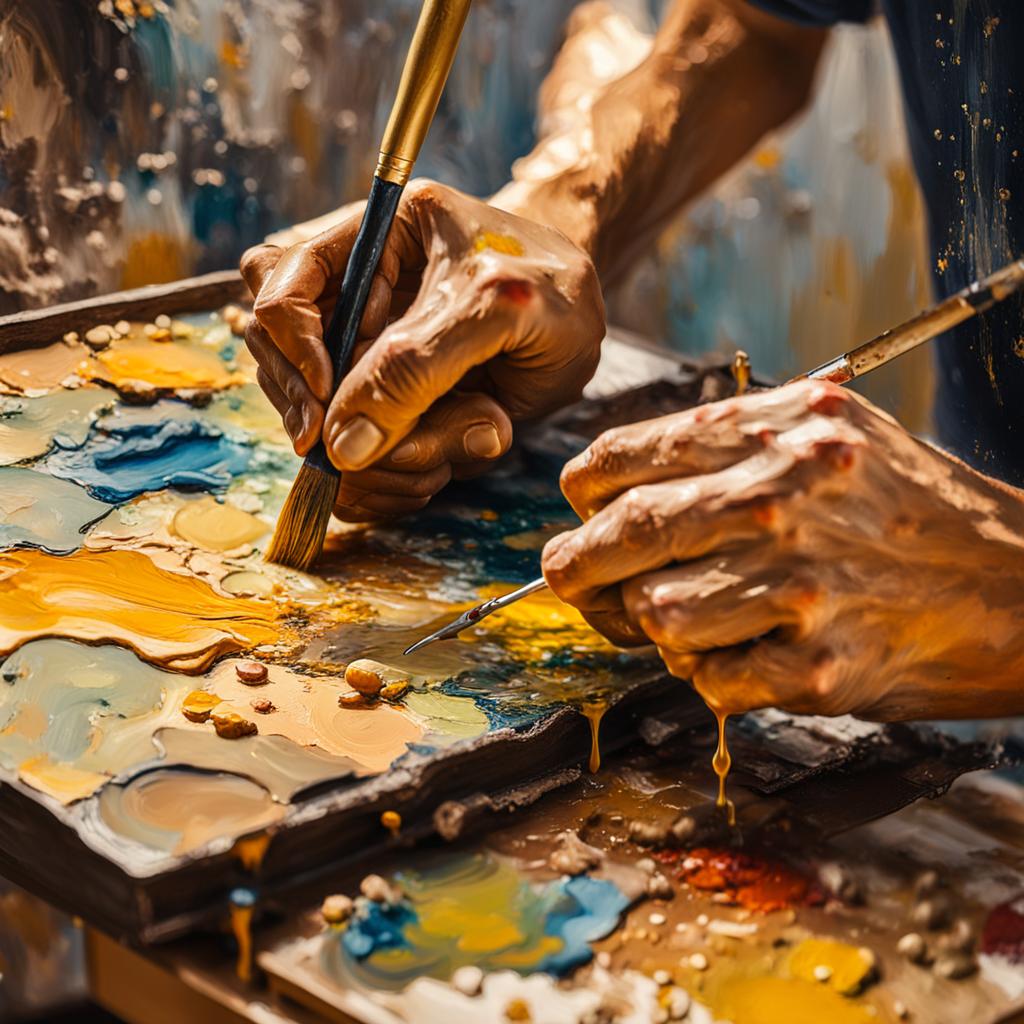
When paint is still wet and a section proves unworkable, reach for your palette knife. This tool excels at removal, not just application.
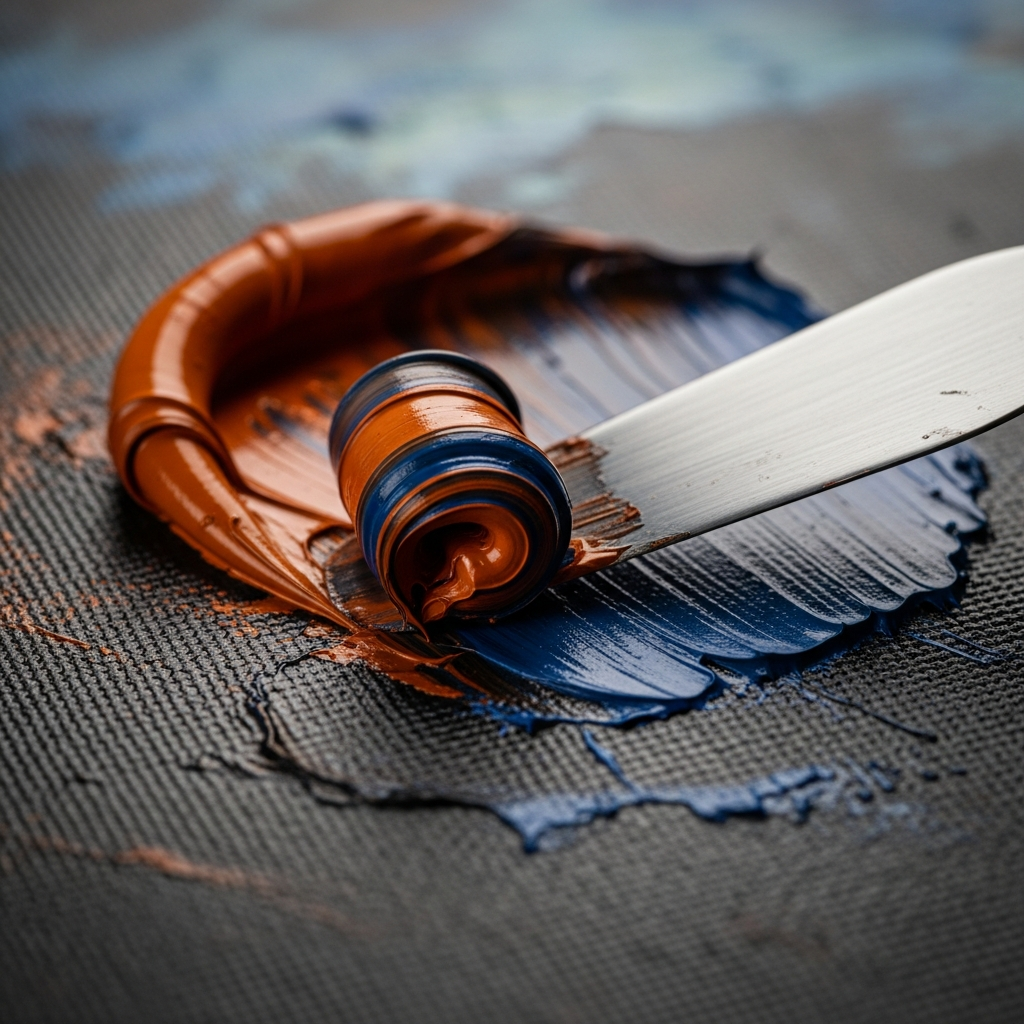
Scrape wet paint from the canvas until you expose the weave or toned ground beneath. Wipe away residue using a lint-free cloth dampened with odorless mineral spirits. Once the area appears thin and ghostly, you can repaint immediately. This approach prevents unstable paint ridges that might crack as the work ages—a concern emphasized in professional oil painting techniques.
Oiling Out and Strategic Glazing
Sometimes oil paintings develop a dull, sunken appearance where oil has absorbed into lower layers. This doesn’t signal failure—the surface simply needs revitalization.
Apply a thin layer of medium to restore sheen and vibrancy. Glazing with transparent colors corrects color theory issues while preserving the underlying drawing. For instance, if a portrait painting appears too cool or gray, a thin glaze of transparent orange can breathe warmth back into skin tones.
Salvaging Overworked Oil Paintings
If excessive blending has created a plastic, lifeless surface, follow these steps:
Allow the painting to dry completely until touch-dry. Mix fresh paint with texturing medium or use it directly from the tube. Apply bold, distinct strokes over the smooth, overworked areas using the impasto technique. The textural contrast will make the painting appear intentional and revitalized.
Rescuing Acrylic Paintings: Harnessing Opacity
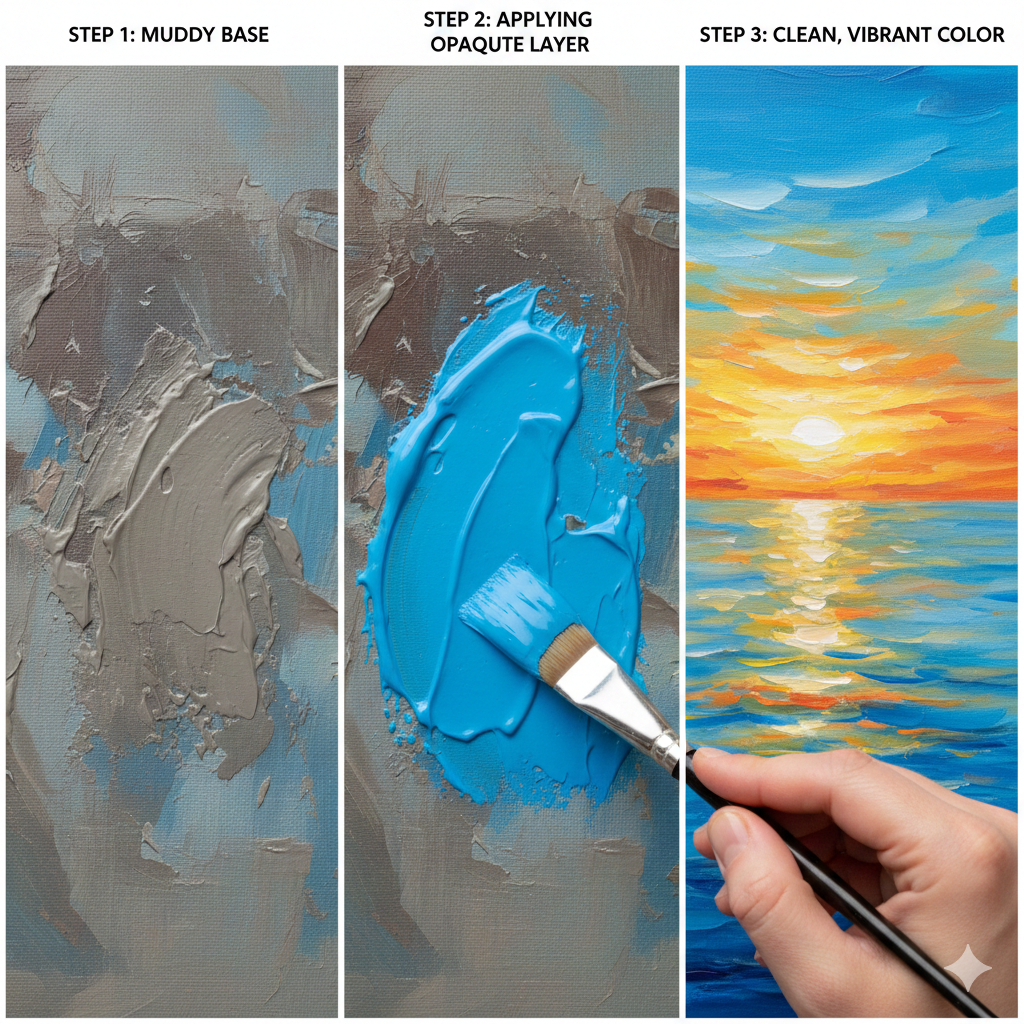
Acrylic painting dries rapidly, which proves advantageous when correcting errors. Since acrylics form a durable plastic film, covering mistakes becomes straightforward.
The Reset Method
Fixing muddy colors in acrylic often requires starting fresh in that area. Thanks to acrylic opacity, you can wait for the problematic section to dry (usually just minutes), then paint completely over it with a fresh, clean color mixed on your palette. If texture becomes excessive, lightly sand the dried acrylic before repainting—a technique detailed in guides on fixing overworked paintings.
The Gesso Solution
When large compositional elements fail—perhaps the perspective on a building is fundamentally flawed—apply gesso directly over the painted area. You can absolutely restart a painting on the same canvas. For complete resets, apply two coats of gesso over the entire surface. The resulting textured ground often adds unexpected character to your next attempt. Learn more about canvas preparation for optimal results.
Rescuing Watercolors: Working with Transparency
Watercolor’s reputation for being unforgiving stems from a simple truth: once the white paper disappears, recovery becomes challenging. However, repairing watercolor mistakes is entirely possible with the right approach.
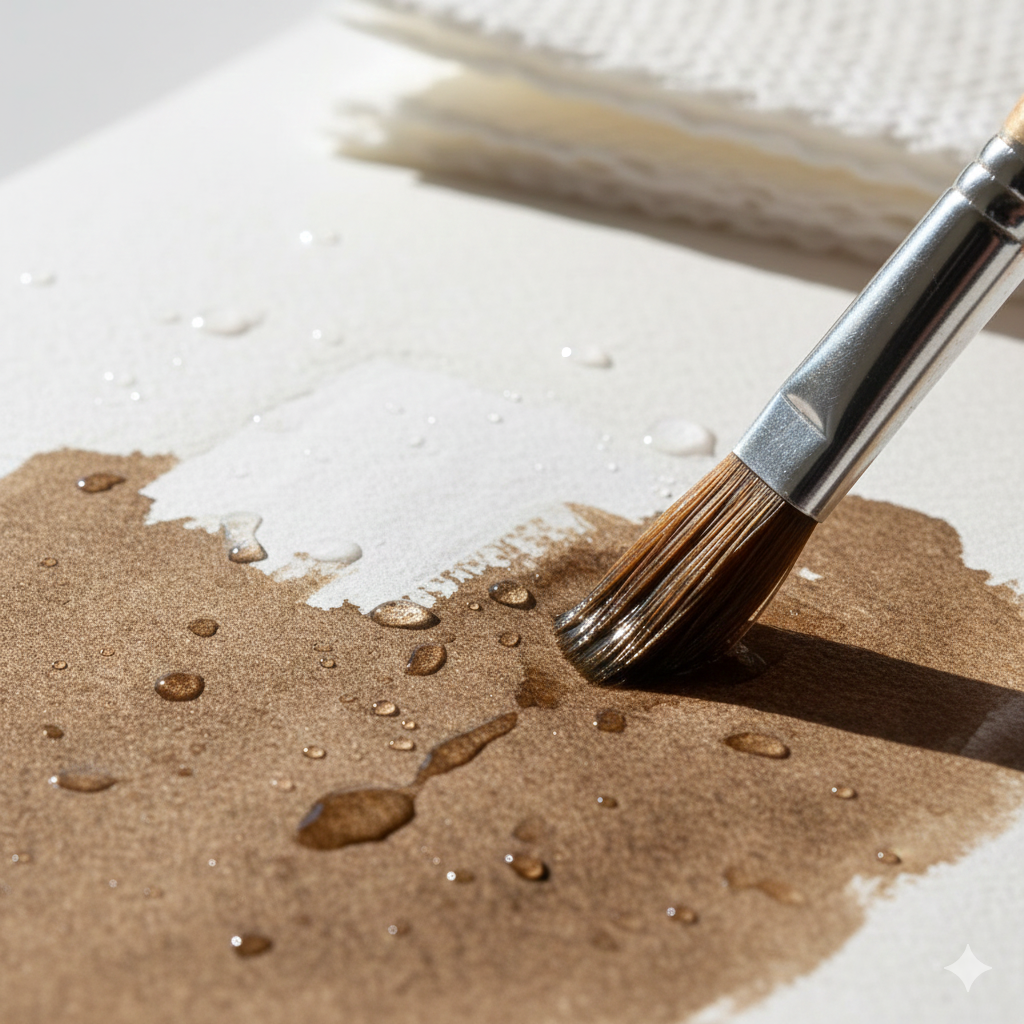
Lifting and Scrubbing Techniques
When a watercolor appears too dark or dull, lifting pigment offers a solution. Use a stiff synthetic brush dampened with clean water to gently scrub the area, then blot with paper towel. For stubborn staining pigments, a melamine sponge can lift color more aggressively, though exercise caution to avoid damaging paper fibers. Professional watercolorists also use specialized watercolor techniques to control lifting.
Transforming into Mixed Media
When a watercolor painting falls short of expectations, consider changing the rules entirely. Introduce gouache to paint light details over dark areas. Add ink or pastel for definition and emphasis. This transforms the piece from a failed watercolor into a dynamic mixed-media work.
Universal Rescue Techniques
Some painting rescue strategies work across all mediums, making them essential knowledge for any artist.
Correcting Compositional Errors
Compositional problems often respond well to radical cropping. Use four strips of paper to frame different sections of your painting. You may discover that while the entire work struggles, a beautiful smaller composition hides within it. Crop boldly—you can re-stretch canvas or cut paper to isolate the strongest elements. This approach aligns with creating focal points effectively.
Eliminating Muddy Color
Mud develops when warm and cool colors mix indiscriminately, neutralizing each other. The solution: allow the painting to dry completely, then apply pure, vibrant color in small, strategic accents. The eye gravitates toward these pops of saturated color, allowing muddy areas to recede into supporting roles—a principle rooted in understanding color theory.
Material Comparison for Repairs
Different materials require different correction approaches. Understanding these characteristics helps you choose the right rescue strategy:
| Material | Correction Window | Opacity for Cover-up | Lifting Capability | Best Rescue Method |
|---|---|---|---|---|
| Oil Paint | Hours to Days | High (with titanium white) | Excellent (while wet) | Scraping down or painting over using fat-over-lean principles |
| Acrylics | Minutes | Very High | Poor | Opaque layering or gesso patching |
| Watercolor | Seconds to Minutes | Low (Transparent) | Moderate (depends on staining) | Lifting, blotting, or adding gouache |
| Gouache | Minutes (Re-wettable) | High | High (Re-wettable) | Re-wetting to blend or layering opaque lights |
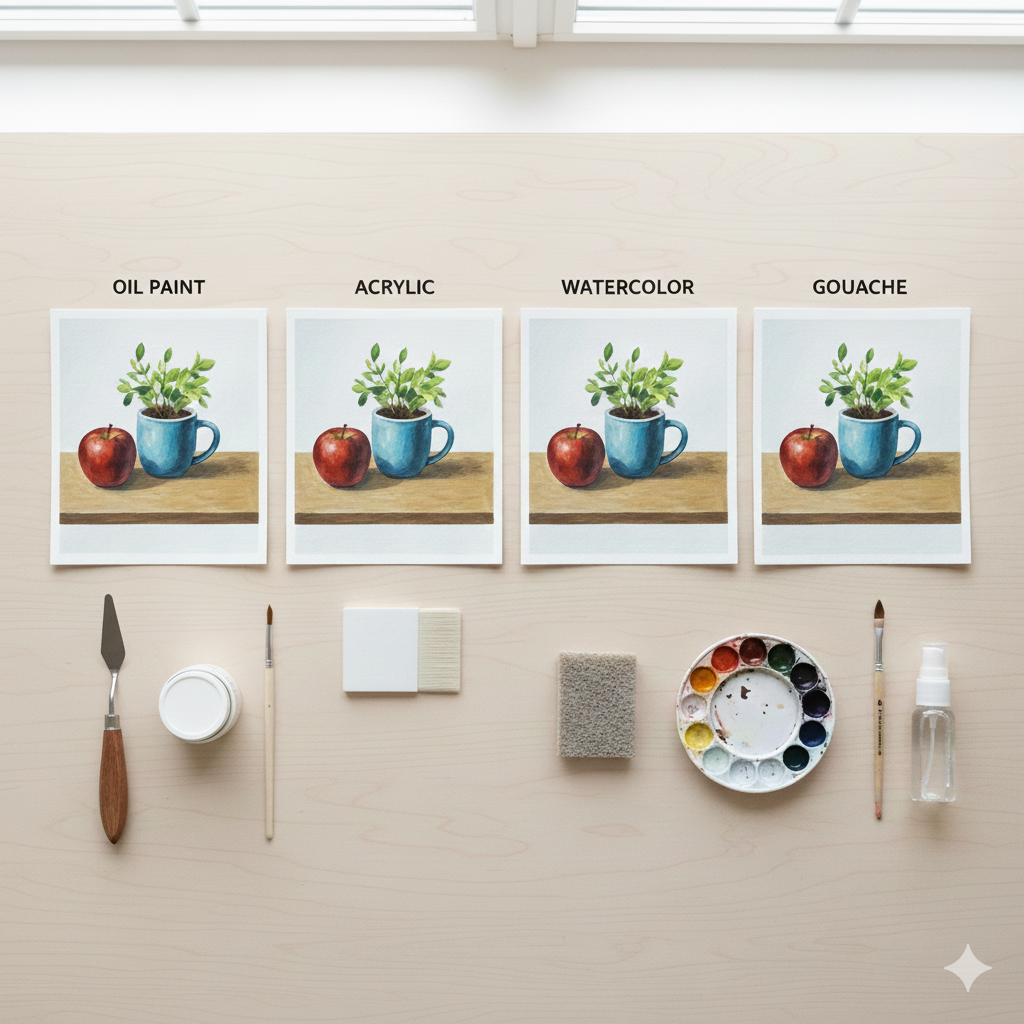
This comparison helps painters understand why choosing painting mediums affects correction strategies significantly.
Radical Rescues: When to Start Fresh
Sometimes troubleshooting reveals that the structural problems run too deep for repair.
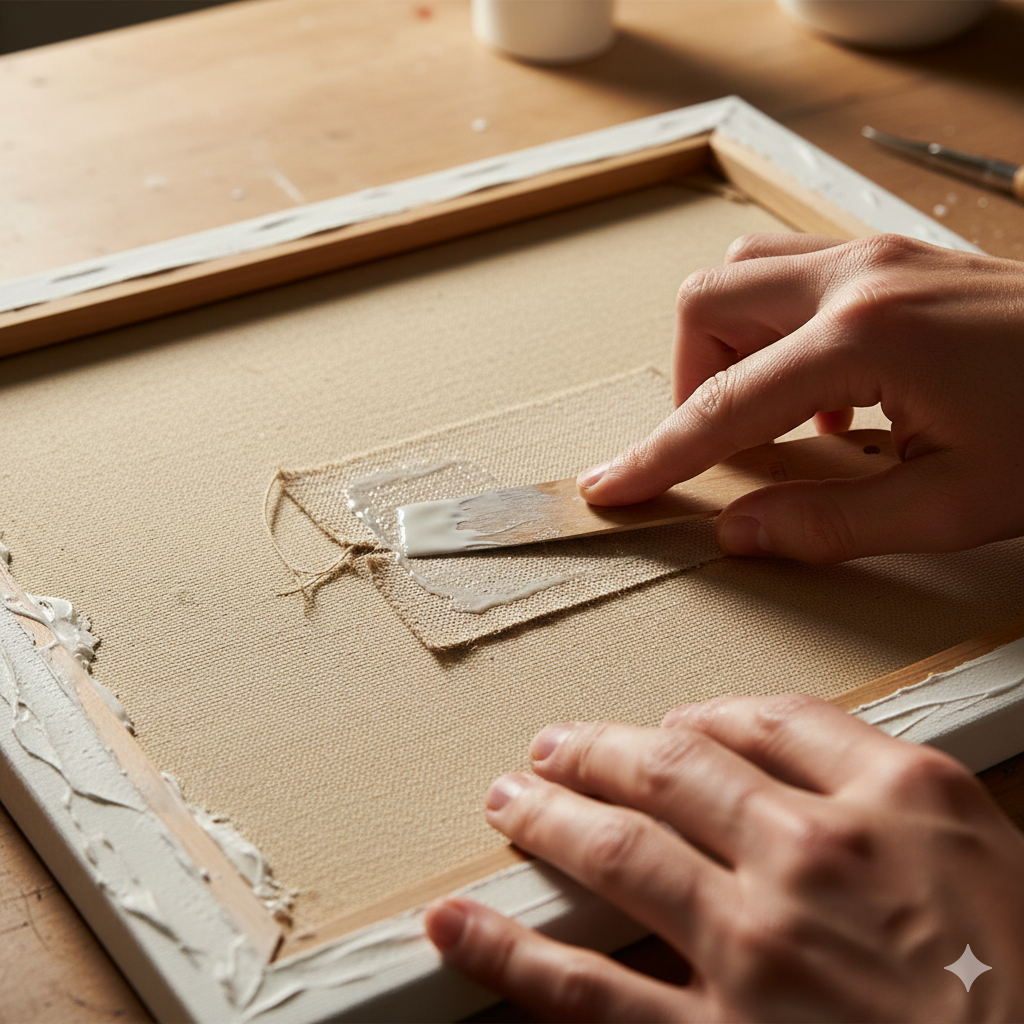
For cured oil paintings, complete paint removal proves difficult, but you can sand down the surface (wear appropriate respiratory protection) and re-gesso. If you’ve accidentally damaged the canvas itself, patch it from the reverse side using canvas and acid-free adhesive, then fill the front with modeling paste before repainting. Understanding when to employ these fixing painting mistakes methods versus starting anew requires honest self-assessment.
Building Resilience Through Problem-Solving
Redeeming troubled artwork builds more than technical skill—it develops creative resilience. Every rescue operation teaches you more about layering, materials, and technique than paintings that progress smoothly from start to finish.
The next time you face a canvas and think you’ve ruined it, reframe the situation. You haven’t destroyed anything—you’ve simply reached the problem-solving phase. Grab your palette knife, mix a fresh color, or consider bold cropping. Your masterpiece might be hiding just beneath the apparent mistake. Remember that even famous painting mistakes have turned into celebrated masterpieces.
Understanding how to rescue paintings connects to broader artistic development. As you master these techniques, you’ll gain confidence in your ability to handle any creative challenge. This resilience extends beyond technical skills into your overall artistic journey, making you a more adaptable and confident creator.
FAQs: How to Rescue a Painting
How do I fix muddy colors in acrylic painting?
Muddy colors result from over-blending wet paint directly on the canvas. Let the muddy area dry completely, then mix a fresh, clean color on your palette and apply it purely over the mistake. Avoid blending into the layer below. Review common painting mistakes beginners make to prevent this issue.
What should I do when a painting has too much detail?
Overworked paintings need loosening up. Take a large brush or palette knife and glaze over detailed areas with a unifying color, reducing contrast. Then sharpen only one focal point. This restores visual hierarchy and follows principles of effective painting techniques.
How can I fix a figure drawing error in a finished painting?
In oil or acrylic, paint the background over the problematic limb or feature to effectively erase it, carving the shape back to correct proportions. Then repaint the edge accurately. This technique works well for portrait painting corrections.
When should I give up on a painting versus trying to fix it?
If correcting the error requires changing more than 60% of the canvas, or if the underlying support has degraded significantly, starting fresh makes more sense. Treat the unsuccessful piece as a valuable study. Learn to critique your own paintings to make this determination.
How do I fix a watercolor painting that looks dull?
Dull watercolors typically lack value contrast. Mix a strong dark using ultramarine blue and burnt sienna, then paint negative shapes around your subject. This forces lighter areas to advance visually and appear more vibrant. Explore additional watercolor color mixing techniques for better results.
Citations
- Golden Artist Colors – Technical Information on Acrylics and Oils
- Tate Museum – Art Terms and Techniques: Impasto
- Winsor & Newton – Understanding Watercolor Lifting and Correction
- National Galleries of Scotland – Impasto Technique Guide
- MoMA – Impasto Definition and Examples
- Winsor & Newton – Lifting Preparation Masterclass
For more painting techniques and troubleshooting guides, explore our complete collection of articles at ProminentPainting.com.