

Ever wonder what it was like to live in the Netherlands during the 17th century? You’re in luck! The incredible artists of that time left us a visual diary through their work. This period, known as the Dutch Golden Age, was a time of great wealth, exploration, and artistic genius. Instead of just painting kings and religious scenes, artists started to capture everyday life, making ordinary things look extraordinary. This guide will walk you through the top 10 most famous Dutch Golden Age paintings, revealing the stories, secrets, and stunning skill behind each masterpiece. Get ready to travel back in time and see the world through the eyes of legendary painters like Rembrandt and Vermeer.
The Night Watch (1642)
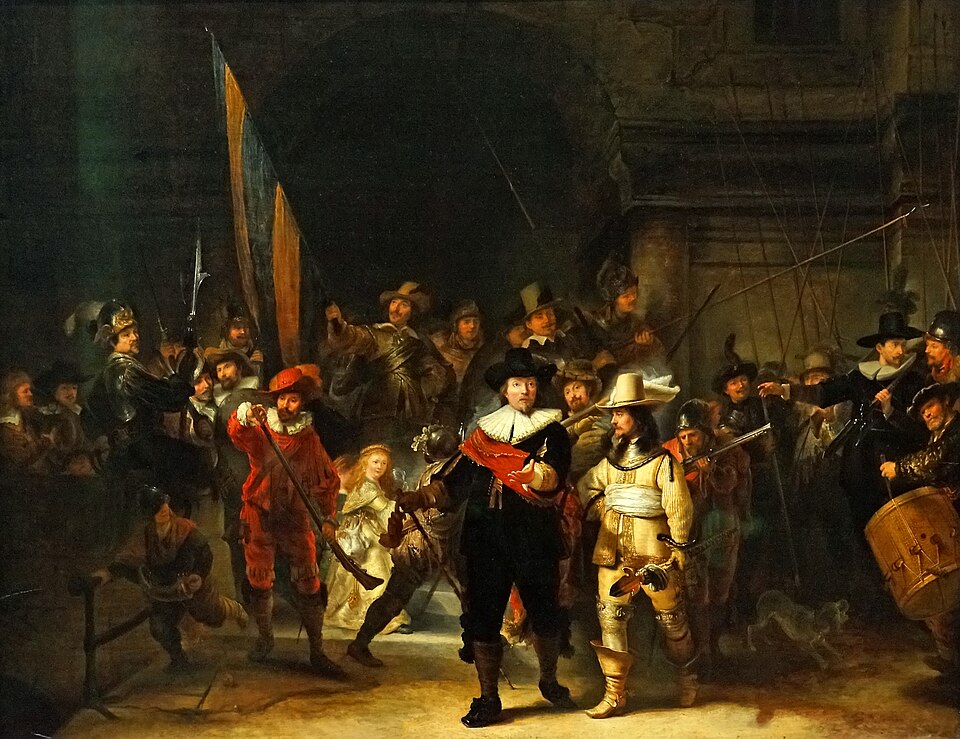
Description: Imagine a giant, action-packed painting so full of life it feels like a movie scene. That’s ‘The Night Watch’ by Rembrandt van Rijn. It’s not actually a night scene; the painting just got darker over time! It shows a group of city guards, led by Captain Frans Banninck Cocq, getting ready for action. Instead of a stiff, formal group portrait, Rembrandt made everyone look like they were in the middle of doing something important, creating a whirlwind of motion and drama. The painting was famously trimmed on all four sides in 1715 to fit between two columns in Amsterdam’s Town Hall, losing several figures in the process.
Painting Techniques: Rembrandt was a master of chiaroscuro, a technique using strong contrasts between light and dark. He uses a spotlight effect to draw your eye to the most important figures, like the captain and his lieutenant, while others fade into the shadows, adding to the painting’s mystery and energy. Learn more about mastering light and shadow in your own paintings.
Location: Rijksmuseum, Amsterdam
Estimated Value: Priceless
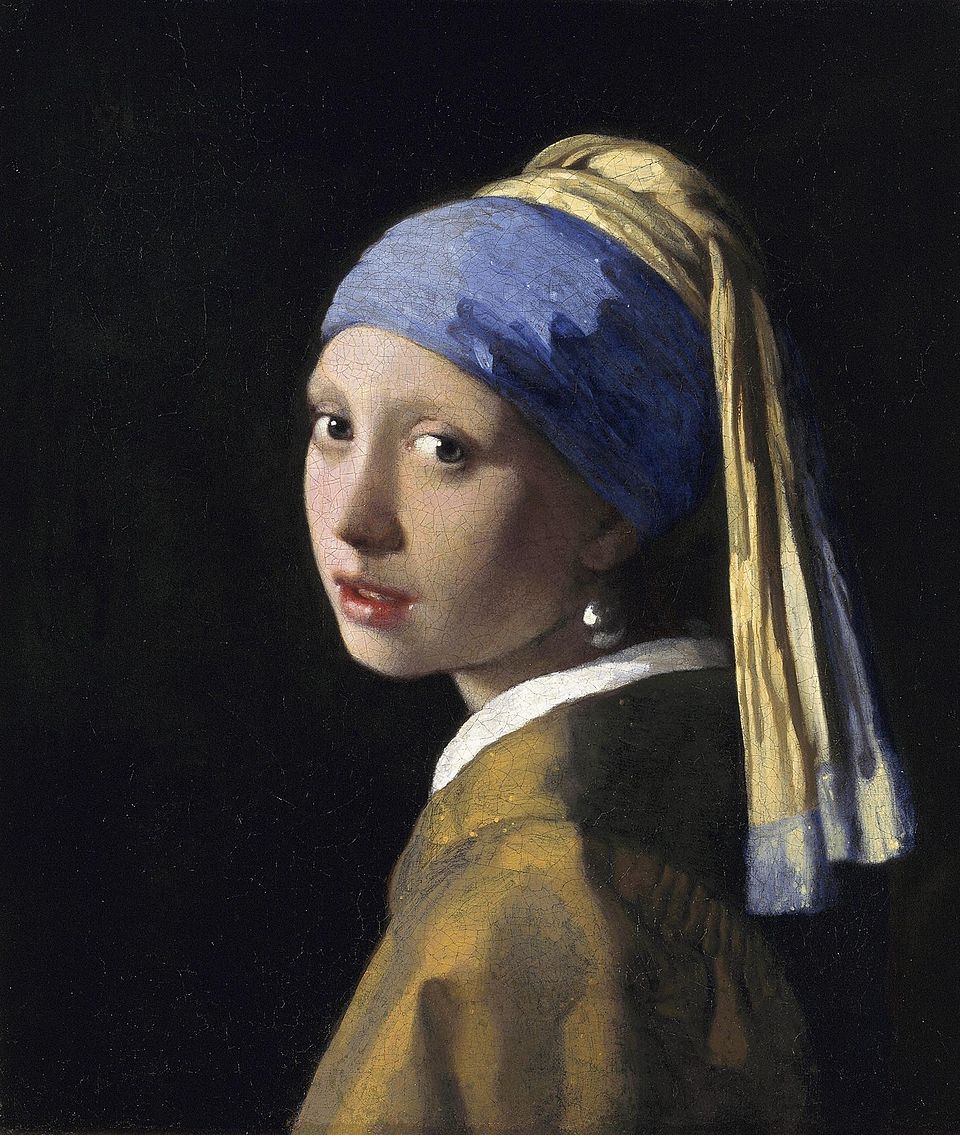
Girl with a Pearl Earring (c. 1665)
Description: Often called the ‘Mona Lisa of the North,’ this painting by Johannes Vermeer is captivating. It’s not a traditional portrait but a ‘tronie’—a study of a head and facial expression. The girl turns to look at us over her shoulder, her eyes wide and her lips slightly parted as if she’s about to say something. The simple dark background makes her, and the gleaming pearl earring, pop right off the canvas. The famous ‘pearl’ might not be a pearl at all; some art historians argue that given its size and sheen, it’s more likely polished tin or glass.
Painting Techniques: Vermeer was an expert at painting light. Notice how he uses tiny dots of white paint on the girl’s earring and the corner of her mouth to create a sense of wetness and reflection. His use of soft, diffused light gives the painting a quiet, intimate feel.
Location: Mauritshuis, The Hague
Estimated Value: Priceless
The Milkmaid (c. 1658-1660)

Description: Johannes Vermeer had a special talent for making simple, everyday moments feel sacred and important. In ‘The Milkmaid,’ a housemaid is completely focused on her task of pouring milk into a bowl. The room is quiet, and the sunlight streaming through the window illuminates every detail, from the texture of the bread to the stream of milk. It’s a peaceful scene that celebrates the dignity of daily work. X-ray analysis revealed that Vermeer originally included a map on the back wall, which he later painted over to keep the focus entirely on the maid and her task.
Painting Techniques: Vermeer used a technique called pointillé, applying tiny dots of paint to create a shimmering effect of light on surfaces. You can see this on the bread and the baskets. He also used a limited but rich color palette, with the brilliant blues and yellows making the scene vibrant.
Location: Rijksmuseum, Amsterdam
Estimated Value: Priceless
The Anatomy Lesson of Dr. Nicolaes Tulp (1632)

Description: This is one of Rembrandt’s first major works and it’s a real showstopper. It’s a group portrait, but a very unusual one. It shows Dr. Tulp giving an anatomy lesson to a group of surgeons, dissecting the arm of a corpse. The surgeons aren’t just staring at the viewer; they are all looking at different things—the body, the doctor, or a giant textbook—making the scene feel dynamic and real. The body being dissected belonged to an executed criminal named Aris Kindt, and public dissections were a social event in 17th-century Amsterdam.
Painting Techniques: Rembrandt’s genius for composition is on full display. He arranges the figures in a pyramid shape to create depth and focus. The intense lighting on the corpse makes it the undeniable center of attention, highlighting the scientific curiosity of the era.
Location: Mauritshuis, The Hague
Estimated Value: Priceless
The Merry Family (1668)

A lively and cautionary scene in The Merry Family by Jan Steen.
Description: Jan Steen was famous for his lively, chaotic, and often funny scenes of daily life. ‘The Merry Family’ is a perfect example. It shows a happy, noisy family gathering where everyone is eating, drinking, and making music. But it’s also a moral lesson. The note hanging from the mantelpiece contains a Dutch proverb: ‘As the old sing, so pipe the young,’ warning that children will copy their parents’ bad behavior. In the Netherlands, a messy, chaotic household is still sometimes referred to as a ‘Jan Steen household’ because of his famous paintings.
Painting Techniques: Steen was a brilliant storyteller. He filled his paintings with symbolic details and expressive figures. His use of bright colors and energetic brushwork adds to the joyful and chaotic atmosphere of the scene.
Location: Rijksmuseum, Amsterdam
Estimated Value: Priceless
The Laughing Cavalier (1624)

Description: Don’t let the title fool you—the man in this portrait by Frans Hals isn’t actually laughing. He has a confident, knowing smirk that makes you wonder what he’s thinking. Dressed in luxurious and fashionable clothes, he looks directly at the viewer with a bold and engaging gaze. It’s one of the most charismatic portraits ever painted. The title ‘The Laughing Cavalier’ was invented in the 19th century; the subject’s identity and why he is smiling remain a mystery.
Painting Techniques: Frans Hals was known for his loose, quick brushstrokes that brought his subjects to life. Instead of smooth, blended paint, you can see the individual strokes, which gives the painting a sense of energy and spontaneity, as if the man was captured in a fleeting moment.
Location: The Wallace Collection, London
Estimated Value: Priceless
The Windmill at Wijk bij Duurstede (c. 1670)
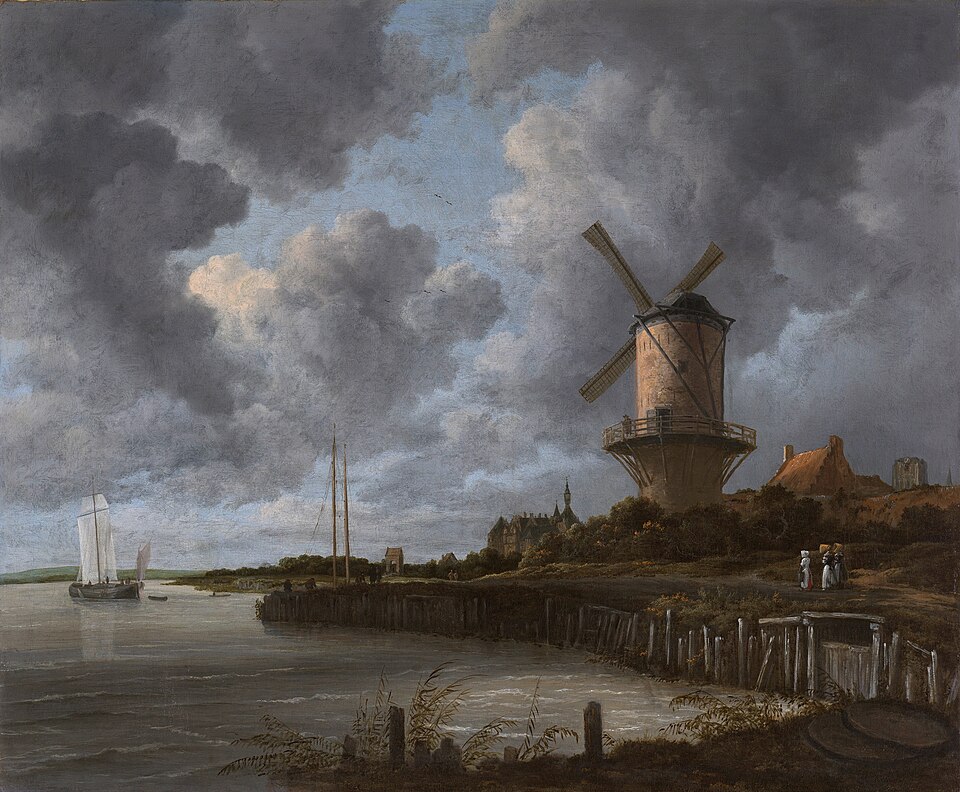
Description: Landscapes were a huge deal during the Dutch Golden Age, and Jacob van Ruisdael was the king of them. This painting shows a towering windmill set against a dramatic, cloudy sky. The landscape feels vast and powerful, with the dark clouds suggesting an approaching storm. It’s more than just a picture of a windmill; it’s a painting about the power of nature. To make the scene more impressive, Ruisdael made the windmill significantly taller in the painting than it was in real life.
Painting Techniques: Ruisdael was a master of painting skies. He used them to create mood and drama. The low horizon line in this painting makes the sky feel enormous and emphasizes the size and strength of the windmill. Explore more about landscape painting techniques.
Location: Rijksmuseum, Amsterdam
Estimated Value: Priceless
Still Life with Gilt Goblet (1635)

Description: Who knew a tipped-over cup and a half-eaten pie could be so beautiful? Willem Claesz. Heda was a master of the ‘pronkstilleven,’ or luxurious still life. This painting shows the messy aftermath of a fancy meal. The objects—a silver pitcher, a gleaming goblet, a peeled lemon—are painted with incredible realism. It feels like someone just stepped away from the table. These still life paintings often carried a hidden moral message, reminding wealthy viewers that earthly pleasures are temporary and fleeting.
Painting Techniques: Heda was incredible at painting textures. Look closely and you can almost feel the cold metal, the rough lemon peel, and the soft tablecloth. He used a limited, almost monochromatic color palette of grays, browns, and yellows to create a sense of harmony and calm.
Location: Rijksmuseum, Amsterdam
Estimated Value: Priceless
The Goldfinch (1654)
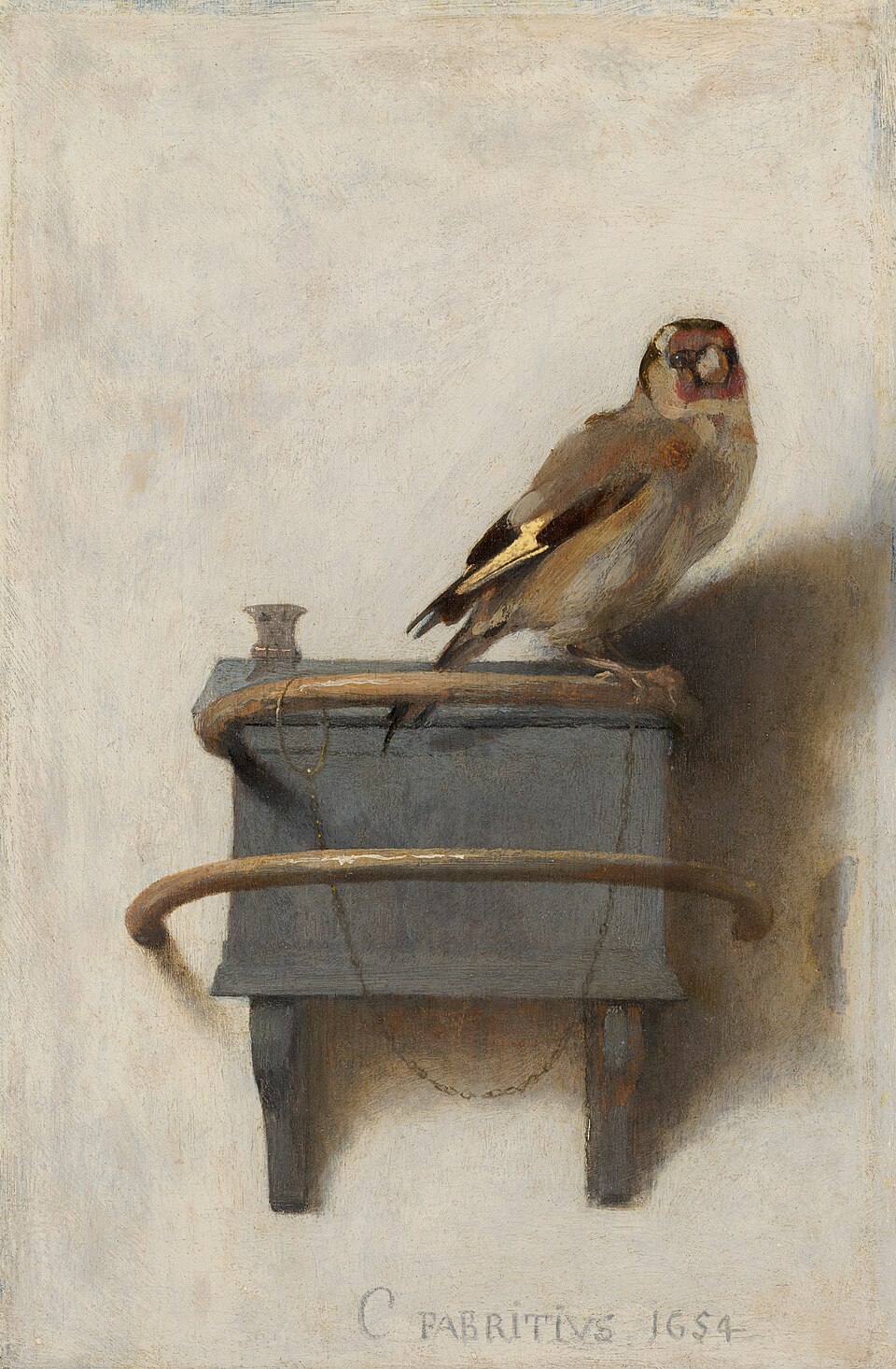
The tiny yet powerful masterpiece, The Goldfinch by Carel Fabritius.
Description: This small, charming painting by Carel Fabritius shows a little goldfinch chained to its perch. It’s a masterpiece of simplicity. The bird is painted with such detail and life that it almost seems real. Fabritius used a clever trick called trompe-l’œil, which means ‘to deceive the eye,’ to make the bird look three-dimensional. Carel Fabritius, one of Rembrandt’s most promising students, died in a massive gunpowder explosion in Delft the very same year this painting was created.
Painting Techniques: Fabritius used thick, bold brushstrokes for the bird, contrasting with the smooth, pale background. This technique, possibly learned from his teacher Rembrandt, helps the tiny subject stand out with a powerful presence.
Location: Mauritshuis, The Hague
Estimated Value: Priceless
The Proposition (1631)
Description: Judith Leyster was one of the few successful female painters of the era, and this painting shows why she was so brilliant. It depicts a man offering a woman money, interrupting her while she is sewing by candlelight. Unlike many similar scenes from the time, the woman is not interested. She ignores the man’s proposition and focuses on her work, a powerful statement of female integrity. For centuries, this work was mistakenly attributed to Frans Hals, but the discovery of Leyster’s distinctive monogram revealed her as the true artist. Learn more about women in art history.
Painting Techniques: Leyster was a master of genre scenes and candlelight effects, a skill often associated with the followers of Caravaggio. The single flame illuminates the scene dramatically, creating deep shadows and highlighting the tension between the two figures.
Location: Mauritshuis, The Hague
Estimated Value: Priceless

Inspiration and Legacy
Artists of the Dutch Golden Age drew inspiration from the dramatic lighting of Italian Baroque painters like Caravaggio, but they adapted this style to their own unique subjects. Instead of grand religious scenes, they focused on the world around them: portraits of merchants, detailed still lifes, vast landscapes, and scenes of everyday life. This focus on realism and the celebration of the ordinary was revolutionary.
The legacy of these Dutch masters is immense. Rembrandt’s psychological depth and experimental techniques influenced countless artists, including Vincent van Gogh. Vermeer’s mastery of light and quiet, intimate scenes have been studied and admired for centuries, inspiring artists and filmmakers alike. Their work fundamentally changed the art world, proving that profound beauty and meaning could be found in the everyday.
Final Thoughts
The Dutch Golden Age was more than just a period of history; it was a revolution in seeing. The artists of this era gave us a window into their world, capturing life with honesty, skill, and incredible beauty. From the grandeur of ‘The Night Watch’ to the quiet contemplation of ‘The Milkmaid,’ these works continue to fascinate and inspire us. The legacy of Dutch Golden Age paintings lies in their ability to make us appreciate the beauty in our own daily lives and to see the extraordinary in the ordinary.
If you’re inspired by these masters and want to develop your own painting techniques, explore our comprehensive guides for beginners on oil painting, watercolors, and acrylic painting.
FAQs about Dutch Golden Age
What was the Dutch Golden Age?
The Dutch Golden Age was a period in the 17th century (roughly 1588-1672) when the Dutch Republic became a global leader in trade, science, and art. This new wealth led to a huge demand for art, and painters began creating works for the homes of merchants and citizens, not just the church or royalty.
Why are there so many portraits and still lifes in Dutch Golden Age art?
With the rise of a wealthy middle class, people wanted to decorate their homes and show off their status. Portraits were a way to preserve their likeness, while still lifes of luxurious objects, exotic foods, and beautiful flowers were a way to display their wealth and success.
Who are the most famous Dutch Golden Age painters?
The ‘big three’ are generally considered to be Rembrandt van Rijn, known for his dramatic portraits and historical scenes; Johannes Vermeer, celebrated for his masterful use of light in quiet domestic scenes; and Frans Hals, famous for his lively and energetic portraits. Discover more about famous artists and their styles.
What makes Dutch Golden Age paintings so special?
Their realism and focus on everyday life set them apart. These artists developed incredible techniques to paint light, texture, and human emotion in a way that had never been seen before. They made normal life a worthy subject for great art.