Do painters have to die to become famous? This question haunts art students, collectors, and aspiring artists everywhere. The short answer is no—it’s a romantic myth that misrepresents how artistic success actually works. While Vincent van Gogh’s tragic story feeds this narrative, many of history’s greatest painters achieved wealth and recognition during their lifetimes, from Leonardo da Vinci to Pablo Picasso.
Key Points Summary
- Death is NOT required for artistic fame—many painters achieve success while alive
- The “death effect” is economic, not magical—it’s about scarcity, not destiny
- Van Gogh’s story is misleading—his fame took decades after death, not immediately
- Modern artists build fame strategically through galleries, social media, and branding
- Historical masters like Picasso earned millions during their lifetimes through smart business
- Today’s art market values living artists more than ever before
Understanding the Death Effect Myth
The idea that painters must die before becoming famous persists in popular culture, but it’s mostly fiction. This belief stems from a few highly publicized cases—particularly Vincent van Gogh—whose posthumous success gets repeated so often it becomes accepted as truth.
What Is the “Death Effect”?
The death effect refers to the supposed instant increase in an artist’s value after they pass away. However, research shows this mechanism is far more complicated than people think. Van Gogh’s death passed without substantial comment, collectors didn’t scramble to acquire his works, and his art continued to be viewed as lacking for many years.
The real story? Van Gogh’s fame took over a decade to develop, only after German Expressionists and Fauvists started using his techniques in their own work. His success wasn’t about death—it was about cultural timing and critical reappraisal.
The Economics Behind Scarcity
When art dealers talk about the death effect, they’re actually discussing basic economics: scarcity value. Society naturally places higher value on things with limited supply. An artist’s death guarantees no more paintings will ever be created, making existing works definitively scarce.
In the business world, people buy stock based on predicted future value, and likewise, an artist may experience more notoriety and higher prices in the years prior to their death because the value of their art is predicted to rise.
This explains why some collectors invest in elderly artists—they’re banking on scarcity, not artistic merit. It’s a financial strategy, not evidence that death creates talent recognition.
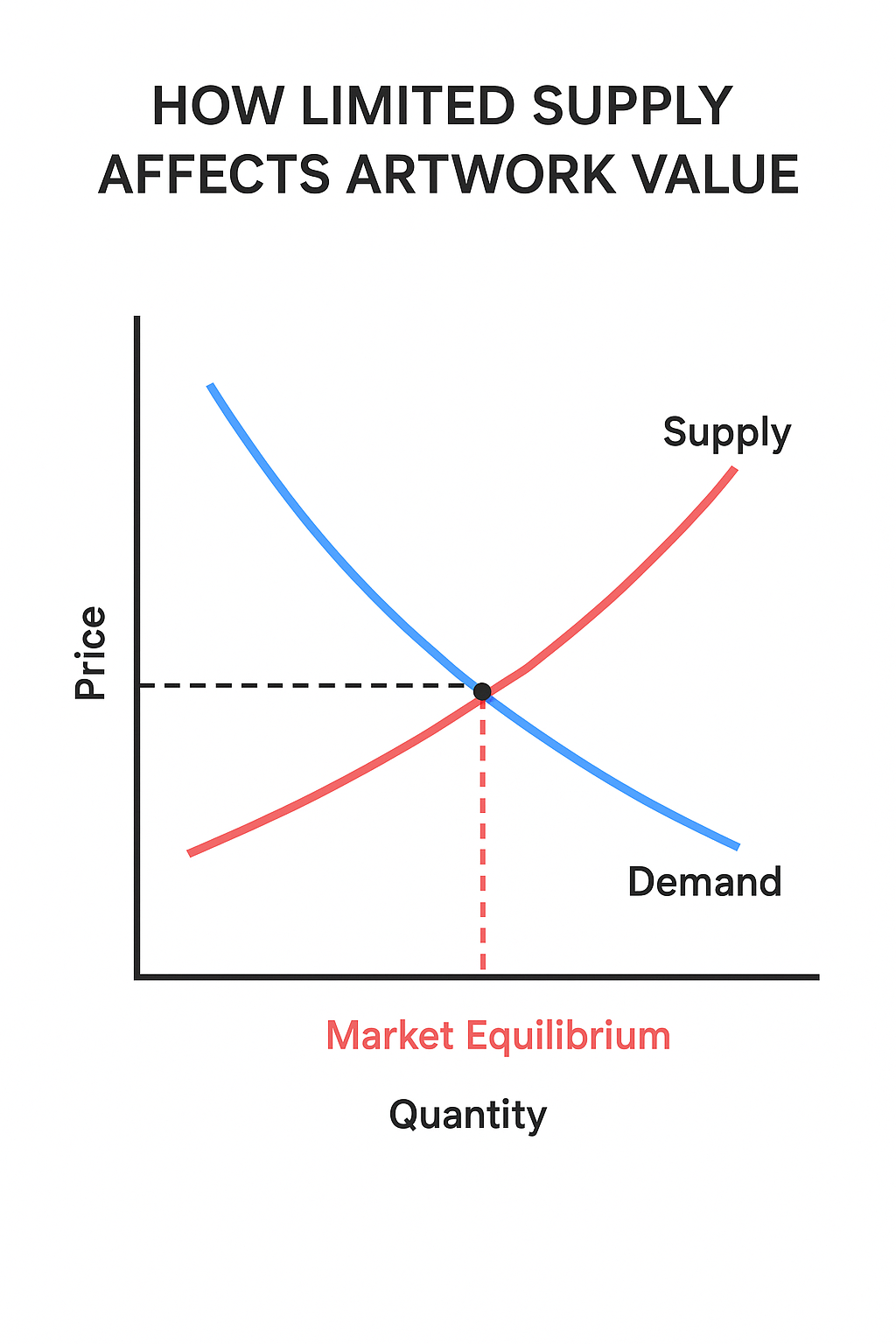
Basic economic principles of supply and demand:
The horizontal axis (Quantity) represents the number of artworks available.
The vertical axis (Price) represents the value or price of the artwork.
The blue curve (Demand) slopes downward, showing that as price decreases, more people want to buy art.
The red curve (Supply) slopes upward, showing that as price increases, artists or sellers are willing to supply more art.
The intersection point (where supply and demand meet) represents the market equilibrium — the fair price and quantity under normal conditions.
In short:
👉 Less supply + steady demand = higher price.
Historical Painters Who Became Famous While Alive
The most influential artists throughout history prove that success doesn’t require dying first. Let’s examine some who enjoyed wealth, recognition, and celebrity during their active careers.
Leonardo da Vinci: The Renaissance Celebrity
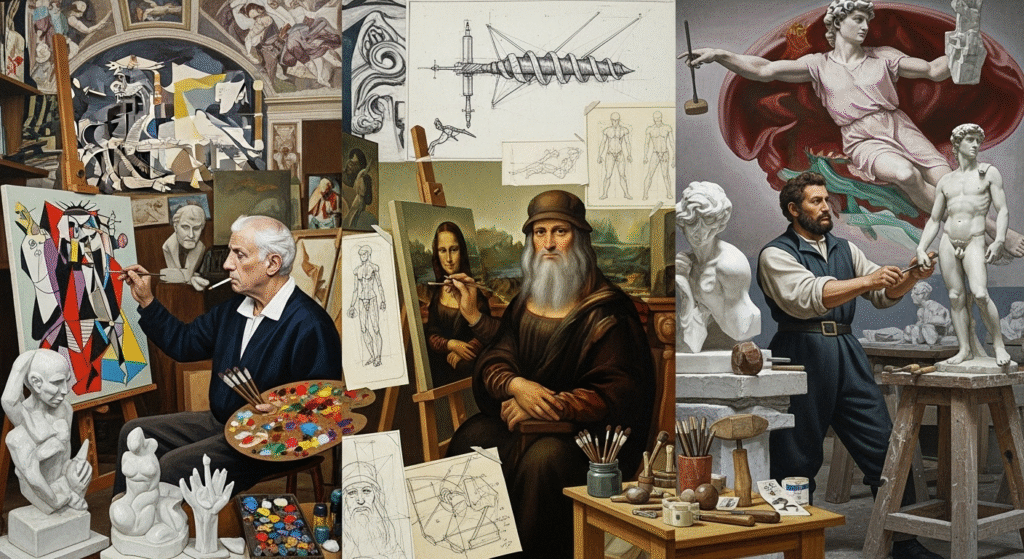
Leonardo Da Vinci was famous in his lifetime—a rare feat achieved by few other artists. At 14, he was apprenticed to one of the best painters of the time, Andrea del Verrocchio, and was commissioned by nobility and clergymen to paint.
Da Vinci’s success came from strategic positioning. He wasn’t just a painter—he was a scientist, mathematician, and inventor. He worked for powerful patrons including the Medici family, securing commissions that paid well and boosted his reputation. His masterpieces like The Last Supper and Mona Lisa were celebrated during his lifetime, not discovered posthumously.
Michelangelo: The Commissioned Genius
Michelangelo represents another perfect example of living success. Throughout the Renaissance period, fame meant proximity to power. Michelangelo received numerous significant commissions from popes and princes, enjoying celebrity status while actively creating the Sistine Chapel ceiling and his sculpture of David.
These Renaissance masters weren’t struggling artists—they were the premier service providers to the most influential patrons of their time. Their business model was simple: create exceptional work, secure powerful sponsors, and build a reputation that commanded top prices.
Pablo Picasso: The Ultimate Brand Manager
Do painters have to die to become famous? Picasso’s life answers with a resounding “no.” He stands as the definitive counter-example to the death myth, functioning as arguably the first artist to strategically manage his own brand on a global scale.
Picasso’s numbers are staggering:
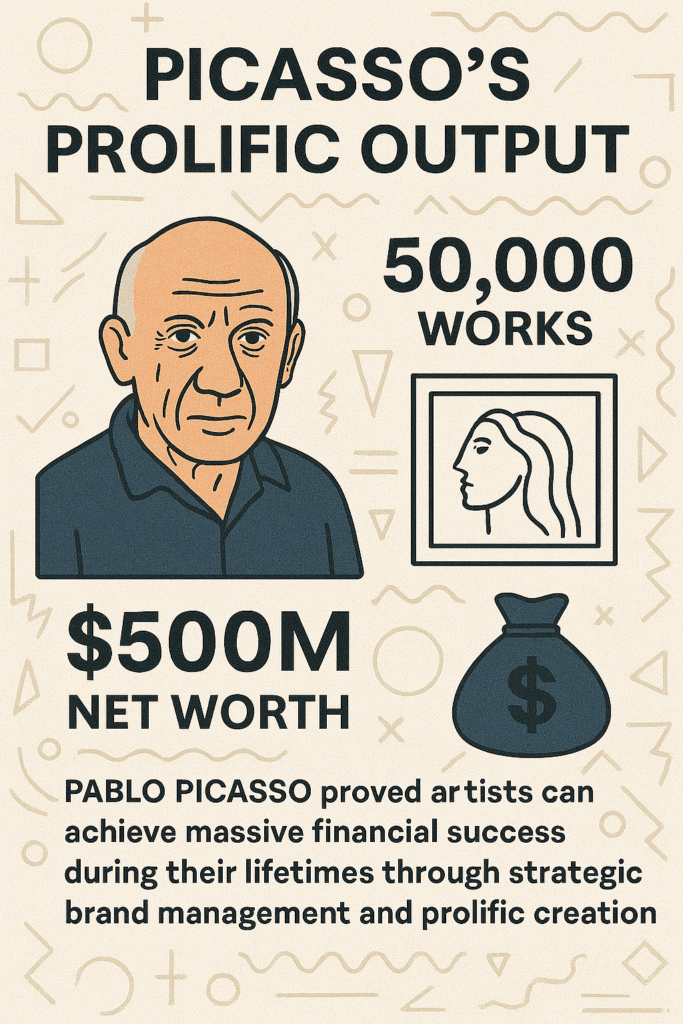
- Created approximately 50,000 artworks over 71 years
- Averaged one new piece almost daily from age 20 to 91
- Achieved a net worth of $500 million by his death in 1973
- Became a household name while actively painting
How did he do it? Picasso’s revolutionary approach combined prolific output with savvy business strategy. He co-invented Cubism around 1907, fundamentally contributing to modern art development. But beyond artistic innovation, Picasso mastered the complex system of dealers and intermediaries.
By mid-career, Picasso held the upper hand over galleries representing him. His work was so sought-after that he controlled which pieces entered the market. When relationships with traditional dealers faltered, he leveraged high-society connections for major non-gallery commissions, such as set designs for the Ballets Russes.
Contemporary Success Stories
During the modern age, many well-known artists were creating work and finding large audiences in life. Artists like Andy Warhol, Salvador Dali, and Georgia O’Keeffe all found great success before their deaths.
Today, living artists like Ai Weiwei, Kehinde Wiley (who painted President Obama’s portrait), and Banksy command international attention and high prices. The contemporary painting scene includes numerous artists building successful careers right now.
How Modern Artists Build Fame While Living
Today’s art world has transformed from an existential lottery into a managed commercial enterprise. Three primary variables determine contemporary success: institutional endorsement, quantifiable investment potential, and digital exposure.
The Power of Mega-Galleries
Art galleries function as “kingmakers” in today’s market. Representation by top-tier galleries like Gagosian, Hauser & Wirth, or Pace acts as a career-defining moment. These institutions launch careers, set market prices, and serve as gatekeepers to the most sought-after works.
Historical pioneers including Georgia O’Keeffe and Mark Rothko relied heavily on visionary dealers like Alfred Stieglitz and Leo Castelli. These relationships provided financial backing and promotion that were indispensable for breaking down barriers to acclaim.
The strategic approach focuses intensely on established, “proven artists” to ensure quicker returns on investment and reduced risk. By capitalizing on existing demand and employing psychological strategies that create urgency and exclusivity, mega-dealers drive up the desirability and value of living artists’ works.
Investment-Worthy Criteria
For collectors acquiring work by living artists, the art market has established specific criteria to de-risk investments:
| Investment Criteria | Why It Matters | Impact on Fame |
|---|---|---|
| Mature Style Examples | Minimizes career uncertainty, validates consistent development | Solidifies critical acceptance, translates to higher initial pricing |
| Strong Provenance | Establishes legitimacy, liquidity, and institutional association | Signals high-value status, increases competitive desirability |
| Cultural Relevance | Captures public attention, engages contemporary discourse | Drives museum investment and media attention rapidly |
| Auction Track Record | Proves consistent market repeatability and stability | Creates urgency and perceived stability for collectors |
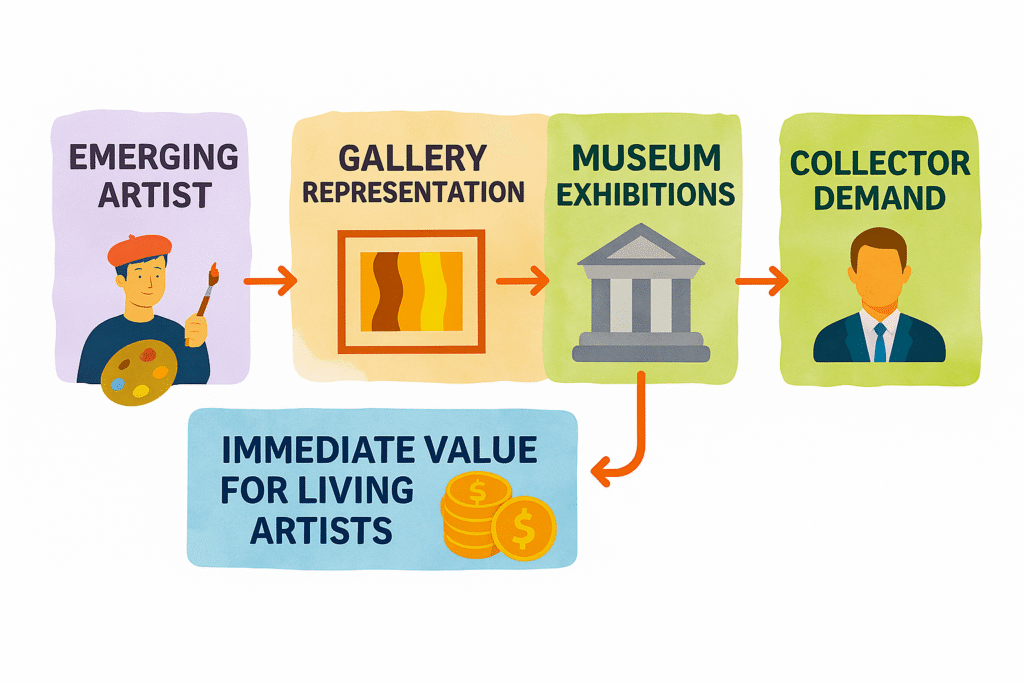
Works addressing current themes—fame, politics, gender, race, and nationality—are particularly valuable. This cultural relevance translates directly into interest from major collectors and museums, propelling an artist’s celebrity and financial viability.
The modern market front-loads validation. Rather than waiting decades for posthumous reappraisal, mega-galleries absorb critical risk by selecting and promoting established living artists. High prices are paid now, based on managed expectations of future legacy, not confirmed historical legacy.
Digital Revolution: Social Media as Gallery
Because we live in an era where art is everywhere, and doesn’t appear to be leaving any time soon, it’s important to nourish the creative mind and encourage people to participate in art.
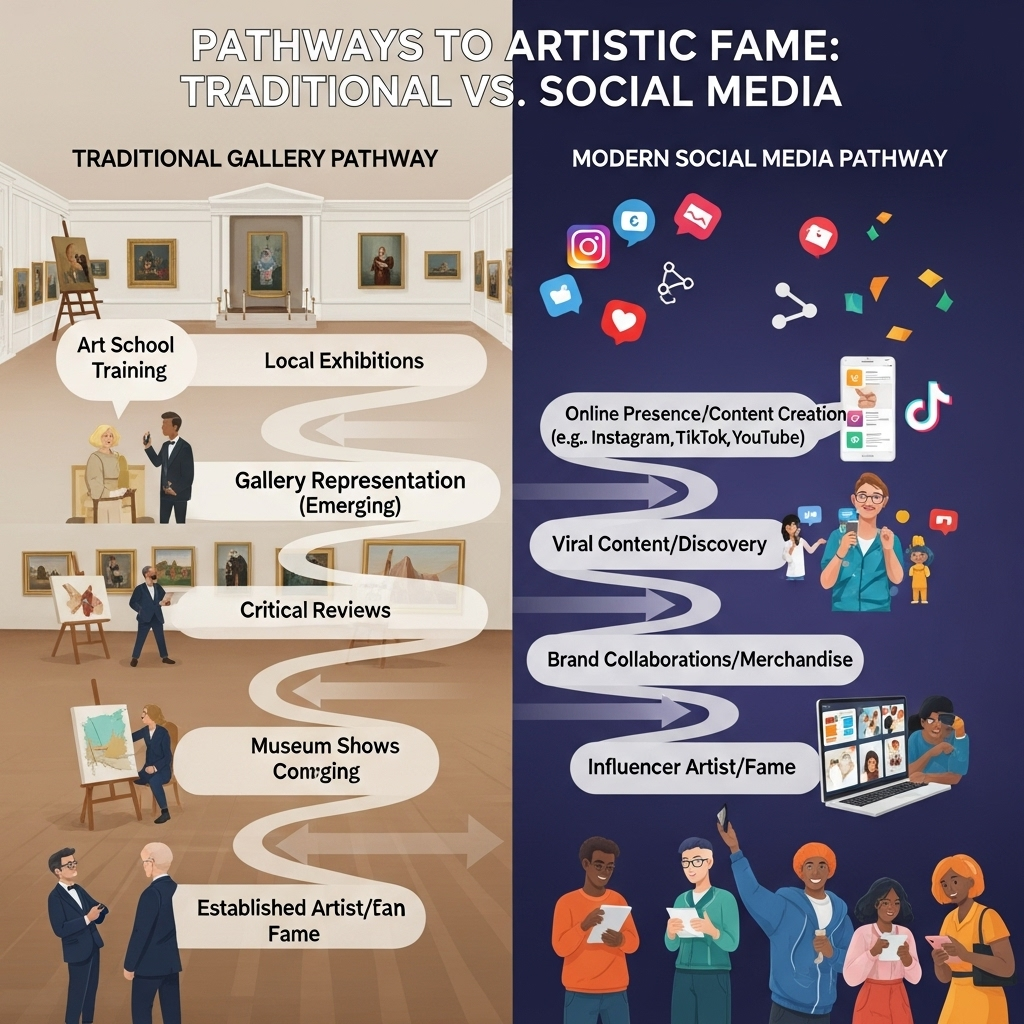
Social media platforms offer contemporary artists unprecedented visibility. A local painter can reach global audiences instantaneously, eliminating sole reliance on physical galleries. Instagram artists regularly gain international recognition through viral content.
The digital environment allows artists to actively develop personal brands. Their profiles act as digital portfolios showcasing not only finished work but also personality, creative process, and behind-the-scenes narratives. This transparency fosters deeper connections between creators and audiences—a key component of modern celebrity.
Platforms facilitate immediate engagement through comments, likes, and shares, providing instant feedback and valuable networking opportunities. Artists connect directly with curators, collectors, and potential collaborators globally, bypassing traditional gatekeepers.
Major international art fairs leverage this digital-physical symbiosis. While events like Art Basel and Frieze only operate physically for a few days annually, they maintain vital year-round digital presence. Art Basel’s 1.4 million Instagram followers dwarf physical attendance, using actual fairs as content generators to amplify digital reach.
The Dual Economy of 21st Century Fame
| Fame Mechanism | Posthumous (Van Gogh Model) | Modern Living Artist |
|---|---|---|
| Primary Value Driver | Scarcity, time, and historical reappraisal | Strategic branding, gallery promotion, audience engagement |
| Timeframe for Success | Decades (often 10+ years post-mortem) | Instantaneous (viral) to short-term managed growth |
| Artist Control | None—relies entirely on external critics | High—artists proactively manage personal brand |
| Core Economic Principle | Fixed supply and demand (scarcity) | Speculative investment potential and cultural relevance |
| Key Intermediaries | Posthumous critics, historians, later generations | Mega-galleries, social media platforms, art fair networks |
The Celebrity Economy is driven by instantaneous viral notoriety and carefully managed personas. The Value Economy remains tethered to physical institutional validation, high-level provenance, and investment criteria established by galleries and auction houses. Digital tools accelerate the former, generating global recognition, but physical intermediaries anchor this notoriety to high market value.
Why Van Gogh’s Story Misleads Us
Vincent van Gogh’s tragic narrative serves as the defining archetype of the struggling artist redeemed by death. The popular story claims he sold only one painting during his lifetime, died unappreciated, and became instantly valuable posthumously. This oversimplified version misleads aspiring artists about how fame actually works.
The Real Van Gogh Timeline
The truth is more nuanced. Van Gogh wasn’t entirely unknown during his life—he exhibited work and connected with other artists. His brother Theo supported him financially and promoted his paintings. What Van Gogh lacked wasn’t talent but the right timing and cultural context.
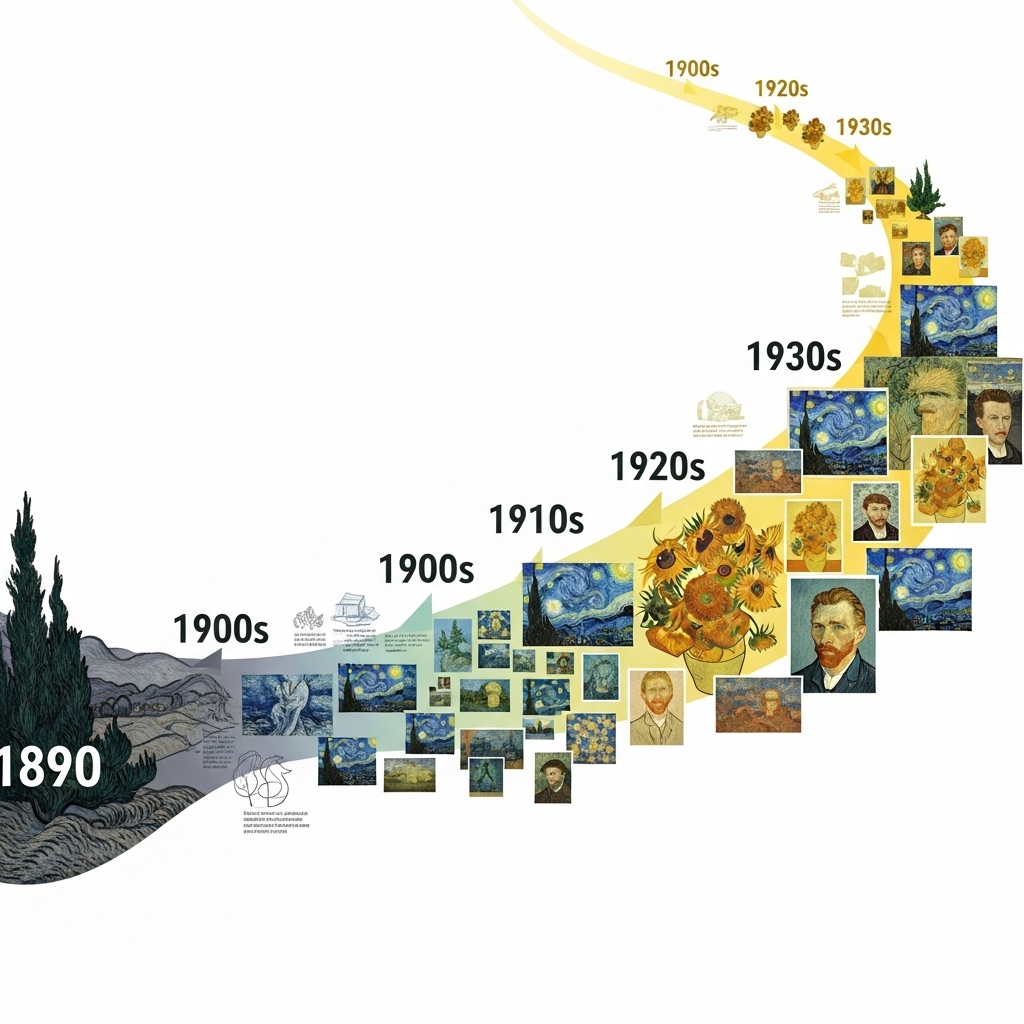
After his 1890 death, there was no miraculous scramble by collectors. His work continued being undervalued for over a decade. The acceleration began only when new movements—particularly German Expressionists and Fauvists—discovered his techniques and incorporated them into their own revolutionary styles.
Van Gogh’s posthumous success required living critics and subsequent artists to write the script for his legacy. As literary theory suggests, no artist’s meaning is complete in isolation. Their significance emerges through relationship to “the dead poets and artists.” Death finalized Van Gogh’s body of work, allowing critics to place him within art history for critical comparison.
Lessons from the Van Gogh Myth
Do painters have to die to become famous? Van Gogh’s story actually teaches the opposite lesson. His fame didn’t result from death itself but from:
- Cultural timing: Right movements discovering his work at the right moment
- Critical champions: Advocates who promoted his unique vision
- Finished oeuvre: A complete body of work for assessment
- Historical context: Later generations recognizing his innovations
These factors could have operated during his lifetime with better positioning, supportive dealers, and different cultural circumstances. Van Gogh’s tragedy wasn’t that he needed to die for recognition—it’s that he lacked the business infrastructure and strategic support that successful living artists employ today.
Artists like Paul Cézanne and Paul Gauguin faced similar challenges but achieved greater recognition before death because they better navigated the art establishment.
Building Success as a Living Artist Today
Modern painters have unprecedented opportunities to achieve recognition during their lifetimes. The tools, platforms, and market structures supporting living artists are more robust than ever in history.
Strategic Steps for Contemporary Artists
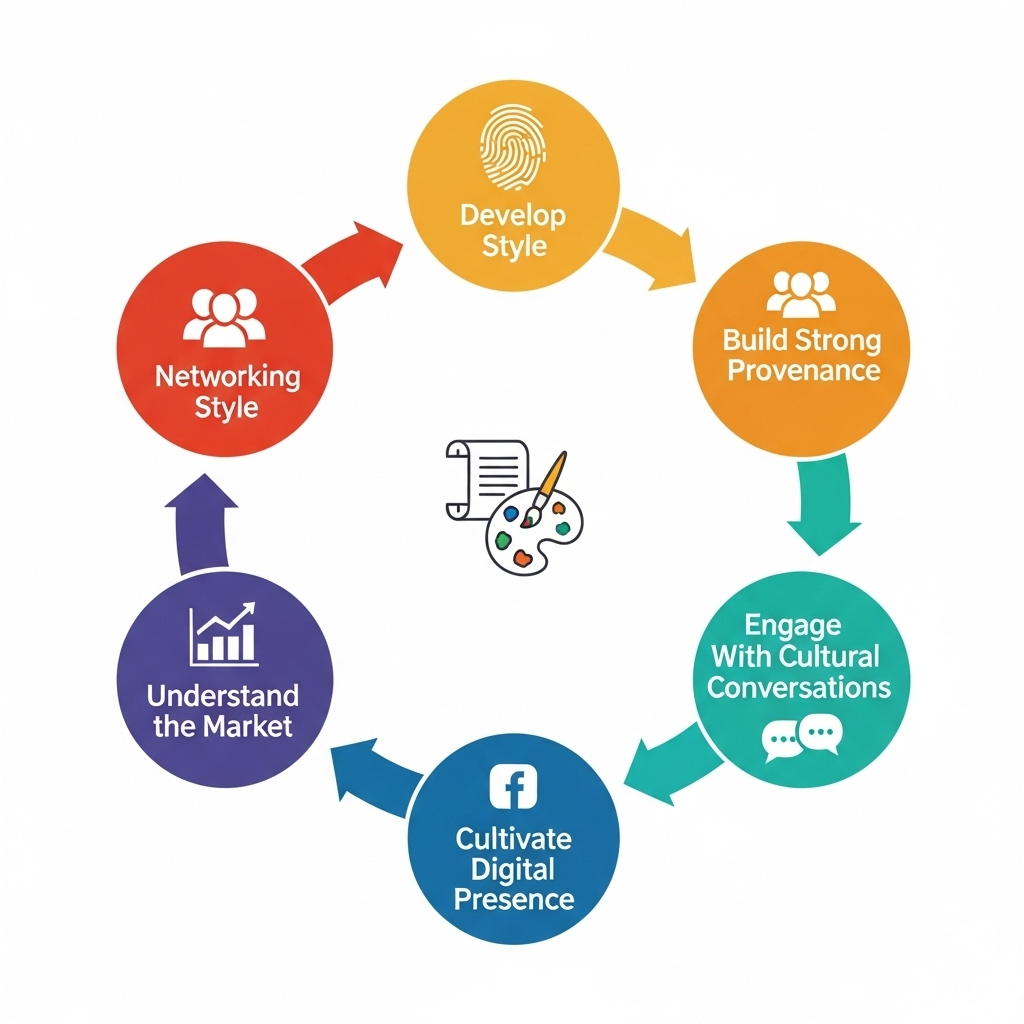
1. Develop Your Unique Style
The first requirement for investment-worthy work is demonstrating a mature, consistent style. Collectors want to see a clear artistic voice that represents genuine vision, not trend-chasing. Study famous artist styles to understand how masters developed signature approaches, then find your own painting style.
Experiment with different painting techniques until you discover what feels authentic. Whether working in watercolor, oil, or acrylic, consistency helps collectors recognize and value your work.
2. Build Strong Provenance
Document everything. Professional photographs, exhibition history, gallery representations, awards, and publications all contribute to provenance. Each piece of documentation adds legitimacy and value to your work.
Create a professional portfolio showing your evolution as an artist. Include artist statements explaining your concepts and influences. The art world values transparency and professionalism when assessing investment potential.
3. Engage With Cultural Conversations
Address relevant contemporary themes in your work. Art that speaks to current issues—identity, environment, technology, social justice—captures public attention. This doesn’t mean abandoning personal vision, but rather connecting individual experience to broader cultural moments.
Research art movements to understand how artists throughout history engaged with their times. Contemporary art increasingly values work that sparks dialogue and reflection.
4. Master Digital Presence
Build professional social media profiles showcasing your work and creative process. Platforms like Instagram, TikTok, and Pinterest drive discovery for emerging artists. How TikTok shapes contemporary painting demonstrates social media’s growing influence.
Post consistently, engage with followers, and participate in online art communities. Digital presence amplifies gallery representation rather than replacing it. The most successful contemporary artists maintain both strong online brands and physical gallery relationships.
5. Network Strategically
Attend gallery openings, art fairs, and industry events. Building an art business requires relationships with curators, collectors, other artists, and critics. Many breakthrough opportunities come through personal connections.
Consider residencies, competitions, and group exhibitions to expand your network. Each interaction builds credibility and increases visibility within art world circles.
6. Understand the Market
Study art market trends to understand what’s currently valued. This doesn’t mean compromising artistic integrity, but rather positioning work strategically. Learn how to price your artwork appropriately based on size, medium, experience, and comparable sales.
Research which galleries represent artists working in similar styles. Understanding your place within the broader market ecosystem helps identify appropriate representation opportunities.
Monetization Options for Living Artists
Today’s artists have multiple revenue streams beyond traditional gallery sales:
- Selling art online through platforms like Etsy, Saatchi Art, and personal websites
- Print-on-demand products featuring your artwork
- Art commissions from private collectors
- Teaching workshops or creating online courses
- Licensing artwork for commercial use
- Passive income streams through various channels
- Grant funding from various organizations
Diversifying income sources provides financial stability while building your reputation. Many successful artists maintain multiple revenue streams rather than relying solely on gallery representation.
The Psychology Behind Posthumous Fame
Understanding why the death myth persists reveals important insights about how we value art and artists.
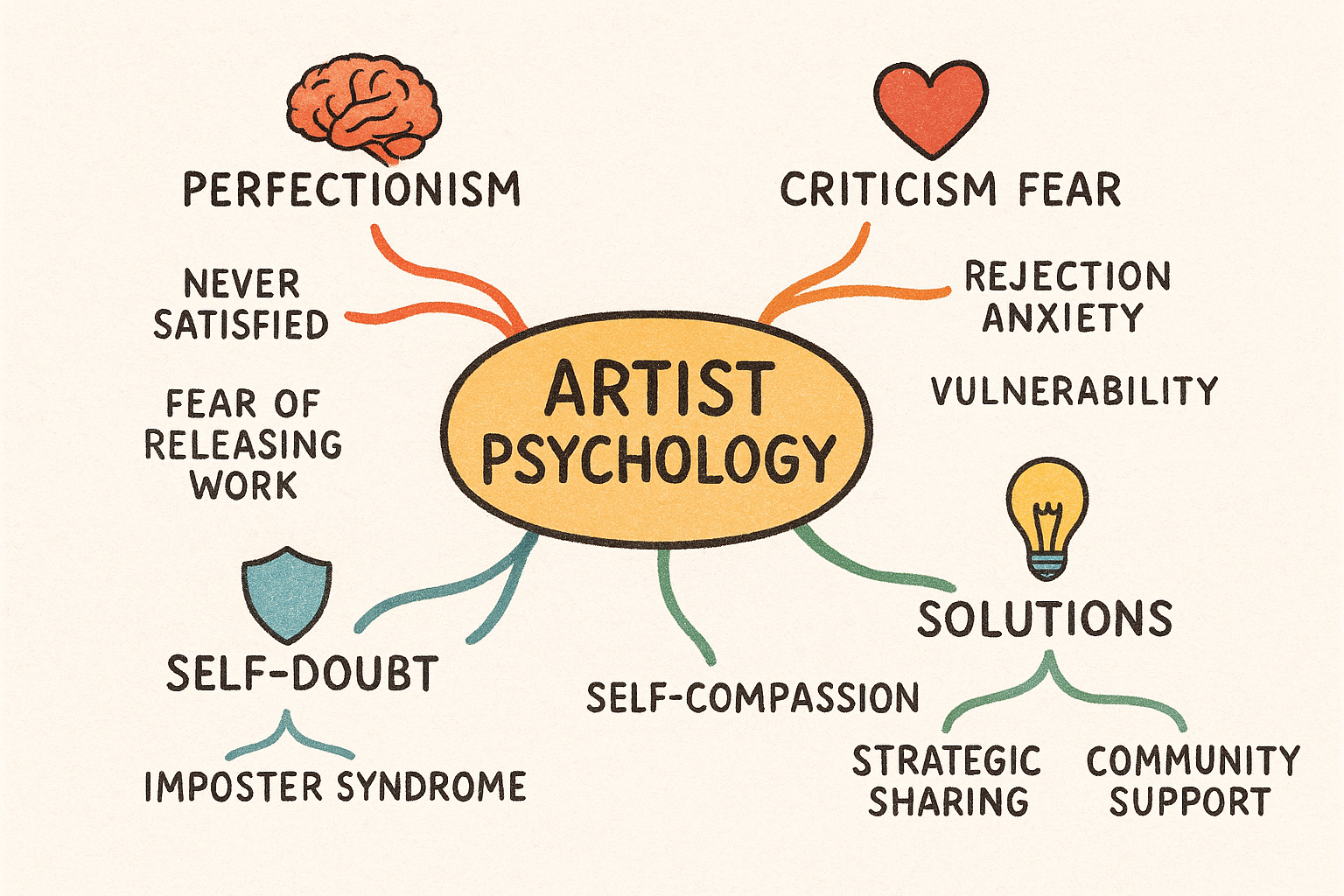
The Romance of the Suffering Artist
Western culture has romanticized the “starving artist” archetype for centuries. This narrative suggests true artistic genius requires suffering, poverty, and ultimate redemption through posthumous recognition. Van Gogh’s story perfectly fits this dramatic arc, which is why it gets repeated constantly.
This mythology serves several functions:
- Justifies collecting practices: Buyers feel they’re “discovering” overlooked talent
- Validates delayed recognition: Critics can claim prescience about “difficult” work
- Excuses poor artist support: Society off-loads responsibility for supporting living creators
- Creates compelling narratives: Tragedy sells better than steady commercial success
The reality? Many famous artists lived in poverty not because suffering enhanced their talent, but because of poor business skills, mental illness, addiction, or societal rejection of innovative work.
The Perfectionism Trap
Most artists have an emotional attachment to their creations, making them horribly vulnerable to criticism. Many don’t believe their work will ever be good enough to earn money. They’re perfectionists at their core, and cannot release a piece until they’re completely satisfied—but that satisfaction never comes.
This perfectionism blocks success during an artist’s lifetime. Fear of criticism prevents artists from releasing work publicly, severely limiting opportunities for recognition and sales. Ironically, after death, these same artists can no longer block the flow of appreciation—explaining why some gain posthumous fame.
The lesson? Overcoming creative blocks and managing perfectionism are crucial skills for living artists. Success requires not just creating good work, but also sharing it confidently with the world.
Death as Finalization
There’s a legitimate reason why ultimate historical status often requires death: completeness. Critics can only definitively assess an artist’s full contribution once their life’s work is finished. A living artist might still create their masterpiece tomorrow, changing critical evaluations.
Death finalizes the portfolio, allowing historical placement within the continuum of art history. This determines whether work represents a transient trend or a cornerstone of cultural development. For the designation of historical greatness transcending multiple centuries, an artist’s passing serves as essential finalization for long-term critical placement.
However, this applies to enduring legacy across generations—not initial fame, commercial success, or contemporary recognition. Living artists absolutely can achieve all those during their lifetimes.
Debunking Common Misconceptions
Let’s address several persistent myths about artistic fame that discourage living artists.
Myth 1: “Only Dead Artists Are Valuable”
Reality: The highest-selling living artists regularly command millions at auction. Jeff Koons, David Hockney, and Gerhard Richter all sell works for eight-figure sums while actively creating. The secondary market for living artists has grown exponentially in recent decades.
Myth 2: “True Art Isn’t Commercial”
Reality: Throughout history, the greatest artists were consummate professionals who understood business. Rembrandt operated a large studio workshop. Rubens employed assistants to meet demand. Picasso strategically managed his brand. Separating art from commerce is a modern romantic notion that doesn’t reflect historical reality.
Myth 3: “Galleries Only Want Dead Artists”
Reality: Galleries make more money representing living artists. They can build relationships, secure exclusive representation, and shape careers over time. Dead artists’ estates control their work, limiting gallery opportunities. Top galleries actively scout living talent because it’s more profitable long-term.
Myth 4: “You Need to Struggle to Create Good Art”
Reality: Poverty and suffering don’t enhance creativity—they hinder it. Financial stress, mental illness, and addiction prevent artists from working at full capacity. The “suffering artist” myth romanticizes circumstances that actually damaged artists’ careers and well-being. Art therapy research shows creativity flourishes in supportive environments.
Myth 5: “Social Media Success Isn’t Real Success”
Reality: Digital platforms are increasingly where collectors discover artists. Instagram has become the primary portfolio platform for emerging artists. Online artists who build engaged followings translate that attention into gallery representation, commissions, and sales. Social media success and traditional art world success now reinforce each other.
“The idea that artists must suffer and die before achieving recognition is a harmful myth that prevents living artists from pursuing sustainable careers. History shows us that savvy business skills, strategic positioning, and strong support networks matter as much as raw talent.”
Contemporary Art Market Analysis
The Future of Artist Fame
The trajectory of the art world increasingly favors living artists. Several emerging trends accelerate this shift.

Technology and Democratization
AI art tools and digital platforms democratize access to both creation and distribution. Artists no longer need gallery approval to reach global audiences. While this increases competition, it also multiplies opportunities for recognition.
Virtual galleries and digital art markets expand beyond physical limitations. Collectors worldwide can discover and purchase work without geographic constraints. This global marketplace increases liquidity and visibility for living artists.
Changing Collector Demographics
Younger collectors prioritize living artists over historical works. They want relationships with creators, access to studios, and involvement in artistic development. This generational shift in collecting motivations bodes well for contemporary artists.
Millennial and Gen Z collectors also value social impact, diversity, and innovation—areas where living artists excel. The increasing size of the art market means more buyers seeking more artists, creating opportunities unprecedented in history.
Transparency and Access
Social media provides unprecedented transparency into artistic processes. Collectors see works in progress, understand creative decisions, and connect personally with artists. This intimacy creates emotional investment that drives sales and loyalty.
How artists build their brands now includes authentic engagement and behind-the-scenes access. Artists who embrace this transparency cultivate devoted followings that support their work financially and emotionally.
Sustainability and Ethics
Growing awareness of sustainable art practices and ethical collecting favors living artists. Collectors increasingly want to know their purchases support artists directly rather than enriching estates or speculators.
This ethical dimension adds value to purchasing from living artists. Collectors feel they’re participating in cultural creation rather than simply acquiring objects. This shift in values fundamentally changes how the market operates.
Frequently Asked Questions
How long does it take for artists to become famous?
There’s no fixed timeline for artistic fame. Some artists achieve recognition within years through viral success or strategic gallery relationships, while others build reputations steadily over decades. Contemporary artists leveraging social media can gain attention faster than historical figures, but lasting recognition still requires consistent quality and cultural relevance.
Why are some artists only recognized after death?
Artists were often not appreciated when alive because they were ahead of their times, and people didn’t understand or appreciate their style. Also, their audience was limited due to nonexistence of global communication and easy travel. Today’s technology and global connectivity make posthumous discovery less common.
Can artists become millionaires while alive?
Absolutely. Many contemporary artists earn substantial incomes through gallery sales, commissions, licensing, and teaching. Artists like Jeff Koons, Damien Hirst, and Yayoi Kusama have achieved multimillion-dollar net worths during their lifetimes. Success requires combining artistic talent with business acumen and strategic positioning.
What percentage of artists become famous?
Fame is subjective and exists on a spectrum. While only a small percentage achieve international household-name status, many artists build successful regional or specialized reputations. With the global rise of amateur painting, more artists at various levels find audiences and financial sustainability.
Do artists need gallery representation to succeed?
Not necessarily. While gallery representation remains valuable for accessing established collectors and institutions, many artists build successful careers through online sales, commissions, teaching, and direct marketing. Diversifying income sources often provides more stability than gallery reliance alone.
How much does an artist’s death increase their work’s value?
The “death bump” varies dramatically. Well-known artists may see 20-30% increases, while unknown artists may see no change at all. The increase depends on existing demand, career trajectory, and scarcity of available works. Notably, Van Gogh experienced no immediate value increase following his death.
Are any art movements more successful during artists’ lifetimes?
Yes. Impressionists like Monet and Renoir achieved substantial success while living, despite initial critical resistance. Pop Art pioneers like Warhol became celebrities during their careers. Contemporary movements generally support living artists better than historical periods due to improved market infrastructure.
How can I increase my chances of success as a living artist?
Focus on developing a consistent style, building strong digital presence, networking within art communities, understanding market dynamics, and maintaining prolific output. Combine artistic excellence with business skills. Study how to improve your art while simultaneously learning how to sell effectively.
Conclusion: Death Is Not a Prerequisite for Fame
Do painters have to die to become famous? The evidence overwhelmingly says no. This persistent myth misrepresents both historical reality and contemporary market dynamics. From Renaissance masters to modern superstars, countless painters have achieved wealth, critical acclaim, and lasting recognition during their active lifetimes.
Death functions primarily as an economic accelerator for secondary markets and a definitive risk mitigator for collectors—it guarantees scarcity and finalizes portfolios for historical assessment. But living artists achieve fame, notoriety, and commercial success every day through strategic positioning, quality work, and effective brand management.
The real difference between Van Gogh’s trajectory and Picasso’s wasn’t talent—it was business infrastructure, strategic support, cultural timing, and self-promotion. Today’s artists have unprecedented tools for building recognition without waiting for posthumous reappraisal. Social media, global connectivity, mega-galleries, and transparent markets all favor living artists more than any previous era in history.
The ultimate measure of artistic greatness may still require the passage of time and historical perspective. But financial success, celebrity status, critical recognition, and cultural impact are all readily achievable for painters who combine artistic excellence with strategic career management.
The romantic notion that artists must suffer in obscurity and achieve recognition only after death serves no one—not collectors seeking investment opportunities, not audiences craving connection with living creators, and certainly not the artists themselves who deserve to benefit from their talents during their lifetimes.
So if you’re an aspiring painter wondering whether fame requires your demise, take heart. Pick up your brushes, develop your voice, build your network, share your work boldly, and pursue success now. History’s most celebrated artists prove that recognition, wealth, and lasting legacy are all possible while you’re still alive to enjoy them.
Citations:
Academic and Market Research:
Artist Career Development:
- Creative Capital
- New York Foundation for the Arts (NYFA)
- The Artist’s Guide to Grant Writing by Gigi Rosenberg
Art History and Context:
Market and Auction Data: