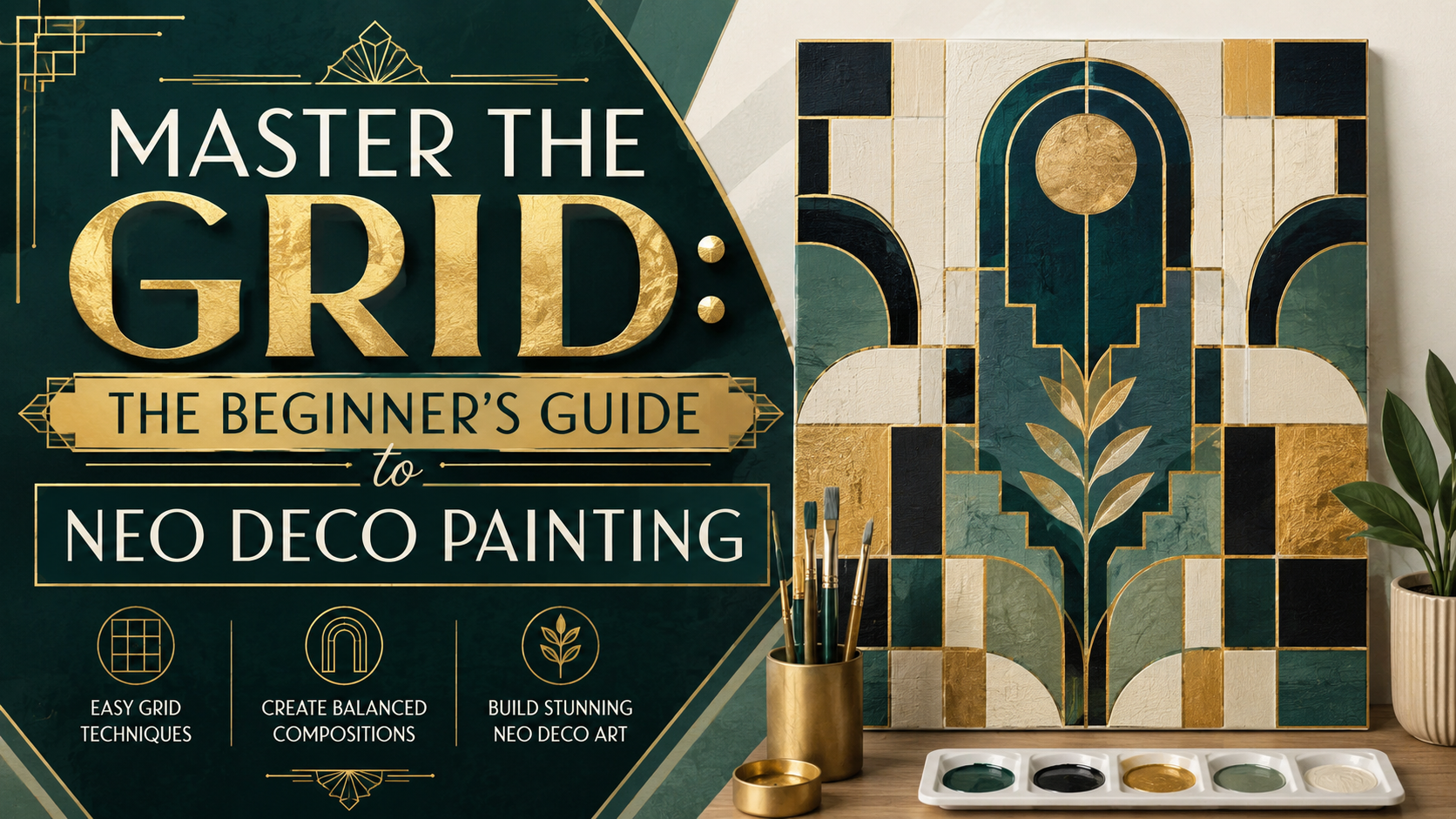
Summary: This guide introduces Neo Deco painting, an exciting contemporary trend that combines classic 1920s geometric structure with rich modern textures. You will learn how to design balanced layouts, pick sophisticated color schemes, and weave tactile elements into your artwork. Read on to master this accessible style and unlock a fresh perspective for your creative journey.
You are standing in front of a blank canvas, terrified of making the first mistake. It is a common feeling. Traditional landscapes demand precise perspective, while total abstraction can leave you feeling lost without a clear map. That is why Neo Deco painting is a beautiful solution for beginners. This emerging art style gives you the perfect balance of strict geometric rules and playful creative freedom. It takes the glamorous bones of 1920s design and updates them with moody colors, deep textures, and organic lines. Let us break down how you can use this structured, rhythmic style to build your confidence and create striking artwork.
What Is Neo Deco Painting?
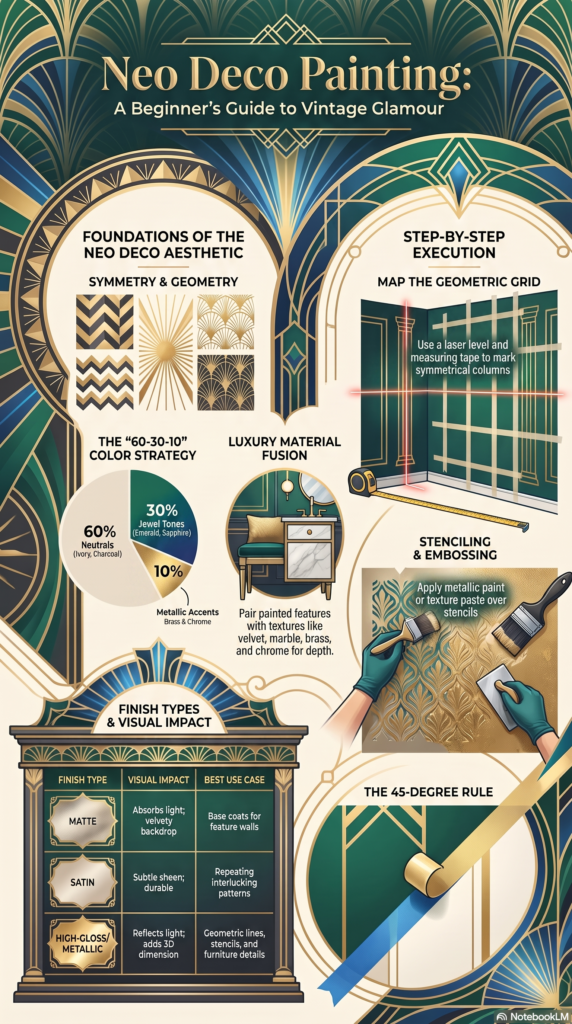
Neo Deco painting is a contemporary art trend that reimagines historical 1920s Art Deco by blending its iconic geometric shapes, clean symmetry, and repeated curves with modern textures and deep, moody color palettes. It shifts away from cold, machine-like luxury toward a more grounded, tactile, and human expression of craftsmanship.
The original Art Deco movement emerged as a celebration of machine-age optimism and technological progress. In contrast, current fine art galleries show that the modern revival focuses on emotional authenticity and visible touch. Instead of perfectly flat, mass-produced surfaces, modern creators use this style as a comforting framework. It provides structure. Think of it as a beautiful architecture for your canvas, where clean lines contain rich, breathing paint. It lets you explore complex ideas without losing your grip on essential elements of composition.
Embracing the Balance of Geometry and Symmetry
The heart of this style lies in its clean visual rhythm. The original designers loved zigzags, chevrons, sunburst motifs, and stepped forms. These shapes feel powerful because they mimic both classical architecture and natural patterns. In modern spaces, design experts note that oversized geometric art creates a powerful sense of order and luxury.
For beginners, building an artwork around symmetry is a fantastic shortcut to success. You do not need to guess where your focal point should live. The grid does the heavy lifting for you. Advanced artists can take this a step further by setting up a perfect symmetrical layout, then deliberately breaking it with an unexpected brushstroke or an organic fluid shape. This creates a brilliant tension on the canvas. It catches the eye.
How Do Beginners Choose a Neo Deco Painting Color Palette?
Beginners should choose a Neo Deco painting color palette by pairing deep, rich jewel tones like burgundy, navy blue, or emerald green with warm metallic accents like polished brass, copper, or gold leaf. Balancing these intense hues with soft neutrals like sand or clay prevents the design from overwhelming the eye.
Forget the pastel tones of Art Nouveau. This style demands confidence. Recent home design data shows that homeowners use color-drenched art to reinforce a room’s atmosphere with deep plum reds, olive greens, and ochres. You can learn more about how these choices affect your work by exploring our guide on how to create mood with color choices.
Neo Deco Color Combinations
| Tone Type | Classical Palette Examples | Modern Neo Deco Substitutes |
| Deep Jewels | Ruby Red, Sapphire Blue | Burgundy, Dark Plum, Deep Navy |
| Warm Earth | Bright Orange, Terracotta | Rust, Clay, Muted Ochre |
| Metallics | Cold Chrome, Shiny Silver | Brushed Brass, Antique Gold, Copper |
Using a targeted selection of colors helps you build harmony across the canvas. If you want to keep your mixing simple, try working with a painting with a limited palette setup to keep your tones clean.
The Power of Rich Material Textures
In the past, Art Deco paintings featured incredibly smooth, metallic skins and flawless, lacquered finishes. Today, everything has changed. Contemporary fine art trends reveal that flat designs are giving way to works that feel tactile, layered, and organic.
Texture gives your painting a physical story. You can achieve this by layering heavy gesso before you even touch your colors, or by mixing texturing mediums directly into your acrylics. Think of thick paint ridges catching the light next to perfectly flat, matte geometric shapes. This interplay of light and form creates incredible visual depth. If you are using oils, remember to follow the traditional guidelines found in the fat over lean rule to ensure your textured layers dry safely without cracking over time.
What Supplies Do You Need for Neo Deco Painting?
To start Neo Deco painting, you need a sturdy canvas or wood panel, low-tack painter’s tape for crisp geometric edges, a firm synthetic flat brush, acrylic or oil paints in jewel tones, and metallic acrylic paint or gold leaf for signature accents.
Essential Supplies Checklist
| Tool / Material | Specific Purpose in Neo Deco Art |
| Low-Tack Painter’s Tape | Used to mask out perfectly straight chevrons, arches, and sharp geometric grids. |
| Flat Synthetic Brushes | Ideal for laying down clean, unblemished fields of color without loose stray hairs. |
| Heavy Body Acrylics | Excellent for building up structural paint ridges and tactile surface variations. |
| Metallic Leaf or Paint | Adds the essential touch of 1920s glamour and handles highlight reflections. |
Having the right tools makes a massive difference in your workflow. Having sharp lines is essential for this look. If you are unsure about which brushes to buy first, take a look at our breakdown of the best paint brushes for beginners to pick the right shapes for your studio space.
How Can Artists Use Light and Shadow in Geometric Art?
Artists use light and shadow in geometric art by treating flat shapes as three-dimensional forms, applying clean gradients that mimic metallic sheen, and using high-contrast shading to create an illusion of architectural depth. This technique transforms a basic pattern into a sculptural masterpiece.
You do not need to paint realistic faces to show mastery over illumination. By understanding the complete guide to light and shadow, you can turn a simple fan arch into a glowing, volumetric structure on your canvas. Contemporary painters often mix smooth, airbrushed gradients with harsh, graphic shadow lines to capture that iconic, retro-futuristic glow. It is all about contrast.
Symmetry gives you a safe harbor, while modern texture provides a place to play. Do not wait for the perfect idea to strike. Grab a roll of painter’s tape, choose three deep colors, and map out a simple geometric design on a small canvas. You will find that the rhythm of the lines guides your hands naturally. If you create something you love, or if you hit a snag along the way, leave a comment below or share your progress with our community. Let us start creating together.
6 Contemporary Artists – Art Deco Geometry, Color, and Glamour
| Artist Name | Core Style & Focus | Primary Mediums | Neo Deco Characteristics |
| Lily Stockman | Abstract Architectural Geometry | Oil on Canvas | Focuses on balanced symmetry and clean lines inspired by traditional Indian pigments, blending radiant illumination with structured form. |
| Jim Gaylord | Engineered Geometric Movement | Collage and Gouache | Utilizes stacked planes of paper and precision-cut shapes to recreate classic organic motifs, establishing a crisp sense of logic and repetition. |
| Ji Young Yoon | Dreamy Urban Abstraction | Acrylic and Mixed Media | Transforms structured cityscapes into atmospheric compositions using high-contrast shadow lines, architectural arches, and sharp geometric grids. |
| Rico Gatson | Radiant Geometric Power | Acrylic and Public Murals | Features massive, interlocking chevrons and sunburst patterns that bring a powerful sense of visual rhythm and bold color contrast into large public spaces. |
| Abby Young | Graphic Luxury Design | Digital and Mixed Media | Specializes in high-contrast cosmic themes, layering deep burgundy and teal backdrops with crisp, metallic gold sunburst lines. |
| Elisabeth Fredriksson | Tactile Gemstone Geometry | Digital Graphic Painting | Combines intricate Art Deco octagons and fan shapes with the simulated textures of raw emerald, weathered copper, and polished gold leaf. |
Frequently Asked Questions
What is the difference between classic Art Deco and Neo Deco?
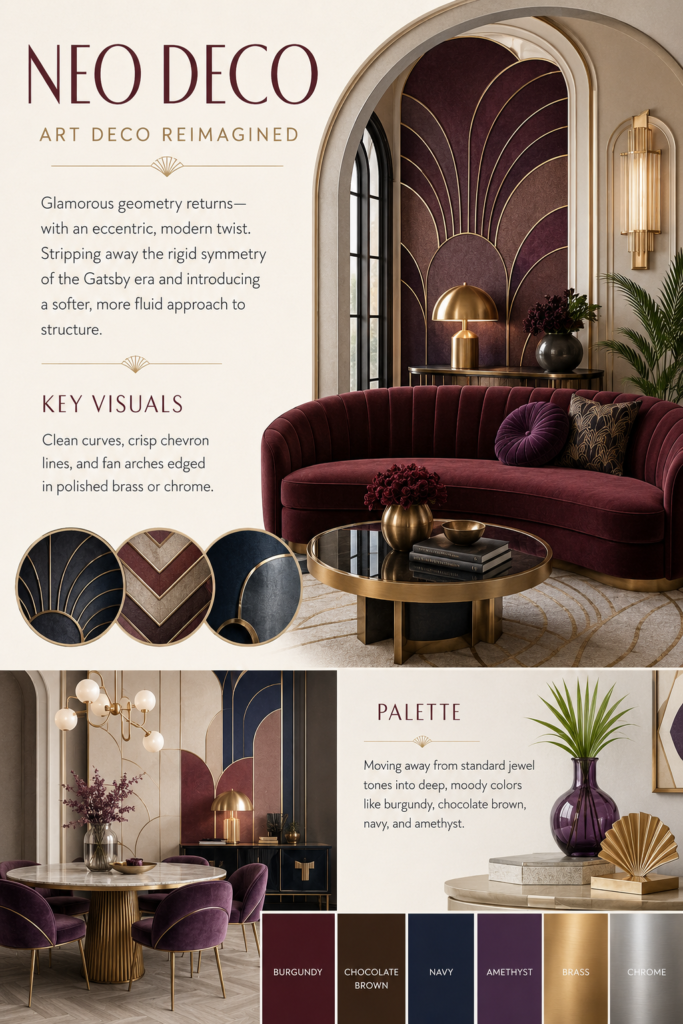
Classic Art Deco focused on flat, ultra-smooth surfaces, machine-age materials, and high-contrast luxury. Neo Deco introduces heavy, tactile textures, organic variations, and slightly muted, warmer palettes that feel human rather than industrial.
Can I paint Neo Deco art using watercolors?
Yes, you can paint this style with watercolors by using high-quality masking fluid to keep your geometric lines perfectly white and crisp. Layering transparent washes creates beautiful, modern tonal gradients within the geometric shapes.
Do I need to be good at drawing to try Neo Deco painting?
Not at all. Because this style relies heavily on rulers, compasses, and painter’s tape, you do not need advanced freehand drawing skills to create an excellent composition.
How do I get perfectly clean lines when pulling up painter’s tape?
To get clean lines, seal the edge of your tape with a thin layer of clear acrylic medium or your background paint color before applying your main accent tone. This step blocks any paint from leaking underneath the tape.
What kind of finish is best for a Neo Deco painting?
A combination of ultra-matte varnishes for the solid colors and a high-gloss finish for the metallic accents works best. This contrast enhances the visual depth and makes the metallic sections catch the light beautifully.